Mindsmith AI eLearning: Beyond One-Click Course Creation (Video Course)
Let's skip the one-click hype. Learn a practical, human-first workflow in Mindsmith: brief an AI co-pilot, storyboard smart, build skill-building interactivity (branching + voice), and ship faster,without giving up your standards.
Related Certification: Certification in Designing Custom AI eLearning Courses
Also includes Access to All:
What You Will Learn
- Brief the Mindsmith AI agent to generate instructionally sound lessons
- Design and approve storyboards to set structure before generation
- Create branching scenarios and AI voice role-plays to train judgment and conversational skills
- Edit tiles, apply branding, and run global revisions with human-in-the-loop control
- Publish SCORM/web packages and use analytics to iterate and improve outcomes
Study Guide
AI-Powered eLearning Development with Mindsmith | Going Beyond One-Click Course Creation Hype
Let's be honest: "one-click course creation" sounds great in a pitch deck, but it rarely produces training you'd want your name on. Effective learning isn't about dumping text on slides. It's about intent, context, and iteration. That's where this course comes in.
In this guide, you'll learn how to use Mindsmith as your AI co-pilot to create truly instructionally sound eLearning,faster than you're used to, without sacrificing quality. We'll walk from zero to published: how to brief an AI agent, how to let it do the heavy lifting without giving up your standards, how to build interactivity that actually builds skill (not just clicks), and how to refine at scale without rework. You'll leave with a repeatable workflow, real prompts, and implementation patterns you can adapt across leadership, compliance, customer service, and more.
Throughout, you'll notice one theme: AI supports your judgment. You steer. It accelerates. That's the whole point.
What you'll walk away with:
- A step-by-step method for kicking off any lesson or course with AI,without losing instructional integrity
- A practical understanding of Mindsmith's co-pilot, storyboarding, tile-based editing, and advanced features (branching, voice role-plays)
- Templates and examples you can copy, paste, and adapt
- A mindset for human-in-the-loop collaboration that keeps quality high and timelines short
Guiding idea:
"Create better e-learning faster." Not by skipping steps,but by doing the right steps smarter.
Foundations: Terms, Tools, and What We're Actually Building
Before we touch a prompt, align on the building blocks you'll use in Mindsmith. Clear terms make faster teams.
AI Agent:
A conversational assistant inside Mindsmith that asks clarifying questions, generates content, suggests structure, and applies edits. Think "junior instructional designer with superpowers," not "magical button."
Lesson vs. Course:
- Lesson: A self-contained learning experience, typically 10-20 minutes. Perfect for a single skill, policy, or process.
- Course: A collection of lessons forming a larger program with a coherent journey (onboarding, leadership track, product certification).
Recipes:
Pre-built prompt flows for frequent tasks (needs analysis, convert a video to a lesson, create a branching scenario). These compress multi-step work into one guided interaction.
Storyboard:
The high-level outline before build-out: page titles, descriptions, and learning objectives per page. This is the most strategic checkpoint in your process.
Tiles:
Modular blocks (text, images, interactions, knowledge checks, buttons) you can edit, move, or resize. Every AI-generated element becomes a tile you fully control.
Branching Scenario:
An interactive decision path. Learner choices lead to consequences, feedback, and new paths,ideal for decision-making and judgment training.
AI Conversation:
Real-time, voice-based role-play with an AI character. The learner speaks; the AI responds with natural audio; then provides a performance analysis.
GROW Model (for coaching):
- Goal: Define the target.
- Reality: Understand the current state.
- Options: Explore possible paths.
- Will / Way Forward: Commit to actions and support.
Examples:
- A "Lesson" on "How to de-escalate an upset customer at checkout" (10-15 minutes, scenario-heavy).
- A "Course" called "New Manager Foundations" composed of 6 lessons: Giving Feedback, Running 1:1s, Delegation, Coaching with GROW, Handling Conflict, and Legal Basics.
The Mindset: AI as Co-Pilot (Not Replacement)
Great design blends constraints, context, and empathy. AI can't know your learners or culture the way you do. It can, however, run at lightspeed once you point it in the right direction.
Mindsmith's agent starts with questions. It wants to know your audience, outcomes, and brand voice before it writes a line. That's not friction,it's insurance against shallow output.
Two truths to carry through the course:
- Instructional integrity beats speed. The agent's guardrails help you preserve it.
- You maintain 100% editorial control. Nothing is locked.
Examples of co-pilot wins:
- You upload a policy PDF and a "do/don't" doc from Legal. The agent synthesizes it into a clean lesson, then prompts you with gaps it detects (e.g., missing examples for gray areas).
- You specify that your learners are mid-career leaders who hate fluff. The agent writes lean copy with real scenarios, not generic HR speak.
Workflow Overview: From Brief to Publish
Here's the repeatable path we'll follow from start to finish:
- Initiate the project: prompt + uploads + constraints
- Needs analysis dialogue: the agent asks, you clarify
- Storyboard first: approve the structure before content
- Generate the lesson: content, visuals, interactivity
- Iterate rapidly: global edits, new materials, thematic tweaks
- Add advanced practice: branching and voice conversations
- Brand it, publish it, track it
Example outcomes:
- Build an MVP of a 15-20 minute lesson in minutes, then spend your time where it matters,scenario realism, stakeholder alignment, and polish.
- Create two versions of the same lesson for different audiences (field vs. HQ) with targeted changes applied by the agent in one pass.
Project Initiation: Brief the AI Agent Like a Pro
A detailed brief increases output quality 10x. The agent can only mirror what you give it.
Core inputs to provide:
- Topic and audience (role, experience level, context)
- Desired instructional approach (story-driven, scenario-first, GROW coaching, compliance clarity)
- Performance outcomes (what changes at work?)
- Constraints (time-on-task, brand voice, no jargon)
- Source materials (policies, guides, call transcripts, values)
Prompt Template (copy/paste):
"Create a [lesson/course] for [audience] on [topic]. Target a [time] experience. Use a [style: e.g., story-driven with realistic scenarios] approach. The performance goal is [outcome]. Include [interactions: branching after each key concept + a final practice]. Use a [tone] voice. I've uploaded [docs],treat them as the source of truth. Ask me clarifying questions before drafting the storyboard."
Example 1:
"Create a lesson for new pharmacy tech leaders on giving feedback using the GROW model. Target 15 minutes. Story-driven with named characters. Performance goal: leaders can hold a 10-minute feedback conversation that ends with clear next steps. Interactions: short branching scenario after each step + final role-play. Tone: down-to-earth, professional."
Example 2:
"Create a course for frontline support agents on handling data privacy requests. 4 lessons, 12-15 minutes each. Outcomes: identify request types, verify identity, follow escalation paths. Use case-based learning with short bursts of practice. Tone: clear, no fluff, human. I've uploaded our privacy SOP and escalation matrix."
Tip:
Upload everything that matters up front,SOPs, SME notes, values. It reduces rework later when stakeholders inevitably say, "Can we add this?"
Needs Analysis: The Agent's Clarifying Dialogue
This is where Mindsmith separates itself from "one-click." The agent runs a targeted Q&A to capture your context before building anything.
Common agent questions you'll see:
- Audience: New vs. experienced? Any misconceptions to address?
- Context: When and where will they apply this? What gets in their way?
- Time: How long should the lesson be?
- Assessment: Knowledge checks, scenarios, or both? Any scoring requirements?
- Tone & branding: Formal or conversational? Brand colors, fonts, logo?
- Examples & stories: Any real cases or characters to include?
- Accessibility: Any requirements (captions, alt text, contrast)?
Example 1 (your responses):
- Audience: New managers, mostly promoted from IC roles, little coaching experience.
- Context: Fast-paced retail pharmacy,feedback often happens between customers.
- Time: 15 minutes.
- Assessment: Scenario-based checks after each GROW stage + a final role-play.
- Tone & branding: Conversational, avoid corporate cliches. Use our teal and charcoal palette.
Example 2 (your responses):
- Audience: Customer success reps, seasoned but resistant to scripts.
- Context: Remote calls with enterprise admins; technical issues trigger frustration.
- Time: 12 minutes.
- Assessment: Branching scenario with three levels of difficulty, automated feedback.
- Tone & branding: Confident, direct, customer-first language. Use our font and logo.
Best Practice:
Answer the agent like you'd brief a contractor. More detail now means fewer rewrites later.
Storyboarding: Approve the Structure Before the Build
After the Q&A, the agent proposes a storyboard: page titles, descriptions, and which objectives each page hits. This is your strategic checkpoint. Change the architecture here, not after full generation.
What you'll review:
- Flow: Does the sequence match how people actually learn and apply the skill?
- Coverage: Are all objectives addressed with meaningful practice?
- Density: Is the time-on-task realistic for your audience?
- Variety: Is there a balance of explanation, example, and interaction?
Example 1 (initial structure):
- Page 1: Why feedback matters in pharmacy settings
- Page 2: GROW overview
- Page 3: G , Define the goal (explain + example)
- Page 4: R , Explore reality (explain + example)
- Page 5: O , Options (explain + example)
- Page 6: W , Way forward (explain + example)
- Page 7: Knowledge check (5 questions)
- Page 8: Final scenario
Your revision:
"Add a short branching scenario after each GROW step. Move the final scenario to be a timed simulation."
Example 2 (initial structure):
- Page 1: Privacy request types
- Page 2: Identity verification steps
- Page 3: Escalation matrix overview
- Page 4: Case study (single path)
- Page 5: Final quiz
Your revision:
"Break Page 4 into three mini-cases by request type. Add a decision at each step with contextual feedback. Replace the final quiz with a cumulative, branching case."
Tip:
Ask the agent to regenerate the storyboard with alternatives. "Give me two other flows: one scenario-first, one microlearning style." Pick the best of three.
Automated Lesson Generation: From Storyboard to MVP
Approve the storyboard, and the AI builds a complete, multi-page lesson in minutes. This is your MVP: coherent copy, relevant imagery, and working interactions. Then you refine.
What the agent generates:
- Content: Headers, body text, call-outs, examples, concise summaries
- Visuals: On-brand or stylistically consistent images for backgrounds and characters
- Interactivity: Tabbed content, knowledge checks, branching scenarios, buttons, progress
- Structure: Clean page layout with tiles you can edit instantly
Minimum Viable Product in minutes:
Expect a strong first draft of a 15-20 minute lesson in under five minutes. That speed frees you to spend time on nuance, not grunt work.
Example 1:
The GROW feedback lesson arrives with:
- A persona-driven intro (a new lead pharmacist and a senior tech)
- A short explainer for each GROW step
- A 2-3 branch scenario after each step
- A final timed role-play with hints disabled
Example 2:
The privacy lesson arrives with:
- Clean visuals of professional workspaces (no text baked into images)
- A three-part branching case (access request, deletion request, DSR escalation)
- Built-in just-in-time references to the uploaded SOP
Best Practice:
Use the MVP to drive stakeholder reviews early. People give better feedback on something they can click through than on a doc.
The Editor: Tiles, Full Control, Zero Lock-In
Every element the AI creates becomes an editable tile. Click, type, reorder. Nothing is locked. This is where you inject voice, culture, and nuance.
What you can adjust:
- Text: tone, examples, length, terminology
- Images: swap, regenerate, or upload your own; change focal points
- Interactions: edit prompts, choices, feedback; add/removes nodes in branches
- Layout: move tiles, resize, split pages, add sections
Example 1:
- You replace stock "pharmacist" photos with images of real store setups you've approved.
- You tweak feedback copy to match your internal phrasing ("Own the outcome" vs. "Take responsibility").
Example 2:
- In a branching scenario, you add a "partial credit" path that mirrors common mistakes your reps make, with targeted coaching tips.
- You insert a 30-second video clip from a recorded coaching call and a text transcript tile for accessibility.
Tip:
Keep a "Language & Examples" page at the end of the lesson (hidden from learners) with reusable phrases and snippets. It speeds later edits and localization.
Building Meaningful Interactivity: Branching Scenarios
Interactivity should train judgment,not just collect clicks. Branching scenarios let learners make decisions, see consequences, and get personalized feedback.
Design principles:
- Make the "wrong" choices plausible (close distractors)
- Keep paths short but meaningful (2-4 steps per scenario) to prevent fatigue
- Tie feedback to the why, not just right/wrong
- Use expressive visuals or character states to reinforce emotion
Example 1 (GROW , Goal stage):
Prompt: "Your tech says, 'I'm always behind on inventory.' What's your opening question?"
Choices:
- "Why are you behind?" (leads to defensiveness; feedback: "You jumped to blame. Start with desired outcome.")
- "What would 'on top of inventory' look like by next Friday?" (progress; feedback: "You set a concrete goal and time frame.")
- "Let's talk options." (skips steps; feedback: "You moved to solutions too fast.")
Example 2 (Compliance , Identity verification):
Prompt: "A caller requests data deletion for an account."
Choices:
- Proceed after email confirmation only (partial credit; missing secondary verify)
- Require two-factor verification per SOP (correct)
- Escalate immediately (incorrect for non-critical case)
Best Practice:
Use a node-based editor to visualize paths. Ask the agent: "Add a reflective prompt after each incorrect path that asks the learner to restate the principle in their words."
Advanced Practice: AI-Powered Voice Conversations
Some skills require live practice. AI conversations turn your lesson into a safe role-play lab,at scale.
How it works:
- Setup: Define the character, scenario, objectives, and scoring rubric.
- Interaction: The learner speaks; the AI responds instantly with voice.
- Analysis: The system evaluates performance against each objective and gives targeted feedback.
Example 1 (GROW coaching role-play):
Setup: "You're coaching Mia, a high-performing tech who's defensive about feedback. Use GROW to guide the conversation in 6-8 minutes. Objectives: define a specific goal; explore reality with at least two open-ended questions; generate three options; commit to one next step with a date."
Experience: The AI plays Mia,guarded at first, then opening up if you handle Reality patiently.
Analysis: "You defined a clear goal and explored reality well. You moved to options a bit early; consider validating Mia's constraints first. Your final commitment lacked a date,add a deadline next time."
Example 2 (Customer escalation):
Setup: "You're on a call with an admin furious about a billing error. De-escalate, clarify the problem, and outline next steps. Objectives: reflect emotion, confirm details, propose a path, secure agreement."
Experience: The AI mirrors realistic agitation; if you interrupt or script-dump, it escalates. If you reflect and clarify, it calms and engages.
Analysis: "You reflected emotion effectively. You skipped confirming the invoice number before proposing a fix,add that checkpoint."
Tip:
Ask the agent to vary difficulty. "Generate 3 versions: easy (receptive learner), medium (skeptical), hard (hostile). Use the same objectives but adapt the character's responses."
Iterative Refinement: Global Edits at the Speed of Thought
Real projects evolve. Stakeholders add docs. Visuals need a shift. Standards change. Instead of manual patchwork, use AI-assisted revisions to update the entire course in one pass.
Global visual edits:
"Replace hero images on each page with wide-shot photos of a pharmacy without any text. Keep lighting bright and people diverse." The agent finds and replaces, preserving layout.
Content integration mid-project:
Upload a "Core Values" doc, then prompt: "Read and summarize our values. Propose where they reinforce key points in this course. Show me your plan first." Approve, then let it update language and add call-outs.
Example 1:
- You add a DEI statement. The agent identifies two scenarios where inclusive language examples help and inserts them with subtle, on-brand framing.
- You ask for glossary tooltips on first use of terms. The agent adds them across pages.
Example 2:
- You upload new call recordings. The agent extracts quotes and weaves them into scenarios as realistic dialogue choices.
- You change the target completion time from 20 to 12 minutes. The agent trims explanations, adds a "Learn more" tile linking to optional resources.
Best Practice:
Request a "change plan" before the agent edits. It makes approvals cleaner: "Show me exactly which pages and tiles you'll modify and why."
Branding and Theming: Make It Look Like You
Consistency reduces cognitive friction. The theme editor brings your identity into the learning experience without manual formatting on every page.
What to set:
- Logo and lockup spacing
- Primary and accent colors (hex codes)
- Fonts for headers and body text
- Default button styles, card components, and icon set
Example 1:
Healthcare brand using soft teal, charcoal, and open, readable fonts. Call-outs use a subtle teal border, not heavy fills, to maintain a clinical, calm feel.
Example 2:
Fintech brand with a bold accent color and geometric font. Knowledge check buttons carry the accent; feedback tiles use a subdued neutral for accessibility and contrast.
Tip:
Create and save multiple themes: internal training vs. partner training. Then swap at publish time without touching content.
SCORM, Publishing, and Analytics
You're building for real ecosystems. Mindsmith supports professional publishing workflows and retrofitting legacy content.
SCORM import:
Import published SCORM 1.2 or 2004 packages and deconstruct them into editable tiles. This turns "frozen" legacy content into living files you can update.
Publishing options:
- Share via public link for quick reviews or standalone delivery
- Export as a web-hosted HTML5 package
- Publish as SCORM for your LMS (with completion/score data)
- Host on Mindsmith and access built-in analytics
Analytics to watch:
- Completion and drop-off points
- Time spent per page
- Question-by-question performance
- Branch paths chosen most often
Example 1:
You import a legacy compliance SCORM, update outdated policy references, add two short scenarios, refresh the theme, and republish to the LMS.
Example 2:
You host the coaching lesson on Mindsmith, watch where learners stall (the Reality step), and add a short example video to that page to smooth progression.
Best Practice:
Use analytics to drive your second iteration,not stakeholder opinions alone.
Instructional Integrity: Guardrails That Keep Quality High
Speed is only useful if you protect learning outcomes. The agent's "high guardrails" help ensure sound instruction even when timelines bite.
Guardrails in practice:
- The agent asks for objectives and assessment types before drafting content
- It checks for coverage and suggests practice after key concepts
- It resists fluff: if you ask for "scenario-first," it won't default to lecture
Example 1:
You request a microlearning format. The agent warns that three objectives won't fit in 8 minutes and proposes splitting them across two lessons.
Example 2:
You ask for a heavy quiz. The agent suggests mixing short scenarios with a couple of recall items to better assess application, not trivia.
Tip:
Ask the agent: "What risks do you see in my current storyboard related to transfer to the job?" Use its answer as a debate starter with stakeholders.
Human-in-the-Loop Collaboration: The Real Accelerator
AI amplifies strong teams. The best results come when you treat the agent like a creative partner you can push and refine,not a vending machine.
Collaboration patterns:
- Co-create: "Draft three alternative intros,one story-led, one problem-led, one data-led."
- Critique: "Tighten the copy by 20% without losing nuance. Show me before/after."
- Blend: "Pull three quotes from the SME doc and integrate them as learner choices in the first scenario."
Example 1:
A stakeholder sends a "values refresh." The agent proposes subtle placements (call-outs, end-of-page reflections) instead of heavy-handed inserts,and you approve the subtle path.
Example 2:
A regional leader wants localized scenarios. You prompt the agent to generate region-specific names, regulations, and customer patterns, then swap them in programmatically.
Best Practice:
Timebox AI iterations. Two passes with clear acceptance criteria beat seven vague cycles.
Applications Across Contexts
Use one workflow. Apply it everywhere.
Instructional Designers / L&D Teams:
- Rapid prototypes for early buy-in
- First-draft acceleration: from weeks to days
- Focus shifts to needs analysis, SME interviews, and polish
Corporate Training:
- Leadership: coaching, delegation, conflict, feedback
- Compliance: privacy, safety, anti-harassment with realistic practice
- Customer service: de-escalation, empathy, product troubleshooting
Educational Institutions:
- Faculty can spin up lesson companions to readings or labs
- Instructional design courses can teach modern AI-augmented workflows
Example 1:
A retail chain launches a new POS. You import SOPs, generate a scenario-based lesson, add two voice conversations for tricky customer moments, publish to LMS in a week.
Example 2:
A university instructor converts a recorded lecture into a concise lesson with inline quizzes and a branching case, tailored to different majors by toggling examples.
From "Hype" to Habit: A Practical Build Sequence
Here's a simple week-long pattern you can reuse. Adjust timelines as needed.
Day 1-2:
- Collect inputs (SOPs, values, examples, brand kit)
- Draft your initiation prompt; upload docs
- Run the needs analysis dialogue
Day 2-3:
- Review and revise the storyboard (get stakeholder sign-off)
- Approve for generation
Day 3-4:
- Receive the MVP
- Edit for accuracy, tone, and realism
- Add or tune branching scenarios
Day 4-5:
- Add voice conversations (if applicable)
- Apply theme and branding
- QA for accessibility and flow
- Publish to review link
Final pass:
- Gather feedback via analytics and stakeholders
- Apply global edits (visuals, values, glossary)
- Export/publish to LMS
Tip:
Use the quote as your quality bar: "Designed to support better instructional design decisions, not replace them." If a request lowers instructional integrity, push back,with options.
Recipes You'll Actually Use
Recipes speed up frequent moves. Start with these:
Needs Analysis Recipe:
Prompts a structured Q&A for audience, context, objectives, assessment, tone, and constraints. Outputs a clean brief the agent and your stakeholders can reference.
Convert Media to Lesson:
Upload a video or webinar. The agent extracts key points, generates a lesson with short checks, and offers scenario prompts based on the content.
Branching Builder:
Give it a scenario outcome and 2-3 key decision points. It drafts plausible choices, consequences, and feedback. You edit for nuance.
Example 1:
You run "Convert Media to Lesson" on a 20-minute coaching demo, then use "Branching Builder" to turn the coach's mistakes into learning paths.
Example 2:
You run the "Needs Analysis Recipe" before a high-visibility compliance rollout; the output becomes your mini design doc for approvals.
Best Practice:
Save your best custom prompts as personal recipes. Standardization reduces cognitive load across the team.
Assessment Strategy: Measuring What Matters
Don't default to quizzes. Match assessments to objectives.
Patterns to use:
- Knowledge checks for terminology and process sequencing
- Branching scenarios for judgment and decision-making
- Voice conversations for relational and conversational skill
Example 1:
Objective: "Managers can run a GROW conversation." Assessment: voice role-play scored against a rubric (clarity of goal, depth of reality, breadth of options, concreteness of will).
Example 2:
Objective: "Agents can classify privacy requests." Assessment: branching case with three request types, each requiring correct identification and next steps.
Tip:
Ask the agent: "Design a rubric with observable behaviors for each objective." Use it to anchor both branching feedback and voice conversation analysis.
Accessibility, Ethics, and Accuracy
Professional training respects all learners and gets facts right,especially with AI in the mix.
Accessibility checklist:
- Alt text for images; transcripts for audio/video
- Sufficient color contrast
- Keyboard navigation for interactions
- Clear language and consistent headings
Ethics & accuracy:
- Verify all policy/procedure content against source docs
- Label AI-generated scenarios; avoid real names unless authorized
- Review for bias in characters, choices, and feedback
Example 1:
The agent proposes a character background that stereotypes. You correct it and save a guidance note for future builds.
Example 2:
The agent summarizes a policy incorrectly. You link the exact policy excerpt in a reference tile and ask it to regenerate the summary constrained to that text.
Best Practice:
Adopt a "source of truth" pattern. Upload authoritative docs and instruct the agent: "Only use these for compliance statements; cite the section in a tooltip."
Versioning and Change Management
AI speeds change. That's a gift and a risk. Keep a clean trail.
Lightweight version control:
- Snapshot the lesson at each major milestone (Storyboard v1, MVP v1, Final v1)
- Log AI-assisted global edits with a one-liner ("Replaced hero images; integrated values")
- Keep a "Changelog" tile at the end (hidden)
Example 1:
Audit asks what changed since last quarter. You export the changelog and version snapshots in minutes.
Example 2:
Two designers work in parallel. You compare snapshots and merge updates deliberately instead of overwriting.
Tip:
Name versions with structure: Product_Topic_Audience_v1_MVP. Small habit, big payoff.
Stakeholder Communication: Faster Approvals with Fewer Meetings
People approve what they understand. Let the product sell itself.
Tactics that work:
- Share the storyboard for structural sign-off before build
- Send an interactive MVP link with two specific questions ("Is this the right flow?" "Are these scenarios realistic?")
- Show analytics from pilot groups to move opinions to evidence
Example 1:
You present two alternative intros (story-first vs. problem-first). Stakeholders pick quickly because they can feel the difference.
Example 2:
A manager wants "more content." You show time-on-task data and a heatmap of where learners hesitate; you add a targeted micro-example instead of a lecture block.
Best Practice:
Always offer options. "We can add more detail (adds 4 minutes), or we can link a resource (keeps time, adds depth on demand). Pick what matters most."
When to Use Branching vs. Voice Conversations
Both build skill; choose based on objective, context, and scale.
Use branching when:
- You're training discrete decisions with clear consequences
- You need rapid, scalable practice with low setup overhead
- You want to visualize paths and coach with text feedback
Use voice conversations when:
- You're training relational or conversational nuance (tone, timing, listening)
- You want learners to practice speaking and thinking in real time
- You need rich, rubric-based analysis
Example 1:
Branching for "verify identity" checkpoints; voice conversation for "de-escalate an angry customer."
Example 2:
Branching for "choose the best email subject for a renewal"; voice conversation for "run a quarterly business review conversation."
Tip:
Hybrid works: Use branching to teach the structure, then voice to test live performance.
Practical Prompts You'll Reuse
Steal these. Tweak as needed.
Global visual change:
"Replace all hero images with wide-shot photos of a pharmacy. Avoid text overlays. Keep lighting bright and natural. Keep diversity across age, gender, and ethnicity."
Integrate core values:
"I've uploaded our core values. Summarize each in one sentence. Propose where each value reinforces a concept in this lesson. After I approve, add subtle call-outs and a 2-question reflection at the end."
Tighten copy:
"Reduce body text by 20% while keeping examples and key phrases. Maintain a conversational tone. Show me a tracked list of changes."
Scenario realism check:
"Identify any dialogue lines that sound generic or corporate. Replace with phrasing a frontline manager would actually use. Provide two alternatives per line."
Example 1:
You run the "tighten copy" prompt on a dense policy page and instantly gain 2 minutes of learner attention back.
Example 2:
You run the "realism check" on your customer scripts and get three better options for the toughest line in the scenario.
Capstone Exercise: Build a Lesson End-to-End
Apply everything. Here's your practice brief.
Brief:
Audience: New team leads in a manufacturing plant.
Topic: Conducting a safety observation and giving immediate coaching.
Time: 12-15 minutes.
Assessment: Branching scenarios after each concept + final voice conversation.
Tone: Practical, zero fluff.
Uploads: Safety SOP, recent incident summaries, brand kit.
Steps:
1) Initiate the project with a detailed prompt and uploads.
2) Answer the agent's questions with specifics from your plant context.
3) Review and revise the storyboard; add "practice after each concept."
4) Generate the MVP; tune copy and imagery.
5) Build two branching scenarios (observation done well vs. rushed).
6) Add a voice conversation for the live coaching moment.
7) Integrate values (e.g., "safety first, always").
8) Apply theme; QA for accessibility; publish to review.
9) Gather analytics from a pilot group; apply global edits.
10) Export SCORM for LMS and archive version snapshots.
Deliverables:
- A working lesson link
- A one-page storyboard snapshot
- A rubric for the voice conversation
- A short changelog
Tip:
Keep a "known issues" tile to track what you'll improve next cycle.
Common Pitfalls and How to Avoid Them
Speed invites sloppy habits. Stay sharp.
Pitfall 1: Vague prompts.
Fix: Use the initiation template. Always include audience, context, outcomes, constraints, and source docs.
Pitfall 2: Overstuffed objectives.
Fix: Split into multiple lessons or reduce scope. Ask the agent to propose a modular sequence.
Pitfall 3: Cosmetic interactivity.
Fix: Tie every scenario to a performance behavior. If it doesn't build the target skill, cut it.
Pitfall 4: Ignoring analytics.
Fix: Adjust based on where learners stall or guess. Add examples where needed; remove fluff where they breeze.
Example 1:
Your first pass has 10 knowledge checks. Analytics show low transfer. You swap 6 of them for two branching decisions and a short reflective prompt.
Example 2:
Stakeholders push for "more policy text." You keep time constant and add an optional "Drill deeper" tile instead of bloating the core path.
Study Check: Quick Questions to Lock This In
Multiple-Choice:
1) The primary role of the Mindsmith AI agent is:
A) One-click autopilot creation
B) A co-pilot for generation and revision
C) Media-only generator
D) Full replacement for an instructional designer
Answer: B
2) The purpose of the storyboard phase is to:
A) Write final quiz items
B) Approve high-level structure before full build
C) Choose a-la-carte interactions
D) Record audio narration
Answer: B
Short Answer Prompts:
- Name two ways to provide initial context to the AI agent.
- What's the difference between a branching scenario and an AI conversation?
- How can you integrate a core values doc after an initial draft is built?
Discussion Starters:
- Why is human oversight essential for instructionally sound eLearning?
- Beyond coaching, where would voice-based simulations excel?
- How might this approach modernize your version of ADDIE or SAM?
Key Insights and How to Apply Them Tomorrow
AI as a Co-Pilot:
Let it handle structure and speed while you handle strategy and nuance.
Instructional Integrity:
The agent's clarifying questions are an advantage,use them. Quality is set at the brief.
Iterative Design:
Storyboard first, then build. Avoid rework by changing structure early.
Ongoing Collaboration:
Introduce new docs mid-stream and let the AI integrate them intelligently. Ask for a plan first.
Conversational Practice:
Voice role-plays scale soft skills training with immediate, actionable feedback.
Human Control:
Every tile is editable. That's non-negotiable for professional training.
Example 1:
Tomorrow, pick one legacy SCORM, import it, update the content with real scenarios, and republish. You'll feel the difference in a day.
Example 2:
Spin up a 12-minute micro-lesson with a single branching decision and a 4-minute voice conversation. Share analytics with your stakeholders to start a new conversation about quality vs. quantity.
Recommendations for Teams Rolling This Out
1) Adopt a Human-in-the-Loop Strategy:
Favor tools that keep designers in control. Codify your review checkpoints (brief, storyboard, MVP, final).
2) Pilot Advanced Simulations:
Start with one high-impact soft skill (de-escalation or coaching). Measure before/after call quality or manager confidence.
3) Train for AI Collaboration:
Teach prompting, critique, and recipe reuse. This is a new craft. Give your team prompt libraries and rubrics.
4) Leverage Rapid Prototyping:
Share MVPs within days to capture stakeholder attention and reduce misalignment early.
Example 1:
Run a two-week pilot with one lesson, one branching scenario, and one voice conversation. Debrief with analytics and learner quotes.
Example 2:
Create a playbook with your top 10 prompts, your brand theme, and two sample storyboards. New designers get productive in a day.
Mini-FAQ
Q: How is a lesson different from a course here?
A: A lesson stands alone (10-20 minutes). A course stitches multiple lessons into a coherent path with shared outcomes.
Q: When should I use recipes?
A: When you repeat tasks: needs analysis, converting media, drafting a branching scenario. Recipes compress multi-step work into a reliable pattern.
Q: Can I really edit everything?
A: Yes. Every text, image, and interaction is a tile you can modify,no lock-in.
Q: How do I avoid generic content?
A: Upload real artifacts (SOPs, transcripts), answer the agent's questions specifically, and run a "realism check" prompt before final.
Q: What if stakeholders add requirements late?
A: Upload the new doc, ask the agent for a change plan, then apply global edits. Faster and safer than manual thread-pulling.
Conclusion: The New Standard for Building Courses Worth Taking
You don't need more content. You need the right content, delivered in a way people can use tomorrow. Mindsmith lets you work like a modern designer: brief with clarity, iterate with intent, and deploy with confidence. You start with a conversation, shape a strong storyboard, generate an MVP in minutes, and spend your energy where it counts,scenario realism, practice that drives behavior, and polish that reflects your brand.
Use AI as your co-pilot. Keep human judgment in the driver's seat. When you do, you'll make courses that are instructionally sound, engaging, and fully yours,built faster than the old way and better than "one-click" hype ever promised.
Final reminder:
"The agent has really high guardrails for making sure what you create with it is as instructionally sound as possible." Use those guardrails. And keep the mantra close: "Create better e-learning faster."
Frequently Asked Questions
This FAQ is a practical reference for anyone evaluating or using Mindsmith to build AI-assisted eLearning. It answers common questions from "what is it and how do I start?" to advanced topics like branching logic, AI conversations, accuracy, LMS delivery, accessibility, governance, and ROI. Use it to plan your workflow, cut rework, and avoid hype-driven shortcuts.
General Concepts
What is Mindsmith?
Mindsmith is an eLearning authoring tool with AI woven into the full development workflow.
It acts like an AI co-pilot that helps you plan, draft, iterate, and polish courses,without replacing your judgment. The agent accelerates content creation, proposes structures, suggests assessments, and can generate or select media, while you keep creative control. You can start from a blank canvas, templates, or recipes to speed up common tasks. Everything it produces is editable at the page and tile level, so you can refine tone, accuracy, and interactions. The result: faster production cycles and higher consistency across lessons and courses, especially when you feed it strong prompts and source materials (like policies or process docs). Example: turn a company feedback framework into a story-driven lesson with step-by-step practice and a scenario-based knowledge check,then revise tone and visuals to match your brand.
Who is Mindsmith designed for?
Mindsmith supports instructional designers, eLearning developers, and business teams who build training content.
It's built for people who want speed without sacrificing instructional clarity. If you own compliance training, onboarding, enablement, or skills development, Mindsmith reduces grunt work,like drafting objectives, creating first-pass content, and building repeatable interactions,so you can focus on nuance and stakeholder alignment. It's also helpful for SMEs who need structure to turn expertise into training. Example: an HR partner can upload policy PDFs and prompt the agent to build a micro-course, then hand it to an ID for interaction design and assessment strategy. Teams with established standards benefit from recipes that encode best practices (like a needs analysis checklist or story-driven module format) to keep outputs consistent across multiple creators.
What types of projects can be created in Mindsmith?
Two core project types: Lessons and Courses.
- Lessons are standalone modules, often 10-20 minutes, ideal for focused skills, updates, or microlearning. Think: "Giving Feedback with the GROW Model."
- Courses are collections of multiple lessons organized into a larger journey. Think: "Leadership Fundamentals," with separate lessons on coaching, delegation, and performance conversations.
You can start with a lesson and later assemble related lessons into a course, reusing themes and interactions. The AI agent can help enforce consistent structure and style across multiple lessons, and templates or recipes can pre-load your preferred approach. Use lessons for targeted performance gaps and courses for multi-topic programs with spaced repetition or progressive practice.
Can I use my existing eLearning content with Mindsmith?
Yes,import published SCORM packages and convert them into editable projects.
If you've lost the original authoring files, Mindsmith can ingest SCORM and reconstruct an editable version. This is useful for updating legacy courses, refreshing visuals, or integrating new policy details without starting from scratch. After import, you can use the AI agent to reorganize pages, rewrite text for clarity, and add modern interactions like branching decisions or AI conversations. Example: update a "Workplace Safety" course by importing SCORM, improving scenario realism with branching choices, and aligning visuals with your current brand theme.
Starting a Project & The AI Agent
How do I start creating a course?
Three common starts: AI Agent, blank project, or template.
- AI Agent: Provide a detailed prompt with topic, audience, goals, and desired format. Upload source docs (e.g., process guides) to anchor accuracy. The agent proposes a structure and first draft.
- Blank Project: Build from the ground up. Add pages and tiles manually, then use the agent for targeted tasks (e.g., "Draft a scenario for page 4").
- Template: Choose a pre-built structure (e.g., "Cybersecurity Basics") and adapt. Templates speed onboarding and standardize patterns. Tip: write prompts like creative briefs,audience, context, constraints, assessment approach,so the first draft lands closer to your standard.
How does the AI agent work?
It's a conversational partner that builds, revises, and explains its choices.
You describe the training need, audience, tone, brand constraints, and assessment strategy. The agent may ask clarifying questions (duration, difficulty, typical scenarios) before generating outputs. It drafts titles, summaries, learning objectives, page sequences, and media guidance. It can also produce interactions (quizzes, branching, scenarios) and revise them on command. Example: "Shift tone to down-to-earth, add a 3-branch scenario after each concept, and include hints with rationale." Think of it as a fast teammate that never tires, but still needs your direction and review.
Can I provide the AI agent with source material?
Yes,upload PDFs, docs, or text to anchor content in your reality.
Source docs increase accuracy and reduce rework. The agent reads your materials, extracts key points, and aligns outputs with your practices. Ideal inputs include SOPs, compliance rules, product sheets, brand voice guides, and frameworks (e.g., your coaching model). Example: upload a "Core Values" PDF and prompt the agent to weave values into scenarios and feedback. Tip: flag "must-not-change" items (e.g., policy wording) and ask the agent to quote those verbatim, then summarize and contextualize them for practice.
Certification
About the Certification
Get certified in human-first AI eLearning design with Mindsmith. Prove you can brief an AI co-pilot, storyboard smart, build branching and voice interactions, and ship high-quality courses faster without lowering standards.
Official Certification
Upon successful completion of the "Certification in Designing Custom AI eLearning Courses", you will receive a verifiable digital certificate. This certificate demonstrates your expertise in the subject matter covered in this course.
Benefits of Certification
- Enhance your professional credibility and stand out in the job market.
- Validate your skills and knowledge in cutting-edge AI technologies.
- Unlock new career opportunities in the rapidly growing AI field.
- Share your achievement on your resume, LinkedIn, and other professional platforms.
How to complete your certification successfully?
To earn your certification, you’ll need to complete all video lessons, study the guide carefully, and review the FAQ. After that, you’ll be prepared to pass the certification requirements.
Other AI Video Courses
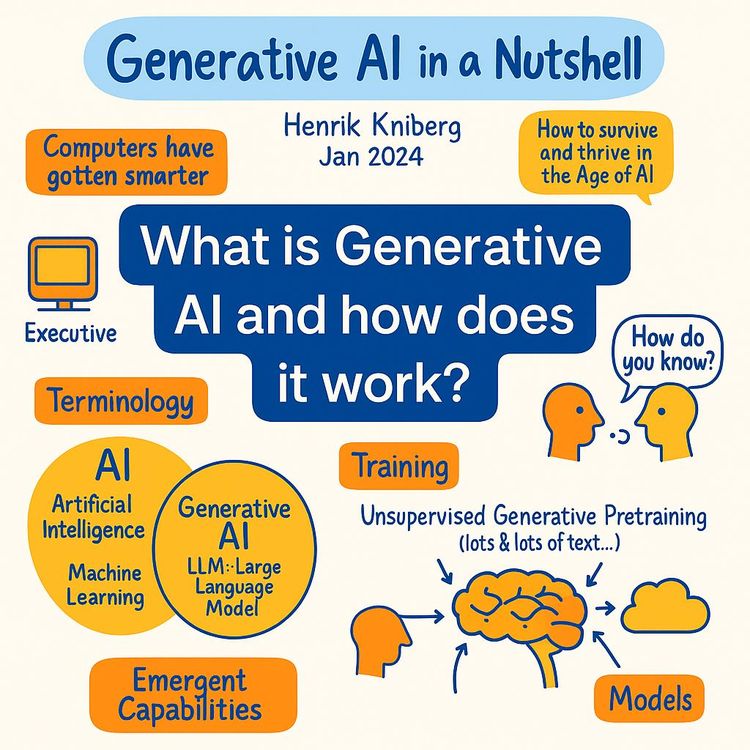
Video Course: What is Generative AI and how does it work?

Video Course: How to Use ChatGPT from Beginner to Professional
Video Course: How to Use Google Gemini for Google Workspace to Boost Productivity

Video Course: How to Use Claude 3.7 AI - Tips for Beginners!
Video Course: ChatGPT for Data Analytics: Full Course - from Beginners to Professional

Video Course: Generating Images and photos With ChatGPT?
Video Course: Generating Images & Photo's with MidJourney
Video Course: Generating Design's with Microsoft Designer and AI

Video Course: Generating Design's with Canva.com and AI
Join 20,000+ Professionals, Using AI to transform their Careers
Join professionals who didn’t just adapt, they thrived. You can too, with AI training designed for your job.