Power BI MCP Server: AI Report Development with No Data Leaks (Video Course)
Ask AI to create DAX, set relationships, and document your Power BI model,then ship it safely. This course shows how MCP plugs AI into your semantic model, saves hours, and keeps data private with practical guardrails, audits, and tracing.
Related Certification: Certification in Developing Secure AI Reports on Power BI MCP Server
Also includes Access to All:
What You Will Learn
- Define MCP and its role bridging LLMs and Power BI
- Explain tokens, context windows, and their impact on DAX
- Choose and secure deployment models: local, self-deployed cloud, or managed
- Enforce provider policies, zero-retention, and governance controls
- Audit MCP traces to verify metadata sharing and prevent leaks
- Craft secure prompts and validate AI-generated measures and relationships
Study Guide
Power BI MCP | AI-Powered Report Development WITHOUT Data Leaks
What if you could ask an AI to build your Power BI measures, set relationships, add clear descriptions, and do it all safely,without leaking sensitive information? That's exactly what this course teaches you.
We'll walk through the entire stack: how Large Language Models (LLMs) connect to your Power BI semantic model using the Model Context Protocol (MCP) server, how that connection works under the hood, and how to use it responsibly. You'll see real examples, learn the risks, and get a practical framework to deploy AI in your workflow without sacrificing privacy. If you're a Power BI developer, analyst, or leader who wants speed without mistakes, this is your playbook.
What You'll Learn and Why It Matters
AI inside Power BI used to be guesswork. You'd paste fragments of your model and ask for DAX tips. Useful sometimes, but slow and limited. The MCP server changes that. It gives AI direct access to your semantic model so it can create measures, understand relationships, and commit changes instantly. That's a leap in productivity. But, opening your model to an AI service is not a decision you make casually. Data privacy is the main event.
By the end of this course, you'll be able to: define MCP and how it bridges AI and Power BI; understand how LLMs process tokens and why context windows matter; choose the right deployment model (local, self-deployed cloud, or managed service) based on risk and resources; analyze provider policies so you don't leak data; audit data flow with tracing tools; and implement governance so your team can move fast and stay safe.
Foundations: LLMs, Tokens, Context Windows, and the Power BI Semantic Model
Let's align on a few core ideas before we add AI to your stack.
Large Language Model (LLM)
An LLM is a pattern engine trained on massive text corpora. It predicts what text should come next based on what it has seen. When you ask it to write DAX, you're leveraging those learned patterns to generate code that fits your context.
Tokens
LLMs process text as tokens. A token might be a word, sub-word, or even punctuation. Your prompt, the model's output, and any data the MCP server sends to the LLM all count toward a token budget. Bigger tasks need more tokens.
Context Window
This is the model's short-term memory during a single exchange. If your model metadata is large, the AI needs enough context window to "hold" the relevant parts while reasoning about DAX and relationships. If it runs out, it forgets earlier details.
Semantic Model
In Power BI, your semantic model defines tables, columns, relationships, and measures. It encodes business logic. MCP gives the AI a structured, standardized way to understand and act on that model directly.
DAX (Data Analysis Expressions)
Power BI's calculation language. With MCP, the AI can not only write DAX,it can place it into your model in the right table with descriptions, saving you time and reducing repetitive work.
Example 1:
You have a large star schema with Sales, Customers, Products, and a Date table. Traditionally, you'd ask for DAX and paste it in. With MCP, you ask the AI to "Create standard time intelligence measures for Sales Amount and store them in the 'Metrics' table with descriptions." The AI reads the model, builds the measures, and commits them.
Example 2:
Your model includes fact tables from multiple regions. You ask, "Add relationships between Orders and Date on OrderDate, and between Orders and Customers on CustomerID. Add descriptions explaining cardinality and direction." The AI inspects existing relationships and creates the correct ones with documentation.
The Evolution: From Copy-Paste Prompts to Direct Model Control via MCP
Before MCP, you had to spoon-feed context. Copy a table schema, hope the AI inferred enough, then manually integrate its output. It was helpful, but fragile.
MCP changes the game. It's a standardized protocol that lets AI talk to external tools in a structured, reliable way. With a Power BI MCP server running, the LLM can ask the model questions, generate DAX, and send verified changes back. It's two-way and fast.
How MCP-Enabled AI Works
1) You write a prompt in natural language. 2) The LLM interprets it. 3) The MCP server connects to your active Power BI model and shares the relevant metadata. 4) The LLM generates actions (like measures) and sends them back through MCP. 5) Your model updates instantly.
Example 1:
Prompt: "Create standard time intelligence measures for Sales Amount and store them in 'Metrics.' Add clear descriptions." The AI identifies the Sales Amount field, locates the Date table, creates YTD, QTD, MTD, YoY, and other time intelligence measures, then inserts them in the correct table with descriptions.
Example 2:
Prompt: "Add a Total Customers measure, New Customers MTD, and Returning Customers YoY. Document the assumptions." The AI infers logic from existing tables, builds the measures, and annotates its reasoning in the descriptions for future maintainability.
Case Study: AI-Driven Development in Action
In a live demonstration using MCP, a developer prompted: "write common time intelligence measures for sales and store them in my measure table." Within seconds, the AI analyzed the model, generated 14 distinct measures,like Year-to-Date and Quarter-to-Date,wrote descriptions for each, and saved them directly into the Power BI file. That's a task that usually eats a significant chunk of a day reduced to moments.
Two details matter here. First, the AI didn't guess; it read the exact model metadata through MCP. Second, the output landed directly in the model,no copy-paste, no context drift.
Example 1:
Time intelligence bundle: Sales YTD, Sales QTD, Sales MTD, Previous Month Sales, YoY Sales, YoY Growth %, Rolling 12 Months, and more,each with plain-language descriptions.
Example 2:
Documentation autopilot: The AI not only creates measures, it annotates the why and how, improving team handoffs and easing future refactors.
The Central Challenge: Data Privacy
Productivity is easy to get excited about. Privacy is where you earn the right to use these tools at work. When you connect a Power BI model to an LLM via MCP, the model's metadata, and sometimes query snippets or sample results, can be sent to the AI service. That metadata,table names, column names, relationships, business terms,can be sensitive all by itself. The question is simple: where does that data go, who can see it, and how long is it retained?
Here's the truth you need to keep front and center: it's not the abstract model that "holds" your data. It's the business running the service and the policies they enforce.
"It's not the model that holds your data... It's the business that operates it and the policies that they have in place around data retention."
Example 1:
A model includes a table named EmployeeSalary and columns like BasePay and Bonus. Even if you don't send raw salary values, the metadata alone reveals sensitive business structure and priorities.
Example 2:
A healthcare dataset uses table names like PatientVisits and columns like DiagnosisCode. Without a single record value, those names can still violate policy if exposed outside controlled boundaries.
Deployment Models: Three Ways to Run LLMs (and Their Trade-offs)
You have three primary deployment paths. Each changes how much control you have, how much effort is required, and how safe your data is by default.
1) Local Model Execution
The LLM and MCP server run on your machine or on-prem servers. Tools include LM Studio, Ollama, and Microsoft Foundry.
- Pros: Maximum control. No data leaves your environment. You define retention (or the lack of it).
- Cons: You need serious hardware,especially GPUs with large memory. Standard laptops rarely cut it. Large context windows can overwhelm local resources, which slows or blocks complex tasks.
Example 1:
You run a compact, open-source LLM locally for measure generation and documentation on a privacy-critical HR model. No internet traffic, instant compliance wins.
Example 2:
You prototype a new sales analytics model offline after a sensitive merger. The AI drafts relationships and measures while everything stays on-prem during the integration phase.
Tips:
- Keep your local models updated and benchmarked for context window capacity.
- Use smaller targeted prompts to stay within token limits.
- Encrypt local disks and restrict admin access to the MCP host machine.
2) Self-Deployed Cloud Models
You host and manage an LLM within your own cloud tenancy using platforms like Azure AI or Amazon Bedrock.
- Pros: Powerful, scalable compute without buying hardware. Full control over logging, retention, and security guardrails. Can enforce network isolation and private endpoints.
- Cons: Requires MLOps and cloud architecture expertise. There's operational overhead: updates, monitoring, throttling, and cost management are on you.
Example 1:
A bank deploys an LLM inside its private cloud, configures strict data residency, logs all AI interactions, and audits every call made through MCP.
Example 2:
A global manufacturer sets up an internal AI service with tiered access. BI developers submit MCP tasks to a curated model that's been approved by security.
Tips:
- Use private networking and VNet/PrivateLink equivalents for isolation.
- Implement policy-as-code for data retention. Default to zero retention unless required for troubleshooting.
- Add rate limits and guardrails on the MCP server to prevent over-sharing metadata.
3) Managed AI Services
Third-party providers host the model and infrastructure for you. Common providers: OpenAI, Anthropic, Google. It's the easiest way to start.
- Pros: Minimal setup. Access to powerful, up-to-date models. Great developer experience.
- Cons: You depend on provider policies. Free or prosumer tiers may retain data and even use it for training unless disabled.
Example 1:
A small analytics team uses a managed service to accelerate measure creation and documentation, relying on a team or enterprise plan with zero data retention to stay compliant.
Example 2:
A startup spins up a proof of concept with a managed provider, then transitions to an enterprise plan once they're ready to put real data through MCP.
Tips:
- Always verify your plan's retention policy and training usage. Enterprise and team tiers often provide zero data retention and no-training commitments.
- Disable "help improve the model" toggles for any confidential work.
- Segment environments: use one project for non-sensitive experimentation and another for production with stricter controls.
Managed Service Policies: What to Verify Before You Connect Anything
Managed services are convenient, but the contract is everything. Two plans from the same provider can have very different policies.
Enterprise/Team Plans
These typically include: zero data retention; no use of your inputs/outputs for training; better admin controls; audit logs; and sometimes data residency options.
Free/Prosumer Plans
These may retain data for a period and potentially use it to improve the model. You might be able to opt out, but the default could be on.
Checklist to Review
- Data retention: Is it zero by default? If not, can it be disabled?
- Training usage: Are your inputs/outputs excluded from training?
- Data residency: Where is data stored/transferred? Does that comply with your policies?
- Access controls: Can you enforce SSO and role-based access?
- Auditability: Can you retrieve logs of prompts, metadata shared, and model actions?
Example 1:
You discover your "Pro" plan retains data for a window of time and may use it to improve future models. For confidential reporting, that's a hard stop until you upgrade and disable training usage.
Example 2:
You switch to a team plan that guarantees zero retention and no training on your data. You also enforce SSO and require multi-factor authentication for anyone invoking the MCP-connected environment.
Security Framework: Governance That Enables Speed
Governance isn't a blocker; it's the price of speed at scale. Set the rules, then move fast inside them. These action items come straight from the "do this now" list every BI leader needs.
1) Establish an AI Usage Policy
Define approved models and services, acceptable use cases, and what data can/can't be sent through MCP. Require reviews for any new provider before use.
Example 1:
Policy states: only enterprise-tier providers with zero data retention are approved. Sensitive HR and healthcare models must run locally or in a self-deployed cloud.
Example 2:
Policy mandates: no PII columns may be exposed via MCP unless they are masked or aliased, and only to pre-approved models.
2) Mandate Enterprise-Grade Subscriptions
For real work with proprietary data, require enterprise or team plans that promise zero retention and no training.
Example 1:
Your procurement checklist explicitly rejects free/prosumer tiers for internal data. Developers get enterprise accounts provisioned through IT.
Example 2:
You run MCP in a separate workspace connected only to enterprise-grade API keys. Keys are rotated regularly and stored in a secret manager.
3) Conduct Due Diligence
Review privacy policies, terms of service, and data processing agreements. Confirm residency options and retention controls in writing.
Example 1:
Legal and security teams sign off on a managed provider only after receiving confirmation that inputs/outputs are excluded from training.
Example 2:
You document a matrix of providers: plan types, retention rules, opt-out toggles, and data residency. Publishing this internally prevents "shadow AI."
4) Implement Technical Audits
Use telemetry/tracing to capture what metadata and prompts leave your environment. Validate that nothing sensitive is sent unintentionally.
Example 1:
Traces show the AI requested columns from a restricted table. You adjust your MCP server permissions and retry with the correct scope.
Example 2:
Audit logs reveal a developer tried a free-tier key with unknown retention. You revoke access and enforce enterprise key usage.
5) Train and Educate Users
Developers should understand MCP, provider policies, and how to prompt securely. This isn't optional.
Example 1:
You run a short training: "How to prompt without exposing PII" with real prompts that redact sensitive terms.
Example 2:
You publish a "safe prompt" library for common tasks (time intelligence, relationship setup) that includes security notes and validation steps.
Auditing and Tracing: See Exactly What Leaves Your House
Tracing tools give you eyes on the wire. Configure your MCP server to send traces to a telemetry service so you can inspect prompts, tool calls, and metadata shared.
What Tracing Reveals
- The exact prompt sent by the user.
- The AI's tool calls to the MCP server (e.g., "get columns from table," "create measure").
- The metadata returned (table names, columns, relationship info).
- The final DAX and actions taken.
Example 1:
A trace shows the AI tried to reference a deprecated column. You catch it quickly and update the prompt to point to the correct field, then rerun.
Example 2:
You notice sensitive table names in the metadata (e.g., "ExecutiveComp"). You implement a metadata aliasing rule so only sanitized names flow to the AI.
Best Practices:
- Log all MCP interactions for models with sensitive content. Retain logs per your policy.
- Set automated alerts when certain table/column names are accessed through MCP.
- Regularly sample traces to ensure compliance and refine prompt templates.
Practical Workflow: From Prompt to Production
Let's make this concrete with a repeatable process you can apply on day one.
1) Prep Your Environment
- Decide your deployment model (local, self-deployed cloud, or managed).
- If managed, verify enterprise policies: zero retention, no training, SSO enabled.
- Start your MCP server and connect it to your active Power BI model.
2) Scope the Task
Be explicit about tables, columns, and where outputs belong. Reference measure tables by name. Tell the AI to add descriptions.
Example 1:
Prompt: "Create Sales YTD, QTD, MTD, YoY, and Rolling 12 Months for [Sales Amount]. Use the 'Metrics' table. Include descriptions explaining the date column and any filters."
Example 2:
Prompt: "Add a relationship between Orders[OrderDate] and Date[Date]. Cardinality: Many-to-One. Cross-filter direction: Single. Add a description explaining why."
3) Execute and Review
Let the AI propose changes, then inspect them. Check DAX logic, formatting, and table placement. Use your tracing tool to confirm no sensitive metadata was sent unexpectedly.
4) Validate
Validate measures with test visuals. Compare against known benchmarks. Add QA notes directly to measure descriptions if needed.
5) Document
Have the AI generate documentation for new measures, relationships, and assumptions. Save that in your source control or BI wiki.
Prompt Engineering for Power BI + MCP
Precision saves time. Write prompts that minimize ambiguity and reduce unnecessary metadata exposure.
Pattern 1: Explicit Targets
"Create [Measure Names] referencing [Table][Column], store in [Measure Table], describe [Assumptions/Filters]."
Example 1:
"Create 'Active Customers' using distinct Customers[CustomerID] filtered by Orders in the last 12 months. Store in 'Customer Metrics'. Add a description that explains the rolling window logic."
Example 2:
"Create a 'Net Sales' measure as Sales Amount minus Returns Amount. Use 'Metrics'. Include a description and dependencies."
Pattern 2: Guardrails in Prompt
"Do not access tables with names containing 'HR' or 'PII'. If required, ask for confirmation first."
Example 1:
"Avoid any table with 'Comp' in the name. If you need salary-related fields, stop and ask."
Example 2:
"Use only these tables: Sales, Date, Products, Customers. Ignore all others."
Tips:
- Reference the measure table explicitly to avoid cluttering fact tables.
- Ask for descriptions every time. It becomes your living documentation.
- Embed security constraints in your prompt to reduce accidental exposure.
Validating AI-Generated DAX (Trust, But Verify)
AI accelerates creation, but validation remains human. Treat AI output as a first draft,high quality, but not infallible.
Checklist
- Confirm the Date table is marked as a Date table and relationships are correct.
- Check filter context in measures involving time intelligence or segmentation.
- Create quick visual sanity checks (e.g., card visuals for YTD vs. sum of months).
- Review calculated columns vs. measures. Avoid columns where a measure suffices.
Example 1:
Your YoY % measure looks off. You spot that the AI didn't use DIVIDE with a safe denominator. You update it, add a note to the description, and re-run tests.
Example 2:
A "Rolling 12 Months" uses TOTALYTD with a wrong year-end. You fix it to use DATESINPERIOD and document your fiscal logic in the measure's description.
Data Minimization: Share Less, Achieve More
Send the smallest possible metadata footprint to the AI. The less you expose, the lower your risk.
Techniques
- Metadata scoping: restrict MCP to specific tables and columns.
- Aliasing: rename sensitive table/column names before exposure (e.g., "CompData" becomes "Table_A").
- Redaction: set MCP not to share sample values unless explicitly allowed.
Example 1:
Before calling MCP, you alias "EmployeeSalary" to "Table_A" and "BasePay" to "Measure1." The AI builds measures without learning sensitive names.
Example 2:
You limit MCP to Sales, Date, and Products for a task. The AI can't even "see" HR or Finance tables during that session.
Best Practices:
- Default to deny. Only grant metadata access needed for the prompt.
- Keep a safe namespace for sensitive models and block them by default.
- Rotate aliases periodically and document the mapping internally.
Provider vs. Model: Aim Your Risk Lens at the Right Target
Many people worry about "the model" itself. The real risk is the operator and the infrastructure around the model: their retention rules, training usage, logs, and access controls. Choose providers based on policies, not just performance.
"MCP stands for Model Context Protocol and just provides AI a standardized way to communicate with external tools like PowerBI."
Example 1:
Two providers run similar models. One retains data for diagnostics by default; the other offers a verified zero-retention guarantee on enterprise plans. The latter is the safer choice for production.
Example 2:
One provider routes requests through a region you can't approve. Another offers configurable residency within your allowed geographies. You pick the second even if it's slightly slower.
Measuring the Productivity Boost (Without Hand-Waving)
In practice, developers have seen MCP-enabled AI build measure bundles, set relationships, and annotate everything in seconds. In one test, an AI produced 14 fully-commented time intelligence measures almost instantly. That's the mundane heavy lifting handled, so you can focus on modeling, visuals, and stakeholder conversations.
Example 1:
New report kickoff: In the first hour, you have a full suite of time intelligence and core KPIs ready,clean, documented, and validated.
Example 2:
Backlog reduction: Your team clears weeks of "add these measures" requests in a day, while senior developers focus on architecture and advanced logic.
Organizational Implications: Roles, Skills, and Playbooks
This isn't about replacing developers. It's about upgrading them. Repetitive coding shifts to AI. Human experts focus on model design, strategy, and quality control.
For Developers
- Become fluent in prompt design, validation, and governance.
- Own model integrity and business logic guardrails.
- Use the AI as a partner, not a crutch.
Example 1:
A developer sets up a "measure factory" pattern: standardized prompts that generate KPI bundles with consistent naming and descriptions.
Example 2:
Another developer builds a validation dashboard that flags outlier results post-AI generation, catching issues early.
For Organizations
- Approve providers and plans centrally. Publish rules and training.
- Instrument everything with tracing. Review and iterate.
- Treat AI like any other production system: change control, audits, and monitoring.
Example 1:
IT publishes a list of approved AI services with their retention/training status. Anything else is blocked at the firewall and API gateways.
Example 2:
Data governance integrates MCP logs into the standard audit cycle alongside database access logs.
For Education & Training
- Train teams on MCP fundamentals, provider policies, and secure prompting.
- Share safe prompt templates and anti-patterns to avoid.
Example 1:
A short course walks analysts through "From prompt to measure to validation," including redaction and aliasing.
Example 2:
Office hours: developers bring their hardest prompts, and the team co-designs safer, clearer versions together.
Advanced Scenarios with MCP
Once the basics are in place, you can expand to higher-complexity tasks while staying safe.
Scenario 1: Relationship Refactoring at Scale
Prompt the AI to audit all relationships, identify potential directionality issues, and propose a refactor plan with descriptions.
Example 1:
"List any bi-directional relationships and recommend safe alternatives. Add descriptions explaining the risks."
Example 2:
"Ensure all Date relationships are single-direction, many-to-one. Document any exceptions."
Scenario 2: Documentation Autogeneration
Have the AI create or update a documentation bundle that mirrors your model: measures, relationships, assumptions, and common pitfalls.
Example 1:
"Generate a documentation summary with: KPI definitions, DAX patterns used, and dependencies per measure."
Example 2:
"Create a README for developers explaining time intelligence patterns, including test cases."
Common Pitfalls and How to Avoid Them
Most issues come down to scope, validation, or policy blind spots.
Pitfall 1: Overexposing Metadata
You grant the AI access to your entire model when it only needs three tables. Fix: scope the MCP server to the narrowest set possible.
Pitfall 2: Assuming Plan Defaults Are Safe
You use a free-tier key and assume data isn't retained. Fix: upgrade to enterprise/team and verify zero retention/no training in writing.
Pitfall 3: Skipping Validation
You trust the measures without testing. Fix: build quick validation visuals and compare to known numbers.
Example 1:
In a pilot, an analyst exposes the entire model for convenience. The trace shows sensitive HR tables were discoverable. You tighten scoping and rerun.
Example 2:
Generated YoY logic used a calendar year when you operate on a fiscal year. You adjust the Date table configuration and update the measures.
Compliance and Audit Readiness
If your industry is regulated, you need receipts: who did what, when, and with which data.
Must-Haves
- Audit logs for MCP sessions, including prompts and metadata accessed.
- Provider documentation stating retention/training policies for your plan.
- Internal approvals for provider use and change control on MCP configurations.
Example 1:
During an audit, you produce traces proving that no PII fields were ever exposed to the AI, plus provider assurances of zero retention.
Example 2:
You show a change log: when relationships were added, by which user, with AI-generated descriptions and human approvals.
Putting It All Together: A Secure Adoption Blueprint
Here's a simple implementation blueprint you can follow.
Step 1: Choose Your Deployment Model
- High sensitivity: local or self-deployed cloud.
- Medium sensitivity: managed service with enterprise plan and strict controls.
Step 2: Lock Down Policies
- Document approved providers and plans.
- Enforce zero retention and no training on customer data.
- Require SSO, MFA, role-based access.
Step 3: Prepare Your MCP Environment
- Scope access to necessary tables/columns.
- Configure aliasing and redaction rules.
- Enable telemetry/tracing.
Step 4: Run a Controlled Pilot
- Start with a non-sensitive model.
- Validate productivity gains and test your trace reviews.
- Iterate on prompt templates.
Step 5: Expand with Guardrails
- Introduce progressively sensitive workloads as you gain confidence.
- Keep reviewing traces and refining prompts.
- Train new users and refresh policy briefs regularly.
Example 1:
You run a two-week pilot on product analytics. The team generates measures and documentation via MCP, validates outcomes, and captures trace evidence. Results justify expanding to sales analytics.
Example 2:
After expansion, you detect metadata creep in traces. You tighten scoping, roll out a new prompt library, and maintain velocity without risk.
Hands-On: Two End-to-End Exercises
Use these exercises to cement the workflow.
Exercise 1: Time Intelligence Pack
- Goal: Generate YTD, QTD, MTD, YoY, YoY%, and Rolling 12 Months for Sales Amount.
- Prompt: "Create these measures for [Sales Amount] in 'Metrics'. Use Date[Date]. Add clear descriptions. Confirm relationships are correct."
- Validate: Build quick cards and line charts comparing expected totals. Review descriptions and assumptions.
Example 1:
Inspect the trace to confirm the AI only accessed Sales, Date, and Metrics tables.
Example 2:
Spot-check YoY% for a known period. If off, adjust the denominator and re-run.
Exercise 2: Relationship Setup and Documentation
- Goal: Add Orders-Date and Orders-Customers relationships with correct cardinality and direction.
- Prompt: "Create relationships: Orders[OrderDate] -> Date[Date] (Many-to-One, Single direction). Orders[CustomerID] -> Customers[CustomerID] (Many-to-One, Single direction). Add descriptions."
- Validate: Open Model view, confirm relationships, and test slicers and visuals.
Example 1:
Trace shows the AI attempted bidirectional filtering. You correct the prompt to require single direction and regenerate.
Example 2:
Documentation explains why single direction prevents filter loops. You keep this for future developers.
Q&A Practice: Test Your Understanding
Multiple Choice
1) The primary function of an MCP server is:
A. Train a new LLM.
B. Act as a translator between an LLM and an external tool's data model.
C. Store Power BI files in the cloud.
D. Visualize data using AI-generated charts.
2) The main drawback of running a powerful LLM locally is:
A. It's less secure.
B. It needs high-end hardware (especially GPU memory).
C. It costs more than enterprise tiers.
D. It can't create DAX.
3) When using a managed AI service for business, the most critical factor to verify is:
A. Context window size.
B. Provider data retention and training policies.
C. Response speed.
D. Language count.
Short Answer
1) Describe the difference in data control between a self-deployed model in your cloud and a managed model from a third party.
2) Define "context window" and why it matters for complex Power BI models via MCP.
3) What would you look for in a telemetry trace to ensure no sensitive data leaked?
Discussion
1) You're advising a security-conscious financial institution. Which deployment model do you recommend and why? What are key risks and mitigations?
2) You're on a "Pro" plan with a setting: "Help improve the model by allowing us to use your data." What happens if you leave it on while working with sensitive salary data?
Advanced Tips: Keep It Fast, Keep It Safe
Performance
- Use concise prompts with explicit references to reduce token usage.
- Split large tasks: create measures in bundles rather than all at once.
- Cache safe metadata locally for repeated tasks in local/self-hosted setups.
Security
- Deny-by-default on the MCP server; whitelist what's needed per task.
- Mask or alias sensitive table/column names where possible.
- Rotate credentials and restrict MCP access to approved users and workspaces.
Quality
- Standardize naming conventions via prompt templates.
- Require descriptions for all AI-generated measures.
- Keep a "known good" validation dashboard per subject area.
Example 1:
Introduce a "Create Measures (Safe)" prompt that references only approved tables and includes validations to run post-generation.
Example 2:
Use a measure linter or code review checkpoint before merging AI-generated DAX into your main branch.
Common Questions
Does MCP send raw data values?
By default, MCP focuses on metadata (tables, columns, relationships) and actions like creating measures. Depending on configuration, it may include some query snippets or sample outputs. Your configuration and tracing should control and verify this.
Can I prevent specific tables from being exposed?
Yes. Scope your MCP server to include only the required tables for the task. Consider aliasing for extra protection.
What if my provider changes their policies?
That's why governance exists. Subscribe to policy updates, run periodic reviews, and be ready to switch providers or move to a self-deployed model if needed.
Example 1:
Quarterly, you re-verify provider commitments around retention and training, and capture screenshots or signed statements for your audit file.
Example 2:
You keep a fallback local model ready for tasks that can't risk external exposure if a policy change occurs.
Every Point, Double-Checked
- MCP enables direct, two-way AI interaction with Power BI's semantic model.
- The AI can query structures, understand relationships, create DAX measures, and add descriptions automatically.
- This creates significant productivity gains, reducing routine work from hours to seconds.
- The central risk is data privacy: metadata and possibly query snippets can reach an external service.
- Security depends on the deployment model and provider policies.
- Three deployment options: local (most secure, heavy hardware), self-deployed cloud (control with overhead), and managed services (easy but policy-dependent).
- Enterprise subscriptions typically offer zero data retention and no training on your data; free/prosumer plans may retain data and use it unless you opt out.
- Focus on the provider's policies and infrastructure rather than the abstract model.
- Governance is non-negotiable: usage policy, enterprise subscriptions, due diligence, technical audits, and training.
- Use telemetry/tracing to see exactly what is shared and verify compliance.
- Developers' roles evolve toward design, validation, and prompt engineering; organizations must set clear policies and training paths.
Conclusion: Speed Without Leaks
AI plus Power BI via MCP is not hype,it's a real advantage. You can hand off repetitive measure creation, relationship setup, and documentation to an assistant that works in seconds. That frees you for higher-value work: modeling, analytics, and making better decisions with stakeholders.
But with great speed comes responsibility. The biggest risk isn't the code; it's the data trail. Anchor your approach in governance: pick the right deployment model, verify provider policies, enforce enterprise subscriptions, limit metadata exposure, and audit everything with tracing. Train your team to prompt with intention and validate with discipline.
Do that, and you'll move faster than ever without sacrificing privacy. You'll build a development engine that's both efficient and responsible,an AI-powered Power BI practice that accelerates outcomes and protects what matters.
Frequently Asked Questions
This FAQ exists to answer the real questions people ask before connecting AI to their Power BI models,how it works, how to use it, and how to avoid data leaks.
Use it to understand MCP-enabled development, pick the right deployment option, set guardrails, and operationalize AI safely across your BI team. Each answer is practical, direct, and built for business professionals who want speed without sacrificing security.
Fundamentals
What is AI-powered report development in Power BI?
AI-powered development means an AI can read and change your Power BI model, not just suggest code.
Instead of copying prompts back and forth, an LLM connects through a Model Context Protocol (MCP) server to your open Power BI file. It can list tables, inspect relationships, write DAX, add descriptions, and execute changes directly in your semantic model. The result is faster iteration and fewer manual steps.
Example: Ask, "Create YTD, QTD, and MTD measures for Sales Amount and add descriptions." The measures appear in your model immediately. You still review, test, and approve,AI accelerates the mechanics, while you own the logic and acceptance criteria.
How is this different from using a standard chatbot for DAX help?
Generic chatbots don't know your model; MCP-connected AI does.
With a standard chatbot, you paste table/column names and business context, then copy the response back into Power BI. It's manual and error-prone. With MCP, the AI queries your semantic model directly, understands schema and relationships, and can write and apply changes (e.g., measures) in-place. It's a two-way link rather than a copy/paste workflow.
Example: Instead of describing your Date table and Sales table to a chatbot, you ask the MCP-enabled AI to generate a complete time intelligence suite, and it executes the DAX directly in your model, ready for validation.
What is a Model Context Protocol (MCP) server?
MCP is a translator that lets an LLM talk to your Power BI semantic model safely and consistently.
The MCP server exposes tools the AI can use: read schema, run queries, and write changes. Think of it as a standardized bridge between your AI assistant and Power BI. It governs what the AI can see and do,so you can enable reading tables, creating measures, or other approved actions, while blocking anything outside your scope.
What is a Large Language Model (LLM) and how does it work in this context?
An LLM predicts text based on patterns; MCP gives it model awareness.
The flow: your prompt is tokenized, the model reasons on it, generates a response token by token, and detokenizes to readable text. With MCP, the LLM can request schema, craft DAX, and call tools to write back to Power BI. Quality depends on the model's reasoning ability, training coverage, and context window size.
Example: Ask for a rolling 12-month measure; the LLM inspects your Date table, finds the right columns, and writes the DAX with descriptions,without you pasting schema.
Practical Application and Setup
What development tasks can AI perform with an MCP server?
Anything a developer does with metadata and DAX,at speed.
Common tasks include listing tables/columns, generating time intelligence (YTD, QTD, MTD), creating calculated measures, documenting measures with descriptions, and suggesting schema improvements. Depending on the implementation, it can also propose or create relationships. Always review and test the changes just like you would for human-authored work.
Can you share an AI-driven development workflow example?
Prompt, validate, commit,keep a human in the loop.
Example sequence: "Connect to my open Power BI file" → "List all tables" → "Create standard time intelligence for Sales Amount in Metrics" → "Add detailed descriptions." The AI executes these steps, and measures appear instantly. You then verify correctness with sample visuals, QA checks, and naming conventions before publishing. This shortens time to insight without skipping governance.
What tools do I need to enable this integration?
You need a host app, an AI chat interface, an MCP server extension, and an open .pbix.
Typical stack: a code editor such as VS Code (host), an AI chat extension, the Power BI MCP server extension, and your active Power BI Desktop file. Each piece plays a role: the chat for prompts, MCP for model access, and the editor for configuration/logging. Keep versions current and test the integration in a non-production model first.
How do I configure the Power BI MCP server?
Point your host to the MCP server and define allowed tools via JSON.
General steps: install the host extensions, download the MCP server, then edit a JSON config to set the executable path and permitted actions. Keep the configuration minimal and explicit,only enable the tools you need (e.g., read schema, create measures). Store configs in source control and document your setup so others can replicate it safely.
Data Privacy and Security
What is the main data privacy concern with AI access to my model?
Connecting AI to your model can expose metadata and query results to a third party.
Depending on your setup, table/column names, relationships, measure logic, and aggregated or row-level outputs may be sent to the AI service. Risk areas: data retention, data residency, training usage, and access scope. Use least-privilege principles, review provider policies, and consider local or private-cloud deployments for sensitive work.
Who stores my data: the model or the service provider?
The operator of the LLM service stores data, not the model itself.
The model is software; the company running it controls logs, retention, and access. Your plan and settings determine how prompts and outputs are handled. Read the provider's privacy policy and data processing terms. If your standards require strict controls, choose enterprise-grade offerings or self-hosted alternatives.
What are the LLM deployment options for Power BI?
Three main choices: local, private cloud, or managed service.
Local: everything runs on your machine or on-prem; it's the most secure but hardware-heavy. Private cloud: you deploy your own model in your tenant (e.g., Azure or AWS), gaining control and scalability with operational overhead. Managed service: simplest to start, but you inherit the provider's privacy and retention policies. Pick based on data sensitivity, budget, and internal capability.
What are the pros and cons of running an LLM locally?
Pros: maximum privacy; Cons: serious hardware requirements.
Local keeps prompts and outputs inside your environment. That's ideal for highly sensitive models. The trade-off is performance and practicality: you'll need a high-end GPU, significant VRAM, and ample RAM to achieve usable speed and context size. For many teams, a private-cloud deployment offers a better balance of control and capability.
What hardware do I need to run an LLM locally?
You'll need a dedicated GPU with substantial VRAM plus plenty of system RAM.
Larger models with bigger context windows are more capable for Power BI tasks, but they demand more compute. Standard business laptops usually struggle. If you must go local, budget for workstation-class hardware or consider quantized models with smaller footprints,understanding that you may trade off speed, accuracy, or context size.
What are the risks of using a managed AI service?
Data exposure and policy lock-in are the main risks.
Depending on your plan, prompts and outputs may be retained for abuse monitoring and, in some tiers, used to improve models unless you opt out. Residency, logging, and subcontractor access also matter. Align provider guarantees with your compliance needs, and never connect sensitive models without documented approval and proper settings.
How do data retention policies differ by plan?
Free/prosumer plans often retain and can use data; enterprise plans often commit to zero-retention and no training usage.
Read the exact policy for your tier. Many business offerings provide stricter privacy, dedicated endpoints, and data processing agreements. Don't assume parity across tiers,the same vendor can have vastly different terms per plan.
How do I ensure my data isn't used for model training?
Use enterprise-grade plans, disable improvement toggles, and sign proper agreements.
Steps: set account privacy controls to opt out of training usage, select a plan that contractually forbids training on your data, and ensure your Data Processing Agreement reflects this. Confirm settings at the org and workspace level so one misconfigured account doesn't leak sensitive prompts.
Certification
About the Certification
Get certified in AI-assisted Power BI on MCP Server. Build and ship secure reports: generate DAX with AI, set relationships, document models, and enforce guardrails, audits, and tracing. Deliver faster, prevent data leaks, and deploy to prod.
Official Certification
Upon successful completion of the "Certification in Developing Secure AI Reports on Power BI MCP Server", you will receive a verifiable digital certificate. This certificate demonstrates your expertise in the subject matter covered in this course.
Benefits of Certification
- Enhance your professional credibility and stand out in the job market.
- Validate your skills and knowledge in cutting-edge AI technologies.
- Unlock new career opportunities in the rapidly growing AI field.
- Share your achievement on your resume, LinkedIn, and other professional platforms.
How to complete your certification successfully?
To earn your certification, you’ll need to complete all video lessons, study the guide carefully, and review the FAQ. After that, you’ll be prepared to pass the certification requirements.
Other AI Video Courses
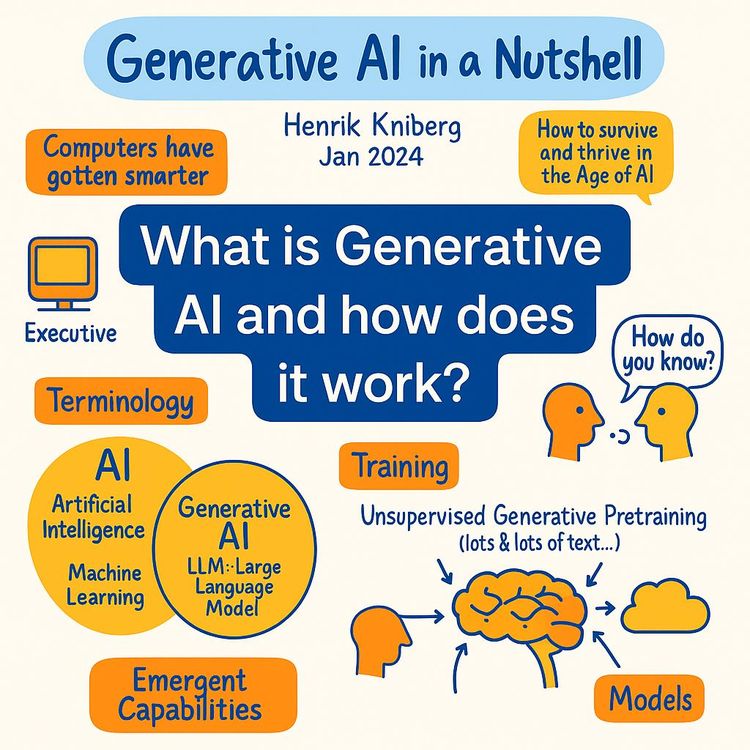
Video Course: What is Generative AI and how does it work?

Video Course: How to Use ChatGPT from Beginner to Professional

Video Course: How to Use Google Gemini for Google Workspace to Boost Productivity

Video Course: How to Use Claude 3.7 AI - Tips for Beginners!

Video Course: ChatGPT for Data Analytics: Full Course - from Beginners to Professional

Video Course: Generating Images and photos With ChatGPT?

Video Course: Generating Images & Photo's with MidJourney

Video Course: Generating Design's with Microsoft Designer and AI

Video Course: Generating Design's with Canva.com and AI
Join 20,000+ Professionals, Using AI to transform their Careers
Join professionals who didn’t just adapt, they thrived. You can too, with AI training designed for your job.