Python Essentials for AI Agents: LLMs, APIs & LangChain (Video Course)
Build AI agents that don't need babysitting. Learn Python, Pandas/NumPy, SQL, APIs, and LLMs (OpenAI, Gemini, Hugging Face). Then wire it all with LangChain and FastAPI to ship a tool-using agent that actually gets work done.
Related Certification: Certification in Building AI Agents with Python, LLMs, APIs & LangChain

Also includes Access to All:
What You Will Learn
- Set up reproducible Python environments and use Jupyter Lab / Colab
- Write idiomatic Python: variables, control flow, functions, modules, and style
- Load, clean, and transform data with Pandas and NumPy
- Visualize data quickly with Matplotlib for EDA and reporting
- Integrate APIs and databases; build APIs with Flask or FastAPI and use SQL/SQLAlchemy
- Connect to OpenAI/Gemini/Hugging Face and build/ orchestrate LLM agents with LangChain, LangGraph, CrewAI, AutoGen while managing secrets securely
Study Guide
Python Essentials for AI Agents - Tutorial
Let's keep it simple. You want to build useful AI agents. Agents that reason, use tools, and solve problems without babysitting. Python is the operating system of that ambition. It's readable, flexible, and has an ecosystem that lets you move from idea to prototype to production without rewriting everything.
This course walks you from zero to confident builder. You'll set up your environment, master core Python, handle data like a pro, integrate with databases and APIs, and plug into Large Language Models (LLMs) from OpenAI, Google, and Hugging Face. Then we'll look at agent frameworks,LangChain, LangGraph, CrewAI, and AutoGen,so you don't reinvent the wheel when you start orchestrating multiple steps, tools, and roles.
By the end, you'll not only know Python,you'll know how to apply it to architect real agents that get real work done. That's the point.
What You'll Build Your Skills On (Why It Matters)
Python is the lingua franca of AI because it lets you think in systems: read and clean data, run models, call services, store results, then iterate fast. The core stack we'll use,NumPy, Pandas, Matplotlib, SQL, requests, Flask/FastAPI, and LLM SDKs,covers the entire lifecycle of an AI agent. From the first "hello world" to a tool-using agent that talks to APIs, consults a database, and writes a report.
Module 1: Set Up Your Development Environment
Good setup quietly compounds speed. Bad setup drains it. Here's what to use and why.
Anaconda Distribution
Anaconda packages Python with most of the data science libraries you'll need plus conda for environment and dependency management. Install it with default settings. Avoid adding Anaconda to PATH unless you know why you're doing it. Create isolated environments per project to prevent version conflicts.
Jupyter Lab/Notebook
Jupyter is perfect for experimentation, analysis, and iterative development. You run code in cells, see output immediately, and can mix narrative with code. Launch it from Anaconda Navigator. It's great for notebooks that document your thinking and results.
Google Colab
Colab gives you a cloud Jupyter Notebook with free GPUs. No local install. Store notebooks in Google Drive, share them easily, and prototype resource-intensive ideas on hardware you might not have.
Virtual Environments (Pro Tip)
Even with Anaconda, know how to create virtual environments. It prevents dependency nightmares and makes your projects reproducible.
Conda environments: conda create -n myenv python=3.11; conda activate myenv
Python venv: python -m venv .venv; source .venv/bin/activate (macOS/Linux) or .venv\Scripts\activate (Windows)
Example 1:
# Create and activate a conda environment
conda create -n agents python=3.11 -y
conda activate agents
Example 2:
# Install core packages
pip install numpy pandas matplotlib requests fastapi uvicorn flask sqlalchemy python-dotenv
Tips
- Keep one environment per project.
- Freeze dependencies: pip freeze > requirements.txt
- Use a .env file with python-dotenv for secrets (never commit it).
Module 2: Core Python Concepts
Think of variables as containers for information. You'll use them for numbers, text, flags, lists,everything. Python is dynamically typed, so you don't declare types; Python infers them. That flexibility helps you move fast.
2.1 Variables and Data Types
Core types
- int: whole numbers (42)
- float: decimal numbers (3.14)
- str: text ('hello')
- bool: True/False
- NoneType: None (no value)
- list: ordered, mutable [1, 'a', 3.14]
- tuple: ordered, immutable (1, 'a', 3.14)
- dict: key-value mapping {'name': 'Ava', 'age': 32}
- set: unique items {1, 2, 3}
Type casting
Use int(), float(), str() to convert. Useful when parsing JSON strings or CSV data.
Example 1:
x = 10
y = "20"
total = x + int(y) # 30
is_ready = True
note = f"Total is {total} and ready: {is_ready}"
Example 2:
record = {"id": "101", "amount": "5.75"}
amount = float(record["amount"])
record_id = int(record["id"])
2.2 Operators
Arithmetic
+ - * / ** % //
- / divides with decimals; // floor-divides (truncates). % gives remainder.
Comparison
== != > < >= <= , return True or False.
Logical
and, or, not , combine conditions.
Example 1:
discount = 0.1 if total > 100 else 0
final_price = total * (1 - discount)
is_vip = True
eligible = (final_price > 50) and is_vip
Example 2:
age = 25
is_student = False
eligible_for_discount = (age < 18) or is_student
2.3 Control Flow and Indentation
Python uses indentation to define blocks. Four spaces. Not tabs. If your indentation is off, your code won't run.
Conditionals
- if: check one condition
- elif: check additional conditions
- else: fall-through
Loops
- for: iterate over a sequence or range
- while: run while a condition is True
Loop control
- break: exit the loop now
- continue: skip to next iteration
- pass: placeholder; do nothing
Example 1 (if/elif/else):
score = 85
if score >= 90:
grade = 'A'
elif score >= 80:
grade = 'B'
else:
grade = 'C'
Example 2 (for/while):
# for loop
for i in range(3):
print("Loop", i)
# while loop with break/continue
n = 0
while True:
n += 1
if n % 2 == 0:
continue # skip even numbers
if n > 7:
break
print("Odd:", n)
Example 3 (pass):
def todo_feature():
pass # implement later
2.4 Functions, Modules, and Pythonic Style
Functions
Reusable blocks defined with def. Support positional, keyword, and default arguments. Return values with return.
Example 1:
def greet(name="World"):
"""Return a friendly greeting."""
return f"Hello, {name}!"
greet()
greet(name="Ava")
Example 2 (lambda and map):
add_ten = lambda x: x + 10
nums = [1, 2, 3]
transformed = list(map(add_ten, nums)) # [11, 12, 13]
Modules and Packages
- Module: a .py file you can import.
- Package: a folder of modules with an __init__.py file (can be empty). Lets you organize larger projects.
Example 3 (module usage):
# file: utils/math_tools.py
def square(x):
return x * x
# file: main.py
from utils.math_tools import square
print(square(4))
Pythonic Patterns (PEP 8 & PEP 257)
- snake_case for functions/variables; CamelCase for classes.
- 4 spaces indentation; blank lines between functions/classes.
- Use docstrings to explain purpose, args, returns.
- Prefer list comprehensions and enumerate.
Example 4 (list comprehension & enumerate):
squares = [x*x for x in range(5)] # [0,1,4,9,16]
for idx, val in enumerate(squares):
print(idx, val)
Tips
- Write comments to explain "why," not "what."
- Keep functions small and focused.
- Use type hints to help tooling: def add(x: int, y: int) -> int:
Module 3: Working with Files (CSV and JSON)
Agents live on data. You'll read, write, and transform CSV and JSON constantly. CSV is great for tabular data. JSON is the language of APIs.
CSV with Pandas
Prefer Pandas for fast, robust CSV handling.
Example 1:
import pandas as pd
df = pd.read_csv("sales.csv")
df["revenue"] = df["price"] * df["quantity"]
df.to_csv("sales_with_revenue.csv", index=False)
Example 2 (csv module if needed):
import csv
with open("simple.csv") as f:
reader = csv.DictReader(f)
rows = list(reader)
JSON with the built-in json module
JSON is for nested, structured data and API payloads.
Example 3:
import json
# Read
with open("config.json") as f:
cfg = json.load(f)
# Write
with open("out.json", "w") as f:
json.dump(cfg, f, indent=2)
Example 4 (parsing API responses):
import requests, json
resp = requests.get("https://httpbin.org/json")
data = resp.json()
subtitle = data.get("slideshow", {}).get("title")
Tips
- Always validate keys with .get() to avoid KeyError.
- Use indent when saving JSON for readability.
- Normalize deeply nested JSON to a DataFrame with pandas.json_normalize when needed.
Module 4: Numerical Computing with NumPy
NumPy's ndarray is a compact, fast structure for numerical work. Vectorized operations remove Python loops and give you speed.
Array Creation
np.array, np.zeros, np.ones, np.arange, np.linspace.
Vectorized Ops
Apply arithmetic to entire arrays at once.
Shape and Broadcasting
Reshape arrays; broadcast smaller arrays across larger ones based on shape rules.
Example 1 (creation and vectorization):
import numpy as np
a = np.array([1,2,3])
b = a * 2 # array([2,4,6])
c = a + np.array([10,10,10])
Example 2 (reshape and broadcasting):
m = np.arange(6).reshape(2,3) # [[0,1,2],[3,4,5]]
col_means = m.mean(axis=0) # [1.5, 2.5, 3.5]
centered = m - col_means # broadcasting subtracts row-wise
Example 3 (stats):
x = np.random.randn(1000)
print(x.mean(), x.std())
Tips
- Keep arrays numeric; avoid mixed types for performance.
- Use dtype explicitly when precision matters (float32 vs float64).
Module 5: Data Manipulation with Pandas
Pandas is spreadsheets on steroids: reading, cleaning, filtering, grouping, reshaping. This is your daily driver for tabular data.
Core Structures
- Series: 1D with labels
- DataFrame: 2D table with labeled rows and columns
I/O
pd.read_csv, df.to_csv, read_excel, to_excel, read_sql, to_sql.
Selection & Filtering
.loc for label-based; .iloc for position-based; boolean masks.
Cleaning
.fillna, .dropna, .drop_duplicates
Aggregation
.groupby, .agg, .pivot_table
Transformation
.apply, .map, vectorized column ops
Example 1 (selecting and filtering):
import pandas as pd
df = pd.DataFrame({"city": ["NY","SF","LA"], "sales": [100, 200, 150]})
sf_row = df.loc[df["city"] == "SF"]
top = df[df["sales"] > 120][["city", "sales"]]
Example 2 (cleaning):
df = pd.read_csv("users.csv")
df = df.drop_duplicates(subset=["email"])
df["age"] = df["age"].fillna(df["age"].median())
Example 3 (groupby):
orders = pd.DataFrame({"user":["a","a","b"], "value":[10, 20, 5]})
totals = orders.groupby("user")["value"].sum().reset_index()
Example 4 (apply and map):
df["city_len"] = df["city"].apply(len)
mapping = {"NY":"New York","SF":"San Francisco","LA":"Los Angeles"}
df["city_name"] = df["city"].map(mapping)
Example 5 (merge):
users = pd.DataFrame({"user":["a","b"], "tier":["pro","free"]})
merged = pd.merge(orders, users, on="user", how="left")
Tips
- Prefer vectorized ops over apply loops for speed.
- Use .astype to set types (e.g., categories for memory savings).
- For huge CSVs, load in chunks: pd.read_csv(..., chunksize=100000).
Module 6: Data Visualization with Matplotlib
Visuals tell you where to look. Even text-heavy agent workflows benefit from quick plots to verify assumptions, trends, and outliers.
Common Plots
- Line: trends over time
- Scatter: relationships between variables
- Bar: category comparisons
- Histogram: distribution
- Box: spread and outliers
Example 1 (line & scatter):
import matplotlib.pyplot as plt
x = [1,2,3,4,5]
y = [2,3,5,7,11]
plt.plot(x, y, label="trend")
plt.scatter(x, y, color="red")
plt.title("Line + Scatter")
plt.xlabel("x"); plt.ylabel("y"); plt.legend()
plt.show()
Example 2 (hist & box):
import numpy as np
data = np.random.randn(1000)
plt.hist(data, bins=30, color="skyblue")
plt.title("Histogram")
plt.show()
plt.boxplot(data)
plt.title("Box Plot")
plt.show()
Example 3 (bar):
cats = ["A","B","C"]
vals = [5, 3, 8]
plt.bar(cats, vals, color=["#1f77b4","#ff7f0e","#2ca02c"])
plt.title("Category Counts")
plt.show()
Tips
- Always label axes and add a legend when relevant.
- Use consistent colors and scales across plots.
- For quick EDA, integrate plots inline in Jupyter.
Module 7: Databases and SQL
Agents don't just compute; they remember. Databases give your system memory, consistency, and query power.
Relational Databases
Data in tables with rows and columns (like a spreadsheet, but transactional and indexed). You query them with SQL: SELECT, INSERT, UPDATE, DELETE.
Connecting Python to SQL
- sqlite3 (built-in) for local or in-memory DBs
- PyMySQL for MySQL
- psycopg2 for PostgreSQL
- SQLAlchemy ORM to work with Python classes instead of raw SQL
Practical Workflow
Use pandas.read_sql_query to execute SQL and get a DataFrame immediately.
Example 1 (SQLite + Pandas):
import sqlite3, pandas as pd
conn = sqlite3.connect("app.db")
df = pd.read_sql_query("SELECT id, name FROM users LIMIT 5;", conn)
Example 2 (SQLAlchemy ORM):
from sqlalchemy import create_engine, Column, Integer, String
from sqlalchemy.orm import declarative_base, sessionmaker
engine = create_engine("sqlite:///app.db")
Base = declarative_base()
class User(Base):
__tablename__ = "users"
id = Column(Integer, primary_key=True)
name = Column(String)
Base.metadata.create_all(engine)
Session = sessionmaker(bind=engine)
session = Session()
session.add(User(name="Ava"))
session.commit()
Example 3 (Writing DataFrame to SQL):
df = pd.DataFrame({"name":["Ava","Noah"]})
df.to_sql("users", conn, if_exists="append", index=False)
Tips
- Use indexes on columns you query often.
- Keep transactions small and explicit when needed.
- For analytics, extract to Pandas via read_sql_query, then transform.
Module 8: Understanding APIs
APIs are the connective tissue of modern systems. They're how your agent talks to the world: fetch data, trigger actions, send messages.
REST Basics
- Endpoint: URL of a resource
- Methods: GET (retrieve), POST (create), PUT (update), DELETE (remove)
- Headers: metadata (auth tokens, content type)
- Body: JSON payload you send with POST/PUT
Security
- API Keys sent via headers (e.g., Authorization: Bearer ...)
- OAuth 2.0 for delegated access with tokens
- Never hardcode secrets in code. Use environment variables or a secret manager.
Example 1 (GET with requests):
import os, requests
url = "https://api.example.com/items"
headers = {"Authorization": f"Bearer {os.environ.get('API_TOKEN')}"}
resp = requests.get(url, headers=headers, timeout=15)
if resp.status_code == 200:
data = resp.json()
else:
print("Error:", resp.status_code, resp.text)
Example 2 (POST with JSON body):
payload = {"name": "Widget", "price": 9.99}
resp = requests.post(url, json=payload, headers=headers)
item = resp.json()
Example 3 (Query params and pagination):
params = {"page": 1, "limit": 50}
items = []
while True:
resp = requests.get(url, headers=headers, params=params)
batch = resp.json()["items"]
if not batch:
break
items.extend(batch)
params["page"] += 1
Tips
- Handle rate limits: if resp.status_code == 429, wait and retry.
- Implement exponential backoff for transient errors.
- Log request IDs and status codes for troubleshooting.
Module 9: Building APIs with Flask and FastAPI
Sometimes your agent is the service. Build APIs that other systems can call,status checks, data access, or kicking off jobs.
Flask
Lightweight and flexible. Great for simple APIs and quick prototypes.
Example 1 (Flask API):
from flask import Flask, request, jsonify
app = Flask(__name__)
@app.get("/health")
def health():
return jsonify({"status": "ok"})
@app.post("/sum")
def sum_values():
data = request.get_json()
return jsonify({"sum": sum(data.get("values", []))})
# Run: flask --app app.py run
FastAPI
Type-hint driven, fast, automatic docs (OpenAPI), built for modern APIs.
Example 2 (FastAPI):
from fastapi import FastAPI
from pydantic import BaseModel
app = FastAPI()
class Item(BaseModel):
name: str
price: float
@app.post("/items")
def create_item(item: Item):
return {"ok": True, "item": item}
# Run: uvicorn app:app --reload
Tips
- Validate input with Pydantic models (FastAPI).
- Add auth (API keys or OAuth) for write endpoints.
- Version your API: /v1/resource.
Module 10: Interacting with Proprietary LLMs
LLMs extend your agent with reasoning, language understanding, and content generation. You'll access them via APIs with provider SDKs.
OpenAI (GPT models)
Get an API key. Store it as an environment variable (OPENAI_API_KEY). Use the SDK to send prompts and get responses.
Example 1 (OpenAI text generation):
import os
from openai import OpenAI
client = OpenAI(api_key=os.environ["OPENAI_API_KEY"])
resp = client.chat.completions.create(
model="gpt-4o-mini",
messages=[{"role": "user", "content": "Summarize the benefits of data cleaning in 3 bullets."}]
)
print(resp.choices[0].message.content)
Google (Gemini models)
Install google-generativeai, store key as GEMINI_API_KEY, and use the SDK.
Example 2 (Gemini):
import os, google.generativeai as genai
genai.configure(api_key=os.environ["GEMINI_API_KEY"])
model = genai.GenerativeModel("gemini-pro")
response = model.generate_content("Give 2 creative taglines for an AI analytics tool")
print(response.text)
Best Practices
- Never hardcode API keys,use env vars or a secret manager.
- Keep prompts deterministic when you need stable output (lower temperature).
- Log prompts and responses for debugging (scrub sensitive data).
Module 11: Using Open-Source Models with Hugging Face
The Hugging Face Hub is a goldmine of open-source models. You can test quickly with their Inference API or run models locally with transformers.
Inference API (hosted)
Fast to start. Good for testing multiple models without setup.
Example 1 (Inference API via requests):
import os, requests
API_URL = "https://api-inference.huggingface.co/models/facebook/bart-large-cnn"
headers = {"Authorization": f"Bearer {os.environ['HF_TOKEN']}"}
payload = {"inputs": "Long article text here..."}
resp = requests.post(API_URL, headers=headers, json=payload)
print(resp.json())
Local Inference with transformers
More control. Requires CPU/GPU resources.
Example 2 (pipeline):
from transformers import pipeline
summarizer = pipeline("summarization", model="facebook/bart-large-cnn")
summary = summarizer("Long text...", max_length=60, min_length=20, do_sample=False)
print(summary[0]["summary_text"])
Example 3 (Q&A pipeline):
qa = pipeline("question-answering", model="distilbert-base-cased-distilled-squad")
answer = qa(question="Who wrote the book?", context="The book was written by Alice.")
print(answer["answer"])
Tips
- Test hosted first, then move local for control and cost.
- Use smaller distilled models for speed; larger ones for quality.
- Cache model downloads to avoid repeated downloads.
Module 12: Frameworks for AI Agent Development
Building an agent from scratch is fun once. After that, frameworks save time with prompts, tools, memory, and workflows built in.
How Agents Work (mental model)
- Core LLM for reasoning
- Tools (functions/APIs) the model can call
- Memory/state to remember context
- A controller to decide "what to do next"
- Optional planning/reflection loops
LangChain
Provides chains, memory, tools, and integrations for LLM apps.
Example 1 (LangChain tool calling, conceptual):
from langchain_openai import ChatOpenAI
from langchain.tools import Tool
from langchain.agents import initialize_agent, AgentType
llm = ChatOpenAI(model="gpt-4o-mini")
def get_weather(city: str) -> str:
return "72F and sunny in " + city
tools = [Tool(name="weather", func=get_weather, description="Get weather by city")]
agent = initialize_agent(tools, llm, agent=AgentType.ZERO_SHOT_REACT_DESCRIPTION, verbose=True)
agent.run("What's the weather in Austin and should I bring sunglasses?")
LangGraph
Represent workflows as graphs with nodes and edges. Build cyclical, stateful processes (like plan-execute-reflect). Great when you need feedback loops and robust state handling.
CrewAI
Orchestrates multiple agents with defined roles (e.g., researcher, writer). Helpful for collaborative, task-oriented pipelines.
AutoGen (Microsoft)
Focuses on multi-agent conversations that solve tasks together. You set up agents with different capabilities and let them interact.
Example 2 (AutoGen minimal conversation):
from autogen import AssistantAgent, UserProxyAgent
assistant = AssistantAgent(name="assistant")
user = UserProxyAgent(name="user", human_input_mode="NEVER")
user.initiate_chat(assistant, message="Draft an outline for a Python agent tutorial")
Tips
- Start with a single-agent chain; add tools next; only then introduce multi-agent orchestration.
- Log tool calls and final decisions to audit behavior.
- Keep prompts modular and versioned.
Module 13: Putting It All Together , A Mini Agent
Let's wire up a toy agent that fetches live data via an API, cleans it with Pandas, then asks an LLM to write a brief summary. Simple, but this pattern repeats everywhere.
Steps
1) Make an authenticated API request (requests)
2) Parse JSON and normalize with Pandas
3) Visual spot-check with Matplotlib (optional)
4) Summarize with an LLM (OpenAI or Hugging Face)
Example 1 (Weather to Summary):
import os, requests, pandas as pd
from openai import OpenAI
# 1) Fetch weather
city = "Austin"
resp = requests.get("https://wttr.in/Austin?format=j1")
data = resp.json()
# 2) Normalize
hourly = pd.json_normalize(data["weather"][0]["hourly"])
hourly["tempF"] = hourly["tempF"].astype(int)
top = hourly[["time","tempF","FeelsLikeF"]].head(8)
# 3) Optional check with print or plot
print(top)
# 4) Summarize with LLM
client = OpenAI(api_key=os.environ["OPENAI_API_KEY"])
prompt = f"Given this weather table: {top.to_dict(orient='records')} Write 3 short bullet insights for a traveler."
resp = client.chat.completions.create(model="gpt-4o-mini", messages=[{"role":"user","content": prompt}])
print(resp.choices[0].message.content)
Example 2 (Finance news aggregation):
- requests to fetch headlines
- Pandas to clean/merge by source and date
- Matplotlib to visualize article counts by topic
- LLM to produce a 1-paragraph executive summary with 3 bullet highlights
Best Practices
- Sanitize inputs before sending to an LLM.
- Log API responses and LLM outputs (omit secrets).
- Keep a retry wrapper for API calls (backoff on 429/5xx).
Security and Key Management (Don't Skip This)
Security isn't optional. Hardcoding keys is a quick way to leak secrets and get locked out of services.
Use Environment Variables
- Store keys in .env (local) or a secret manager (cloud).
- Load with python-dotenv.
Example 1 (.env usage):
# .env file
OPENAI_API_KEY=sk-...
# Python
from dotenv import load_dotenv
import os
load_dotenv()
api_key = os.getenv("OPENAI_API_KEY")
Example 2 (requests with secret):
headers = {"Authorization": f"Bearer {os.environ['SVC_TOKEN']}"}
resp = requests.get("https://api.example.com/secure", headers=headers)
Other Tips
- Rotate keys periodically.
- Scope tokens to minimal permissions.
- Never log raw keys or full credentials.
Troubleshooting and Performance Tips
Error Handling
Wrap external calls in try/except. Distinguish between client errors (4xx) and server errors (5xx). Retry on the latter.
Example 1 (retry/backoff):
import time, requests
for i in range(5):
resp = requests.get("https://api.example.com")
if resp.status_code == 200:
break
wait = 2 ** i
time.sleep(wait)
Data Performance
- Use Pandas vectorization; avoid Python loops.
- For giant files, stream in chunks.
- Use categorical dtypes to reduce memory.
LLM Costs and Latency
- Batch prompts when possible.
- Use smaller, cheaper models for classification or extraction; reserve larger models for reasoning-heavy steps.
- Cache frequent results (e.g., Redis).
Implications & Applications
For Professionals
- Design end-to-end systems: ingestion → clean → store → infer → act → report.
- Build resilient workflows: retries, monitoring, logging.
- Turn repetitive tasks into agents that run on a schedule and alert you when action is needed.
For Students and Educators
- Use notebooks for iterative learning; turn them into scripts/APIs later.
- Teach data handling first, then model interaction, then orchestration.
- Encourage projects with real APIs and datasets.
For Institutions
- Standardize environment management (conda/docker).
- Build internal data APIs for clean access; add LLM endpoints for language tasks.
- Prototype agents for customer support, research synthesis, or internal analytics.
Recommendations: Your Practical Roadmap
For Learners
1) Set Up: Install Anaconda; get comfortable with Jupyter or Colab.
2) Core Python: Drill variables, control flow, functions until you don't think about syntax.
3) Master Pandas: Pick a Kaggle dataset; clean, transform, analyze; write insights.
4) Experiment with APIs: Get an API key (weather, movies), make GETs, parse JSON, handle errors.
5) Explore LLMs: Use Hugging Face Inference API to test summarization or Q&A; try a local transformers pipeline.
For Professionals
1) Best Practices: Enforce PEP 8/PEP 257; secure keys; logging and monitoring.
2) Modularize: Split projects into packages with clear modules and docstrings.
3) Evaluate Agent Frameworks: Start with LangChain; test LangGraph for workflows; consider CrewAI/AutoGen for multi-agent tasks.
Key Insights & Takeaways
- Python is the default standard for AI development thanks to clarity and libraries like NumPy and Pandas.
- Manage environments (conda/venv) to avoid dependency conflicts and ensure reproducibility.
- Data skills pay rent: cleaning, transforming, and summarizing with Pandas is non-negotiable.
- APIs let your agent use external tools and data. requests is your go-to for HTTP in Python.
- Security matters: keep secrets out of code; use env vars or a secret manager.
- Frameworks accelerate development: LangChain, CrewAI, AutoGen help you compose complex systems faster.
- Open source is powerful: Hugging Face gives you models, datasets, and pipelines to experiment and deploy.
Expanded Practice: Common Patterns You'll Reuse
Pattern 1: Load → Clean → Save
import pandas as pd
df = pd.read_csv("raw.csv")
df = df.dropna(subset=["email"]).drop_duplicates("email")
df.to_csv("clean.csv", index=False)
Pattern 2: API → JSON → DataFrame
import requests, pandas as pd
resp = requests.get("https://api.example.com/data")
data = resp.json()
df = pd.json_normalize(data["items"])
Pattern 3: DB → Analysis → Report
import sqlite3, pandas as pd
conn = sqlite3.connect("prod.db")
df = pd.read_sql_query("SELECT * FROM sales WHERE date >= '2023-01-01';", conn)
summary = df.groupby("region")["revenue"].sum().reset_index()
summary.to_csv("rev_by_region.csv", index=False)
Deep Dive Examples Per Major Concept (Reinforcement)
Core Python Examples
1) List comprehension vs loop:
vals = [1,2,3,4]
evens = [v for v in vals if v % 2 == 0]
# vs
evens2 = []
for v in vals:
if v % 2 == 0:
evens2.append(v)
2) enumerate for index+value:
for i, city in enumerate(["NY","SF","LA"]):
print(i, city)
NumPy Examples
1) Broadcasting add column mean:
m = np.array([[1,2,3],[4,5,6]])
m_centered = m - m.mean(axis=0)
2) Dot product and matrix multiply:
a = np.array([1,2,3])
b = np.array([4,5,6])
dot = a @ b # 32
M = np.array([[1,2],[3,4]])
N = np.array([[5,6],[7,8]])
prod = M @ N
Pandas Examples
1) Pivot table to summarize:
df = pd.DataFrame({"region":["E","E","W"], "cat":["A","B","A"], "rev":[10,20,30]})
pivot = pd.pivot_table(df, values="rev", index="region", columns="cat", aggfunc="sum", fill_value=0)
2) Datetime handling:
df["date"] = pd.to_datetime(df["date"])
monthly = df.groupby(pd.Grouper(key="date", freq="M"))["rev"].sum()
Matplotlib Examples
1) Multiple subplots (simple):
plt.figure(figsize=(8,4))
plt.subplot(1,2,1); plt.plot([1,2,3],[2,3,5]); plt.title("Line")
plt.subplot(1,2,2); plt.hist(np.random.randn(500)); plt.title("Hist")
plt.tight_layout(); plt.show()
2) Scatter with color by category:
x = [1,2,3,4]; y = [10,9,12,7]; colors = ["r","g","r","g"]
plt.scatter(x,y,c=colors); plt.title("Scatter by Category"); plt.show()
SQL Examples
1) Basic CRUD (conceptual):
- SELECT name FROM users WHERE active=1;
- INSERT INTO users (name, email) VALUES ('Ava','a@example.com');
2) Joins:
- SELECT o.id, u.name FROM orders o JOIN users u ON o.user_id = u.id;
API Examples
1) OAuth 2.0 high-level:
- Redirect user to provider auth URL → provider redirects back with code → exchange code for token → use token in Authorization header.
2) Error handling:
if resp.status_code >= 500: retry
elif resp.status_code == 401: refresh token
elif resp.status_code == 429: wait based on Retry-After header
LLM Examples
1) Prompt templating:
template = "You are a helpful analyst. Summarize this data: {data}"
prompt = template.format(data=top.to_dict(orient='records'))
2) Tool-augmented LLM (concept):
- If user asks for weather, call get_weather() tool; else answer directly.
Quick Verification Checklist (Project Briefing Coverage)
- Python fundamentals: variables, data types, operators, control flow, functions , covered with multiple examples and tips.
- Environment setup: Anaconda, Jupyter Lab/Notebook, Google Colab , covered with installation guidance and usage tips.
- Coding best practices: PEP 8, PEP 257, Pythonic patterns , covered with examples (list comprehensions, enumerate, docstrings).
- NumPy fundamentals: ndarray, creation, vectorization, reshape, broadcasting , covered with examples.
- Pandas essentials: Series/DataFrame, I/O, selection/filtering, cleaning, aggregation, transformation, merging , covered with examples.
- File handling: CSV and JSON , covered with examples using Pandas and json.
- Databases and SQL: fundamentals, Python connectors, SQLAlchemy ORM, pandas.read_sql_query , covered with examples (SQLite, ORM).
- API integration: REST concepts, methods, security (API keys, OAuth 2.0), requests usage , covered with examples including pagination and retries.
- Building APIs: Flask and FastAPI , covered with minimal, practical implementations.
- LLMs (proprietary): OpenAI and Google Gemini SDK usage, secure key handling , covered with examples.
- LLMs (open-source): Hugging Face Inference API and local transformers pipeline , covered with examples.
- Agent frameworks: LangChain, LangGraph, CrewAI, AutoGen , introduced with practical notes and examples.
- Additional study depth: Data visualization with Matplotlib , added and demonstrated.
- Security: environment variables, python-dotenv , covered with examples.
- Recommendations and applications for learners, professionals, institutions , included.
Conclusion: Build the Muscle, Then Build the Agents
You just walked through the stack that powers modern AI agents. Clean Python. Solid data handling. Visuals that validate your thinking. Databases for memory. APIs to plug into anything. And LLMs to reason, summarize, and create. Then the frameworks that stitch it all together,so your agent can not only think, but do.
The real unlock isn't memorizing syntax. It's turning these skills into workflows: load → clean → analyze → call services → store → summarize → act. Start small. Automate a weekly report. Wrap a model call in an API. Wire up a tool-using agent with one reliable function. Each iteration tightens your feedback loop, and momentum compounds. That's how you go from dabbling to deploying.
Apply what you've learned this week. Pick a dataset and an API. Build a script that fetches data, cleans it, visualizes one insight, and asks an LLM to draft a short summary. Then schedule it. That's an agent in the wild. Keep going.
Appendix: Extra Examples and Best Practices You'll Reuse
Reading large CSVs in chunks
import pandas as pd
chunks = pd.read_csv("big.csv", chunksize=100_000)
total = 0
for chunk in chunks:
total += chunk["revenue"].sum()
print(total)
JSON normalization
from pandas import json_normalize
data = {"users":[{"id":1,"profile":{"name":"Ava"}},{"id":2,"profile":{"name":"Noah"}}]}
df = json_normalize(data["users"]) # columns: id, profile.name
FastAPI with query params and path params
from fastapi import FastAPI
app = FastAPI()
@app.get("/users/{user_id}")
def get_user(user_id: int, verbose: bool = False):
return {"id": user_id, "verbose": verbose}
SQLAlchemy query patterns
users = session.query(User).filter(User.name.like("%A%")).all()
first = session.query(User).order_by(User.id.desc()).first()
Requests session reuse
s = requests.Session()
s.headers.update({"Authorization": "Bearer ..."})
resp = s.get("https://api.example.com/items")
Matplotlib style settings
plt.style.use("seaborn-v0_8")
plt.rcParams["figure.figsize"] = (8,5)
Prompt hygiene
- Keep instructions first and clear.
- Provide structured context (JSON, bullet points).
- Constrain output format when parsing (e.g., "Return JSON with keys: ...").
Frequently Asked Questions
This FAQ zeroes in on the most common questions people ask while learning Python for AI agents,setup, core syntax, data work, APIs, LLMs, agent frameworks, deployment, and real-world pitfalls. Each answer is practical, business-focused, and concise so you can move from "how" to "done" without spinning your wheels.
Part 1: Python Fundamentals
What is Python and why is it a preferred language for AI and data science?
Python is a high-level, interpreted language known for readability and a massive library ecosystem. That mix makes it ideal for AI and data work. Why it matters: Less boilerplate means faster iteration, fewer bugs, and quicker experiments.
Key points: Simple syntax, cross-platform support, and libraries like NumPy, Pandas, Matplotlib, and Scikit-learn cut development time. Community support speeds troubleshooting and learning. It's open source and widely adopted across companies and research labs.
Example: A pricing team can load sales data with Pandas, run demand forecasts using Scikit-learn, and visualize outcomes with Matplotlib,all in one notebook, then connect the workflow to an LLM to summarize insights in plain language for executives.
What is Anaconda and why is it a recommended setup for data science?
Anaconda is a Python distribution with a package manager (conda), popular libraries, and tools like Jupyter preinstalled. Why it matters: It removes setup friction, prevents dependency conflicts, and standardizes environments across teams.
Key points: Ships with NumPy, Pandas, Matplotlib, and Jupyter Lab/Notebook; supports isolated environments for different projects; Anaconda Navigator offers a GUI for launching tools; easy to reproduce environments on new machines or servers.
Example: Your data team can pin an environment for a churn model. New hires run one command to mirror it, avoiding the "works on my machine" trap and speeding onboarding.
What is the difference between Jupyter Lab and Google Colab?
Both are interactive notebook environments; they differ in where code runs and how resources are managed. Why it matters: Pick based on control, compute needs, and collaboration style.
Jupyter Lab: Runs locally; full control over packages and files; uses your machine's CPU/GPU; ideal for private data and custom dependencies.
Google Colab: Cloud-based; no install; easy sharing; access to free or paid GPUs; some session/time limits; good for quick experiments or teaching.
Example: Use Colab to prototype a recommendation model with a GPU, then move to Jupyter Lab on a secured workstation to integrate with internal data and private APIs.
What are the fundamental data types in Python?
Python's core types cover numbers, text, logic, emptiness, and collections. Key points: int, float, str, bool, NoneType; collections: list (ordered, mutable), tuple (ordered, immutable), dict (key-value), set (unique items). Use type() to inspect variables.
Why it matters: Picking the right type reduces bugs and improves performance (e.g., sets for fast membership checks).
Example: For a customer profile: use a dict for attributes ({'id': 123, 'tier': 'gold'}), a list for recent purchases, a set for unique tags, and a tuple for a fixed schema (id, name) used as a join key.
What are the rules and conventions for naming variables in Python?
Follow rules to avoid syntax errors and conventions to keep code readable. Rules: Start with a letter or underscore; case-sensitive; use letters, digits, underscores; avoid reserved keywords like if/for/def/class.
Conventions: snake_case for variables/functions, PascalCase for classes, UPPER_SNAKE for constants; use descriptive names.
Why it matters: Clear naming reduces confusion and accelerates code reviews.
Example: Good: total_revenue_q3, calculate_discount(price), CustomerProfile. Poor: x1, myvar, data2.
How do conditional statements work in Python?
Use if/elif/else to branch logic based on conditions. Indentation defines code blocks (typically four spaces). Why it matters: Most business logic is decisions: pricing tiers, eligibility, approvals.
Key points: Combine conditions with and/or/not; keep conditions readable; extract complex logic into functions; avoid deep nesting when possible.
Example: Approve a discount if customer is 'gold' and cart_value > 200, else require manager review. This logic maps directly to if/elif blocks and can be unit tested to prevent revenue leakage.
What is the difference between for and while loops?
for loops iterate over a known sequence or range; while loops continue until a condition changes. Why it matters: Correct choice prevents infinite loops and improves clarity.
for: Best for lists, dicts, ranges, files, API pages. while: Best when you don't know the iteration count ahead of time (e.g., poll an API until status == 'ready').
Example: Use for i in range(12) to forecast 12 months; use while pending_tasks and retries < 3 to process a queue with backoff. Keep exit conditions obvious and tested.
Part 2: Writing Clean, Fast Python
What are best practices for writing functions and docstrings?
Functions should do one thing well and explain themselves. Key points: Use clear names; limit parameters; set sensible defaults; avoid side effects; return values instead of mutating globals; document with concise docstrings (PEP 257). Follow PEP 8 style.
Why it matters: Small, documented functions are easier to test, reuse, and replace.
Example: def compute_ltv(revenue_series, churn_rate=0.02) with a docstring describing inputs/outputs lets analysts reuse it across products without re-reading logic. Add type hints (e.g., revenue_series: pd.Series) for better editor support.
How are lists, tuples, sets, and dicts used in real business cases?
Pick structures based on access patterns. Lists: Ordered sequences (e.g., daily sales). Tuples: Fixed records (e.g., (store_id, date)). Sets: Fast uniqueness/membership (e.g., deduplicate SKUs). Dicts: Keyed lookups (e.g., sku_to_price).
Why it matters: The right structure simplifies code and speeds operations.
Example: Use a set to quickly check if a user_id is in a fraud watchlist; use a dict to map region codes to tax rates; use a list to collect results for plotting; use tuples as stable keys in a dict {(store_id, week): revenue}.
How do I handle CSV and JSON files efficiently?
Use Pandas for tabular CSVs and the json module for nested JSON,or Pandas json_normalize for semi-structured data. Key points: Specify dtypes on read to reduce memory; use chunksize for large files; validate columns; handle missing values early; always set index=False when writing CSVs to avoid extra columns.
Why it matters: Prevents slow reads, memory errors, and schema drift.
Example: Large exports from a finance system can be read in chunks (read_csv(..., chunksize=100000)), aggregated, then appended to a database without loading everything into memory.
When should I use NumPy arrays instead of Python lists?
Use NumPy when you perform numeric operations over large data. Key points: Vectorized math on arrays is faster and uses less memory than Python loops; broadcasting simplifies multi-dimensional math; integrates with Pandas and SciPy.
Why it matters: Speedups of 10-100x on numeric workloads are common.
Example: Price optimization: compute margins for millions of items with one array operation (prices - costs) instead of a Python loop. For small, irregular data or mixed types, lists are fine.
Certification
About the Certification
Get certified in AI agent development with Python, LLMs, APIs & LangChain. Prove you can use Pandas/NumPy and SQL, integrate OpenAI/Gemini/Hugging Face, build FastAPI services, and ship tool-using agents that automate real work.
Official Certification
Upon successful completion of the "Certification in Building AI Agents with Python, LLMs, APIs & LangChain", you will receive a verifiable digital certificate. This certificate demonstrates your expertise in the subject matter covered in this course.
Benefits of Certification
- Enhance your professional credibility and stand out in the job market.
- Validate your skills and knowledge in cutting-edge AI technologies.
- Unlock new career opportunities in the rapidly growing AI field.
- Share your achievement on your resume, LinkedIn, and other professional platforms.
How to complete your certification successfully?
To earn your certification, you’ll need to complete all video lessons, study the guide carefully, and review the FAQ. After that, you’ll be prepared to pass the certification requirements.
Other AI Video Courses
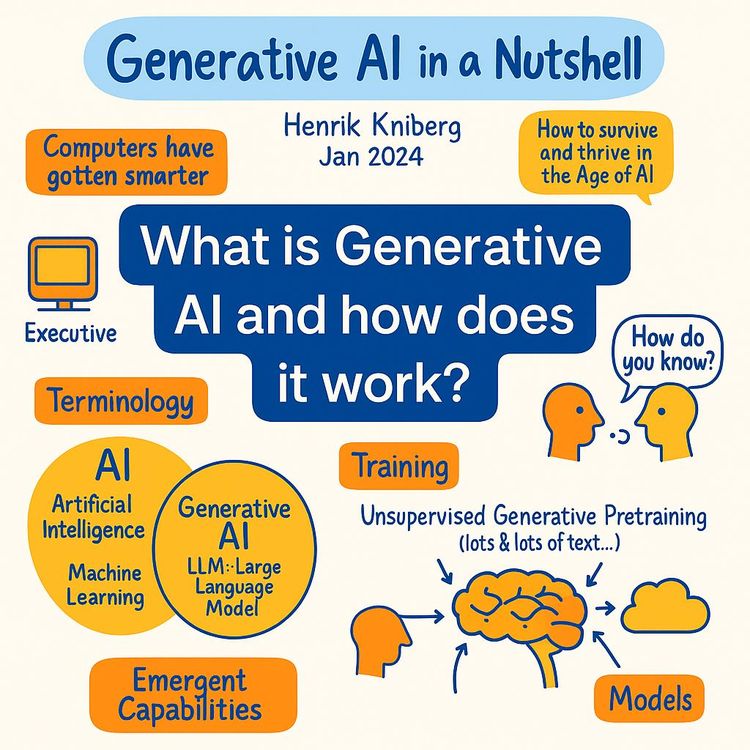
Video Course: What is Generative AI and how does it work?

Video Course: How to Use ChatGPT from Beginner to Professional

Video Course: How to Use Google Gemini for Google Workspace to Boost Productivity

Video Course: How to Use Claude 3.7 AI - Tips for Beginners!
Video Course: ChatGPT for Data Analytics: Full Course - from Beginners to Professional

Video Course: Generating Images and photos With ChatGPT?

Video Course: Generating Images & Photo's with MidJourney

Video Course: Generating Design's with Microsoft Designer and AI

Video Course: Generating Design's with Canva.com and AI
Join 20,000+ Professionals, Using AI to transform their Careers
Join professionals who didn’t just adapt, they thrived. You can too, with AI training designed for your job.