SAP Data Intelligence Course: Orchestration, ML & Kubernetes (Video Course)
Data silos and AI projects that never ship? This course offers a practical path to a unified data strategy. Get hands-on with SAP Data Intelligence, from Docker and Kubernetes to deploying real ML models. Learn to break down silos and deliver business value.
Related Certification: Certification in Orchestrating Data & ML Pipelines on Kubernetes
Also includes Access to All:
What You Will Learn
- Explain the business case for SAP Data Intelligence and common causes of failed data initiatives
- Describe the platform architecture, microservices, NATS messaging, and Kubernetes orchestration
- Build and manage Docker images and containerized operators for the platform
- Create, schedule, and monitor data pipelines using the Pipeline Modeler
- Use Connection Management and the Metadata Explorer to discover, profile, and prepare data at source
- Deploy, version, and monitor machine learning models, including pre-built services and BYOM workflows
Study Guide
# SAP Data Intelligence Full Course | ZaranTech ## Introduction: Why This Course Exists Let's be honest about something that most technical training won't tell you. The data world is a mess. Not because we don't have enough tools,we have too many. Every vendor promises the moon, and somehow, most organizations end up with a Frankenstein of point solutions that barely talk to each other. That's where SAP Data Intelligence comes in, and that's why this course exists. SAP Data Intelligence is not just another tool in the enterprise stack. It's SAP's answer to a question that's been plaguing organizations for years: how do we actually get value from our data without losing our minds in the process? The platform brings together data orchestration, governance, machine learning, and pipeline management into one unified environment. No more stitching together five different services and hoping they work well together. Here's what we're going to do in this course. We're going to strip away the marketing hype and get into the actual mechanics of SAP Data Intelligence. We'll start with the business case,why this platform matters and what problems it actually solves. Then we'll dive into the technical architecture, including the containerization and orchestration technologies that make everything tick. We'll get our hands dirty with Docker and Kubernetes, because you can't understand SAP Data Intelligence without understanding the foundation it's built on. We'll explore the core components, from Connection Management to the Metadata Explorer, and we'll look at real-world implementation strategies. By the time you finish this course, you'll have a thorough understanding of how SAP Data Intelligence works, why it's structured the way it is, and how to leverage it in your organization. Whether you're a data engineer, data scientist, architect, or IT leader, this course will give you the knowledge you need to work with this platform effectively. Let's get into it. --- ## Section 1: The Data Problem Nobody Wants to Admit ### The Scale of the Crisis Here's a number that should stop you in your tracks: by a recent estimate, approximately 463 exabytes of data are generated every single day worldwide. That's 463 billion gigabytes. Every day. Let me put that in perspective,that's equivalent to over 212 million DVDs being produced daily. The data isn't slowing down either. Organizations are generating more information every year, and they're struggling to keep up. But here's the thing that's even more concerning. Despite all this data, 86% of enterprises report that they are not extracting maximum value from their information assets. The data exists, but the value doesn't. Something is broken in how we manage and leverage data, and it's costing us dearly. ### Why Data Initiatives Fail Through my work with countless organizations, I've found that data initiatives fail for two primary reasons, and they're not what you might expect. The first reason is data problems. The data itself is insufficient, incorrect, or conflicting. You have one system saying a customer is in New York and another saying they're in New Jersey. You have duplicate records, missing fields, inconsistent formatting. The data quality is so poor that no one trusts the insights derived from it, and honestly, they shouldn't. The second reason is more subtle but equally damaging: a failure to understand the business problem. Organizations get so caught up in the technology that they forget to ask the fundamental question: what business challenge are we trying to solve? They build sophisticated data pipelines and machine learning models without a clear understanding of the problem they're solving for. It's like building a high-performance race car when you needed a reliable family sedan. ### The Cost of Getting It Wrong The financial impact of poor data management is staggering. In 2011, the average organization lost approximately $1.07 million per year due to data complexity and poor data quality. By 2017, that number had risen significantly, and it's only continued to climb. Business disruption costs alone average around $5 million per incident, with productivity losses adding another $3 million on top. But it's not just about money. Data silos create a culture of mistrust and inefficiency. When different departments can't see the same version of the truth, decision-making becomes political rather than data-driven. Your sales team might be targeting accounts that your finance team considers high-risk, and no one knows because the systems don't talk to each other. ### The Machine Learning Promise Here's where it gets interesting. Machine learning has the potential to transform how organizations operate. Take Netflix, for example. Their recommendation engine saves them approximately $1 billion annually. A billion dollars. They're using data to predict what you want to watch before you even know you want to watch it. And they're not alone. Streaming platforms, e-commerce giants, and forward-thinking enterprises are using machine learning to drive personalization, optimize inventory, and predict customer behavior. But here's the catch: 8.5 out of 10 early data science initiatives fail to reach production. The models work in the lab, but they never make it into the real world. Why? Because organizations are missing the infrastructure to support them. They have data scientists building models in isolation, but no way to deploy those models at scale, monitor their performance, or integrate them into business processes. This is where SAP Data Intelligence enters the picture. --- ## Section 2: What Is SAP Data Intelligence, Really? ### The Official Definition, Translated SAP Data Intelligence is a comprehensive solution designed to deliver data-driven innovation and intelligence across the enterprise. That's the official line. But what does that actually mean in practice? Think of SAP Data Intelligence as the central nervous system for your enterprise data. It connects to all your data sources, helps you understand what you have, allows you to build pipelines to process and transform that data, and enables you to deploy machine learning models that generate insights and drive action. All of this happens in one place, with one interface, and one governance model. ### What It Actually Does Let me break down the core capabilities into digestible pieces. **Access and Connect**: SAP Data Intelligence connects to virtually any data source you can imagine. We're talking SAP systems like ECC and S/4HANA, databases like SQL Server and Oracle, cloud storage like AWS S3 and Azure Data Lake, and everything in between. The platform has built-in connectors that handle the heavy lifting of establishing secure connections. **Govern and Discover**: Through comprehensive metadata management, the platform helps you understand what data you have, where it came from, and what it means. You can catalog data assets, track data lineage, and apply governance policies. This isn't just nice to have,it's essential for compliance with regulations like GDPR and CCPA. **Prepare and Enrich**: The Metadata Explorer allows you to profile and prepare data directly at the source, without extracting it into the platform first. You can join datasets, replace null values, and clean up inconsistencies. This saves time, storage, and computing resources. **Build Powerful Pipelines**: The Pipeline Modeler provides a drag-and-drop interface for creating complex data workflows. You can schedule pipelines to run on a recurring basis, monitor their execution in real-time, and generate alerts when something goes wrong. It's like ETL on steroids, but more agile and flexible. **Deploy Intelligent Applications**: This is where the magic happens. The platform includes machine learning capabilities that allow you to build, train, and deploy models directly within SAP Data Intelligence. You can use pre-built ML services for tasks like image classification and similarity scoring, or you can bring your own models and deploy them at scale. **Monitor and Orchestrate**: The platform provides end-to-end visibility into your data ecosystem. You can monitor pipeline execution, track model performance, and orchestrate complex workflows that span multiple systems and teams. ### What It's Not Before we go further, let me clear up a common misconception. SAP Data Intelligence is not just a machine learning or AI tool. Yes, ML is an important pillar, but it's only one piece of the puzzle. Many organizations adopt SAP Data Intelligence primarily for data orchestration and never touch the ML capabilities. The platform is designed to manage the entire data lifecycle, from ingestion to insight, and everything in between. --- ## Section 3: The Architecture of SAP Data Intelligence ### The Three Pillars The architecture of SAP Data Intelligence can be understood through three interconnected functional pillars: **Data Governance**: This pillar handles metadata management, data preparation, and access governance. It's about understanding and managing your data assets. **Data Orchestration and Monitoring**: This is where pipelines are scheduled, executed, and monitored. It's the operational heart of the platform. **Data Pipelining and Processing**: This is where the actual data work happens,ingestion, transformation, and model building. These three pillars work together seamlessly, but they're also independent. If one component fails, the others continue to function. That's by design, and it's a key differentiator from legacy platforms. ### Microservices Architecture Traditional enterprise software often follows a monolithic architecture, where all components are bundled together into a single application. If one component crashes, the entire system goes down. SAP Data Services, the predecessor to Data Intelligence, had this problem. If the central management repository failed, the whole platform became inaccessible. SAP Data Intelligence, by contrast, uses a microservices architecture. Each functional component,the Pipeline Modeler, Metadata Explorer, Machine Learning tooling, Connection Management, System Management,runs as an independent Docker image within its own Kubernetes pod. This means if the Metadata Explorer crashes, the Pipeline Modeler keeps running. You can scale components independently based on demand, and updates can be deployed without taking the entire platform offline. ### The NATS Messaging System So how do all these independent services communicate with each other? The answer is NATS, an open-source messaging system written in Go. NATS enables efficient message passing between processes, regardless of the programming language used for each sub-engine. This is crucial because SAP Data Intelligence supports multiple sub-engines for operator execution: Python, C++, ABAP, and a default engine for JavaScript and other basic operators. Each sub-engine can run in its own Dockerized container within the pipeline environment. When you create a custom Python operator with special dependencies,say, you need the pandas library or scikit-learn,you can define those dependencies in a Docker file, and the operator runs in its own isolated environment. ### The SAP Strategy SAP's strategy for Data Intelligence can be summed up as "one solution to connect to anything." The platform integrates tightly with SAP applications through various APIs and connectors, but it's equally at home in a heterogeneous enterprise environment. Whether you're connecting to SAP BW, Azure Data Lake, or an on-premise Oracle database, SAP Data Intelligence has you covered. --- ## Section 4: Docker and Containerization ### The Problem Docker Solves Let me tell you about one of the most frustrating experiences in software development: "it works on my machine." You've been there. You write code on your laptop, and it works perfectly. You push it to the test environment, and suddenly everything breaks. The issue is almost always an environment mismatch,a missing library, a different version of a dependency, a configuration file that's in the wrong place. Traditional virtual machines were supposed to solve this, but they're not practical at scale. A single VM can consume 32GB of RAM and 100GB of disk space. Now imagine trying to maintain hundreds of VMs for testing purposes. It's expensive, slow, and a nightmare to manage. ### Containers to the Rescue Containers solve this problem by packaging the application with all its dependencies,operating system files, libraries, software,into a single, self-contained unit. Think of it like a "plug-and-play" USB device. You can take a container running on your laptop and deploy it to any environment that supports containers, and it will behave exactly the same way. Here's a comparison that puts things in perspective. A full Ubuntu operating system might take up 2 to 2.5 GB of disk space. An Ubuntu Docker image is only about 73 MB. That's because a container shares the host operating system's kernel and only includes the minimum files needed to run the specific software. It's faster to deploy, uses fewer resources, and is more portable. ### Images vs. Containers A common point of confusion is the difference between a Docker image and a Docker container. Let me clear that up. A Docker image is a read-only template. It contains the application code, runtime, system tools, and libraries needed to run the software. You can think of it as a recipe or a blueprint. Images are stored in a repository, like Docker Hub, where they can be pulled and used by anyone. A container, on the other hand, is a runnable instance of an image. It's what happens when you take that recipe and actually cook the meal. You can create multiple containers from the same image, and each one is isolated from the others. When you make changes inside a container,say, installing additional software or modifying configuration files,those changes are ephemeral. They only exist for the lifetime of that specific container. When the container is deleted, those changes are lost. ### Essential Docker Commands Let me walk you through some essential Docker commands that you'll use on a regular basis. I'll show you the command, what it does, and why you'd use it. First, to install Docker on Ubuntu, you'd update your package repositories and then install the docker.io package: sudo apt-get update sudo apt-get install docker.io Once Docker is installed, you can pull images from Docker Hub: sudo docker pull ubuntu This downloads the Ubuntu image to your local machine. You can see all your local images with: sudo docker images To run a container from an image, use the `docker run` command. The `-it` flags enable interactive mode, and `-d` runs the container in detached mode: sudo docker run -it -d ubuntu This gives you the container ID, which you can use to execute commands inside the container: sudo docker exec -it [container-id] bash This drops you into a bash shell inside the running container. You can install software, modify files, and do whatever you need to do. When you're done, exit the shell, and the container keeps running. If you want to save the changes you've made to a container as a new image, you can commit them: sudo docker commit [container-id] username/imagename And then push that image to Docker Hub: sudo docker push username/imagename ### Docker Files Manually configuring containers is fine for learning, but in production, you'll want to automate the process using Docker files. A Docker file is a text file that contains a series of commands to build an image. Here's a simple example: FROM ubuntu RUN apt-get update RUN apt-get install -y apache2 ADD ./ /var/www/html CMD ["apachectl", "-D", "FOREGROUND"] The `FROM` command specifies the base image. The `RUN` commands execute shell commands during the build process. The `ADD` command copies files from the host system into the image. The `CMD` command specifies the command to run when the container starts. There are two commands that are often confused: `CMD` and `ENTRYPOINT`. The key difference is that `CMD` can be overridden when you run the container, while `ENTRYPOINT` always executes, even if you pass additional parameters. Use `CMD` for the main command and `ENTRYPOINT` for commands that should always run. --- ## Section 5: Kubernetes and Container Orchestration ### Why Kubernetes? Docker is excellent for running individual containers, but what happens when you have hundreds or thousands of containers to manage? What happens when a container crashes and needs to be restarted? What if you need to scale a service from 2 instances to 20 to handle increased traffic? This is where Kubernetes comes in. Kubernetes, often abbreviated as K8s, is an open-source container orchestration platform originally developed by Google. It automates the deployment, scaling, and management of containerized applications. Think of it as the air traffic controller for your containers. ### Kubernetes Architecture A Kubernetes cluster consists of two types of nodes: master nodes and worker nodes. The master node is the control plane. It's responsible for scheduling containers, monitoring the health of nodes and pods, and managing the overall cluster state. The master node includes components like the API server, the scheduler, and the controller manager. Worker nodes are where the actual workloads run. Each worker node contains a `kubelet`, which is an agent that communicates with the master node and manages the containers running on that node. Worker nodes also host the container runtime, which is typically Docker. ### Pods: The Building Blocks In Kubernetes, the smallest deployable unit is called a pod. A pod can contain one or more containers that share the same network and storage resources. Containers within the same pod are co-located and co-scheduled, meaning they run on the same physical or virtual machine. In most cases, you'll have one container per pod, but there are scenarios where you might want to have multiple containers in a pod,for example, a web server and a log shipper that need to share the same filesystem. ### Deployments A deployment is a Kubernetes object that defines the desired state for a set of pods. You specify the container image to use, the number of replicas (how many instances of the pod to run), and other configuration options. Kubernetes handles the rest. Here's an example of a deployment YAML file: yaml apiVersion: apps/v1 kind: Deployment metadata: name: nginx-deployment labels: app: nginx spec: replicas: 3 template: metadata: labels: app: nginx spec: containers: - name: nginx image: nginx:1.15.2 ports: - containerPort: 80 This deployment tells Kubernetes to ensure that three pods running the nginx image are always up and running. If one of those pods crashes, Kubernetes automatically creates a new one to replace it. ### Services and Ingress Pods are ephemeral. They can be created and destroyed at any time, and each time a pod is recreated, it gets a new IP address. This makes it difficult for other applications to connect to your services. That's where services come in. A Kubernetes service is a stable endpoint that sits in front of a set of pods. It acts as an internal load balancer, distributing traffic across the pods that match its selector. When a pod is created or destroyed, the service automatically updates its list of endpoints. For external access, you'll typically use an Ingress Controller. This is a specialized load balancer that routes HTTP and HTTPS traffic to the appropriate services based on URL paths or hostnames. ### Namespaces Namespaces are a way to divide a Kubernetes cluster into multiple virtual clusters. They're useful when you have multiple teams or projects sharing the same underlying infrastructure. Each namespace has its own set of resources, and you can apply access controls to ensure that teams can only modify their own resources. ### Practical Example Let me walk you through a practical example. Suppose you've deployed SAP Data Intelligence in a production environment. The platform consists of several microservices: a pipeline modeler, a metadata explorer, machine learning tooling, a system management component, and an embedded SAP HANA instance. Each of these runs in its own pod. If the metadata explorer pod crashes, Kubernetes automatically restarts it. Meanwhile, the pipeline modeler continues to function without interruption. If you notice that the pipeline modeler is running low on resources, you can scale it horizontally by increasing the number of replicas. Kubernetes will distribute the additional pods across the available worker nodes. You can use `kubectl` commands to interact with the cluster: - `kubectl get pods` , list all pods - `kubectl get pods -o wide` , list pods with additional details like IP address and node - `kubectl get deployments` , list all deployments - `kubectl logsFrequently Asked Questions
Is SAP Data Intelligence the same as SAP Data Warehouse Cloud or SAP HANA?
No, these are distinct but complementary products. SAP HANA is an in-memory database that stores and processes data at high speed. SAP Data Warehouse Cloud is a modern data warehousing solution that uses HANA under the hood for modeling, persistence, and consumption of data for reporting. SAP Data Intelligence sits on top of these and other systems as an orchestration and governance layer.
Think of it this way: Data Intelligence is the conductor of an orchestra. It tells all the different instruments (databases, data lakes, applications, ML models) when to play and how to work together in harmony. It doesn't replace the instruments; it coordinates them. It connects to your HANA databases, your S/4HANA systems, your cloud storage, and even external tools, managing the flow of data between them. It also provides the governance and metadata management to ensure the entire data ecosystem is trustworthy and understandable.
What business problems does SAP Data Intelligence actually solve for a company?
The core problems it solves stem from data silos and disconnected tools. Most companies have data scattered across SAP and non-SAP systems, making it difficult to get a single, trusted view. This leads to three major issues: inefficient processes, poor decision-making, and failed data science projects. Data Intelligence tackles this by providing a single platform to connect everything.
Practically, it means a business can: automate the flow of data between systems, ensure data quality and governance, and finally get machine learning models into production. For example, instead of a data engineer manually exporting data from an ERP system to a data lake for a data scientist to analyze, a pipeline in Data Intelligence can do this automatically on a schedule. This frees up skilled staff and reduces errors. It also allows a business to answer complex questions, like "Why are customers churning?" by combining operational data (purchases, support tickets) with experience data (surveys, social media sentiment) in a governed, reproducible way.
Is SAP Data Intelligence just a tool for data scientists and machine learning?
This is a common misconception. While Data Intelligence has strong machine learning capabilities, that is only one part of its value proposition. The platform is fundamentally about data orchestration, integration, and governance. It is built for data engineers, data stewards, and data analysts, not just data scientists.
Many customers adopt it initially for pure data orchestration use cases, such as moving data from an on-premise ECC system to a cloud data lake or automating complex ETL processes. They might not use a single ML feature for the first year. The ML tooling is a powerful component for those who need it, allowing teams to build, deploy, and monitor models. But the platform's core strength is providing a unified, governed environment where all data work,from simple integration to advanced AI,can happen. It's a platform for the entire data team.
Why do most data science projects fail to reach production, and how does this platform help?
Industry reports consistently show that a vast majority of data science initiatives fail to make it into production. The root causes usually fall into two main categories. First, there are data problems: the data is insufficient, wrong, or conflicting, and data quality is poor. Second, there's a lack of business alignment: the team doesn't fully understand the business problem they're trying to solve.
SAP Data Intelligence helps address both of these directly. The Metadata Explorer allows data scientists to profile and preview data at the source before building models, ensuring they understand its quality and structure upfront. This prevents wasted effort on bad data. The platform also facilitates collaboration between business and technical teams by providing a governed environment where data is cataloged and understandable. By unifying data access, governance, and model deployment, it removes the technical hurdles that typically kill projects. It ensures that a model isn't just a theoretical notebook but a deployed, monitored, and operational part of the business process.
What is the single most important concept to understand about SAP Data Intelligence's architecture?
The most important concept is its microservices architecture, built entirely on containerization with Docker and orchestrated by Kubernetes. Unlike older, monolithic tools where one failure can bring down the whole system, every component in Data Intelligence,the Pipeline Modeler, Metadata Explorer, Connection Management, etc.,runs as an independent, isolated container.
This design is the foundation for its scalability, resilience, and flexibility. If the Metadata Explorer fails, your pipelines continue to run. If you need more processing power for a specific task, Kubernetes can automatically scale just that component. This also makes deployment and updates simpler and safer. For a business, this translates to higher system availability and lower operational risk. Understanding this container-based foundation is critical because it changes how you install, troubleshoot, and extend the platform. You're not managing one big server; you're managing a dynamic ecosystem of small, independent services.
Certification
About the Certification
Become certified in SAP Data Intelligence orchestration and ML deployment. You'll break down data silos, manage pipelines with Kubernetes, and ship real ML models into production,delivering measurable business value from day one.
Official Certification
Upon successful completion of the "Certification in Orchestrating Data & ML Pipelines on Kubernetes", you will receive a verifiable digital certificate. This certificate demonstrates your expertise in the subject matter covered in this course.
Benefits of Certification
- Enhance your professional credibility and stand out in the job market.
- Validate your skills and knowledge in cutting-edge AI technologies.
- Unlock new career opportunities in the rapidly growing AI field.
- Share your achievement on your resume, LinkedIn, and other professional platforms.
How to complete your certification successfully?
To earn your certification, you’ll need to complete all video lessons, study the guide carefully, and review the FAQ. After that, you’ll be prepared to pass the certification requirements.
Other AI Video Courses
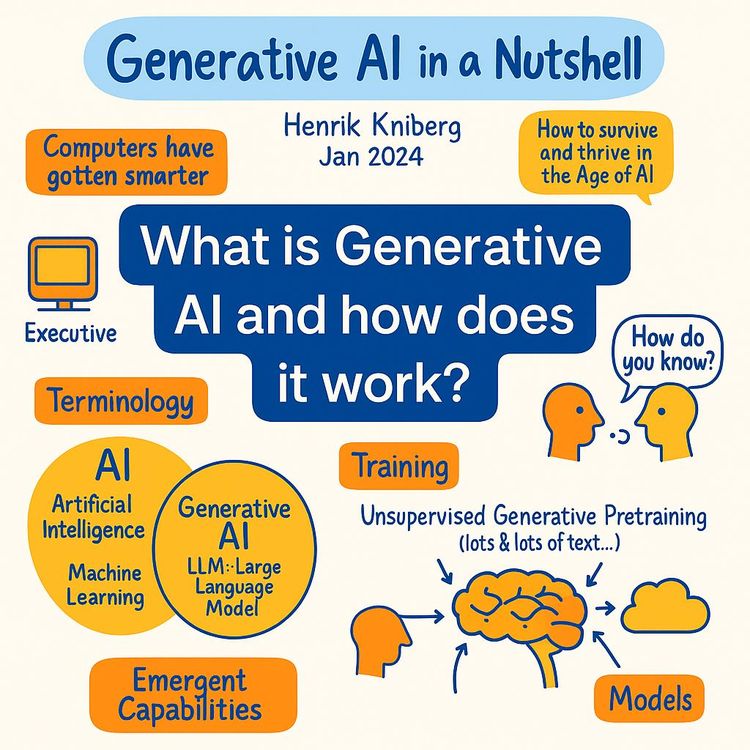
Video Course: What is Generative AI and how does it work?

Video Course: How to Use ChatGPT from Beginner to Professional

Video Course: How to Use Google Gemini for Google Workspace to Boost Productivity

Video Course: How to Use Claude 3.7 AI - Tips for Beginners!

Video Course: ChatGPT for Data Analytics: Full Course - from Beginners to Professional
Video Course: Generating Images and photos With ChatGPT?

Video Course: Generating Images & Photo's with MidJourney

Video Course: Generating Design's with Microsoft Designer and AI

Video Course: Generating Design's with Canva.com and AI
Join 20,000+ Professionals, Using AI to transform their Careers
Join professionals who didn’t just adapt, they thrived. You can too, with AI training designed for your job.