Start a 1-Person No-Code AI Business: Idea to First Sales (Video Course)
No dev team or code needed,yes, really. Learn a repeatable, solo-friendly system: spot painful problems, get paid to validate them, turn a simple service into a prototype and no-code AI MVP, pre-sell early adopters, then grow through scrappy distribution.
Related Certification: Certification in Launching No-Code AI Solutions and Driving First Sales

Also includes Access to All:
What You Will Learn
- Identify and validate painful, high-value AI problems
- Sell a paid done-for-you pilot with a one-page offer
- Build a clickable prototype using no-code tools
- Pre-sell an Early Adopter Program to fund development
- Build a minimal no-code AI MVP and automate core workflows
- Collect behavior-driven feedback and scale with partners and growth hacks
Study Guide
How to Start a 1-Person AI Business (With Zero Code)
You don't need a dev team. You don't need a pitch deck. You need a problem that hurts, a way to solve it manually, and the discipline to validate everything with money before you build anything. That's what this course is about.
By the end, you'll be able to find a high-value problem, sell a simple service to prove demand, turn that service into a clickable prototype, pre-sell access to an early adopter cohort, build a no-code AI MVP, iterate based on user behavior (not opinions), and scale using untraditional distribution. This isn't theory. It's a repeatable system you can run solo with modern no-code AI tools and a customer-first mindset.
What You'll Learn (and Why It's Valuable)
Most people start with ideas. Ideas feel good. But markets reward painkillers, not vitamins. So we'll start where the money is,real problems in growing niches that customers will pay to remove. You'll learn to validate the pain with short conversations, then validate demand with pre-payments. You'll "get paid to learn" by delivering the solution manually before you invest in software. From there, you'll build a clickable prototype, sell an Early Adopter Program, ship a minimal no-code product, and iterate using a feedback loop grounded in user behavior.
Learning objectives:
- Identify and validate painful, high-value problems that AI can solve.
- Tell the difference between a vitamin ("nice-to-have") and a painkiller ("must-have").
- Craft a one-page, done-for-you offer and land your first paying client.
- Build a clickable prototype without writing code.
- Pre-sell with an Early Adopter Program to fund development.
- Use no-code AI tools to build a minimum viable product (MVP).
- Create a system for collecting, analyzing, and prioritizing customer feedback.
- Execute unconventional growth strategies to find customers faster.
Mindset: Painkiller Over Vitamin, AI-First, and Paid Validation
Three principles drive solo AI businesses that actually make money:
Pain precedes product: If it doesn't fix a costly pain, it's a hobby. Start with an urgent problem, then build the smallest thing that solves it. Your opinion doesn't matter; the market's response does.
Validate with cash: Verbal praise is cheap. The only signal you can trust is a financial commitment. Ask for a deposit, pre-payment, or a pilot fee. If they won't pay, don't build.
AI-first design: Don't retrofit AI into a legacy process. Design the solution from the ground up around what AI can enable: automated workflows, prompt-driven interfaces, voice input, and outcomes delivered with fewer steps.
Examples:
- A "social media caption generator" is a vitamin. A "pipeline filler that books qualified calls from every ad click" is a painkiller.
- A "productivity app" is a vitamin. A "contract summarizer that cuts legal review time by 70% and flags risk" is a painkiller.
Step 1: Identify a Painful, High-Value Problem
Markets reward solutions to expensive problems. Look for pains that tie to one of four outcomes customers pay for: make more money, save time, save money, or improve status. If it moves a sales number, cuts a cost, removes process waste, or grants prestige, you're in the right territory.
Cultivate opportunity awareness:
Create a "frustration list." For a week, write down every inefficiency you notice in your work and daily life: missed handoffs, repetitive data entry, back-and-forth emails, poor follow-ups, choppy onboarding, outdated spreadsheets. Pay attention to industries you know; your pattern recognition is sharper there.
Validate the pain with interviews:
Talk to at least 10 people in the target niche. Keep it short and conversational. Use a framing script to test resonance without leading them to your solution.
Sample validation script:
"I've been speaking with people in [role/industry], and I'm hearing recurring issues with [X, Y, Z]. Does that line up with your experience? What's the consequence when this happens? How often does it show up?"
If they jump in with stories, costs, or missed opportunities, that's heat. If they shrug, move on.
Align with a growing market:
A strong current makes everything easier. Pair a validated problem with an industry growing at a healthy clip. Your goal is to ride momentum that already exists so you don't have to swim upstream for attention.
Adopt an AI-first mindset:
Imagine the ideal end state if AI handled the heavy lifting. Could a prompt, a voice note, or a single upload trigger the outcome? Could you bypass complex UI and let a conversational bot pull context, execute tasks, and deliver results?
Target customers with capacity to pay:
Go where budgets live: SMBs with clear ROI, agencies, consultants, e-commerce brands, B2B sales teams, operations leaders. Consumers can work,if the pain is tied to money, time, or status,but businesses generally convert faster and churn less if the ROI is clear.
Examples:
- Niche: Property management. Pain: After-hours maintenance calls get missed; tenants churn; owners complain. Outcome: AI-assisted triage that logs issues, dispatches vendors, and updates tenants saves dozens of hours monthly and reduces churn.
- Niche: B2B sales teams. Pain: Inbound leads go cold because reps take hours to respond. Outcome: An AI "first responder" that qualifies via chat, books meetings, and sends personalized follow-ups boosts conversion and pipeline.
Quick exercise:
List 10 frustrations in your domain. For each, write the cost in money, time, or reputation. Rank by pain and frequency. Shortlist the top three. Run 10 conversations for the top one. Record the exact phrases they use; you'll reuse them in your offer.
Step 2: Solve the Problem Manually as a Service
Before you build software, sell the result as a done-for-you service. Get paid to learn. It gives you cash flow, customer intimacy, and process mastery.
Benefits:
- Revenue generation: This funds development and proves demand.
- Process mastery: You'll find the edge cases and where AI should assist vs. where humans must intervene.
- Informed roadmap: Real customers show you what matters and what doesn't.
Create a one-page offer with four parts:
1) The problem, stated in their words.
2) The outcome, with a clear, tangible win.
3) The timeline for delivery.
4) The investment (your price). Keep it simple and outcome-focused.
Pricing tip:
Anchor to value delivered, not hours worked. If you can save a team 40 hours a month or unlock new revenue, price accordingly. Start simple,pilot fee for 30 days,then convert to a monthly retainer if outcomes hit.
Examples:
- Offer 1: "We stop lead leakage. In 30 days, we implement an AI lead responder that qualifies and books meetings automatically. Outcome: more calls on the calendar, less manual follow-up. Investment: $2,500 for the first month (setup + service), then $1,500/month."
- Offer 2: "We clean your customer data and keep it clean. In two weeks, we dedupe, standardize, and enrich your CRM so your emails land and your forecast is real. Outcome: better deliverability, accurate reporting. Investment: $3,000 one-time, then $500/month monitoring."
Delivery workflow (manual phase):
- Intake: Form or interview capturing current workflow, tools, and constraints.
- Execution: You and lightweight AI tools (prompts, spreadsheets, automations) do the work manually.
- Reporting: Weekly Loom video showing progress, metrics, and next steps.
- Transition: Once results are consistent, map what can be automated in the MVP.
Sales call script (simple):
"You mentioned [pain] causing [cost]. Here's how I fix it in [timeline]. The outcome is [result]. I run this as a one-month paid pilot. If we hit the goal, we roll into a monthly plan. Does that sound fair?"
Step 3: Build a Clickable Prototype
Resist the urge to build software. Build a simulation. A clickable prototype is enough to show, sell, and refine your approach without burning months in development.
Design the core workflow:
Sketch the journey from "I have a problem" to "I got the result." Keep it to the absolute essentials. If your solution can be prompt- or voice-driven, don't over-engineer a graphical interface; your "UI" might just be a single form, a chat window, or a phone call that triggers automation.
Use prototyping tools:
- Figma: Quick, high-fidelity screens and clickable flows.
- UXPin: Interactive prototyping with logic.
- Visily: AI-assisted wireframes from prompts or sketches.
Gather feedback (record with permission):
Put your prototype in front of your manual-service clients and prospects. Ask: "What's most valuable here? What feels unnecessary? What would you change before you'd pay for this?" Focus on outcome friction: where do they hesitate, get confused, or ask for a shortcut?
Examples:
- Prototype 1: A two-screen flow for an AI "first responder" that turns inbound leads into bookings. Screen 1: Paste ad URL and domain; Screen 2: Preview of the AI's outreach messages with a big "Activate" button. Everything else is hidden or automated.
- Prototype 2: A voice-first maintenance triage. Button: "Record issue." The next screen shows structured extraction (tenant info, category, urgency) and a "Dispatch" button. No complex dashboard, just a queue and a status.
Tip:
Record sessions (with consent). Transcribe them. Highlight exact phrases customers use when they describe value or confusion. Those words become your copy and your next iteration targets.
Step 4: Validate the Prototype with Cash (Early Adopter Program)
Enthusiasm isn't validation. Payment is. Pre-sell access before you build,think "off-plan" sales in real estate. You're selling an outcome, access, and influence in exchange for early commitment.
Launch an Early Adopter Program (EAP):
Position it as an invite-only group of "Founding Customers." Limit seats (10-50). Make it clear they'll get an advantage over competitors, direct input into the product, and red-carpet onboarding.
Create an irresistible offer:
- A meaningful discount on year one (for example, half off the planned subscription).
- VIP onboarding and implementation support.
- Direct influence on the roadmap via regular calls.
- Priority support and direct access to you.
Spell out timelines, what's included, and what's not. Keep it confident and transparent.
Examples:
- EAP 1: "Founding 25" for a lead-to-meeting AI. Regular price: $300/month. EAP: $150/month for the first year, billed upfront; includes white-glove setup, custom messaging templates, and bi-weekly roadmap sessions.
- EAP 2: "Maintenance Ops Founders" (15 seats). Regular price: $500/month. EAP: $250/month for the first year, billed upfront; includes vendor onboarding, custom escalation rules, and priority feature requests.
Landing page structure (simple):
- Headline: The pain and the promised result.
- Short demo: GIF or Loom of the clickable prototype.
- The EAP offer: price, discount, what's included, timeline.
- Social proof: quotes from your manual service clients.
- Call to action: "Apply" or "Reserve Spot" + payment link or invoice flow.
Outreach email you can adapt:
"We've been doing [manual service] and consistently delivering [outcome]. I'm opening a small Early Adopter Program for the product version. You'll get founder access, VIP setup, and a locked-in discount for year one. The goal is to give you a real edge before this goes public. Want details?"
Step 5: Build the Minimal Viable Product (MVP)
Now that you have cash and committed customers, build the smallest product that reliably delivers the promised outcome. Keep it bare. Most first versions fail because they try to do everything for everyone.
Ruthless prioritization:
Include only features that solve the core problem for your early adopters. Use the 80% rule: build what at least 80% of them will use weekly. Everything else goes in a "later" list.
Avoid featureritis:
Extra features feel productive but often dilute your value. A tight product that nails the one job beats a Swiss Army knife that nobody fully uses.
No-code AI development process:
- Scope with an AI: Use a tool like Brain Dumper (buildwithai.io) to describe your product in plain language. Walk it through your prototype and workflow. It will produce structured specs, prompts, and platform recommendations.
- Generate specs and prompts: Extract system instructions, data models, key prompts, and integration needs.
- Build with a no-code app builder: Use a builder like lovable.dev to assemble your MVP quickly. Supplement with automation tools (Zapier, Make) for data flows and background jobs.
Minimal architecture you can run solo:
- Front end: a simple web app or even a form + chat interface.
- AI core: your prompts and models managed through the builder.
- Automations: Zapier/Make to handle triggers, emails, scheduling, and updates.
- Data: basic database tables for users, sessions, logs.
- Analytics: event tracking for sign-ups, activations, and feature use.
Security basics (even as a solo founder):
- Ask for the least data necessary.
- Provide a privacy note in plain language.
- Offer a simple data export/delete option.
- Use proven authentication components from your no-code stack.
Examples:
- MVP 1 (Lead responder): Features: 1) Connect inbox/calendar; 2) Turn on AI responder with editable messaging; 3) Bookings page and weekly report. That's it. No complex dashboards.
- MVP 2 (Maintenance triage): Features: 1) Voice/text intake with structured extraction; 2) Automated vendor dispatch with rules; 3) Status updates to tenants. No analytics suite, no advanced reporting in v1.
Step 6: Systematically Collect and Analyze Customer Feedback
Launch is the starting line. Now you build a feedback loop grounded in what customers do, not just what they say. Track behavior, meet with your best users, and prioritize with a simple matrix.
Establish a feedback cadence:
Form a "Customer Advisory Board" with your most engaged paying users. Meet weekly or bi-weekly. Record with permission. Keep sessions focused: what worked, what didn't, where they got stuck, and what they did next.
Focus on behavior:
Install analytics. Track: sign-up to activation, time to first value, feature usage, and drop-off points. Correlate usage patterns with successful outcomes (booked meetings, resolved tickets, hours saved). Behavior is truth.
Prioritize with a simple matrix:
- Y-axis: Impact (how many paying customers does this affect?)
- X-axis: Value (does this boost competitiveness and revenue?)
Only build top-right: high impact, high value. Defer the rest. Ruthless is kind.
Use AI for analysis:
Transcribe every customer call. Feed transcripts into an AI to cluster themes, highlight friction, and suggest priorities based on your matrix. Keep a running "insights log" with decisions and reasons.
Examples:
- Decision 1: Several customers stumble at connecting calendars, blocking activation. High impact, high value. You add a one-click connector and a 60-second onboarding guide. Activation rate jumps.
- Decision 2: A few customers ask for custom color themes. Low impact, low value for outcomes. You park it for later and focus on improving AI message quality, which correlates with booked meetings.
Interview template (short):
"Walk me through your last session. Where did you hesitate? What did you expect to happen? What outcome mattered most? If I could change one thing this week, what would unlock the most value for you?"
Step 7: Execute Growth Hacking for Distribution
Marketing is crowded. Growth hacking means finding clever, scalable channels your competitors ignore. Think in terms of leverage: who already has your audience, where do they gather, and which ecosystems can pull you in?
Distribution partners:
Find influencers, authors, consultants, or software companies that already hold your audience's trust. Offer a generous referral fee (15-20% of revenue) and a painless way to promote you: a webinar, a simple landing page, ready-made content, and unique tracking links.
Non-traditional placements:
- Sponsor niche podcasts or YouTube channels with high engagement and a tight audience match.
- Run a "pixel swap" with a non-competing company serving the same customer profile so you can run targeted ads to each other's website visitors.
Integrate into existing ecosystems:
Build your AI tool as an add-on or integration where your customers already live: Shopify, HubSpot, Slack, Salesforce, Zapier. Marketplaces can send a steady stream of qualified users if your listing hits a clear pain and earns strong ratings.
Examples:
- Partner play: A CRM implementation agency promotes your AI lead responder to its client base. They host a webinar; you do the demo. They get 20% recurring commission; you get customers who are already qualified and set up for success.
- Non-traditional: You sponsor a tiny but focused podcast for property managers. Your ad points to a "Founders' Offer" page. You also swap pixels with a vendor management tool. Your retargeting ads only hit visitors already in market, keeping acquisition costs low.
- Ecosystem: You launch a lightweight Slack integration for maintenance triage notifications. Once it's rated well, the Slack App Directory drives organic installs. From there, you upsell to your full product.
Attribution basics (keep it simple):
Create a unique landing page or coupon for each partner. Use tracking parameters for links. Share transparent dashboards with partners so they see the revenue they generate in real time.
Key Concepts & Terminology (So You Can Think Like a Builder)
Painkiller vs. vitamin:
A painkiller solves an urgent problem tied to money, time, or status. A vitamin is nice but not necessary. Most solo founders win with painkillers.
Clickable prototype:
A visual simulation of your app. It looks real, feels real, and lets users click around,but it doesn't have a backend. You use it to sell and gather feedback.
Minimum Viable Product (MVP):
The simplest, smallest version that can deliver the promised outcome to early adopters so you can learn from real usage.
Early Adopter Program (EAP):
An invite-only pre-sale cohort that pays upfront for early access, a discount, and influence over what gets built.
Off-plan sales:
Pre-selling a product before it's fully built to fund development and validate demand. Common in real estate; powerful in software.
Featureritis:
The compulsion to add more features at the expense of clarity and core value. The cure is the 80% rule and a ruthless roadmap.
Growth hacking:
Unconventional, creative, low-cost strategies that find distribution others aren't using yet.
Distribution partners:
People or organizations that already have your ideal audience's attention and trust. They promote you for a referral fee or value exchange.
Pixel swap:
Two non-competing companies place each other's tracking pixels to retarget each other's website visitors with ads. Highly efficient when audiences overlap closely.
Detailed Examples: Two Niches Done End-to-End
Example A: AI Lead Responder for Agencies
- Pain: Agencies lose hot leads because replies take hours. Pipeline suffers.
- Manual service: You personally monitor inbound forms, use AI to draft responses, and book calls. You charge $2,500 for a 30-day pilot; outcome is 10+ bookings from inbound.
- Prototype: Two screens,connect email/calendar; toggle AI responder with preview of messages.
- EAP: "Founding 25" at $150/month for year one (prepaid), VIP onboarding, custom templates, direct founder access.
- MVP: Connect inbox/calendar, message tuning, booking page, weekly pipeline report.
- Feedback system: Track time to first value and booked calls. Interviews reveal onboarding friction; you add a one-click connector. Activation jumps 30%.
- Growth: Partner with CRM consultants (20% commission), run retargeting from a pixel swap with a sales training firm, launch a Zapier integration for easy hookups.
Example B: AI Maintenance Triage for Property Managers
- Pain: After-hours calls get missed, tenants get angry, and owners churn.
- Manual service: You handle triage: intake, categorize, dispatch, and update. $3,000/month pilot for 30 days; success is response time under 5 minutes and reduced backlog.
- Prototype: Voice note intake, auto-extracted fields, "Dispatch" button, status updates. Minimal UI.
- EAP: 15 seats at $250/month for year one (prepaid), includes vendor onboarding and escalation rules, roadmap input.
- MVP: Voice/text intake, rules-based routing, vendor notifications, tenant updates.
- Feedback system: Usage shows dispatch rules are the bottleneck; you add "rule templates" for common issues. Resolution time drops. Customers ask for a Slack alert,high impact,so you add it.
- Growth: Sponsor a niche property management podcast; swap pixels with a tenant screening service; build a listing in the App Marketplace of a popular property management platform.
From Manual Delivery to Prototype: A Practical Bridge
While running the manual service, document every step. Where do you copy/paste? Where do you make a judgment call? Which moments repeat across customers? Each repeated step is a candidate for automation. Each judgment call is a candidate for an AI prompt that asks for missing context or defaults to a safe option.
Example capture process:
- Intake questions you ask every time become a single onboarding form.
- Message templates you send repeatedly become editable defaults in the MVP.
- Rules you follow manually ("if emergency, call vendor") become toggleable settings.
Prototyping Tactics That Convert
Use "before and after" storytelling:
Before: chaos, missed leads, manual follow-ups. After: AI responds immediately, books meetings, sends reminders. Keep it concrete and show it in your prototype with timestamps and outcomes.
Two more prototype-level examples:
- A "one-prompt ops dashboard": A single field where a manager types "summarize yesterday's issues, flag delays, and email owners" and the prototype shows draft emails and a dashboard summary.
- A "contract analyzer": Upload a PDF, see risk flags and a plain-English summary, then an "Approve/Ask Lawyer" button that triggers a predefined email.
Crafting the Early Adopter Offer So People Say Yes
State the pain, the promise, and the price:
"You're losing warm leads after hours. We fix that. Early adopters get founder access, VIP setup, priority features, and a locked-in discount for year one. We start onboarding next week. There are 25 seats." Scarcity helps, but honesty closes.
Two additional EAP structures:
- "Founding 10 Lifetime": A one-time fee (higher upfront) for lifetime access at a lower usage tier. Limited to 10. Great for seed cash.
- "Pilot + Credit": A paid pilot fee that converts to a credit toward the first year if they continue. Reduces perceived risk while keeping you paid.
Building the MVP With No-Code AI: A Walkthrough
1) Scope with an AI assistant:
Open Brain Dumper (or a similar scoping tool). Describe the user journey, data inputs, outputs, edge cases, and integrations. Paste screenshots of your prototype and your manual process notes. Ask it to propose a minimal architecture, data schema, and system prompts.
2) Produce a build plan:
Ask for: user stories, feature list prioritized by 80% usage, database tables, automations, and testing scenarios. Request the exact prompts for your AI inputs and outputs that align to your prototype flows.
3) Build in a no-code app builder:
Use lovable.dev to scaffold pages, forms, and API calls. Add automation via Zapier or Make for emails, calendar bookings, and Slack messages. Keep the UI minimal: one goal per page, one primary action.
Implementation tips:
- Use editable defaults for prompts so customers can tune tone and policy.
- Add event logging from day one (sign-up, connect, activate, success).
- Include an "Export Data" button and a plain-English privacy note.
Two more MVP examples:
- "AI Sales Warmer": Upload a lead list, generate personalized outreach, send, track replies. MVP has only three steps and a weekly performance summary.
- "AI Project Recapper": Connect task tool, generate weekly summaries by client, email drafts to stakeholders. Start with one integration, one template.
Your Feedback Engine: From Gut Feel to Data-Driven
Weekly rhythm:
- Monday: Review usage analytics and support tickets.
- Tuesday: Customer Advisory Board call (recorded).
- Wednesday: Prioritize in your impact/value matrix. Pick one fix and one improvement.
- Thursday-Friday: Ship, test with two customers, measure change.
What to measure:
- Time to first value (minutes from sign-up to the first success).
- Activation rate (percentage who complete setup).
- Core action frequency (the thing that delivers value).
- Outcome metrics (booked calls, resolved issues, hours saved, cost avoided).
Two prioritization scenarios:
- Scenario A: Many sign-ups but few activations. Fix onboarding. Add a setup checklist and guided tour. High impact, high value.
- Scenario B: Feature A is beloved by a small subset; Feature B is used by nearly everyone. Improve Feature B first. Park A for later.
Growth Hacking in Practice: Step-by-Step
Distribution partners (how to pitch):
Subject: "Easy revenue for your audience , we do the work"
Body: "You help [audience] get [result]. We built an AI tool that delivers [outcome]. We'll host the demo, handle onboarding, and pay you [15-20%] recurring. Want to co-host a short webinar next week?"
Non-traditional placements (how to execute):
- Pick three niche shows or channels with your audience.
- Offer a performance-based package (bonus when trials convert).
- Create a promo code just for them and a landing page that mirrors their language.
- Pixel swap: Agree with a complementary company to place each other's pixels. Run retargeting that speaks directly to their audience's context.
Integrations (how to leverage):
Start with one platform your customers already use daily. Build a tight integration that drives your core action. Write a crisp marketplace listing focused on the pain and outcome. Ask your early adopters to leave honest reviews.
Two partner examples:
- A HubSpot consultant includes your lead responder in every CRM build. They run a co-branded webinar monthly. You provide revenue dashboards so they see their commissions stacking.
- A facilities management newsletter features your maintenance triage tool with a founder interview. The audience clicks through to a special founder offer; the editor gets a rev share.
Principles to Keep You on Track
Start with pain, not ideas:
Your preferences don't decide winners. The market does.
Money equals truth:
Until someone pays, feedback is a guess. Payment clarifies priorities.
Watch behavior, not just words:
People mean well but usage shows reality. Let actions lead the roadmap.
Real growth is found in quiet corners:
If everyone's doing it, it's not a hack. You're looking for underused channels where your message resonates and cost to acquire stays low.
Implications & Applications (Who This Helps and How)
For entrepreneurs:
A roadmap to minimize risk, generate early revenue, and build with confidence. You'll know what to do each week and what to ignore.
For investors:
A filter to evaluate founders: Do they have pre-sales? Did they do manual delivery? Are they iterating based on behavior, not opinions?
For business education:
A modern playbook that replaces bulky plans with lean, validation-driven execution.
For corporate innovation:
A low-risk method for internal teams: start with manual pilots, pre-sell to stakeholders, build minimal solutions, and scale what works.
Actionable Recommendations (Do This Next)
1) Identify & validate:
Create a frustration list. Book 10 calls. Use the script to test resonance. Document exact language customers use.
2) Develop & sell:
Write a one-page offer with problem, outcome, timeline, investment. Land one paying pilot.
3) Prototype:
Map the core workflow. Build a clickable prototype in Figma or UXPin. Show it to three prospects and collect feedback.
4) Pre-sell:
Launch an Early Adopter Program. Aim for 10 prepaid customers before you write a line of code.
5) Build the MVP:
Scope with an AI assistant. Build with a no-code AI builder. Ship only the essentials that 80% will use.
6) Implement feedback loops:
Set weekly customer calls. Add analytics from day one. Prioritize with the impact/value matrix.
7) Explore growth channels:
Line up one partner webinar, one niche sponsorship, and one ecosystem integration. Test, measure, iterate.
Common Pitfalls and How to Avoid Them
Building too soon:
If you haven't sold a pilot or pre-sold the product, you're guessing. Go back to manual service and pre-selling.
Over-complicating the UI:
Your customers want outcomes, not dashboards. Consider prompt- or voice-first flows with the fewest steps possible.
Ignoring onboarding:
If setup is clunky, no one gets value. Make activation dead simple: one page, one checklist, one video.
Listening to loud non-buyers:
Collect opinions, but prioritize behavior from paying customers. Your matrix keeps you honest.
Underpricing:
Anchor to value. If your solution drives revenue or deletes hours of grunt work, price in line with the win.
Scripts, Templates, and Prompts You Can Use
Validation call opener:
"People in your role keep bringing up [X, Y, Z]. When that happens in your world, what's the fallout? How often does it pop up?"
One-page offer skeleton:
Problem: "You're dealing with [pain]. It causes [cost]."
Outcome: "In [timeline], you'll get [result], measured by [metric]."
Timeline: "We start with a [number]-day pilot, then go monthly."
Investment: "Pilot is [$X]. Monthly is [$Y]."
EAP outreach DM:
"Been solving [pain] manually and getting [result]. Opening a small early access program with founder support and a locked-in discount. Want in?"
Prototype feedback prompt:
"What's the single most valuable part of this for you? Where did you hesitate? What would you need to see before paying?"
AI scoping request (to your assistant tool):
"Here's the user journey, core features, and prototype. Propose a minimal architecture, data schema, key prompts, and high-priority features used by at least 80% of users. Provide a build plan for [no-code tool] and automations via [Zapier/Make]."
Metrics That Matter
Acquisition:
Partner conversions, cost per demo, cost per EAP member.
Activation:
Setup completion rate, time to first value, first outcome achieved.
Retention:
Core action frequency per week, expansion (more seats or use cases), churn reasons (from exit interviews).
Monetization:
Average revenue per user, payback period on acquisition, percentage converting from pilot to subscription.
Examples of metric-driven decisions:
- If time to first value is high, simplify onboarding and add a guided tour with defaults pre-filled.
- If pilot-to-subscription conversion is low, either the outcome isn't strong enough or the price/value framing is off. Fix the product outcome or the packaging before scaling acquisition.
Tooling Shortlist
No-code prototyping:
Figma, UXPin, Visily
No-code AI development:
Brain Dumper (buildwithai.io), Lovable (lovable.dev)
Automations:
Zapier, Make
Ecosystem footholds:
Shopify App Store, HubSpot Marketplace, Slack App Directory, Salesforce AppExchange, Zapier Integrations
Further study:
The Lean Startup; Value Proposition Design; Customer Development; Product prioritization frameworks (RICE, MoSCoW).
Practice: Prove You Can Do This
Multiple-choice:
1) Defining trait of a "painkiller" product?
a) Many advanced features
b) Solves an urgent, high-stakes problem
c) Aesthetically pleasing
d) Low price
Answer: b
2) Primary purpose of a clickable prototype?
a) Launch to the public
b) Secure a large dev team
c) Validate UX and value with customers before building
d) Have a fully functional backend
Answer: c
3) An Early Adopter Program is designed to:
a) Give away the product for free
b) Generate pre-sales revenue to fund development
c) Outsource support
d) Test slogans
Answer: b
Short answer:
- List the four components of a compelling one-page "done-for-you" offer.
- Explain the 80% rule for MVP features and why it matters.
- Define a "pixel swap" and how it functions as a growth tactic.
Critical thinking:
- Make a frustration list for a field you know. Pick one painkiller problem and explain why buyers pay to fix it.
- You built a prototype for an AI social post assistant for local businesses. Design your Early Adopter Program: price it, cap seats, and list bonuses that make it irresistible.
- You're targeting Shopify store owners. Which growth hack (partners, non-traditional sponsorships, or toolkit integrations) would you pick first and why?
Completion Checklist (Verify You're Covering What Matters)
Pain first:
Validated with at least 10 conversations and clear evidence of cost (money/time/status).
Manual service:
One-page offer sold; pilot delivered; process documented.
Prototype:
Clickable simulation built; three feedback sessions recorded; changes noted.
Pre-sell:
Early Adopter Program launched; at least 10 prepaid members; clear offer (discount, VIP onboarding, roadmap access, founder access).
MVP:
Scoped with AI; built with no-code; only essential features used by 80% of early adopters.
Feedback loop:
Advisory calls scheduled; analytics installed; priorities set with an impact/value matrix; AI used for transcript analysis.
Growth hacking:
At least one partner channel, one non-traditional placement (or pixel swap), and one ecosystem integration tested with tracking in place.
Two Extra Case Snapshots (to Spark Ideas)
Compliance Summary Assistant (B2B services):
Pain: Compliance teams drown in audits and repetitive summaries.
Service: You do weekly summaries for two clients using AI and checklists.
Prototype: Upload doc → "Summarize and flag risk" → Download report.
EAP: 20 seats, 40% off year one, custom templates, monthly roadmap calls.
MVP: Document upload, template-based summary, risk scoring, export.
Growth: Partner with compliance consultants; sponsor a niche newsletter; build a Slack "summary posted" integration.
AI Hiring Screener (SMB):
Pain: HR spends hours screening resumes and scheduling interviews.
Service: You run an AI-assisted screen and shortlist candidates weekly for two clients.
Prototype: "Upload resumes → Pick role profile → Get shortlist + interview slots."
EAP: Founding 15 at a steep first-year discount; VIP onboarding; direct founder access.
MVP: Resume parsing, scorecard, automated scheduling.
Growth: Partner with a recruiting agency; sponsor a recruiting ops podcast; add a Greenhouse integration.
Best Practices You'll Be Glad You Followed
Customer language everywhere:
Use verbatim phrases from validation calls in your copy and onboarding. It makes your product feel like it was built "just for them."
Default to less:
If a feature doesn't directly push the core outcome, it waits. A small, sharp product beats a bulky one.
Make success obvious:
Show a simple progress bar ("3 steps to go live"), auto-fill common settings, and create one "first success" action the moment they sign in.
Record everything (with consent):
Calls, demos, and onboarding. Transcripts are gold for prompts, copy, and prioritization.
Advanced Tips (When You're Ready to Level Up)
Outcome-based pricing:
After you've proven results, offer a performance tier (base + bonus for hitting targets). Aligns incentives and ups your ceiling.
Templates as leverage:
Ship templates for prompts, workflows, and playbooks. Customers love speed to value; templates reduce support and increase adoption.
Data flywheel:
With permission, anonymize usage data to improve defaults and predictions. Better defaults drive better outcomes, which attract more customers.
Recap: Why This Works
You're de-risking each step with the only signal that matters,customer money and behavior. Manual work funds development and teaches you where AI fits. Prototypes sell the vision. Pre-sales prove demand. A minimal product accelerates learning. Analytics tell you what to fix. Unconventional distribution gets you in front of customers cheaper and faster than broad ads ever will.
Conclusion
The barrier to building an AI business has dropped. The barrier to building a profitable one hasn't: that's discipline. Start with a painful problem. Validate it with conversations, then with cash. Deliver the outcome manually to learn the workflow and finance your build. Create a clickable prototype and use it to pre-sell an Early Adopter Program. Build a minimal, no-code AI product that nails the core outcome. Watch what users do, not just what they say, and iterate using a clear prioritization matrix. Scale with growth strategies that live where others aren't looking,partners, niche placements, and ecosystem integrations.
Run this process once and your confidence grows. Run it twice and you've built a skill set that compounds: find the pain, pre-sell the cure, and deliver the result with less effort each time. The sooner you apply these steps, the sooner you'll have a one-person AI business that earns while you keep building. Start with the first call. Sell the first pilot. The rest unfolds from there.
Frequently Asked Questions
This FAQ exists to answer the most common,and most critical,questions people ask before starting a one-person AI business without code. It moves from basic ideas (finding a profitable problem) to advanced execution (growth, compliance, and scale), so you can make clear decisions, avoid common traps, and ship faster with less risk.
The Foundation: Finding a Profitable Idea
What is the most critical first step when starting an AI business?
Bottom line:
Start with a painful problem for a specific group of people,not a clever idea. Revenue follows pain relief.
The fastest path to traction is identifying a high-stakes problem your niche already wants solved. That means customers actively complain about it, waste time or money because of it, and are currently paying for workarounds. Pick a market you understand so you can spot real pain quickly and speak their language.
Practical steps: keep a "frustration list," interview 10-15 people in one niche, and ask, "What's costing you time, money, or reputation each week?" Validation isn't compliments,it's commitment (interest to pay, timeline, and urgency). Example: Agencies missing inbound leads outside business hours are losing sales. Replacing that process with AI-assisted intake is a clear, valuable fix customers pay for.
How can you differentiate between a high-value "painkiller" problem and a low-value "vitamin" feature?
Quick filter:
Painkillers remove costly, urgent pain; vitamins add convenience. Painkillers get budgets approved.
Signals of a painkiller: measurable losses (missed leads, penalties, churn), operational bottlenecks, and executive-level complaints. People search for solutions, cobble together manual fixes, or pay contractors to help. Vitamins sound nice but don't trigger immediate action.
Test it in conversations: when you describe the problem, do they interrupt you with stories and numbers? Do they ask for pricing right away? Example: "Turn every inbound call into a booked appointment" is a painkiller. "A nicer dashboard theme" is a vitamin. Build the aspirin first; you can add vitamins after you have paying customers.
What are the core motivations that drive customers to pay for a solution?
People pay for outcomes:
Make money, save time, save money, and increase status. Your offer should hit at least one,ideally two.
Examples:
- Make money: an AI follow-up system that revives stalled sales opportunities.
- Save time: automated meeting notes that pipe action items into a CRM.
- Save money: AI-based QA that reduces customer support tickets.
- Increase status: polished client proposals generated in minutes.
Anchor your messaging to metrics your buyer cares about: revenue added, hours saved per week, costs avoided, or credibility gained. If your promise can't be measured, it won't be prioritized.
How can you systematically find and validate a painful problem?
Use a three-step loop:
1) Build a frustration list; 2) Interview a niche; 3) Pair with a growing market.
- Frustration list: write daily annoyances you see in your work or network.
- Interviews: talk to 10-15 people in one role/industry; pre-seed options ("others mentioned X, Y, Z,true for you?").
- Market tailwind: choose a sector with rising demand (e.g., ecommerce logistics, healthcare admin).
Validation scorecard: intensity (how bad?), frequency (how often?), spend (what's paid today?), and urgency (when do they need it solved?). Collect yeses with payment timelines,not just interest. Example: "We miss 20% of weekend inquiries" + "We'd switch this quarter if you fix it" = go signal.
Why is it advantageous to solve problems for affluent customers?
Shorter sales cycles and bigger margins:
Buyers with budget can say "yes" faster and pay for outcomes without red tape.
Affluent segments (profitable SMBs, agencies, professional services) value time and certainty. They adopt tools that remove friction and drive revenue. They're less price sensitive and more speed sensitive.
Example: a boutique law firm paying to automate intake and conflict checks will decide in days, not months. Contrast that with a budget-constrained buyer who needs multiple approvals. Target customers who already spend to fix the issue (contractors, software, overtime). You'll land lighthouse accounts, better testimonials, and referrals.
Validation and Your Initial Offer
I've found a problem. Should I start building the AI tool immediately?
No,sell and solve manually first:
Offer a done-for-you service to learn the exact workflow before you automate.
Manual delivery gives you paid research, real data, and proof of results. You'll discover edge cases, hidden steps, and the language customers use,gold for your product UX and prompts. Charge for the outcome, not the hours. Example: run an AI-assisted lead capture service for three local clinics for a month. Document the steps, errors, and wins. That becomes your product spec. Build after you've earned and delivered.
Certification
About the Certification
Get certified in 1-Person No-Code AI Venture Building. Prove you can spot high-value problems, run paid validation, ship a no-code AI MVP, pre-sell early adopters, close first sales, and grow with lean, scrappy distribution.
Official Certification
Upon successful completion of the "Certification in Launching No-Code AI Solutions and Driving First Sales", you will receive a verifiable digital certificate. This certificate demonstrates your expertise in the subject matter covered in this course.
Benefits of Certification
- Enhance your professional credibility and stand out in the job market.
- Validate your skills and knowledge in cutting-edge AI technologies.
- Unlock new career opportunities in the rapidly growing AI field.
- Share your achievement on your resume, LinkedIn, and other professional platforms.
How to complete your certification successfully?
To earn your certification, you’ll need to complete all video lessons, study the guide carefully, and review the FAQ. After that, you’ll be prepared to pass the certification requirements.
Other AI Video Courses
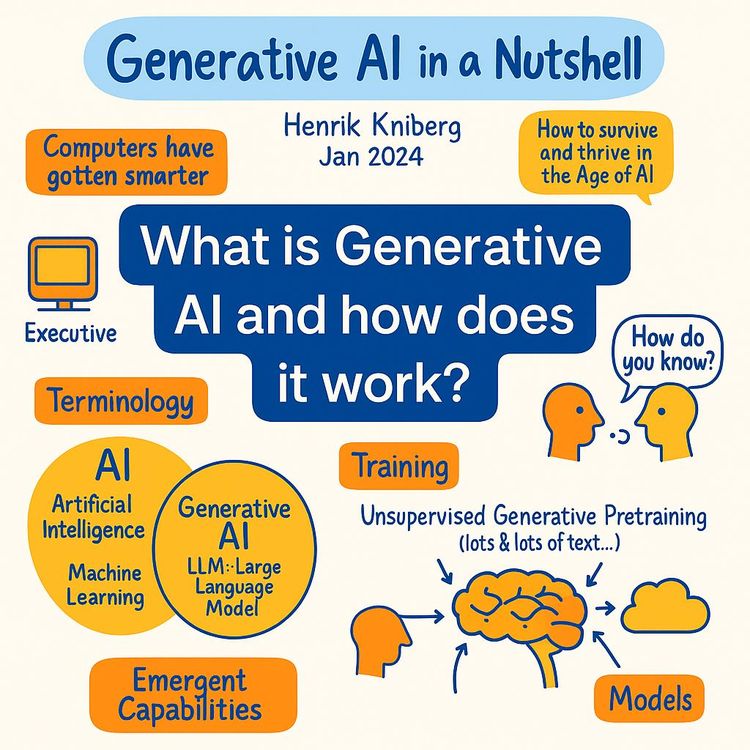
Video Course: What is Generative AI and how does it work?
Video Course: How to Use ChatGPT from Beginner to Professional
Video Course: How to Use Google Gemini for Google Workspace to Boost Productivity

Video Course: How to Use Claude 3.7 AI - Tips for Beginners!
Video Course: ChatGPT for Data Analytics: Full Course - from Beginners to Professional

Video Course: Generating Images and photos With ChatGPT?
Video Course: Generating Images & Photo's with MidJourney
Video Course: Generating Design's with Microsoft Designer and AI

Video Course: Generating Design's with Canva.com and AI
Join 20,000+ Professionals, Using AI to transform their Careers
Join professionals who didn’t just adapt, they thrived. You can too, with AI training designed for your job.