Stop Prompting AI Wrong: Context-First Prompt Engineering (Video Course)
Tired of bland AI replies? Learn how to set context, add constraints, and use examples so the model actually thinks with you. Get sharper research, cleaner writing, fewer hallucinations,and outputs that sound like a human sat down and wrote them.
Related Certification: Certification in Implementing Context-First Prompt Engineering

Also includes Access to All:
What You Will Learn
- Build contextual "worlds" (audience, constraints, examples) to get tailored outputs.
- Write examples and if-then constraints to force predictable model behavior.
- Metaprompt: use AI to craft better prompts for text, image, and code.
- Adopt personas to control voice, tone, and targeted reasoning.
- Extract actionable, contrarian insights with confidence scores and verification steps.
- Remove the AI "stain" so writing reads authentic and human.
Study Guide
Introduction: 99% Of You Prompt AI Wrong (And How To Fix It)
You aren't getting bad answers because the AI is lazy. You're getting bad answers because you're vague. You toss a half-baked prompt into the void and expect genius. What comes back is generic, safe, and instantly forgettable. That's not the model's fault. That's on the director,you.
This course turns you into a director. You'll learn how to build worlds, not toss wishes. You'll use structure, constraints, and examples to pull signal from the noise. You'll get better research. Better writing. Better analysis. Better thinking. You'll use AI as a partner for personal development and decision-making. And,equally important,you'll learn how to remove the "AI stain" from outputs so they read and feel like a human wrote them.
Here's the guiding idea: the quality of your output is proportional to the quality of your input. Give the model a skinny prompt, you get a skinny result. Give the model depth,context, examples, constraints,and it can do world-class work. That's what we'll build here. No fluff. No hacks. Just the real workflow used by people who consistently produce valuable, novel, and persuasive results with AI.
By the end, you'll be able to:
- Build rich "worlds" that produce tailored, non-generic outputs.
- Use examples and constraints that force the model into the right lane.
- Metaprompt (use AI to write better prompts for AI) across text, image, and code.
- Adopt personas for style, tone, and targeted reasoning.
- Extract contrarian insights and actionable takeaways from complex material.
- Use AI to identify your blind spots and craft personalized learning paths.
- Reduce hallucinations with confidence scoring and verification steps.
- Remove generic phrasing so your content reads like a real person wrote it.
- Decide when to use cloud vs. local models,and why that choice matters for privacy and cost.
The Manager Mindset: You Direct, AI Executes
Great prompting is great management. You're setting vision, defining constraints, clarifying standards, and breaking ambiguity into steps. If you can lead a team, you can lead a model. If you can't, this course will teach you.
Authoritative principle worth taping above your desk: "There is significant overlap between the skill of a manager and the skill of a prompt engineer. Both require the ability to communicate a vision clearly and provide structured guidance." The model isn't a mind reader. Your job is to build the world.
Another rule to internalize: "It is the user's responsibility to build the world, not the AI's. The more pieces of the puzzle you provide, the more unique and tailored the world becomes."
Principle #1: Contextual World Building (The Puzzle-Piece Advantage)
World building is the foundational skill. Most prompts fail because they don't give enough context to steer the model. When the model doesn't know the world, it defaults to the most common patterns in its training data,which is why everything sounds the same.
Example 1:
Low-effort: "Give me five video ideas." Result: Generic YouTube tips, recycled topics, bland headlines.
World-built: "I run a newsletter for bootstrapped SaaS founders who are cash-flow positive but plateaued at 20-50k MRR. They value execution over theory and have limited team bandwidth. I use contrarian case studies and short teardown videos. Give me five video ideas that debunk popular growth myths, each with a quick experiment a solo founder could run in a week." Result: Specific, relevant, and instantly useful.
Example 2:
Poor story prompt: "Write a sci-fi short story." Result: Generic space opera.
World-built: "A desert planet where everything is sand. Moisture is scarce; inhabitants wear suits that capture it from the air. Warring clans fight over a resource buried beneath dunes. Now imagine a giant creature in that ecosystem." Result: The model infers something like a sandworm, not a cyclops. That's the puzzle-piece effect. Unique pieces → unique output.
Example 3:
Poor marketing prompt: "Create a campaign for a new smartwatch."
World-built: "Launch campaign for a minimal smartwatch for trail runners who want no notifications, a 7-day battery, offline maps, and a single red button. Avoid luxury aesthetics. Speak to solitude, reliability, and performance under stress. No influencer partnerships. Budget is lean. Show a 14-day content calendar, 3 hero concepts, and 5 UGC prompts."
Tips:
- Preload the model with "puzzle pieces": audience, constraints, what to avoid, examples, voice, and success criteria.
- Use sensory detail when relevant (visual, emotional, constraints-in-the-world).
- Ask the model to state back your world before generating. This confirms understanding and avoids drift.
Method #1: Examples and Constraints (If-Then Instructions)
Models respond better to examples than abstract advice. Think of this like policy-as-text. You're writing operating rules. "If-then" style prompts create predictable behavior and reduce unwanted patterns.
Example 1 (Customer Service):
"If a customer expresses frustration, first validate ('I hear how frustrating this is'), then summarize their issue in one sentence, then offer one solution path. If they mention a refund, present two options with eligibility criteria. Never blame the customer. Keep responses under 120 words."
Example 2 (Sales Emails):
"If the prospect is a VP of Ops at a logistics firm, open with a result metric within 12 words, then one sentence of context, then a single question. If they're a founder under 10 employees, open with a founder-to-founder empathy line, then a sharp benefit, then a 10-minute invite. Never use 'circle back' or 'touch base.'"
Example 3 (Editing Guidelines):
"If a sentence is longer than 20 words, consider splitting. If a claim lacks a source, add '[verify]'. If a paragraph begins with a cliché, rewrite with a specific fact. If passive voice, convert to active unless it changes meaning."
Best practices:
- Set "never do" rules. Prohibitions are as important as directives.
- Include length, tone, and structure constraints.
- Provide 1-2 positive examples and 1 negative example to anchor behavior.
Method #2: Metaprompting (Use AI to Write Better Prompts)
Metaprompting means asking AI to craft the perfect prompt for another model or a later step. This is your leverage when you have a vision but not the vocabulary.
Example 1 (Image Generation):
Input to a text model: "Describe and refine a prompt for an image diffusion model to depict a bioluminescent flower that blooms only at midnight in a foggy alpine valley. Focus on petals, light diffusion, macro lens settings, and color temperature. Exclude brand names."
Output: A camera-ready prompt with technical descriptors (e.g., "macro 100mm, f/2.8, volumetric light, sub-surface scattering, cool 4500K blue bioluminescence, dew-laden petals, soft bokeh").
Example 2 (Complex Webpage):
Step 1: "Break down Stripe's homepage into components: layout grid, hero structure, typography, color, micro-interactions, CTAs, trust signals, footer architecture, and accessibility notes."
Step 2: Edit the spec and hand it back: "Now code the page (HTML/CSS/JS) to match this spec. Comment every section."
Example 3 (Data Workflow):
"I need to analyze monthly churn for a subscription app. Create a step-by-step prompt for a spreadsheet model detailing: data cleaning rules, cohort setup, retention curves, visualization options, and sanity checks."
Tips:
- Ask the model to include "assumptions" and "open questions" in the prompt it generates. This reveals gaps before execution.
- Use metaprompting to create checklists, spec sheets, and rubrics you'll reuse.
Method #3: Persona Adoption (Borrow a Brain)
Personas guide tone, thought process, and formatting. They are especially useful for teaching, critique, and creative voice.
Example 1 (Simple Persona):
"Act as a biology professor teaching first-year students. Explain photosynthesis step-by-step. After each step, ask me one question to test understanding before continuing."
Example 2 (Famous Persona):
"Analyze this pricing strategy in the style of Paul Graham. Focus on first principles, identify what most founders miss, and suggest a contrarian test within a week."
Example 3 (Composite Persona):
"Be a hybrid of a CFO and a product manager. Evaluate this feature request with a P&L lens and a user value lens. Present trade-offs in a two-column comparison."
Best practices:
- Define the persona's goals, blind spots, and language preferences.
- Use "dos and don'ts" to keep the persona from drifting.
- For sensitive topics, choose neutral professional personas to avoid bias.
Research and Analysis: Extracting Deep Insight (The Three-Part Structure)
Summaries are a start. You're after novelty and action. Use a three-part prompt: summarize → red pill insights → actionable evidence or steps.
Example 1 (Book):
"From this book, provide: 1) a concise summary of the key arguments; 2) the 'red pill' insights,ideas that contradict common belief; 3) 5 actionable steps or experiments a solo operator could apply this week, with expected signals to watch."
Example 2 (Report):
"Analyze this 50-page industry report. Deliver 1) key trends; 2) non-obvious risks most analysts ignore; 3) practical implications for a bootstrapped SaaS with under 10 employees; include suggested metrics and leading indicators."
Example 3 (Podcast Transcript):
"From this transcript, extract 1) the mental models used; 2) ideas that would fail in a different context (and why); 3) two experiments to validate the strongest claim."
Best practices:
- Ask the model to label which claims are likely consensus vs. contrarian.
- Request confidence scores for each "fact" it cites (more on that soon).
- Demand examples anchored to your exact audience and constraints.
Deconstructive Analysis: Break Big Things Into Parts
When something feels opaque,budgets, tech stacks, supply chains,ask the model to deconstruct it into components, then compare alternatives. This reveals levers you can actually pull.
Example 1 (AAA Game Budget):
"Break down a $100M game budget. Separate development (~$25M) vs. marketing (~$75M). For development, allocate costs by role (design, engineering, art, QA), then compare salary costs US vs. India vs. Eastern Europe. Show implications for remote teams and outsourcing."
Example 2 (Supply Chain):
"Deconstruct the supply chain of a premium coffee brand from farm to doorstep. Identify the 5 highest cost centers, the 3 biggest risks, and two spots where we can compress lead time by 20%."
Example 3 (Marketing Funnel):
"Model a B2B funnel: traffic sources, MQL to SQL to close, cycle time, ACV, CAC. Show two scenarios: enterprise vs. SMB. Identify the bottleneck with the highest leverage to fix."
Tips:
- Always include geographic or vendor variability to expose arbitrage.
- Ask for sensitivity analysis: "If we cut X by 10%, what happens?"
AI For Personal And Professional Development
AI isn't just an output machine. It's a mirror. Use it to spot blind spots, build scaffolding, and accelerate your learning curve.
Gap Finder Technique
Example 1:
"Based on our conversations, what are the gaps in my understanding of immune system basics? Where am I oversimplifying? Prioritize by importance and suggest the next 3 topics to master."
Example 2:
"From my last 10 chats about product strategy, what biases do you detect? Where am I defaulting to the same assumptions? Give evidence from my messages."
Weekly ritual:
- Run a standing review: "What were the 3 weakest assumptions I made this week? What should I learn next?"
Scaffolding Complex Topics
Example 1 (Physics):
"Explain Faraday's Law of Induction in three modes: 1) to a 5-year-old (analogy only); 2) to a 10-year-old with simple formulas; 3) to a university student, with integral and differential forms plus a worked example."
Example 2 (Accounting):
"Teach accrual accounting at three levels: 1) lemonade stand; 2) small business with invoices; 3) SaaS with deferred revenue and revenue recognition rules; include a simple journal entry at level 3."
Example 3 (Law):
"Explain consideration in contract law at three levels: child, high school civics, first-year law student,with a quick case comparison."
Enhancing Output Quality: Confidence Scores, Verification, and Guardrails
Models can be overly agreeable. They'll invent when pushed. You need friction in your prompts.
Confidence Scores
Example 1:
"For each factual statement, include a confidence percentage and whether it's based on general knowledge or common industry practice. Flag anything under 70% with '[verify].'"
Example 2:
"Provide a step-by-step plan. After each step, include: (confidence %, assumptions, and a quick way to validate with a Google search or internal data)."
Verification Playbook
Example 1:
"List 5 claims from this analysis. For each, provide the fastest way to verify, a suggested source type (peer-reviewed article, market report, company filing), and a 1-2 minute sanity check."
Example 2:
"Create a fact table with the top 10 numbers referenced. Add columns: number, source type, how to verify, confidence score."
Removing The "AI Stain" For Human-Like Writing
AI outputs can feel formulaic. That's fixable. You can force variation and authenticity.
Avoid Phrases And Structures That Scream 'AI'
Example 1:
"Avoid phrases like 'X isn't just about Y,' 'X is more than just Y,' and filler like 'in conclusion.' Use direct, affirmative sentences. Vary sentence length. Prefer concrete nouns over abstractions."
Example 2:
"Rewrite this draft to sound like a human: punchy in the open, clean in the middle, specific in examples. Delete generic transitions. Replace bland adjectives with facts."
Style Emulation (Use Your Own Corpus)
Example 1:
"Analyze these 10 blog posts I wrote for tone, pacing, sentence length, and word choice. Create a style sheet. Then rewrite the following article using that style sheet."
Example 2:
"Blend my writing style with a minimalist essayist. Keep my vocabulary and rhythm. Borrow only the structure and transitions."
Tip: Keep a "voice brief" you paste before writing tasks,rules, favorite moves, and taboo phrases.
Cognitive And Emotional Priming (Use Carefully)
Some instructions push models to reason more carefully. Two categories: cognitive priming and emotional priming.
Cognitive Priming
Example 1:
"Take a deep breath and think step-by-step. Before answering, write out assumptions. Then compute the result."
Example 2:
"Solve this as if you're teaching a beginner. Show your reasoning. If a step feels uncertain, mark it 'tentative' and propose a quick check."
Emotional Priming ("Dark Prompting," Use Ethically)
Example 1:
"Accuracy matters here. Treat this like a high-stakes review. If you're unsure, say so and suggest verification steps."
Example 2:
"Your goal is to minimize errors. Double-check calculations. If data is missing, ask for it before proceeding."
Note: Keep it ethical. The goal is diligence, not manipulation.
Voice-To-Text For Richer World Building
Typing long, detailed prompts is tiring. Use voice notes inside your AI app (not the live conversation mode,use the transcribe feature). Speak your world for 2-5 minutes. Then ask the model to summarize your constraints and extract a spec. It will capture more nuance than a rushed paragraph.
Example 1:
Record a 3-minute voice note describing your audience, product, what you hate in your niche, and your tone. Ask: "Summarize this as a brand voice and messaging brief."
Example 2:
Walk through a problem out loud. Ask the model: "Turn this into a structured prompt with goals, constraints, steps, and success metrics."
Cloud vs. Local AI: Privacy, Cost, And Power
Two main ways to use models:
- Cloud-based (e.g., popular chat assistants). Subscription, strong performance, guardrails, and usage caps.
- Local models (e.g., open-source models) running on your own machine. With a laptop that has a strong processor,ideally with a Neural Processing Unit (NPU),you can run capable models privately with zero ongoing subscription cost.
Example 1 (Student):
Use a local model for note summarization and personal journaling (privacy preserved). Use a cloud model for heavy-duty research or when you need cutting-edge reasoning.
Example 2 (Analyst):
Draft sensitive memos locally; use cloud for quick market scans and multi-source synthesis. Keep a split workflow: private → local; public or broad → cloud.
Policy note: For schools and libraries, investing in NPU-powered computers unlocks private, subscription-free access to strong local models. That broadens access and encourages experimentation without ongoing fees.
Implications And Applications Across Fields
Education And Pedagogy
Use the three-level explanation method to let students climb from simple to advanced understanding. Teachers can adopt different personas to create materials for varied learning styles.
Professional And Corporate Training
Embed the Gap Finder technique in development plans. Employees can confidentially surface skill gaps and get targeted resources.
Strategic Analysis
Managers can deconstruct budgets, model scenarios, and test assumptions before committing resources.
Content Creation And Marketing
Style emulation plus anti-generic rules lets teams publish on-brand content that doesn't read like a template.
Institutional Policy
The cost of ongoing subscriptions vs. a one-time hardware investment creates a real trade-off. Local models with NPUs democratize access, preserve privacy, and reduce long-term expense.
Authoritative Statements To Internalize
"There is significant overlap between the skill of a manager and the skill of a prompt engineer. Both require the ability to communicate a vision clearly and provide structured guidance."
"It is the user's responsibility to build the world, not the AI's. The more pieces of the puzzle you provide, the more unique and tailored the world becomes."
"Analysis indicates that a significant percentage of modern digital content, including up to 14% of UN press releases and 15% of online job postings, already shows signs of being written by large language models."
"Emotional prompting works because the human writing on which AI models are trained intrinsically links emotional language with memory and high-stakes situations, a pattern the AI can be prompted to replicate for higher performance."
Actionable Recommendations (Do These First)
For Professionals:
Institute a weekly review. "Based on our conversations this week, what are the primary gaps in my knowledge or reasoning?" Turn the output into a learning plan with deadlines.
For Students And Learners:
Use the scaffolding prompt: "Explain [concept] to me at three levels: as a five-year-old, as a high school student, and as a university graduate in the field."
For All Users:
Before tough tasks, metaprompt: "I want to achieve [goal]. Help me create a detailed, step-by-step prompt that will produce the best result. Include assumptions and missing info to ask me for."
For Content Creators:
Feed the AI a sample of your writing and request: "Match my style. Avoid generic introductory and negating phrases like 'X is more than just…'"
World-Building Templates You Can Steal
Strategy Brief Template:
"You are [role]. Goal: [outcome]. Audience: [who]. Constraints: [budget/time/regulations]. Avoid: [what you never want]. Must include: [success criteria]. Style: [voice rules]. Provide: [deliverables]. Ask me: [clarifying questions]."
Research Trifecta Template:
"1) Summarize the key arguments. 2) Extract contrarian ('red pill') insights and explain why they differ from common beliefs. 3) Provide actionable steps and evidence for application in [my context]. Include confidence scores and quick verification methods."
Deconstruction Template:
"Deconstruct [system/budget/process] into components. Quantify each where possible. Compare [regions/vendors/strategies]. Provide sensitivity analysis: what changes with ±10% in [key variable]?"
Persona Teaching Template:
"Act as [persona]. Teach [topic] at three levels. After each section, ask a comprehension question. If I fail, reteach with a different analogy."
Advanced: Multi-Model Choreography
Use different models for different strengths.
Example 1 (Content Pipeline):
Text model 1: world-build and outline → Text model 2: draft in your style → Local model: private edits and journaling → You: final polish.
Example 2 (Product Research):
Text model: generate interview guide → Speech-to-text: transcribe calls → Text model: code and theme responses → Spreadsheet model: visualize metrics → Text model: write exec summary with confidence scores and next steps.
Real-World Case Studies
Case 1: Startup Landing Page From Scratch
Workflow: World-build brand voice → Metaprompt component breakdown → Generate spec → Code from spec → Persona-based critique (conversion copywriter) → Revise.
Result: Developer shipped a polished page in a day instead of a week.
Case 2: Deconstructing Cost To Enter A Market
Workflow: Deconstruct budget → Compare US vs. India talent → Sensitivity analysis on marketing spend → Persona critique by CFO → Confidence scoring and verification plan.
Result: Rerouted budget, shifted roles internationally, cut launch costs meaningfully.
Practical Guardrails (Accuracy, Ethics, Constraints)
- Ask for confidence scores and verification steps for any factual work.
- Instruct models to ask clarifying questions before answering when info is missing.
- Use neutral, professional personas for contentious topics.
- Keep sensitive data local when possible.
Exercises: Train Your Prompting Muscle
Multiple Choice
1) The primary principle of "world-building" is:
a) Threatening the AI to get better results.
b) Providing detailed context and puzzle pieces for the AI.
c) Asking the AI to explain a topic at three different levels.
d) Using a local AI model instead of a cloud-based one.
2) "Metaprompting" is the practice of:
a) Asking the AI to find gaps in your knowledge.
b) Using one AI to help you write a better prompt for another AI.
c) Instructing the AI to adopt the persona of a famous person.
d) Demanding a confidence score for each fact.
3) Which is NOT part of the recommended three-step process for deep research?
a) Asking for a summary.
b) Requesting "red pill" or contrarian insights.
c) Demanding actionable evidence.
d) Asking the AI to write in the style of the author.
Short Answer
1) Explain the Gap Finder technique. Why is it powerful for personal development?
2) Describe two strategies for removing the "AI stain" from an LLM's text.
3) What is the "Three Levels" method and why is it effective?
Discussion / Build-a-Prompt
1) You're launching a sustainable, lab-grown leather accessories brand. Using world-building, list at least five puzzle pieces (brand values, target audience, constraints, visuals, taboos).
2) You need to understand the socio-economic effects of automation on factory workers. Craft a single prompt using: personas, the deep research structure, and confidence scores.
3) Pick a topic you know well. Use the Gap Finder technique to challenge your understanding. What simplifications might the AI spot?
Suggestions For Further Study
- Large Language Models (LLMs): Explore how models are trained and where they struggle.
- Diffusion Models: Learn the language of image generation to metaprompt like a pro.
- System Prompts: Study published or leaked system prompts to see professional rule-setting in action.
- Open-Source AI: Browse Hugging Face to find local models and tooling.
- Writing Personas: Read essays by thinkers like Paul Graham to calibrate tone and structure.
Common Pitfalls (And How To Avoid Them)
- Vague asks: "Write a blog post about productivity." Fix: world-build audience, voice, length, and taboo phrases.
- One-shot prompts for complex tasks. Fix: metaprompt to create a spec first.
- No constraints. Fix: set word counts, tone rules, and "never do" lists.
- Trusting everything at face value. Fix: demand confidence scores and quick verification methods.
- Stylistic sameness. Fix: feed your own corpus and ban generic phrasing.
Proof Of Concept: From Generic To Precise
Before:
"Create a marketing plan for my product."
After (World-Built):
"You are a growth strategist for a privacy-first note-taking app for freelance designers who hate complex tools. Goal: 500 paid users in 90 days. Budget: $5k. Avoid: paid social; we don't want to look like Notion. Must include: 3 editorial pillars, 2 low-cost partnerships, and a referral loop. Style: direct, visual, no buzzwords. Provide: 90-day calendar, weekly KPIs, and two kill criteria for tactics that underperform."
Reality Check: Why This Works
Models complete patterns. If you don't provide specific patterns (your world), they complete the most common ones from pretraining. That's why generic prompts yield generic outputs. When you stack puzzle pieces,context, examples, constraints,you bend the probability distribution toward your world. It feels like magic, but it's just better inputs.
Bonus: Fast Prompts You'll Use Weekly
Weekly Review:
"Summarize my key decisions this week. Identify 3 weak assumptions with evidence from our chats. Recommend 2 sources and 1 exercise to correct each."
Clarity Pass:
"Rewrite this plan for clarity and brevity. Keep message, cut fluff. Add headings and one-sentence takeaways per section."
Idea Generator (Non-Generic):
"Generate 10 ideas that would be contrarian but useful for [audience]. Each must start with a concrete, testable claim and end with a 3-step experiment."
Pre-Mortem:
"Act as a skeptical advisor. List 7 ways this project could fail. For each, give a prevention step and an early warning sign."
Key Insights Recap
- Prompting is world building. The more puzzle pieces you provide, the more unique the output.
- Context is king. Generic input leads to generic output.
- Use AI to improve your own prompts,metaprompt before you build.
- Personas change tone and reasoning. Use them deliberately.
- Research = summary + contrarian insight + action,with confidence scores.
- Use AI for self-improvement: Gap Finder plus personalized learning paths.
- Remove the AI stain with strict style rules and your own corpus.
- Consider local models with NPUs for privacy and cost control; use cloud for frontier capability.
Conclusion: Treat Prompting Like A Craft
If you want remarkable outputs, stop tossing shallow prompts into the model and hoping for brilliance. Build a world. Set rules. Show examples. Ask for confidence and verification. Use metaprompting to construct better inputs. Adopt personas that fit the job. Demand contrarian insights and actionable steps. Then, clean the style so it reads like you.
Do this consistently and AI stops being a toy and starts becoming a partner. Not just for faster work, but for better thinking. Take one technique from this course, apply it today, and iterate. The compounding effect of better inputs will transform your results faster than you expect. This is the work. This is how you stop prompting wrong,and start directing right.
Frequently Asked Questions
This FAQ exists to answer the questions people keep asking about why their prompts fall flat and how to fix them. It moves from basics to advanced techniques, offers practical patterns you can copy, and clears up myths that waste time. Each answer gives you the mental models, templates, and examples to get results immediately, whether you're writing, researching, planning, or building with AI.
Use it as a reference: skim the questions, copy the patterns, iterate fast.
Core Principles
What is the core principle of effective AI prompting?
The core principle is world-building: give the model a clear setting, constraints, goals, and examples so it doesn't have to guess. Specificity beats length. Most prompts fail because they're vague, not because they're short. Define the who, what, why, and boundaries before asking for output. Include the audience, tone, format, and success criteria.
Example:
"You are a B2B SaaS pricing strategist. Goal: design a tiered plan for a workflow tool used by HR directors at 200-1,000-employee firms. Constraints: profit margin ≥ 70%, no more than 4 tiers, include value metrics. Output: table with features, price, rationale."
This "built world" unlocks better reasoning and reduces generic fluff. Think like a director writing a brief, not a student asking a question.
Why is world-building crucial?
Models predict based on patterns. If you feed them a thin prompt, they fall back to average answers. A rich world sets probabilities in your favor: industry, audience, constraints, edge cases, and examples steer the model toward useful patterns. The uniqueness of your output matches the uniqueness of your constraints.
Example:
"Desert planet with water scarcity, clans fight over spice, suits harvest moisture. Describe likely apex predators."
The model connects the dots and infers something like sandworms. Swap the world and you swap the outcome. For business: define market maturity, customer sophistication, pricing guardrails, and channel strategy. The model then "knows" what good looks like for your case. Context isn't fluff,it's the instruction set.
How does prompting connect with management?
Both are about clear direction. Great managers translate vision into constraints, milestones, success metrics, and examples. Great prompters do the same. Clarity is leverage. If you can't articulate the outcome, the model can't produce it. Use roles ("Act as a GTM strategist"), responsibilities (what to include/exclude), and definitions (who the audience is, what success looks like).
Example:
"You are a product lead. Create a PRD for a 'meeting notes to tasks' feature. Include problem statement, personas, user stories, acceptance criteria, analytics, and rollout risks. Target mid-market teams using Slack and Notion."
That's management thinking inside a prompt. The more precise the direction, the fewer revisions you need.
What is the best way to provide context?
Show, don't just tell. Use examples of desired and undesired output. Models learn your taste from contrasts. Few-shot > free-form. Provide input-output pairs, rules, and edge cases the way you would in a playbook.
Example:
"Good response: concise, uses bullets, cites sources with links, avoids clichés. Bad response: long intros, generic claims, no sources."
Then add 2-3 samples. You can also set "if/then" policies in plain language: "If asked about legal issues, advise consulting counsel; avoid definitive claims." Concrete examples turn abstract requests into repeatable behavior.
Practical Prompting Techniques
How can AI be used for deep research on a complex topic?
Force structure. Ask for: 1) concise summary, 2) contrarian or under-discussed ideas, 3) actionable application. Make it earn the insight. Add constraints like "no fluff," "cite claims," and "separate opinion from evidence."
Example:
"Analyze this book. Output three sections: A) 10-sentence summary, B) 7 contrarian insights most readers miss, C) 10 practical applications for a startup COO. Cite page numbers or direct quotes where possible."
Use follow-ups: "Rank insights by business value," "Stress test each claim," "What would break this?" Research isn't copy/paste,it's structured interrogation.
What are "red pill insights" in prompting?
They're the non-obvious, often uncomfortable ideas inside a text or dataset. Asking for them forces the model to filter out common knowledge and surface what challenges assumptions. This is where value hides.
Example:
"From this report, extract 10 insights most operators would disagree with at first glance. For each, add 1) supporting evidence, 2) a counterpoint, 3) a small test I can run this week."
Use this for market research, hiring, pricing, or product strategy. It gives you debate-grade inputs, not just summaries. If you only ask for summaries, you'll only get summaries.
How can AI help me understand complex financial breakdowns?
Ask it to decompose numbers into drivers, assumptions, and sensitivity ranges. Break big numbers into parts and time. Request a model with levers you can tweak (headcount, channels, CAC, geography).
Example:
"Break down a $100M AAA game budget by dev vs. marketing. Then split dev by roles, salary bands, tools, and timeline. Compare US vs. India salary assumptions. Provide a sensitivity table: What swings the budget ±20%?"
This pushes the model to surface hidden costs and trade-offs. Use similar prompts for P&L, ad budgets, unit economics, and capex plans. Ask for assumptions in writing. That's where the truth lives.
What is metaprompting, and how do I use it?
Metaprompting is using AI to write better prompts for another task or model. It's a shortcut to expert-level detail without expert vocabulary. Ask the model to be your prompt architect.
Example:
"I want a moody product photo of a ceramic mug. Draft a Midjourney prompt focusing only on visual elements (lighting, lens, mood, angle). Include 3 variations."
For code: "Create a spec sheet for a Stripe-like pricing page. List components, states, interactions, and accessibility requirements. Then generate HTML/CSS/JS."
Good metaprompting separates thinking (spec) from execution (generation).
How do personas improve AI outputs?
Personas set tone, vocabulary, and decision frameworks. "Act as a…" changes the lens the model uses to evaluate trade-offs. Personas are context compressors.
Example:
"Act as a CFO for a SaaS company. Evaluate this pricing plan for margin impact, discount policy, and revenue recognition risks. Output: risks, mitigations, and 'go/no-go' with rationale."
Layer personas with audience targeting: "Explain as if talking to a board vs. a frontline manager." You can also chain personas: researcher → strategist → editor. Use personas to control style and rigor, not just voice.
How can I get AI to explain a concept at different levels?
Ask for layered explanations in one response. Start simple, then add math, then add edge cases. Progressive complexity builds durable understanding.
Example:
"Explain Faraday's Law in three modes: 1) to a 7-year-old using an analogy, 2) to a high schooler with simple formulas and diagrams (ASCII ok), 3) to an undergrad with integral/differential forms, assumptions, and common pitfalls."
Use this for legal clauses, finance concepts, or ML metrics. Then ask: "What's the most common misunderstanding at each level?" Learning sticks when it's scaffolded.
Is there an efficient alternative to typing long prompts?
Yes,voice notes. Record a detailed monologue with your context, constraints, and desired outcomes. Let transcription create the long prompt for you. Speak your brief; edit the transcript.
Example:
"Record: who you are, the job-to-be-done, audience, constraints, examples, and 'what success looks like.' Paste the transcript and add: 'Summarize this into a structured prompt with sections: Role, Goal, Inputs, Constraints, Format, Steps.'"
This gives you a reusable prompt template without typing. The more detail you speak, the fewer revisions you need.
What is "few-shot prompting," and when should I use it?
Few-shot prompting shows the model a handful of input→output examples so it learns your pattern. It's useful for classification, tone matching, formatting, and style mimicry. Teach by example, not description.
Example:
"Task: turn rough notes into crisp bullets. Good: short lines, verbs first, no filler. Examples: [3 pairs of messy notes → clean bullets]. New input: [paste notes]. Output: follow examples exactly."
Use 2-5 strong examples and one edge case (what not to do). Examples reduce ambiguity more than extra words.
How do I get structured output like JSON or tables?
Specify schema, required fields, and validation rules. Ask the model to only return the structure,no prose. Structure reduces cleanup.
Example:
"Return JSON only, no commentary. Schema: {'title': string, 'audience': string, 'key_points': [string], 'cta': string}. Validate that key_points has 5 items. If constraints can't be met, return {'error': reason}."
For docs, ask for Markdown tables; for analytics, CSV with headers. Pair with a checker: "If any field is missing, re-generate." Clear schemas save hours downstream.
Improving Accuracy and Authenticity
How can I reduce hallucinations and improve reliability?
Raise the bar and expose uncertainty. Tell the model to answer only when confident, include a confidence score, and separate facts from assumptions. Make the model show its work without rambling.
Example:
"Answer only if ≥90% confident. For each claim, add (Confidence: x%). If unsure, say 'unknown' and list what data would resolve it. Provide 3 sources with links."
Add "compare-and-contrast" prompts across sources and ask for contradictions. Reliability increases when you penalize vibe and reward verification.
How can I make AI-generated text sound less robotic?
Ban cliché structures and feed your voice. Instruct the model to avoid patterns like "X isn't just Y; it's Z." Provide voice samples and list forbidden phrases. Constraint breeds authenticity.
Example:
"Analyze my writing samples. Create a style guide: sentence length, vocabulary, rhythm, transitions, 'do say' vs. 'don't say.' Rewrite this draft using the guide. Avoid openings like 'In conclusion' or 'In today's…' Use direct, affirmative sentences."
Combine with persona ("editor who cuts fluff"). The right constraints turn generic output into brand voice at scale.
What is "emotional" or "dark" prompting?
It's language that nudges the model to slow down and be precise. Emotional cues ("this is critical") and calming cues ("think step-by-step") often improve reasoning because they correlate with careful writing in training data. Use with care; avoid manipulative tactics.
Example:
"This answer affects a hiring decision. Think step-by-step. List uncertainties first, then your decision with reasoning. If unsure, say so."
Don't rely solely on urgency; pair it with verification and constraints. The goal is rigor, not drama.
Do different AI models need different prompts?
Yes. Models vary in strengths (coding, analysis, safety rules, formatting). Test and adapt. Prompt portfolios beat one-size-fits-all.
Example:
"For Model A: short, direct instructions, explicit formats. For Model B: more examples, lighter constraints. For image models: visual keywords, lighting, lens, composition."
Keep a prompt log: what worked, what failed, why. For critical tasks, run the same prompt across 2-3 models and compare. Model-aware prompting saves time and reduces surprises.
How do I ground answers in my documents to avoid made-up facts?
Use retrieval: supply excerpts, links, or attachments and instruct the model to only use provided sources. Constrain the context; improve fidelity.
Example:
"Use ONLY the attached policy PDFs. If the answer isn't present, say 'not found.' Cite filename and page for each claim. Output: summary, citation list, open questions."
Chunk long docs and add brief summaries to each chunk. Request a "sources used" section. Grounded prompts trade breadth for accuracy,which is what you want for policy, legal, or compliance work.
How should I handle sensitive data in prompts?
Minimize and mask. Only include what's necessary, anonymize identifiers, and avoid sharing secrets with external services. Treat prompts like emails that could be forwarded.
Example:
Instead of "Acme's payroll list," use "Client A." Replace emails, account numbers, and keys with placeholders. Add: "Do not retain or reuse inputs. Do not output any data beyond this session."
If privacy is critical, use local models or approved enterprise tools with data controls. Default to caution; you can always add detail later.
How do I address bias and fairness in AI outputs?
Set explicit fairness rules, ask for alternative framings, and require evidence. Bias hides in assumptions; drag them into the light.
Example:
"Identify assumptions that could bias the recommendation. Provide at least two alternative perspectives. Cite sources for any claims about groups or demographics. If not available, mark as 'unknown.'"
For hiring or risk decisions, avoid sensitive attributes and require structured criteria scoring. Make fairness part of the prompt, not an afterthought.
How do I evaluate and fact-check AI outputs fast?
Create a scoring rubric and ask the model to self-grade before you review. Force standards, then inspect.
Example:
"Before final output, score your draft against this rubric: accuracy (sources), completeness (covers all requirements), clarity (plain language), format (schema), risk (flags uncertainties). If any score < 8/10, revise once and explain changes."
Then spot-check claims and links. For numbers, request ranges and assumptions. Self-grading reduces guesswork and speeds reviews.
AI for Personal Development
What is the "Gap Finder" technique?
Use the model as a mirror. Ask it to identify gaps, shaky assumptions, and oversimplifications in your thinking or plan. Clarity through confrontation.
Example:
"Based on these notes and our chat history, what concepts do I misuse? Where are my blind spots? Rank by impact and difficulty. For each, suggest 2 resources and 1 exercise."
It's feedback without ego risk. Use it for strategy, market analysis, or writing. Growth accelerates when you make hidden gaps visible.
How else can AI support personal growth?
Turn it into a learning curator. Ask for adjacent topics, mental models, and sequenced study plans based on your interests and gaps. Curate, then execute.
Example:
"Given my interests in pricing and category design, suggest a 4-week learning plan: 8 articles, 2 books, 3 exercises. For each resource, add 'what to look for' and a 10-minute application task."
Pair this with spaced repetition: "Quiz me on key ideas weekly." Personalization beats random consumption.
Certification
About the Certification
Get certified in Context-First Prompt Engineering: set clear context, add constraints, and use examples to cut hallucinations, produce sharper research, human-sounding drafts, and reliable, reusable AI workflows.
Official Certification
Upon successful completion of the "Certification in Implementing Context-First Prompt Engineering", you will receive a verifiable digital certificate. This certificate demonstrates your expertise in the subject matter covered in this course.
Benefits of Certification
- Enhance your professional credibility and stand out in the job market.
- Validate your skills and knowledge in cutting-edge AI technologies.
- Unlock new career opportunities in the rapidly growing AI field.
- Share your achievement on your resume, LinkedIn, and other professional platforms.
How to complete your certification successfully?
To earn your certification, you’ll need to complete all video lessons, study the guide carefully, and review the FAQ. After that, you’ll be prepared to pass the certification requirements.
Other AI Video Courses
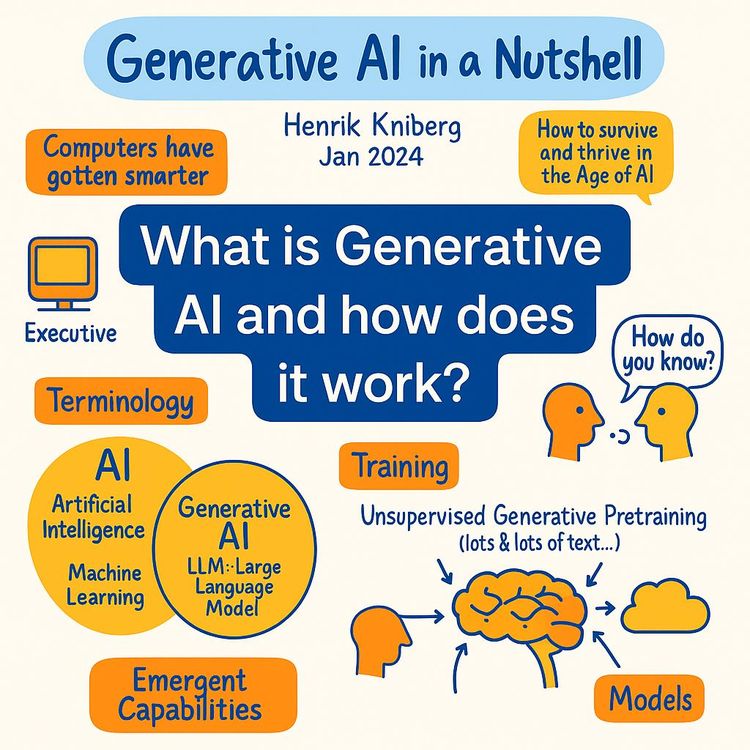
Video Course: What is Generative AI and how does it work?

Video Course: How to Use ChatGPT from Beginner to Professional
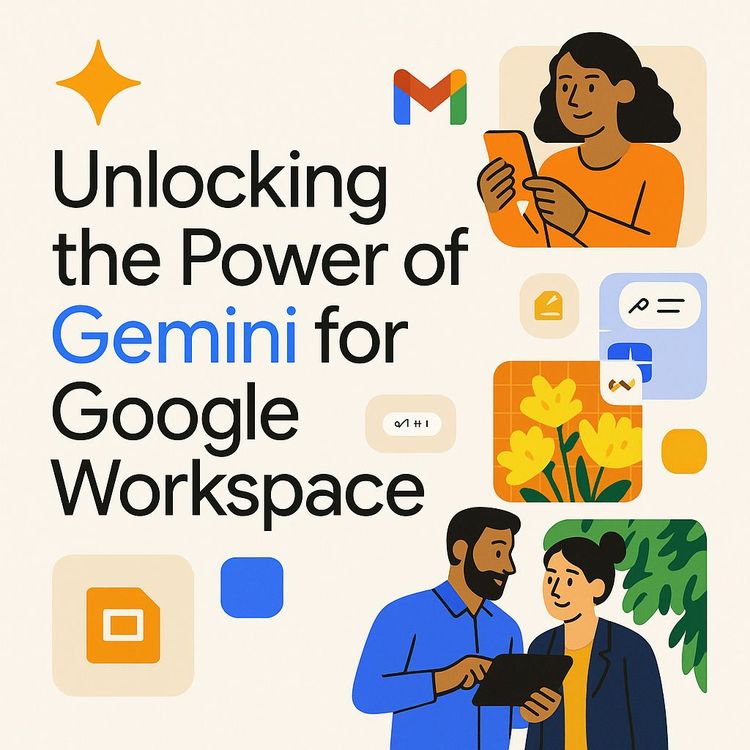
Video Course: How to Use Google Gemini for Google Workspace to Boost Productivity

Video Course: How to Use Claude 3.7 AI - Tips for Beginners!

Video Course: ChatGPT for Data Analytics: Full Course - from Beginners to Professional

Video Course: Generating Images and photos With ChatGPT?

Video Course: Generating Images & Photo's with MidJourney

Video Course: Generating Design's with Microsoft Designer and AI

Video Course: Generating Design's with Canva.com and AI
Join 20,000+ Professionals, Using AI to transform their Careers
Join professionals who didn’t just adapt, they thrived. You can too, with AI training designed for your job.