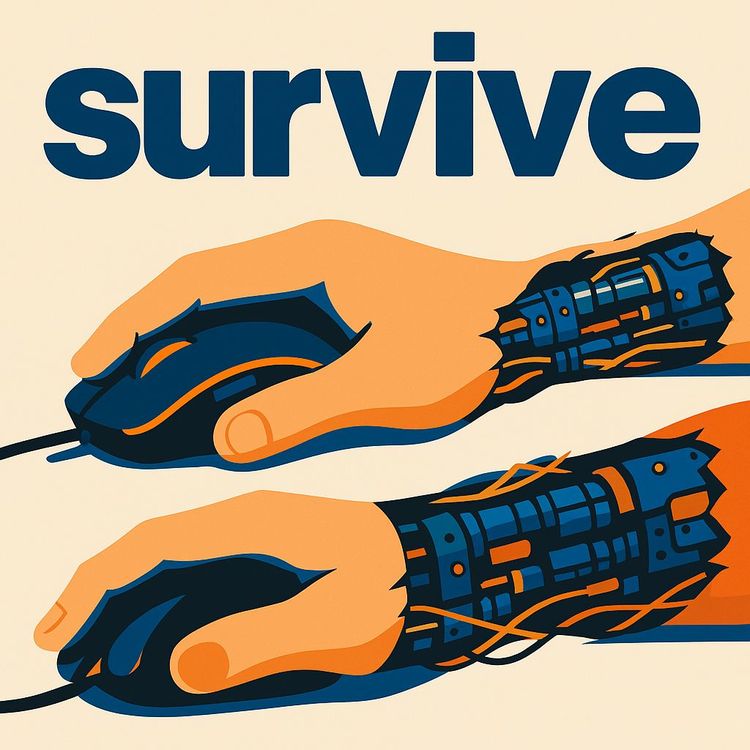
Surviving AI in Graphic Design: Skills, Income, and Strategy (Video Course)
AI is squeezing the bottom of graphic design, but the top is growing. This course shows you how to move up,sharpening judgment, taste, and strategy that AI can't copy, plus building income that doesn't vanish overnight.
Related Certification: Certification in Applying AI to Graphic Design for Career and Income Growth
Also includes Access to All:
What You Will Learn
- Assess which market tier you occupy and plan a move to the strategic layer
- Write specific emotional and business objectives before starting any project
- Build visual intelligence and refined taste through cross-disciplinary study
- Direct and refine AI output to remove errors and ensure consistent identity
- Develop diversified revenue: niche specialization, assets, teaching, audits, and retainers
Study Guide
Let's not pretend this is a normal moment in graphic design. The tools changed, the market changed, and the old rules about "being good at Photoshop" no longer mean what they used to. This course exists because a lot of designers are quietly panicking, and a smaller group is quietly getting ahead. The difference between those two groups is not talent. It is positioning, judgment, and the willingness to build skills that AI cannot copy.
What you're about to read is a complete survival guide for the AI era of graphic design. It covers the new structure of the industry, the collapse of average work, the five human competencies that still command premium fees, and the revenue streams that make your income resilient. We'll go from basic concepts to advanced strategy, with practical examples and actions you can take immediately.
By the end, you'll understand why the bottom of the market is being compressed, why the top is expanding, and exactly where you need to stand. You'll also have a clear plan to move upward before the market moves you involuntarily.
The Great Split: Three Tiers of Graphic Design
The market is no longer one market
The first thing you need to accept is that graphic design is splitting into distinct layers. This is not a subtle shift. It's a structural reorganization. Work that used to be considered acceptable is now everywhere, produced by AI, templates, and people with no formal training. The barrier to making something that looks "fine" has collapsed.
The industry is separating into three tiers, and each one has different rules, risks, and rewards.
Tier one: the saturated layer
This is the bottom. It's fast, clean, usable design driven by speed and output volume. AI-generated work, template-based design, and what people call "AI slop" all live here. The defining feature is that anyone can produce technically acceptable work with almost no friction. A small business owner can generate a logo, a social media post, or a basic brand kit without hiring a designer. That means the value of this work is falling fast.
If your entire offer is "I can make quick, clean graphics for low-budget clients," you are standing in the most dangerous part of the market. This layer is becoming fully self-service. Many designers who operate here will be displaced, not because AI is better than them, but because the clients no longer need to pay for what AI gives them for free.
Tier two: the AI-directed middle layer
Companies in this tier still need designers, but the role is changing. Instead of executing every element from scratch, the designer becomes a director of AI output. You guide the prompts, make directional decisions, refine generated results, and ensure consistency across deliverables. You still control the direction, but AI handles the heavy production lifting.
This is a shift from hands-on execution to orchestration and curation. The designer who succeeds here is not the fastest mouse hand. It's the person who can spot a bad proportion, fix a hallucinated detail, and keep a brand coherent across thirty touchpoints.
Tier three: the strategic layer
At the top, design is built on research, intent, and psychological understanding backed by real skill and experience. Think about a major rebrand for a corporation like Adidas. Whether it's handled in-house or by an agency, the work demands nuanced decisions about audience appeal, emotional resonance, and market positioning. AI cannot make those calls.
At this level, AI is used for research, ideation, rapid exploration, efficiency gains, and mockup creation. It is never a replacement for strategic thinking. The intent, the strategy, and the human insight remain exclusively human. This is where the premium is expanding.
Two examples to make it concrete
Example one: A local bakery needs a logo. A few years ago, they might have paid a freelancer a few hundred dollars. Now they open an AI tool, type "warm minimalist bakery logo with wheat icon," and get five usable options in thirty seconds. The freelancer who only offered basic logo design loses the job.
Example two: A fintech company needs a full brand identity that must feel trustworthy to older investors and modern to younger users. They need packaging for the app, a typography system, motion guidelines, and a launch campaign. AI can generate moodboards and rough concepts, but it cannot decide the emotional strategy, maintain coherence across every asset, or explain why one direction will build more trust than another. That work still commands serious fees.
Self-check for this section
Ask yourself honestly: If a client could generate their own basic design work, what would they still need from you? Does your current value proposition emphasize speed of execution or quality of thinking? Which tier do you currently operate in, and which tier do you want to be in? Your answers will tell you how urgent your repositioning is.
The Death of Average Design
Average work has lost its economic value
When AI makes average work incredibly easy to produce, average work stops being valuable. This is already visible online. Much of the design on the internet now looks technically acceptable,solid principles, maybe some fashionable brutalism, a grain texture thrown on top,but completely interchangeable. The barrier to visual acceptability has collapsed, and that means basic execution is no longer a differentiator.
Designers whose entire value proposition is built on producing competent, standard work are standing on unstable ground. The market no longer rewards basic execution because basic execution is now free.
The homogenization problem
There's another layer to this. Contemporary design output is becoming visually uniform. Everyone pulls from the same inspiration sources, follows the same trends, and uses the same AI tools trained on the same patterns. The result is a landscape where designers look identical to one another. AI accelerates this because it reproduces existing patterns instead of breaking them.
When everyone can access the same aesthetic, the aesthetic itself stops being valuable. What becomes valuable is the judgment behind the choices.
Judgment is the new currency
Here's the core shift: Your worth as a designer is no longer tied to your ability to create something on a screen. It now lives in your capacity to make deliberate, informed decisions about what should exist in the first place.
Clients do not pay for pixels. They pay for outcomes,clarity, perception, trust, attention, and market positioning. A logo is not valuable because it is a vector file. It's valuable because it makes a company look credible, attracts the right customers, and communicates the right emotion. That distinction separates the replaceable from the irreplaceable.
Example one
Designer A receives a brief for a coffee brand. They immediately open Illustrator and start trying fonts and colors. They produce a clean, trendy logo with a coffee cup icon. It looks fine. Designer B receives the same brief. Before opening any software, they write down: "This needs to feel premium but approachable, attract young professionals without alienating older customers, and stand out from the minimalist coffee brands flooding the market." Then they make every visual decision from that frame. Designer B's work may look simpler, but it is strategically loaded. That's the difference clients feel but can't always articulate.
Example two
Two designers are asked to create a social media graphic. Designer A uses a template, swaps the text, and delivers in ten minutes. Designer B asks what action the graphic should drive, what emotion the audience should feel, and how it fits into the larger campaign. The first deliverable is faster. The second one actually works. Over time, the second designer builds a reputation that commands higher fees.
The rise of taste
Taste is one of the most mentioned and least understood concepts in design. It is not pretentiousness. It is a real, trainable capacity. Taste is the ability to recognize what feels intentional, refined, and emotionally appropriate for a given context.
Key characteristics of taste: it is about selection,what you remove, what you simplify, which direction you choose. It involves restraint,understanding when enough is enough. And it is not correlated with technical ability. Some designers know every keyboard shortcut yet produce mediocre work. Others with half the technical skill create work that genuinely connects.
AI struggles with taste because it tends to overproduce everything. It lacks the human capacity for restraint,the confidence to leave things simple, to resist adding one more element, to know when a design is complete. That restraint is a competitive advantage.
How to build taste
If your inspiration comes exclusively from Behance, Dribbble, and Instagram trends, your work will look identical to everyone drawing from the same sources. You need to expand beyond design-specific platforms.
Study architecture for spatial thinking and proportion. Study film for narrative pacing and emotional direction. Study fashion for color combinations and trend cycles. Study photography for composition and lighting. Study packaging for practical constraints and materiality. Observe physical environments,take photos of interesting signage, textures, and layouts. Pay attention to raw human emotion and how visuals trigger it.
Then practice restraint consciously. In your own work, experiment with removing elements until the design cannot function without them. That exercise alone will sharpen your taste faster than watching a hundred tutorials.
Problem Framing: The Underrated Skill
The average designer's mistake
Most average designers jump immediately into execution questions. What color should this be? Which font should I use? Should I add a grain texture? These are surface-level concerns. They address the appearance of the work without questioning its purpose.
The strategic designer's approach
Stronger designers step back before touching any software. They ask: Who is this design actually for? What emotions should this communicate? What is the actual business goal? What specific problems need solving? Why does this need to exist at all?
This line of questioning represents a fundamentally different level of thinking. It's the difference between decorating and designing. Clients are not paying for pixels,they are paying for outcomes: clarity, perception, trust, attention, and market positioning.
Why AI fails at problem framing
AI does not fully understand context. It predicts patterns based on training data; it does not comprehend human nuance the way people assume it does. When you ask AI for a design, it generates probable output. It does not ask why that output should exist or whether it serves a deeper purpose. That gap is exactly where human designers become irreplaceable.
The pre-design objective habit
Before beginning any design project, write down a real objective. Not a vague one. A specific emotional and business goal. This simple practice separates strategic designers from the vast majority of practitioners who skip directly to aesthetics.
Here are a few examples of the kind of objective you should write before opening any software:
Example one: brand refresh
"This needs to feel premium but accessible to first-time customers." That sentence will guide every font, color, and spacing decision. It prevents you from drifting into a style that looks expensive but feels cold.
Example two: targeted outreach
"This needs to attract younger customers without alienating existing older ones." That tension forces you to avoid trends that only appeal to one demographic and find a visual language that bridges both.
Example three: financial service
"This needs to feel trustworthy and established, not flashy." That objective kills the urge to use neon gradients or playful type. It anchors the work in credibility.
Example four: event promotion
"This needs to feel energetic and urgent without seeming chaotic." That line keeps you from overloading the layout with competing elements. It forces hierarchy and clarity.
Write objectives like these before every project. It takes five minutes and immediately moves you from production work to strategic work.
Visual Intelligence and AI's Greatest Weakness
Defining visual intelligence
Visual intelligence is the trained ability to identify design problems instantly,bad spacing, weak hierarchy, unbalanced composition, inconsistent proportions. It develops through deliberate observation and practice over time. It's what lets you look at a layout and know something is off before you can explain why.
AI's primary creative weakness: inconsistency
The most significant weakness of AI in design is not creativity, speed, or even taste. It is consistency. AI systems exhibit several failure modes that reveal themselves the longer you look.
First, detail hallucination. AI invents details that do not align with reality or the rest of the design. A generated product shot might have a label with gibberish text or a shadow that falls in the wrong direction.
Second, proportion drift. Elements that should remain constant subtly change between iterations. A logo mark that appears in one size suddenly shifts its internal spacing when generated again.
Third, logic errors. AI introduces elements that make no sense in context. A chair might have five legs. A hand might have six fingers. A window might be placed where a wall should be.
Fourth, stylistic drift. The visual style subtly changes as iterations progress, breaking coherence. A campaign that starts with warm, muted tones slowly becomes cold and saturated without any human direction.
The coherence problem
Anyone can generate one impressive AI image. But maintaining a coherent visual identity across an entire campaign,packaging, social media, websites, motion graphics, typography systems,is significantly harder. This is the gap that human designers fill.
AI can generate possibilities, but humans must select the workable options, refine AI output to remove hallucinations and errors, ensure stylistic consistency across all touchpoints, and apply judgment about what works and what does not.
Example one
A designer uses AI to generate ten logo concepts for a skincare brand. Five look great at first glance. But on closer inspection, two have inconsistent letter spacing, one has a leaf shape that morphs into a blob, and one has a color that shifts slightly from the rest of the palette. The human designer selects the strongest concept, fixes the spacing, redraws the leaf, and locks the palette. That final polish is what the client actually pays for.
Example two
An agency needs a campaign for a new beverage. AI generates beautiful individual images of the can, but each image has slightly different lighting, the logo placement drifts, and the background color shifts. The art director steps in, establishes strict guidelines, and directs the AI to produce within those constraints. The result is a campaign that feels unified. Without the human director, it would feel like a random collection of pretty pictures.
The future workflow
The future of design work with AI is not humans versus AI. It is humans directing and refining AI. The premium skill is selecting and curating: knowing what works and what absolutely does not. The designer who masters this role becomes more valuable, not less.
Creativity, Pattern Collision, and Idea Archives
Creativity is trainable
Contrary to the myth that creative people are born different, creative thinking is largely a trainable skill. A significant component of creativity comes from pattern collision,taking ideas from different worlds and combining them in unexpected ways.
Why humans have the creative advantage
AI tends to generate probable outcomes,the most statistically likely response to a prompt. Creativity, however, often comes from improbable combinations,connections that do not follow established patterns. This is precisely where humans maintain a significant advantage over AI systems.
Broadening creative inputs
To become more creative, intentionally diversify what you consume. Study architecture for spatial thinking. Study fashion for color combinations. Study film for narrative pacing. Study photography for composition. Study packaging for practical constraints. Observe physical environments,take photos of interesting signage, textures, and layouts. Pay attention to raw human emotion and how visuals trigger it.
Example one
A designer struggling with a boring SaaS landing page studies brutalist architecture and borrows the idea of raw, exposed structure. They apply that thinking to the UI, creating a layout that feels honest and intentionally unpolished. The result is a site that stands out in a sea of generic SaaS templates.
Example two
A packaging designer studies fashion photography and notices how high-end brands use negative space and unexpected cropping. They apply that to a tea box design, leaving large empty areas and cropping the product image in an unusual way. The result feels premium and editorial, far removed from the cluttered tea packaging on the shelf.
Creative constraint exercises
Constraints paradoxically generate creativity. Try these exercises:
Design an entire project using only one typeface family. Remove color entirely and solve problems through value and form. Limit yourself to circles, or triangles, or rectangles only. Eliminate gradients and find alternative solutions. These restrictions force creative problem-solving that open-ended briefs do not.
The power of idea archives
Build a personal library of visual inspiration. Save every interesting composition you encounter. Document unique designs that grab your attention. Organize by feeling, style, or application rather than just category. Review regularly to spot patterns in what attracts you.
This mental library becomes a powerful creative resource over time. It enables you to draw from connections that others miss. The designer with a rich idea archive never stares at a blank canvas for long.
Developing a Point of View
Why perspective matters more than style
AI can imitate styles. It can imitate trends. It can imitate aesthetics. What AI cannot do is possess a genuine perspective. People follow human creators because humans have viewpoints, opinions, and authentic preferences.
Avoiding visual genericness
One of the worst positions for a designer during the AI era is visual genericness,work that could have been produced by anyone because it draws from the same trends everyone else follows. Stop chasing every design trend that appears online. Memorable designers are opinionated designers. Their work captures attention not because it follows the moment, but because it reflects a consistent way of seeing.
Identifying your own point of view
You do not need to force a fake signature style into everything you create. Instead, notice recurring themes in your work,what aesthetics naturally attract you? Examine your preferences: What kind of work do you genuinely admire? Document your opinions: What design decisions do you believe are wrong? What would you never do? Then commit to a direction. Bold, minimal work? Playful, colorful expression? Premium, restrained luxury?
Example one
A designer realizes they are consistently drawn to high-contrast, black-and-white work with sharp typography. They stop trying to make soft, pastel branding because it's trendy. They lean into their natural preference, and over time their portfolio becomes unmistakably theirs. Clients start coming to them specifically for that bold, graphic style.
Example two
Another designer notices they always simplify logos to the absolute minimum. They document that opinion: "A logo should be reducible to a single memorable shape." They write about it, talk about it, and apply it consistently. Soon they become known as the designer who makes brutally simple marks. That reputation is impossible for AI to replicate.
Memorable design characteristics
In a world flooded with content,especially AI-generated content,being technically good is no longer sufficient. The most memorable work tends to be clearer than competing work, simpler than expected, and emotionally direct rather than intellectually obscure.
Many designers hide behind complexity because it looks impressive. But memorable designs usually have a strong concept combined with intentional simplicity. Clarity and emotional directness outperform complexity in a saturated visual environment.
Economic Diversification: Revenue Streams for the AI Era
The flexibility of design skills
Graphic design is one of the most flexible skill sets available in the current economy. Designers who diversify their income sources create resilience against market shifts,including AI disruption,while those who rely on a single client-work stream remain vulnerable. Here are the revenue streams that matter now.
1. Traditional client work with specialization
Client work is not dead. People still pay well for professional design, especially when the designer specializes. The key adaptation is niching down. The designer known for restaurant branding, YouTube thumbnails, or premium packaging is no longer competing against every designer on the internet. They compete in a much smaller pool and charge significantly higher fees because their specialization signals expertise.
Example one
A generalist designer competes with thousands of freelancers for every logo project. A designer who only does restaurant branding gets referred by restaurant owners, builds a portfolio that speaks directly to that niche, and charges three times the generalist rate. The work is not better; the positioning is.
Example two
A designer focuses exclusively on YouTube thumbnails for finance channels. They learn what makes people click, develop a repeatable process, and become the go-to person for that specific need. Their calendar is full because no one else in that niche has their depth of experience.
2. Personal brand development
A personal brand is the most powerful amplifier among all income streams. It creates opportunities that simply do not exist otherwise. Clients find you instead of you seeking clients. Sponsors approach you with partnership offers. Collaborations emerge organically. Business opportunities materialize without active pursuit.
A personal brand is not itself an income stream,it multiplies every other stream on this list. The key is finding a niche where you can deliver genuine value and using your design skills to fully leverage that brand's presence. Understanding marketing theory and psychology transforms this from a content creation exercise into a strategic positioning endeavor.
3. Digital assets and products
Instead of selling work once, sell it repeatedly. Asset categories include mockups, templates, icon packs, font families, social media kits, presentation decks, and brand guideline templates. These can be sold hundreds or thousands of times without additional client interaction.
The model shifted from "one project, one payment" to "one creation, many purchases." While AI is beginning to affect this space, well-crafted assets from respected designers retain significant value. The first time a designer earns more from a single Photoshop mockup than from a full client project represents a paradigm shift in understanding what design work can be.
Example
A designer creates a set of realistic device mockups and lists them on a marketplace. Each sale is small, but over a year the mockups generate more income than several client projects combined. The designer does no additional work after the initial creation.
4. Knowledge monetization
Your accumulated experience is more valuable than you realize. Many designers assume everyone knows what they know,meanwhile, someone with half their experience is teaching on YouTube, creating courses, running workshops, building communities, and writing books.
A designer who understands color theory, branding, typography, layout, packaging, creative thinking, and business communication possesses years of monetizable knowledge. Teaching through online courses, workshops, community building, and educational content creation provides a scalable income stream that does not require per-project time investment. Knowledge monetization also reveals the depth of your own expertise in unexpected ways.
5. Design audits and consulting
Businesses often know something feels wrong with their branding, website, packaging, or marketing,but they cannot identify exactly what. A design audit allows you to charge for expertise and recommendations without producing new design work.
This is especially valuable because it positions you as a consultant rather than a commodity service provider, it requires no production software, and it can lead to larger implementation projects. It leverages judgment,the most defensible human capability,rather than production capacity.
Example
A designer is hired to audit a company's website. They spend a week reviewing the layout, hierarchy, typography, and user flow. They deliver a report with specific recommendations. The company pays for the audit and then hires the designer to implement the changes. The audit itself was pure judgment.
6. Recurring creative services
Unlike logo projects or one-off branding engagements, ad creative design provides recurring revenue. Companies constantly testing ads across social media platforms need a steady stream of creative assets every month. This creates ongoing relationships and predictable income that standalone projects do not provide.
Example
A designer signs a monthly retainer with an e-commerce brand to produce twenty ad variations across Facebook, Instagram, and TikTok. The work is ongoing, the income is predictable, and the relationship deepens over time.
7. Design-focused newsletters
Consistently sharing valuable insights with a targeted audience can build substantial businesses. Newsletter creation requires significant upfront investment but compounds over time as subscriber bases grow and trust deepens. This channel synergizes with personal brand development and knowledge monetization.
Example
A designer starts a weekly newsletter sharing practical branding tips. After a year, the list has grown to several thousand subscribers. Sponsorships, premium content, and product launches follow. The newsletter becomes a distribution channel for everything else they do.
8. Niche software tools and resources
Designers do not need to become programmers to create tools. Partnerships with developers,either through revenue sharing or direct hiring,allow designers to productize their expertise in software form. The key prerequisite is a solid plan and genuine understanding of the problem being solved.
Example
A designer notices that freelancers struggle to create consistent brand guidelines. They partner with a developer to build a simple tool that generates guideline templates. The designer handles the design and user experience; the developer handles the code. They split revenue.
9. Product brands
Creating a physical product brand,posters, clothing, stationery, or other merchandise,uses existing design skills to build something beyond client services. The transition from service provider to product creator represents a fundamental shift in how design skills are monetized. Product brands built on strong visual identities are inherently difficult for AI to replicate.
Example
A designer creates a line of minimalist posters based on architectural landmarks. They build a small online store, market through their personal brand, and generate sales without client interaction. The design work is done once; the product sells repeatedly.
10. Licensing
Licensing allows designers to retain ownership while granting companies rights to use their work. Patterns, illustrations, photographs, and digital assets can generate passive income through marketplaces such as Creative Market, Adobe Stock, Shutterstock, and Envato.
A single pattern licensed across multiple companies, products, and campaigns generates ongoing revenue without ongoing effort. One pattern on clothing, packaging, websites, and marketing materials for several different brands creates entirely passive income.
11. Portfolio diversification
Financial freedom rarely comes from a single income stream. The most robust approach combines multiple streams: client work, template sales, educational content, mentorship, and product brands operating simultaneously. None needs to be enormously successful individually; together they create resilience that no single revenue source can match. If one stream fails, the others continue functioning.
Example
A designer earns base income from specialized client work, sells templates on the side, runs a small YouTube channel that attracts clients, and licenses a few patterns. When a major client pauses work, the other streams keep cash flowing. That's the difference between fragile and resilient.
Implications for Different Players
For individual designers
The primary implication is the urgent need to reposition professional identity away from production capability and toward strategic judgment. This requires deliberate action across multiple dimensions: expanding inspiration sources beyond design-specific platforms, institutionalizing problem-framing practices before project initiation, developing recognizable points of view, and building diversified income portfolios that reduce dependence on any single revenue source.
For design education
Educational institutions must adapt curricula to reflect the new market reality. Technical software proficiency, while still necessary, is no longer sufficient. Design education must emphasize problem framing, strategic thinking, taste development, cross-disciplinary inspiration, and business acumen. Students should graduate with an understanding of how to use AI tools as part of their workflow while developing the distinctly human capabilities that AI cannot replicate.
For design agencies and studios
Agencies must reconsider their service offerings and internal workflows. The agencies that thrive will be those that integrate AI into ideation, exploration, and efficiency while maintaining human control over strategy, direction, and refinement. Agency positioning should emphasize strategic capability rather than production volume,the value proposition that AI cannot match.
For business clients
Businesses procuring design services should understand the distinction between saturated-layer and strategic-layer design work. While AI-generated or template-based design may be appropriate for low-stakes applications, strategic brand work,the kind that builds perception, trust, and market positioning,requires human judgment that AI cannot provide. The premium paid for strategic design work reflects genuine value, not artificial scarcity.
For policy and institutional stakeholders
The transformation of the design industry has implications for workforce development policy. Investments in creative industry training should emphasize strategic capabilities,critical thinking, cross-disciplinary knowledge, business understanding,rather than purely technical skills that AI increasingly renders commoditized. Professional development programs should support mid-career designers transitioning from production-focused roles to strategic positions.
Action Plan: From Awareness to Execution
For individual designers
Start with a personal positioning audit. Assess whether your current work falls primarily in the saturated layer or the strategic layer. If the former, develop a concrete transition plan. Then implement structured problem framing. Before beginning any new project, write explicit objectives covering target audience, emotional response, business goals, and problems to be solved.
Expand inspiration sources systematically. Dedicate regular time to studying architecture, film, fashion, photography, and physical environment design rather than relying exclusively on design platforms. Build an idea archive. Save compelling compositions, unique designs, and interesting visual approaches encountered in daily life. Review and organize this archive regularly to strengthen creative judgment.
Develop a point of view. Identify recurring themes in your personal work, articulate them clearly, and deliberately cultivate them. Resist the pressure to chase every trend. Begin diversifying income streams. Select two or three revenue streams beyond client work,digital assets, knowledge products, licensing, design audits,and develop them incrementally. Identify a specialization niche. Choose a specific design subfield where deep expertise can be developed and communicated, reducing competitive pressure and increasing pricing power.
For design educators
Integrate AI literacy into curricula. Students must understand AI capabilities and limitations, learning to use AI tools for ideation and efficiency while developing distinctly human competencies. Emphasize strategic thinking over technical execution. Restructure courses to prioritize problem framing, audience analysis, and business goal alignment.
Create cross-disciplinary learning opportunities. Expose students to architecture, film, fashion, and other visual disciplines to develop broader taste and creative reference points. Teach business fundamentals. Design graduates need to understand pricing, positioning, diversification, and the economics of different revenue models.
For agencies and studios
Develop AI integration protocols. Create clear guidelines for how AI is used in ideation, exploration, and production while preserving human control over strategy and refinement. Reposition service offerings around strategy. Communicate strategic capability as the primary value proposition, with production as a supporting element rather than the core offering. Invest in team development. Support designers in developing taste, judgment, and point of view as deliberately as technical skills are developed.
Key Insights That Hold Everything Together
The market is compressing, not disappearing
AI is compressing the bottom of the design market, not eliminating the profession. Designers whose value rests on quick, basic graphic production face genuine displacement; designers whose value rests on strategic thinking face expanding opportunity.
The difference is how you use AI
The distinction between designers will increasingly be "how you use AI," not "whether you use AI." AI adoption is becoming universal; differentiation comes from the sophistication of AI deployment, not its presence or absence.
Judgment is the new core competency
The ability to make deliberate, informed decisions about what should exist,and what should not,is more valuable than the ability to produce visual work. Taste is trainable and essential. Developing taste requires expanding beyond design-specific inspiration into architecture, film, fashion, photography, and physical environments.
AI's greatest weakness is inconsistency
While AI generates impressive individual images, it cannot maintain coherent visual identity across campaigns, packaging, platforms, and motion design. Problem framing precedes visual execution. Writing explicit emotional and business objectives before touching software separates strategic designers from production designers.
Creativity is pattern collision
Improbable combinations of ideas from different domains produce genuinely creative work; AI produces probable outcomes based on existing patterns. Point of view is irreplaceable. AI can imitate styles but cannot possess perspective, opinion, or conviction.
Economic resilience requires diversified income
Relying on client work alone leaves designers exposed; combining multiple revenue streams,from digital assets to knowledge products to licensing,creates durable financial security. Specialization is a survival strategy. Niche positioning reduces competition and increases pricing power.
Teaching reveals expertise
Knowledge monetization not only generates income but also clarifies and deepens professional understanding. Memorable design is usually simple design. Clarity and emotional directness outperform complexity in a saturated visual environment.
Quotes worth remembering
"AI doesn't replace great design thinking. What AI is actually doing is compressing the bottom of the market."
"Clients are not really paying you for pixels. They are paying for outcomes,clarity, perception, trust, attention, positioning in the market."
"Taste is really all about selection. It's what you remove, what you simplify, what direction you choose to actually go in."
"AI constantly hallucinates details. It changes proportions. It invents weird logic. It drifts stylistically."
"AI tends to generate probable outcomes. Creativity often comes from improbable combinations."
"In a world flooded with content, especially flooded with AI-generated work, being technically good is no longer enough."
"Memorable designers are usually opinionated designers."
"Financial freedom rarely comes from one income stream. Usually comes from multiple streams supporting each other."
"The designers who stay valuable moving forward will be the ones who understand what they're actually doing and why."
Check Yourself: Questions That Reveal Your Position
Ask these before you move on
If a client could generate their own basic design work, what would they still need from you? Does your current value proposition emphasize speed of execution or quality of thinking? Which tier do you currently operate in, and which tier do you want to be in?
What is the last project where you wrote down an explicit emotional and business objective before opening any software? If you can't remember, that's a signal. What are three non-design sources of inspiration you've studied in the last month? If the answer is zero, your taste is not developing as fast as it could.
Do you have a point of view that someone could describe in one sentence? If not, what recurring themes do you notice in your own work? Which two or three revenue streams beyond client work are you actively building? If the answer is none, your income is more fragile than you think.
These questions are not comfortable, but they are useful. The designers who stay valuable moving forward will be the ones who understand what they're actually doing and why.
Conclusion: Thinking Wins Where Speed Cannot Compete
The graphic design profession stands at a pivotal inflection point. Artificial intelligence has permanently altered the economics of visual production, collapsing the value of average work while simultaneously increasing the premium on genuine strategic thinking, refined judgment, and clear creative vision. The profession is not being destroyed; it is being reorganized, and the reorganization creates both casualties and opportunities.
The designers who will thrive in this new landscape are those who recognize that their value never fundamentally resided in the ability to manipulate pixels. It resided,and continues to reside,in the capacity to understand problems deeply, make deliberate decisions about what should exist and why, and communicate with clarity and emotional resonance. These capabilities are distinctly, irreducibly human. AI can accelerate the production of visual work, but it cannot replace judgment, taste, creativity born from improbable combinations, or the perspective that emerges from lived experience and genuine conviction.
The path forward requires deliberate action: repositioning professional identity, developing capabilities that AI cannot replicate, and building diversified economic foundations. Those who take this action will find that the AI era does not diminish their value,it amplifies it. The saturated layer will continue to commoditize, but the strategic layer will expand, and the designers who occupy it will be those who understood, early and clearly, that thinking wins where speed cannot compete.
You now have the full map. The only remaining question is whether you'll use it.
Frequently Asked Questions
This FAQ exists to cut through the noise and answer the real questions designers face as AI reshapes graphic design. It moves from the immediate changes in the industry to the skills that keep you relevant, then into the income streams that build resilience. Read straight through, or skip to the section that hits you hardest.The New Design Landscape
What is actually happening in the graphic design industry right now?
The industry is splitting into two distinct factions. One side is the saturated layer,fast, clean, usable design driven by speed and output. This is where AI-generated work and templates live. The other side is the strategic layer, where design is built on research, intent, psychology, and real skill. AI compresses the bottom of the market, making basic design faster, cheaper, and more saturated. But the higher strategic layers remain largely untouched. Demand for thoughtful, human-made design is bigger than most people realize, especially for work requiring nuanced decisions and deep audience understanding.
Is AI going to replace graphic designers entirely?
No, but it will fundamentally reshape the industry. AI does not replace great design thinking. What it does is compress the bottom of the market, where speed and volume are the primary value drivers. The industry separates into three tiers.
Lower tier: Small businesses and low-budget clients generate their own quick logos, social posts, and basic branding with AI. This layer becomes fully self-service.
Middle tier: Companies still need designers or art directors, but the role shifts toward guiding AI output, making decisions, refining results, and ensuring consistency.
Top tier: High-level designers and studios use AI for research, ideation, rapid exploration, and mockup creation,but the thinking, strategy, and intent remain human.
Why is "average" design becoming a liability?
Average work is incredibly easy to produce with AI, which means average work loses value. The barrier to making something visually acceptable has collapsed. A design that would have been considered decent a few years ago is now everywhere,AI can generate it, templates can produce it, and beginners can get close quickly. If your entire value as a designer rests on producing technically competent but unremarkable work, you stand on shaky ground. Much of the design online already feels technically fine but visually indistinguishable, with designers following the same trends and producing work that blends into the background.
Why doesn't AI threaten the strategic layer of design?
AI struggles with context, nuance, and human judgment. When a brand like Adidas runs a rebrand, they don't simply prompt an AI for logo designs. The money, seriousness, and outcomes demand skilled, experienced humans who can choose nuances for a specific target audience, understand emotional response, make deliberate positioning decisions, and apply judgment about what works in context. AI predicts patterns,that's what it's trained to do. It does not understand human nuance the way people assume. The strategic layer,where design solves business problems, shapes perception, and communicates emotion,remains fundamentally human territory.
How do I know which tier my current work is in?
Ask yourself three honest questions.
First: If a client could generate their own basic design work, what would they still need from you? If the answer is "nothing," you're in the bottom tier.
Second: Does your value proposition emphasize speed of execution or quality of thinking? If speed is the main selling point, you're competing against AI directly.
Third: Do clients pay for your opinion, or only for your output? If they treat you as a pair of hands, you're replaceable. Move up by shifting from production to direction,framing problems, making strategic choices, and defending decisions with clear reasoning.
Should I stop taking low-budget clients?
Not necessarily. Low-budget clients can be a training ground, but they cannot be your endgame. The risk is staying there too long and letting cheap projects shape your portfolio and habits. If you take low-budget work, do it with intent: use it to practice problem framing, build visual intelligence, or test a niche. But set a timeline to move up. Low-budget clients are the most likely to leave you for AI tools because they value price over expertise. Your goal is to get clients who pay for judgment, not just execution.
Human Skills AI Can't Touch
Certification
About the Certification
Become certified in AI-proof graphic design strategy. Earners sharpen taste and judgment, price and package higher-value work, and build income streams that don't vanish overnight,ready to lead design decisions AI can't copy.
Official Certification
Upon successful completion of the "Certification in Applying AI to Graphic Design for Career and Income Growth", you will receive a verifiable digital certificate. This certificate demonstrates your expertise in the subject matter covered in this course.
Benefits of Certification
- Enhance your professional credibility and stand out in the job market.
- Validate your skills and knowledge in cutting-edge AI technologies.
- Unlock new career opportunities in the rapidly growing AI field.
- Share your achievement on your resume, LinkedIn, and other professional platforms.
How to complete your certification successfully?
To earn your certification, you’ll need to complete all video lessons, study the guide carefully, and review the FAQ. After that, you’ll be prepared to pass the certification requirements.
Other AI Video Courses
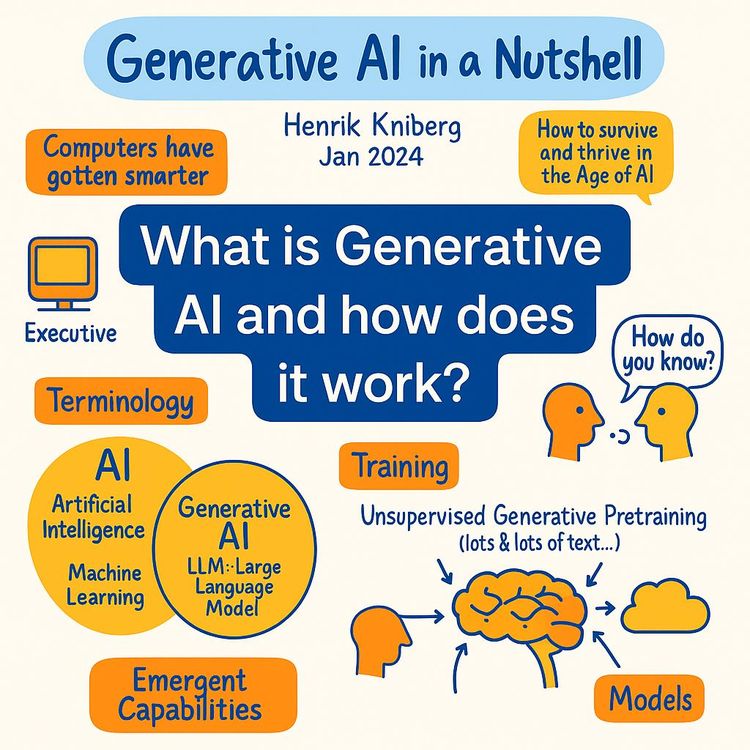
Video Course: What is Generative AI and how does it work?

Video Course: How to Use ChatGPT from Beginner to Professional
Video Course: How to Use Google Gemini for Google Workspace to Boost Productivity

Video Course: How to Use Claude 3.7 AI - Tips for Beginners!

Video Course: ChatGPT for Data Analytics: Full Course - from Beginners to Professional

Video Course: Generating Images and photos With ChatGPT?
Video Course: Generating Images & Photo's with MidJourney
Video Course: Generating Design's with Microsoft Designer and AI
Video Course: Generating Design's with Canva.com and AI
Join 20,000+ Professionals, Using AI to transform their Careers
Join professionals who didn’t just adapt, they thrived. You can too, with AI training designed for your job.