Train Your Brain Like AI: Learn Faster with Feedback Loops (Video Course)
Learn faster with an AI-inspired playbook for your brain. Set targets, run tight feedback loops, and separate training from performance. Curate high-yield inputs, use spaced repetition, and watch skills turn automatic. No hacks,just a system that compounds.
Related Certification: Certification in Implementing Feedback Loops for Faster Learning
Also includes Access to All:
What You Will Learn
- Differentiate and schedule Training vs. Inference sessions
- Curate 1-2 high-yield resources and build a single external database
- Design task-based feedback loops with clear metrics and immediate checks
- Implement spaced repetition and retrieval-focused practice
- Build an MLOps-style learning pipeline (learning rate, batching, regularization)
- Manage biological constraints: peak-energy deep work, sleep, and recovery
Study Guide
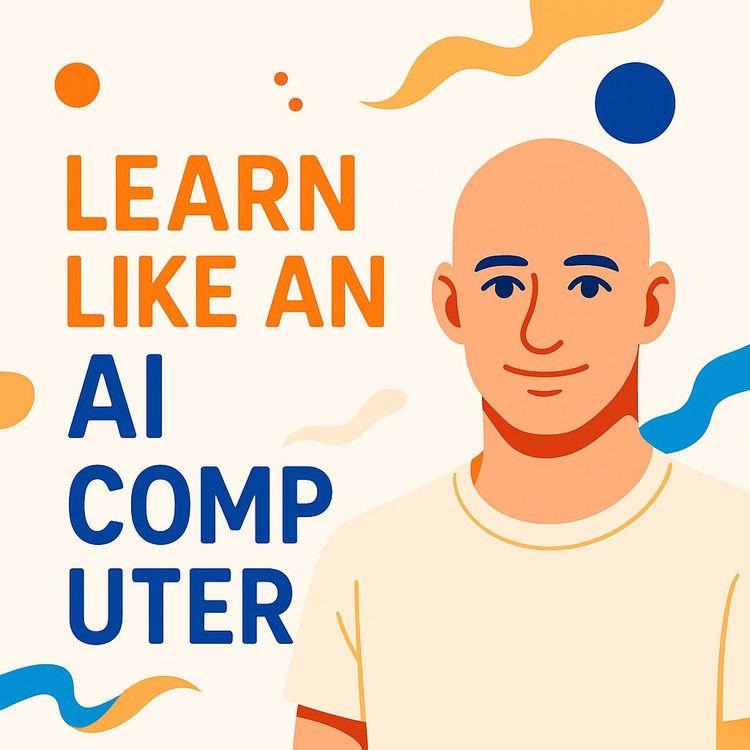
How To Learn Anything Like An AI Computer
Learning isn't luck. It's a process. AI models look magical on the surface, but under the hood they're doing something brutally simple: feed on high-quality data, try to do a task, get feedback, adjust, repeat. Billions of times.
Humans can do the same thing,without the billions. This course gives you a practical, AI-inspired framework to learn faster, retain more, and build expertise you can trust. You'll discover how to set up a "training pipeline" for your brain, why struggle is not a bug but the whole point, and how to design feedback loops that upgrade your skills until they feel automatic.
You'll walk away with a full-stack approach to learning from scratch: the theory (why it works), the method (how to run your training vs. inference modes), the tools (how to curate data, build an external database, and run spaced repetition), and the real-world playbooks for students, professionals, educators, and institutions. This isn't about hacks. It's about building a reliable system that compounds.
The Core Idea: Training vs. Inference
AI has two modes: training (slow, expensive, feedback-heavy) and inference (fast, cheap, automatic). Humans do too. Mixing them up creates frustration and burnout. Getting the distinction right unlocks motivation and precision.
Training mode:
High energy. Deliberate. Feedback-driven. You wrestle with the task, analyze mistakes, and adjust your mental model.
Inference mode:
Low energy. Automatic. You apply what you've already built. No new learning happens here,just execution.
Examples:
- Learning a language: Training is crafting sentences from scratch, getting corrected, and revising flashcards. Inference is chatting fluently with a friend without translating in your head.
- Running sales calls: Training is role-playing, reviewing recordings, and rewriting your script. Inference is the live call where it flows like muscle memory.
Mindset shift:
Don't expect inference-level performance when you're still in training. That disconnect is where most people give up. The struggle is proof you're in the right phase,not a sign you're failing.
Neural Networks: AI vs. Your Brain
Neural networks were inspired by the brain. Both systems are networks of nodes (neurons) connected by weights (synapses/parameters). Learning changes those connection strengths. The parallels give us a map for human learning that actually works.
Human brain advantages:
- Plasticity: Your brain rewires and even grows new connections in response to training.
- Energy efficiency: It runs on a tiny amount of energy compared to the power-hungry machines training AI.
- Generalized intelligence: You can transfer insight across domains,math to music, sales to storytelling.
- Parallelism: You can track multiple inputs,environment, emotion, memory,at once.
- Emotion and curiosity: You have intrinsic drivers AI doesn't. Use them.
Examples of these advantages:
- Plasticity in action: A guitarist drills chord transitions daily; within weeks, finger patterns feel natural and speed jumps without conscious thought.
- Generalization: A software engineer with a background in music uses rhythm to structure clean code and naming conventions, improving clarity.
Human brain disadvantages:
- Slow processing speed: You can't ingest data at machine rates.
- Low bandwidth: Reading, writing, and listening are limited-speed channels.
- Fatigue and biological needs: Sleep, nutrition, stress, and mood cap performance.
Examples of these disadvantages:
- Low bandwidth: Trying to read five textbooks leads to shallow understanding. You forget most of it within days.
- Fatigue: After a long day, tackling dense theory feels impossible. Your training mode is offline, even if your willpower isn't.
These aren't "problems" to fix. They're constraints to work with. Your job is to build a training system that respects them.
How AI Actually Learns (And What To Steal)
AI training has two big steps: data ingestion and feedback loops, repeated at scale. Here's how to adapt both.
1) Data ingestion:
AI models are fed high-quality, relevant data. They don't "understand" it at first,it's raw material.
2) The feedback loop (repeated endlessly):
- Action: Attempt the task (predict the next word, identify an image).
- Outcome: Compare output to the correct answer.
- Feedback: Measure how far off it was.
- Adjustment: Tweak internal weights to do better next time.
Examples (AI side):
- Language modeling: Predict the next word; adjust when wrong; repeat billions of times.
- Image recognition: Label images; compare to ground truth; adjust until accuracy rises.
Examples (human side):
- Writing: Draft a blog post; get peer feedback; analyze weak paragraphs; rewrite; repeat weekly.
- Piano: Practice a piece; record yourself; notice tempo drift; slow down sections; re-integrate; repeat over a month.
The takeaway: The loop is the learning. Reading about swimming doesn't upgrade your brain. Trying strokes, failing, adjusting, and repeating does.
The Training vs. Inference Blueprint
To "learn like an AI," you need to build both modes into your schedule and treat them differently.
Training mode (System 2 thinking):
- Hard by design.
- Fewer inputs, more doing.
- Tight feedback cycles.
- Done during your highest-energy hours.
Inference mode (System 1 thinking):
- Easy by design.
- Many outputs, minimal new effort.
- No new learning goal,just application.
- Done during lower-energy hours.
Examples of the split:
- Coding: Training = solving algorithmic problems, writing tests, refactoring with feedback. Inference = shipping routine features you already know how to build.
- Public speaking: Training = deliberate rehearsal with recorded run-throughs and notes from a coach. Inference = delivering the talk on stage.
Step 1: Curate High-Yield Data (Don't Drown Yourself)
Humans have low bandwidth. You can't consume everything. So curate brutally.
What to do:
- Pick 1-2 core resources per skill. Not 12. Focus increases retention.
- Build an external database: a single place you trust as your go-to reference. This can be a notebook, a digital doc, or a specific book you annotate into.
How to curate:
- Ask experts for "if you had to choose one resource" picks.
- Prioritize clarity over completeness.
- Prefer resources with exercises and solutions.
Examples:
- Studying anatomy: Choose one concise revision book and one bank of practice questions. Capture notes and diagrams into a single digital notebook.
- Learning copywriting: Commit to one classic textbook and one newsletter whose style you want to emulate. Create a swipe file of headlines and offers.
Tip:
High-yield means "most likely to be used in the real task." If it won't show up in practice or performance, it's trivia until proven otherwise.
Step 2: Build Task-Based Feedback Loops
Passive consumption doesn't create expertise. Tasks do. The closer the task is to your real performance, the better the learning transfer.
The loop:
- Action: Do the task (questions, drills, projects, reps).
- Outcome: Check results against a key, rubric, model, or mentor feedback.
- Reflection: Identify the precise misunderstanding or skill gap.
- Adjustment: Update your notes, fix your mental model, and try again.
- Repetition: Come back to the same task later with spacing.
Examples:
- Learning SQL: Write queries for real datasets; verify with expected outputs; note errors in joins and groupings; update your reference notes with examples; repeat weekly with new data.
- Practicing sales: Run mock calls; get scored on discovery questions and objection handling; isolate weak parts; script and rehearse improvements; test live and review recordings.
Tips:
- Shrink the task to the smallest real unit: one problem, one paragraph, one riff, one micro-skill.
- Immediate feedback beats delayed feedback for beginners.
- Use rubrics to keep feedback objective.
Step 3: Spaced Repetition (Beat the Forgetting Curve)
One exposure isn't learning; it's a preview. Use spaced repetition to transfer knowledge into long-term memory.
How to implement:
- Create flashcards for core facts and formulas.
- Schedule reviews at increasing intervals (e.g., day 1, day 3, day 7, day 14, day 30).
- Mix retrieval with application (practice questions, micro-projects).
Examples:
- Language learning: Decks for verbs, phrases, and sentence patterns; weekly speaking practice where you must use last week's cards.
- Medical study: Cards for diagnostic criteria and treatments; weekly mixed-case practice to force application.
Tip:
Always favor recall over recognition. Ask questions that make you produce the answer without cues. Retrieval is the workout; recognition is watching someone else lift.
Step 4: Design Your Learning Pipeline (Like MLOps for Your Brain)
AI teams run pipelines: data, training loops, metrics, iterations. You can do the same.
Define the target (what does "inference" look like?):
- Be specific: "Deliver a 20-minute talk without notes," "Solve LeetCode medium problems in 25 minutes," "Hold a 15-minute conversation in Spanish without English."
Choose metrics (your loss function):
- Error rate, speed, retention, or quality scores. Track them visibly.
Set a learning rate (difficulty step size):
- Too low: boredom and slow progress.
- Too high: overwhelm and quitting.
- Adjust weekly based on performance trends.
Use curriculum learning (order your challenges):
- Sequence from simple to complex. Master sub-skills, then integrate.
Batching (your minibatches):
- Practice in short, focused sets: 10 questions, 3 pages, 15 minutes of scales.
Regularization (prevent overfitting):
- Vary contexts: new problem types, different question formats, unfamiliar environments.
- Teach back (Feynman Technique) to ensure understanding beyond memorization.
Transfer learning (leverage what you know):
- Bring existing skills to new domains: math to data science, debate to sales, design to product strategy.
External database (RAG for humans):
- Retrieval-Augmented Learning = maintaining a single source of truth for refreshers. Your notes are your database; your brain retrieves when needed.
Examples:
- Data analysis pipeline: Objective = complete a full exploratory analysis in 90 minutes. Metric = time-to-insight and error count. Curriculum = foundational SQL → joins → window functions → exploratory plots. Minibatches = 5 query drills per session. Regularization = switch datasets weekly.
- Guitar pipeline: Objective = play a 3-minute piece at tempo without errors. Metric = clean takes per day. Curriculum = isolate difficult bars → integrate sections → full run-throughs. Regularization = practice on different guitars and tempos.
Step 5: Manage Biological Constraints (Look After the Machine)
You are not a computer. Work with your biology, not against it.
Energy management:
- Put training sessions in your peak hours. Put easy admin in troughs.
- Use short sprints (Pomodoro-style) with deliberate breaks.
Sleep, exercise, and nutrition:
- Sleep cements learning and clears waste from your brain.
- Exercise boosts mood and neurochemistry that supports plasticity.
- Stable nutrition prevents energy crashes.
Environment:
- Quiet, predictable space for training.
- Distraction-free tools: block sites, silence notifications, one tab.
Emotion and motivation:
- Tie your learning to meaning: why this skill matters for your life.
- Normalize struggle. It's the tax you pay up front for future ease.
- Gamify progress: streaks, visible dashboards, or studying with a partner.
Examples:
- A student schedules hard problem-sets right after breakfast and saves email and errands for late afternoon.
- A marketer sets up a standing desk and a single clean notebook, keeps a simple protein-forward lunch, and trains during a quiet block before meetings.
Quotes to remember:
"Whenever a task is really hard and you have to strain your brain to do it, that means you're training your brain and your brain is becoming more powerful."
"The more hard stuff you do now, the easier everything is later down the line."
"You might look at somebody who you think is really clever and see them doing everything effortlessly... That's because they've been through this difficult training process."
"Feeling tired all the time is often a consequence of lifestyle factors. Look after your body and you will have more energy for the task you need to do."
From Concept to Practice: Concrete Playbooks
Let's apply the framework to different roles and goals so you can see the pattern.
For students:
- Curate: One concise core textbook + one practice bank.
- External database: A single digital note set with key diagrams and definitions.
- Training: Daily active recall cards + timed mixed questions.
- Feedback: Check answers immediately, tag errors by type (misread, concept gap, careless).
- Spacing: Review weak topics after 1 day, 3 days, 7 days, 14 days, then monthly.
- Energy: Hard sessions in the morning; admin in the afternoon.
Examples:
- Biology: 25 mixed questions per session, immediate review, one-page "error map" updated after each session.
- Literature: Write 2 timed paragraph responses, compare to A-grade samples, revise thesis sentences, repeat.
For professionals:
- Curate: Pick one masterclass or book that maps directly to your core skill (sales, coding, design).
- Training: Deliberate practice blocks with measurable outputs (e.g., 3 outbound sequences, 1 refactor, 1 design case study).
- Feedback: Manager review, peer critique, or client KPIs.
- Spacing: Weekly skill deep-dives, monthly retrospectives.
Examples:
- Sales: Role-play objections for 20 minutes daily, analyze 2 recorded calls per week, update objection scripts, track close rates.
- Engineering: Solve 2 algorithmic problems twice weekly, review code clarity with a mentor, measure bug counts per feature.
For educators and trainers:
- Teach the training vs. inference model on day one.
- Replace info dumps with task-based learning: labs, cases, projects.
- Short feedback cycles: micro-quizzes, pair critiques, live code reviews.
- Visible progress: dashboards that track error types and improvements.
Examples:
- History: Students build timelines and defend cause-effect narratives; weekly arguments graded with a rubric.
- Design: Students redesign a landing page weekly with usability tests to validate changes.
For institutions:
- Protect deep work time (no-meeting blocks).
- Support physical health: sleep education, movement breaks, nutritious options.
- Reward deliberate practice efforts, not just final outputs.
- Provide tooling for spaced repetition and versioned knowledge bases.
Examples:
- Company-wide "maker mornings," manager training on feedback quality, and standardized post-project retrospectives.
- University implements a single platform for spaced repetition across courses and trains instructors to design feedback-first assignments.
Active Techniques That Multiply Results
Feynman Technique (teach-back):
Explain the concept simply to a friend or to yourself on paper. Every stumble marks a gap. Fix the gap, re-explain.
Interleaving:
Mix problem types and contexts within a session. It feels harder, but you learn the underlying structure, not just patterns.
Desirable difficulties:
Create small obstacles that force effort: closed-book practice, timed constraints, or changing the environment.
Examples:
- Law: Teach a case to a peer in 5 minutes; rotate through case types; do a closed-note oral defense weekly.
- Math: Mix algebra, geometry, and probability problems in one set; time the set; fix errors and redo the same set 3 days later.
Common Pitfalls (And How To Avoid Them)
Pitfall: Information hoarding.
Reading many resources creates the illusion of progress without skill. Solution: Commit to one core resource and one practice source for 30 days.
Pitfall: Waiting for confidence.
You get confidence by doing, failing, and surviving. Solution: Start with embarrassingly small tasks and scale.
Pitfall: Overreliance on tools (including AI) during training.
If a tool gives you the answer before you struggle, you rob yourself of adaptation. Solution: During training blocks, restrict tools until after your first attempt.
Pitfall: No metrics.
What isn't measured doesn't improve. Solution: Track completion, accuracy, and speed for your core tasks.
Pitfall: Inconsistent feedback.
Slow or vague feedback kills momentum. Solution: Choose tasks with immediate checks or set up peer feedback agreements.
Examples:
- A coder blindly copies Stack Overflow solutions. Fix: Solve from scratch first; only then compare and integrate improvements.
- A writer reads 10 books on storytelling, but never writes. Fix: Write 300 words daily, get weekly edits from a peer, revise.
Turning AI Concepts Into Human Tactics
Bridge a few AI training ideas into your daily practice for a more robust system.
Learning rate:
Adjust task difficulty. If your accuracy is below 60%, drop the challenge. Above 90% for a week? Increase it.
Early stopping:
Stop a session before burnout. Quality beats quantity when your brain flags.
Data augmentation:
Learn the same concept in different contexts to generalize better: new examples, changed variables, different mediums.
Regular checkpoints:
Run weekly mini-assessments to prevent drift and recalibrate effort.
Examples:
- Language: Practice the same grammar in writing, speaking, and listening exercises.
- Design: Redesign the same interface for desktop and mobile; check usability again.
Deep Work For Training, Shallow Work For Inference
Match tasks to energy.
Training (deep work):
- One task. No notifications. Short, intense intervals. Clear metric.
Inference (shallow work):
- Emails, updates, predictable outputs. Batch them.
Examples:
- Deep: 45-minute block to solve 10 physics questions with immediate marking.
- Shallow: Update project trackers, answer routine Slack messages, format documents.
How To Use AI Tools Without Skipping The Training
AI tools can accelerate learning if used after your first attempt, not before it.
Use AI for:
- Explanations after you try a problem.
- Feedback on drafts you've already written.
- Generating alternative examples and edge cases.
- Creating quizzes from your notes.
Avoid using AI for:
- Getting answers before you think.
- Writing your work verbatim.
- Replacing active recall with passive reading.
Examples:
- Coding: Write a function first, then ask AI to review and suggest optimizations. Save suggestions to your notes with "before/after" snippets.
- Speaking practice: Attempt a 2-minute monologue on a topic, then ask AI for vocabulary and grammar corrections targeted to that monologue.
Case Studies: The Framework In Action
Case 1: Passing a professional exam
- Target: 75%+ on full-length timed practice tests.
- Curate: One concise review book + one question bank.
- Training loop: 20 mixed questions daily → immediate marking → tag error types → targeted review.
- Spacing: Review weak topics after 1/3/7/14/30 days.
- Metrics: Accuracy, time per question, weak-topic frequency.
- Inference: Do a full-length test under real conditions every two weeks.
Case 2: Becoming a better writer
- Target: Publish two polished articles per month.
- Curate: One style guide + a swipe file of great intros and transitions.
- Training loop: Daily 300-word drafts → weekly peer edit → revise and post.
- Spacing: Revisit and rewrite an old paragraph weekly using a new technique.
- Metrics: Draft-to-publish time, edit count, reader engagement.
Case 3: Learning data analysis
- Target: Solve a real dataset challenge in 90 minutes, error-free.
- Curate: One SQL book + one Python notebook tutorial series.
- Training loop: 5 query drills per session → verify outputs → log mistakes → update cheat sheet.
- Spacing: Rotate dataset domains weekly (finance, health, retail).
- Metrics: Queries solved per hour, accuracy, error recurrence.
Case 4: Conversational Spanish
- Target: 15-minute conversation without switching to English.
- Curate: One phrasebook + one beginner course.
- Training loop: Daily speaking prompts → record → get corrections → update phrase deck.
- Spacing: Flashcards daily, 3 short conversations per week.
- Metrics: Time spent speaking per week, corrected error count, phrase recall speed.
Overcoming Human Limitations (With Strategy)
Problem: Seeking easy shortcuts.
Solution: Intentionally add small friction,closed-book first attempts, timed sets, or changing practice locations. Effort is the price of rewiring.
Problem: Slow absorption and limited memory.
Solution: Selective input + spaced repetition. Let go of low-yield content. Revisit only what compounds.
Problem: Low energy and fatigue.
Solution: Sleep more than you think, move your body, eat for stable energy. Schedule training in your peak window.
Problem: Emotional turbulence.
Solution: Create meaning; normalize frustration; make progress visible. Use simple mood rituals before training: water, breathing, one-minute plan.
Examples:
- Before a training block, write the one task, the metric of success, and the time box. Start immediately. No prep rabbit holes.
- After a session, write a 3-line log: what you did, what failed, what you'll change tomorrow.
Your External Database (Memory You Can Trust)
Think of this as your personal wiki. It saves bandwidth and prevents relearning the same thing twice.
How to build it:
- Keep everything in one place (one doc, one notebook, or one app).
- Use concise entries: definition, example, error you made, and corrected version.
- Link related concepts so retrieval is fast.
What goes in:
- Core concepts, frameworks, and formulas.
- Your common mistakes and the fixes.
- Model answers, scripts, or templates you want to internalize.
Examples:
- Sales: A "Top 10 Objections" page with your best responses and annotated call snippets.
- Coding: A "Patterns" page with small, tested code snippets for common problems and a note on when to use each.
Explicit Action Items (Do These Now)
1) Identify your task: Define the skill and what inference looks like. For example, "Deliver a 5-minute demo without notes that closes with a clear CTA."
2) Curate your data: Choose one core resource and one practice source. Stop collecting. Start using.
3) Schedule training sessions: Block your highest-energy hours. Keep them sacred.
4) Implement feedback loops: For every session, do the task, check the outcome, reflect, adjust. No exceptions.
5) Use spaced repetition: Add your core facts/concepts to a review system with growing intervals.
6) Manage your energy: Sleep, exercise, and eat for stable focus. Put shallow tasks in low-energy blocks.
7) Reflect regularly: When frustrated, remind yourself you're in training. Keep a simple progress log.
Examples:
- Set a daily 45-minute training block named "Core Skill Lab." Choose a single task and a single metric for the block.
- After each block, write a one-paragraph debrief and one change to test next time.
Training vs. Inference: Extra Examples To Cement It
Driving:
- Training: Rehearsing mirror checks and lane changes with an instructor correcting every move.
- Inference: Cruising while talking to a friend, everything handled automatically.
Medicine:
- Training: Working through differential diagnoses step by step with guidelines open.
- Inference: Recognizing patterns quickly and asking the right questions instinctively.
Cooking:
- Training: Measuring every ingredient, burning dishes, and learning heat control.
- Inference: Cooking a full meal by feel with perfect timing.
Design:
- Training: Iterating many versions of a layout and testing usability with real users.
- Inference: Producing a clean interface quickly that passes usability checks.
Build Your Daily Training Ritual
Before the session (2 minutes):
- Write the single outcome you want (e.g., "Score 80% on 10 mixed questions").
- Prepare your feedback mechanism (answer key, rubric, or mentor).
- Remove distractions (close tabs, phone away).
During (25-50 minutes):
- Attempt the task without aids.
- Mark results and note error types.
After (5-10 minutes):
- Update your external database with what you learned.
- Schedule your next spaced review.
- Log your metric (accuracy, time, quality).
Examples:
- Language: 15 minutes speaking to a prompt, 10 minutes corrections, 5 minutes card updates.
- Coding: 40 minutes building a function, 10 minutes AI-assisted review after your attempt, 5 minutes notes.
Advanced: Measuring Progress With Simple Metrics
Measure what matters. Keep it simple.
Accuracy:
Percentage of correct answers in a set. Track weekly.
Speed:
Time to complete a standard task at a given quality.
Error taxonomy:
Label errors: misunderstanding, misread, careless, or missing tool. Aim to eliminate categories one by one.
Transfer:
Can you apply the skill to a new context? Test monthly with a new dataset, prompt, or audience.
Examples:
- Exam prep: Aim for 80% accuracy in 30-minute mixed sets; reduce "careless" errors to under 10%.
- Public speaking: Deliver a 3-minute talk with no filler words and clear structure; escalate to 7 minutes next month.
Motivation As A System (Not A Feeling)
Waiting to "feel like it" is a trap. Design motivation into your environment and routines.
Make progress visible:
Track streaks, charts, or tangible before/after samples.
Increase meaning:
Write a 2-3 sentence purpose statement for why this skill matters.
Reduce friction:
Set up your next session before ending this one: open the doc, queue the questions, ready the instrument.
Examples:
- A writer pins last week's draft next to this week's to compare growth.
- A student preloads tomorrow's practice exam and places the notebook on the desk before bed.
Practice Prompts (Use These To Train)
Multiple-choice (answer after thinking first):
1) Which best describes inference?
a) Effortful, slow learning phase
b) Frequent feedback and adjustments
c) Fast, automatic application of a learned skill
d) Raw data ingestion
2) Correct sequence of a feedback loop?
a) Reflection → Action → Learning → Outcome
b) Action → Outcome → Reflection → Learning
c) Learning → Action → Outcome → Reflection
d) Outcome → Learning → Action → Reflection
3) Primary advantage of the human brain over AI models?
a) Faster processing of large datasets
b) Ability to generalize across many fields
Short answer:
1) What is an external database in learning, and why is it essential?
2) For learning guitar, what belongs to training (System 2) vs. inference (System 1)?
Discussion:
1) A student keeps missing practice questions and feels discouraged watching a professor answer effortlessly. What would you say to reframe this,and how should they change their study process?
2) AI tools provide instant answers. How can you use them to support training without replacing it?
Additional Resources (Choose One At A Time)
Books to reinforce the method:
- Thinking, Fast and Slow (dual-process thinking)
- Peak (deliberate practice)
- Make It Stick (spaced repetition, retrieval practice)
Techniques to explore:
- Feynman Technique (teach-back)
- Pomodoro Technique (interval focus)
- Basics of cognitive psychology and neuroscience of learning (for the curious)
Tip:
Don't read them all at once. Pick one, apply it for a month, then layer the next.
Key Insights & Takeaways (Tattoo These On Your Process)
- Embrace the struggle: if it's hard, you're training. That's where skill is built.
- Learning is active: you must do the task, get feedback, and adjust.
- Separate training from performance: stop judging your training with performance standards.
- Effort is an investment: pay now in sweat; collect later in speed and clarity.
- Respect biology: energy, attention, and mood are the foundation,not an afterthought.
- Look after the machine: sleep, move, eat well. Your brain is hardware. Treat it accordingly.
Verification: Did We Cover The Brief?
Foundational parallels:
We laid out brain vs. AI advantages and disadvantages with examples.
Training vs. inference:
We defined both, mapped to System 2/1, and provided multi-domain examples.
AI training process:
Data ingestion and feedback loops, translated to human practice with examples.
Applying AI principles:
Curate data, build feedback loops, spaced repetition, external database, task design, energy management,all with examples and tips.
Human limitations:
Slow bandwidth, fatigue, emotion, and motivation,paired with tactical solutions.
Action items & implications:
Explicit 7-step action plan and tailored playbooks for students, professionals, educators, and institutions.
Quotes and mindset:
Included to normalize struggle and strengthen motivation.
Conclusion: Train Like An AI, Live Like An Expert
If you remember one thing, remember this: the loop is the learning. Curate high-yield inputs. Do the task. Get feedback. Adjust. Repeat with spacing. Protect your energy and your environment. Every difficult session is a deposit that compounds into effortless skill later.
People who look "naturally talented" aren't skipping steps,they did their training earlier. Now it looks easy because their brain runs inference. You can build the same engine. Start with a single session today: one task, one metric, one loop. Keep showing up. Let the process make you powerful.
Final prompt to act:
Write down the skill, the inference target, your two core resources, and your next three training sessions. Schedule them. Then show up and run the loop. That's how you learn anything, like an AI,one deliberate iteration at a time.
Frequently Asked Questions
This FAQ is a practical reference for learning any skill using the same principles that make AI models effective. It answers beginner-to-advanced questions, clarifies common misconceptions, and gives concrete steps you can apply at work and in daily life. Each answer highlights key ideas, connects them to real examples, and shows you how to move from slow, deliberate training to fast, reliable execution.
How are human brains and AI neural networks similar?
Both learn by adjusting connections based on feedback.
Human brains and AI networks share a core architecture: neurons (nodes) that pass signals and connections (weights) that determine how strongly signals travel. In your brain, neurons and synapses are biological; in AI, they are mathematical functions and parameters. Learning happens as these connections are strengthened or weakened through experience and feedback.
Key takeaway:
The brain holds far more complexity and parallelism than current AI, but the learning mechanism,trial, error, and adjustment,is shared. For example, a salesperson improves their pitch by testing variations (data), observing outcomes (feedback), and refining phrasing (weight updates), just as a model improves predictions with each iteration.
What advantages does the human brain have over current AI?
Adaptability, energy efficiency, generalization, parallelism, and emotion-driven insight.
Your brain can rewire (plasticity), run on very little energy, connect ideas across domains, and handle multiple threads at once. It also benefits from curiosity, meaning, and empathy,the hidden engines of persistence and creativity.
Why it matters for learning:
You can shift strategies mid-task, use stories to remember complex info, and draw analogies from unrelated fields. A product manager, for instance, can blend customer psychology, market data, and team dynamics in one mental workspace,something highly specialized AI models don't do without careful setup.
What are the brain's main disadvantages compared to AI?
Lower speed, lower bandwidth, biological limits, and imperfect memory.
We process information slowly, tire easily, and forget without deliberate review. Computers can store and retrieve vast datasets flawlessly; we can't.
Practical implication:
You must be selective with inputs, use spaced repetition, and externalize knowledge into systems you trust. Example: a CFO-in-training consolidates key models, formulas, and case notes into a single digital notebook and schedules review sessions. This counters forgetting and keeps execution smooth during high-pressure moments like board meetings.
What is the fundamental difference between "training" and "inference" in learning?
Training builds the skill; inference applies it.
During training, you struggle, think slowly, and rely on feedback to rewire your brain. During inference, you execute quickly with low effort because the patterns are already established.
Example:
In sales, training is role-playing objections and getting coached on tone and timing. Inference is handling those objections smoothly on a live call. Both phases are essential, but they require different energy and expectations.
What are the key characteristics of the "training" phase?
High effort, slow progress, active feedback, and conscious thinking.
Training is mentally demanding and often frustrating. You attempt a task, compare the result to a benchmark, analyze why it worked or didn't, then adjust your approach. Repeat.
Tip for professionals:
Use timed reps, immediate feedback (model answers, mentor reviews, or customer data), and a clear log of lessons learned. Example: a marketer runs micro A/B tests on subject lines daily, reviews open-rate deltas, and records what patterns win, building intuition over time.
What are the key characteristics of the "inference" phase?
Low effort, fast execution, consistent outputs, and minimal new learning.
Inference is the reward for prior hard work. You draw on established patterns and act with confidence. New insights are rare here; you're applying what's already installed.
Example:
A seasoned analyst builds a forecast quickly because the scenarios, checks, and formatting are second nature. The time to expand skill is outside the live deliverable,through deliberate practice on tougher models and post-mortems.
How do "System 1" and "System 2" thinking relate to training and inference?
System 2 ≈ training; System 1 ≈ inference.
System 2 is slow, deliberate, and analytical,perfect for building skills through practice and reflection. System 1 is fast and intuitive,ideal for executing once patterns are installed.
Application:
A junior clinician methodically works through differential diagnoses (System 2). A veteran quickly identifies likely causes and focuses questions (System 1). Both can coexist: you can execute automatically while using System 2 to audit edge cases.
Can you provide real-world examples of training versus inference?
Driving, music, and language show the shift clearly.
Training: learning stick shift, practicing scales slowly, and struggling with grammar rules. Inference: cruising while chatting, playing a familiar song on stage, and speaking fluently without translating.
Business examples:
Training: rehearsing a pitch deck with tough Q&A. Inference: delivering cleanly to investors. Training: coding kata with strict constraints. Inference: shipping features quickly and safely.
What is the core process for training an AI model?
Data → Task → Action → Outcome → Adjustment → Repeat.
A model ingests high-quality data, attempts a narrow task (e.g., predict the next word), receives a score, adjusts internal weights, and loops millions of times. Each cycle nudges performance up.
Analogy for humans:
You choose a top source, attempt tasks that mirror the goal, get immediate feedback, adjust mental models, and repeat on a schedule. Precision in the loop matters more than volume of passive reading.
How can this AI training process be adapted for human learning?
Select high-yield resources, do reps, get feedback, reflect, repeat with spacing.
Build a compact "source of truth," work on tasks that look like the real thing, check against exemplars, identify gaps, and schedule revisits with increasing intervals.
Example:
Learning SQL: pick one solid tutorial, write queries daily on real datasets, compare to reference solutions, log mistakes ("forgot GROUP BY"), and revisit those queries on a spaced schedule.
Why is an "external database" important for human learning?
Your brain is for thinking; your system is for remembering.
A single, organized repository (notes, documents, templates) prevents drift, reduces search time, and ensures you reinforce correct information. It turns knowledge into an asset you can iterate on.
How to set it up:
One hub, clear hierarchy, atomic notes, tags for retrieval, linked examples. Example: a consultant keeps frameworks, case prompts, model slides, and lessons learned in one place, reviewed weekly.
What is spaced repetition and why is it critical for long-term memory?
Review right before you forget to lock memories in.
Spaced repetition schedules reviews at expanding intervals so recall stays effortful enough to strengthen pathways. It beats cramming for retention and performance under pressure.
Practical setup:
Use software or a calendar to surface cards, problems, or cases on a schedule. Example: a product manager reviews top interview questions, market definitions, and metrics weekly, then biweekly, then monthly, retaining what matters without re-reading everything.
Why is it important to avoid the "easy solution" when learning?
Convenience blocks training.
Outsourcing hard thinking (calculator for easy math, AI for first-pass answers) skips the struggle that builds capability. Use tools during inference, not during the core training reps.
Guideline:
Do the work yourself first; compare after. Example: Write your own outline for a report, then check an AI's version for gaps. You'll learn faster and install reliable patterns.
How can you manage the brain's slow rate of information absorption?
Be ruthless with inputs.
Pick one or two high-yield sources, summarize aggressively, and practice on tasks that mirror your goal. Compress concepts into simple checklists or prompts you can reuse.
Example:
For finance, keep one model template, one valuation sheet, and a short glossary. Spend most time running scenarios, not reading more PDFs. Depth beats breadth.
How should you manage your limited energy for optimal learning?
Match task type to your energy curve.
Use peak hours for hard training (new concepts, problem sets, deliberate practice). Use low-energy windows for inference and admin (reviews, formatting, email). Protect deep work with blocks, no notifications, and a clear warm-up ritual.
Example:
Morning: 90 minutes of case drills. Afternoon: template cleanup and light reviews. Evening: spaced repetition cards. Small changes compound.
How can you maintain motivation during the difficult "training" phase?
Attach meaning, normalize struggle, gamify, and care for your body.
Tie training to a concrete goal, expect friction, track streaks and reps, and treat sleep, nutrition, and exercise as non-negotiable.
Example:
A sales rep links practice to quota freedom, tracks objection-handling attempts, celebrates micro-wins, and lifts or walks daily. Exercise boosts BDNF, improving mood and focus, which keeps the loop going.
How do I set clear objectives like an AI loss function?
Define the error you want to reduce and measure it every session.
An AI minimizes a loss score; you can do the same with a precise metric. Choose a target behavior (e.g., "concise executive summaries"), define a measurable error (">150 words or unclear decision"), and track it.
Example:
For presentations: objective = "decision clarity in slide 1," metric = "can a peer state the decision in 10 seconds?" Review after each rehearsal and adjust until the error rate drops consistently.
How can I create fast feedback without a coach or supervisor?
Use reference answers, checklists, rubrics, and simulated environments.
Build or borrow model solutions, write scoring rubrics, and test yourself in short, realistic scenarios. If no benchmark exists, create your own "gold standard" and iterate it.
Example:
For negotiation practice, record mock calls, grade with a rubric (problem framing, options, tone), and compare to great examples from public talks or transcripts. Tighten the loop with same-day review.
What is deliberate practice and how does it map to AI training?
It's targeted, feedback-rich repetition at the edge of your ability.
Deliberate practice isolates sub-skills, sets specific goals, uses immediate feedback, and pushes difficulty just beyond comfort. This mirrors task-focused AI training with tuned difficulty.
Example:
A data analyst drills only SQL window functions for a week with daily graded challenges and post-mortems, then integrates them into a full pipeline. Focus beats general study.
How do I prevent "overfitting" to practice questions?
Vary contexts, data, and constraints.
Overfitting happens when you memorize patterns that don't generalize. Mix examples, shuffle formats, and test transfer to new scenarios.
Example:
Instead of repeating the same finance case, switch industries, data quality, and time pressure. Use different datasets and ask: "Can I apply the same principles correctly here?" If not, adjust your mental model, not just the answer.
Certification
About the Certification
Get certified in feedback-driven learning. Set clear targets, run tight feedback loops, separate practice from performance, curate high-yield inputs, use spaced repetition, cut ramp-up time, and make critical skills automatic.
Official Certification
Upon successful completion of the "Certification in Implementing Feedback Loops for Faster Learning", you will receive a verifiable digital certificate. This certificate demonstrates your expertise in the subject matter covered in this course.
Benefits of Certification
- Enhance your professional credibility and stand out in the job market.
- Validate your skills and knowledge in cutting-edge AI technologies.
- Unlock new career opportunities in the rapidly growing AI field.
- Share your achievement on your resume, LinkedIn, and other professional platforms.
How to complete your certification successfully?
To earn your certification, you’ll need to complete all video lessons, study the guide carefully, and review the FAQ. After that, you’ll be prepared to pass the certification requirements.
Other AI Video Courses
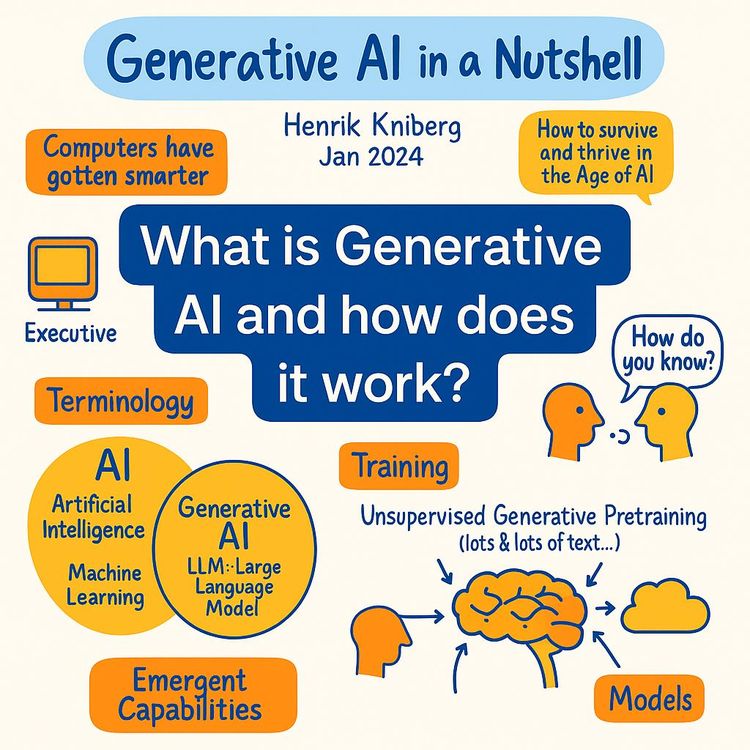
Video Course: What is Generative AI and how does it work?

Video Course: How to Use ChatGPT from Beginner to Professional
Video Course: How to Use Google Gemini for Google Workspace to Boost Productivity

Video Course: How to Use Claude 3.7 AI - Tips for Beginners!

Video Course: ChatGPT for Data Analytics: Full Course - from Beginners to Professional

Video Course: Generating Images and photos With ChatGPT?

Video Course: Generating Images & Photo's with MidJourney
Video Course: Generating Design's with Microsoft Designer and AI

Video Course: Generating Design's with Canva.com and AI
Join 20,000+ Professionals, Using AI to transform their Careers
Join professionals who didn’t just adapt, they thrived. You can too, with AI training designed for your job.