Write Books Faster With AI: A Beginner's Complete Guide (Video Course)
From burnout to fourteen books, I learned to write smarter. This guide walks you through the full AI workflow,brainstorming, characters, outlining, drafting, editing, and publishing,so you keep your voice while ditching the grunt work.
Related Certification: Certification in Accelerated AI-Powered Book Writing

Also includes Access to All:
What You Will Learn
- Shift your mindset: prioritize craft, embrace abundance, and delegate draining tasks
- Assemble and configure an AI toolkit (Claude, n8n, Story Hacker OS, OpenRouter)
- Create genre-specific templates to avoid generic "AI slop" and hit reader beats
- Produce a story dossier: concise logline, synopsis, characters, inciting incident, climax
- Build detailed character sheets, world elements, and scene-specific character sliders
- Outline, draft, edit, format, and publish-includes Amazon strategy and AI disclosure
Study Guide
Introduction: Why AI Belongs in Your Writing Process
Let me start with a confession. I spent two years writing fourteen books the traditional way. I did everything by hand, poured my soul into every page, and watched my second series crash so hard it nearly ended my career. The burnout was real. I'm not talking about a bad week. I'm talking about the kind of creative exhaustion where you question whether you even want to write anymore. That's where most authors end up when they treat writing as a single act rather than what it actually is. A collection of many distinct processes. Brainstorming, character development, plotting, drafting, editing, formatting, marketing. Each one demands different skills, different energy, and different levels of creative bandwidth.
Here's what I've learned since then. The authors who survive this industry aren't necessarily the most talented. They're the ones who figure out how to work smarter without losing their voice in the process. That's what this course is really about. Not replacing your creativity with a machine, but giving you back the time and energy to focus on the parts of writing you actually love. Whether you're a complete beginner who's never written a word or a seasoned author who's hit a wall, this guide will walk you through an entire workflow. We'll cover the mindset shifts you need to survive, the tools that actually work, and the step-by-step process for taking a book from a half-baked idea to a polished, published product. Let's get into it.
Section One: The Mindset That Makes or Breues Authors
Before we touch a single piece of software, we need to talk about your head. Because I can hand you the most powerful AI tools on the planet, and they won't do a damn thing if your brain is working against you. The technology is the easy part. The mindset is where most writers fall apart.
Let me tell you about the two lessons I learned the hard way. The first one came after I put everything into my second series. I'd saved up a thousand dollars, which was a fortune to me at the time, and dumped it into marketing. You know how much that investment brought back? Five hundred dollars. Half of what I put in. The result was devastating. I'd measured my worth entirely by that launch, and when it failed, I had nothing left. That's when I realized lesson one. If you measure success purely by money, you're setting yourself up for pain, because money isn't something you control. The market moves in ways you can't predict. Other authors release books that do better than yours for reasons that have nothing to do with quality. If your self-worth is tied to that, you're going to burn out.
So what do you control? Your craft. The way you tell a story. The way you build a world. The way you improve with every single book. When I stopped measuring success by my bank account and started measuring it by whether I'd grown as a storyteller, something shifted. Every book became a victory, because every book taught me something. That's the shift that carries you through twenty, thirty, fifty books. Not the promise of a single hit, because the odds of a one-hit wonder are almost zero. Sustainable success is built on a catalog of work, and you can't build a catalog if you quit after the first failure.
The second lesson is simpler. Delegate what drains you. Writing is not one thing. It's a collection of tasks, and you probably don't love all of them. I know authors who love plotting but hate drafting. I know others who could write dialogue all day but would rather have a root canal than write a synopsis. Here's the trick. You don't have to do it all. You identify the steps you enjoy most, the ones that light you up, and you focus your energy there. For everything else, you use tools. Whether that's hiring an editor, using software, or in our case, using AI to handle the drudgery. This isn't cheating. It's survival.
This all comes down to the difference between a scarcity mindset and an abundance mindset. Scarcity says the market is saturated, someone else's success is your loss, and you've got one shot. Abundance says readers are always discovering new books, other authors prove there's demand, and every failure is just data. Studies show that people with an abundant outlook spot opportunities more easily. They take more risks, they collaborate, and they stay in the game longer. The future belongs to creators who see AI as an amplifier of their imagination, not a threat to it.
Section Two: Building Your AI Writing Toolkit
Now let's talk about the tools. There are three main options on the market, and they're not created equal. Your choice depends on your technical comfort, your budget, and how much you want to automate. Let me walk you through each one so you can decide where you fit.
Claude: The Beginner's Best Friend
If you're new to AI writing, this is where you should start. Claude is a chatbot built by Anthropic, and it's got the cleanest interface in the business. The writing quality is genuinely impressive, and it's got features that make it perfect for authors. Projects let you create persistent workspaces where you can store all your reference files. Your book bible, character sheets, outlines. Everything sits there in the background, and any conversation you have in that project has access to it. That's like having a writing assistant who's read your entire series and remembers every detail. Skills are like mini-projects you can activate mid-conversation with a slash command. Voice mode lets you brainstorm out loud, and research mode helps you dig into genre conventions. The downside? You're stuck with Anthropic's models. If you want to use GPT or Gemini or something open-source, you'll need a different solution.
n8n: For the Tinkerers
This is where things get powerful. n8n is an automation platform that lets you build multi-step workflows. Think of it like a factory assembly line for your book. You feed in a genre template, it processes it through an AI model, runs a logic check, rewrites it, exports it to Google Docs, and moves on to the next step. All without you touching a keyboard. The beauty is flexibility. You can use any AI model for any task. Maybe you want a cheap model for the first pass and a premium one for the final polish. n8n lets you do that. The downside is the learning curve. You'll need to understand Docker and cloud hosting to get it set up. You've got three hosting options. The hosted cloud is simplest at around 24 to 60 dollars a month. Local hosting is free but only runs when your computer is on. The sweet spot for most people is a self-hosted VPS. I use Hostinger, which costs about 155 dollars for two years. That's roughly 6 dollars a month for an always-on server. It's a bit of a learning curve, but the flexibility is worth it.
Story Hacker OS: The Best of Both Worlds
If you want the power of n8n without all the technical setup, this is your middle ground. It combines a chatbot interface with pre-built automations. You get document management, genre-aware context, and one-click pipelines for everything from brainstorming to chapter generation. It's a proprietary tool, so you have to pay for it, but for a lot of authors, the time savings are worth it.
One more thing. If you go the n8n route, you'll want to hook it up to OpenRouter. That's a gateway that lets you access hundreds of different AI models through a single API. You can pick the most cost-effective model for each specific task, which saves you money in the long run.
Section Three: Genre Templates - The Secret to Avoiding AI Slop
Here's the thing nobody tells you about AI writing. If you just ask for a story, you'll get generic garbage. The AI will default to its most generic tendencies, and readers can smell that from a mile away. They call it AI slop, and it's the death of a career. The fix is genre templates. These are the structural blueprints specific to your genre that tell the AI exactly what kind of story you're telling, what tropes to hit, and what beats to follow.
Why does this matter? Because different genres have different rules. The Hero's Journey doesn't fit a romance, and a cozy mystery has a completely different structure than a military thriller. If you want to sell books, you need to hit the beats that readers in your genre expect. You can take two approaches to create these templates.
The first is manual research. Use a research-enabled chatbot to compile lists of major and minor tropes in your chosen genre. Ask for a chapter-by-chapter outline that incorporates those tropes. Then ask for common themes, character archetypes, and world-building elements. It's a lot of back-and-forth, but you end up with a solid foundation.
The second approach is story hacking, and it's where things get interesting. Story hacking is the process of taking an existing book or screenplay and breaking it down scene by scene. You feed the text into an automation that summarizes each scene, identifies the tropes, measures the intensity of things like romance, violence, and swearing, and then spits out a plot template. You can do this with multiple books in the same genre and then kitbash them together to create a comprehensive genre guide. This isn't copying, by the way. Structure isn't copyrightable. The specific expression of words is. You're studying the architecture of a story, not stealing its soul. It's no different from an artist copying masterworks in a museum to understand how they were made.
Section Four: Brainstorming Your Way to a Story Dossier
Now we get to the fun part. You've got your mindset right, your tools are set up, and you've got your genre templates. Time to brainstorm. This is the most open-ended phase, and it's where you want to be the most collaborative with your AI.
The goal here is to create a story dossier. That's the foundational document that contains your logline, a synopsis, a list of characters, world-building elements, the inciting incident, and the climax. It's the seed from which your entire book grows. To get there, you want to set up a dedicated project in Claude with a system prompt that tells the AI to act as an expert brainstormer. The prompt should instruct it to ask you questions, offer multiple suggestions, and compile everything into a final dossier.
Here's the key. You don't want the AI to just give you ideas. You want it to draw out your own latent ideas. So the prompt should tell it to probe for your thoughts first and only offer suggestions if you're stuck. When you're done, you want a dossier that has a logline of about 25 to 30 words, a synopsis, a bulleted list of characters, world-building notes, and the inciting incident and climax.
There are a bunch of prompt variations you can use to generate ideas. High-concept pitches are great for coming up with fresh, market-aware ideas. Loglines in the style of Blake Snyder condense your story to its essential hook. The 100 possibilities expansion takes a core concept and just goes wild. What-if games transform ordinary situations into speculative premises. You can even use first lines, news stories, or mashups of two unrelated genres to spark something new. The point is to generate a ton of raw material and then shape it into something original.
For the advanced users out there, you can automate this whole process with n8n. The workflow would take a user's brain dump, generate five distinct pitches, rank them using a hook evaluation rubric, select the best one, and then generate the full story dossier. After that, it runs an emotion check to make sure the story has emotional stakes, a character name check to avoid clichés, and a logic check to catch plot holes. Then it rewrites everything with that feedback incorporated. It's a lot of moving parts, but it saves you hours of back-and-forth.
Section Five: Breathing Life into Characters and Worlds
You've got your story dossier. Now it's time to build out the people and places that will inhabit your story. This is where your book starts to feel real. You can do this with a simple chatbot, but the best results come from a dedicated automation that processes each character individually. Why? Because if you ask for a list of characters all at once, the AI spreads its attention too thin. But if you loop through each character one at a time, it can devote its full power to creating a rich, detailed profile.
Each character sheet should include their physical description, their primary role in the story, their personality traits, their motivations, their background, their quirks, and their dialogue style. Once you have those, you can run them through a logic check to make sure their motivations align with their background and that there are no internal contradictions. You can also create a relationship map that shows how each character relates to the others. That's gold for keeping interactions consistent.
Here's a pro tip. Use character sliders. These are baseline ratings on a scale from negative ten to positive ten for things like stress to calm, or fear to courage. Every character has a baseline, but you can adjust those sliders per scene based on what's happening in the story. If a character is normally calm but you're writing a scene where they're being chased by wolves, you'd slide their stress level way up. It's a great way to keep your characters feeling dynamic and reactive to their circumstances.
World-building is just as important, and it's not just for fantasy and science fiction. Even a contemporary romance needs a sense of place. You need to think about settings, objects, systems, groups, deities, geography, politics, culture, history, religion, and language. For each element, you want at least three to four sentences of specific detail. Just enough to draw from when you're writing. Just like with characters, you can automate the process of expanding each element, checking it for logical consistency, and rewriting it for coherence.
Section Six: The Art of Outlining and Plotting
Now we get to my favorite part. The outline. This is where you spend your most creative energy, because a good outline makes the writing a thousand times easier. The outline is the most malleable stage of the process. You're not writing the final prose yet. You're just figuring out what happens. AI-generated outlines are starting points, not final products. Expect to do a lot of revising and expanding.
To generate an outline, you're going to feed your story dossier, character sheets, world-building sheets, and genre plot template into the AI. Optionally, you can also include your themes and tropes for consistency. The AI will then produce a full chapter-by-chapter outline with beats and turning points. But don't stop there. You want to run it through some quality checks. An emotional check makes sure the story has emotional stakes and impactful moments. Plot sliders calibrate each chapter for tension, dread, emotional intimacy, pacing, and humor. A logic check looks for plot holes and inconsistent motivations.
Here's a workflow that works. Review the first-pass outline meticulously. Then, instead of settling for what you have, assign the AI to rewrite specific chapters or sections where you want more detail or a different development. You can loop back and forth between writing and outlining. In fact, you should. The outline isn't a rigid document. It's a living blueprint. As you write, you'll discover things about your story that change the plan. Update the outline to reflect that. If you're a discovery writer who hates outlining, you can still make this work. Just plan the first chapter, write it, edit it, and then plan the next chapter based on what you learned. It's a slower process, but it honors your creative style.
Section Seven: Drafting Your Chapters with AI
Okay, let's talk about the part everyone's curious about. Actually writing the book. First, a disclaimer. You don't have to use AI for this step. The point of this entire methodology is to use AI where it helps you most and to keep the parts you love for yourself. If drafting is your favorite part, do it yourself. But if you're ready to use AI to draft, here's how you do it right.
The key is to avoid AI slop. And the way you do that is through scene briefs. A scene brief is a detailed set of instructions for a single chapter. It includes the plot beats from your outline, the characters who appear, the physical blocking of the scene, and the character's emotional state. This prevents the AI from giving you a bunch of talking heads floating in space. Before you draft, you want to construct a scene brief that selects the relevant plot points, characters, and world-building elements. Then you expand it with blocking and adjust the character sliders based on the scene context. You run a chronology check to make sure nothing is out of order, and then you rewrite the brief with that feedback.
Once you have your scene brief, you can generate the chapter. The prompt should include the point of view, whether you want to show rather than tell, a target word count, and any genre-specific stylistic rules. You should also give the AI the last couple thousand words of the previous chapter for continuity. After the chapter is drafted, you run it through a chronology check and a style check, and then you rewrite it with that feedback.
Here's the most important best practice. Don't generate the whole book at once. Write one or two chapters at a time. Edit them thoroughly. Then update your outline for the next chapter based on what you learned. This allows the AI to reference your edited prose for continuity. The output gets better and better with each chapter because it's learning from your edits.
Section Eight: The Editing Process and the Curse of AI-isms
Editing is a major creative phase, and it's often more enjoyable for authors than drafting. There are three types. Developmental editing focuses on structure. Line editing focuses on sentences and paragraphs. Proofreading focuses on grammar and spelling. AI is great at proofreading and pretty good at line editing, but it introduces its own set of problems. I call them AI-isms. These are the telltale signs that a text was written by an AI, and you need to hunt them down and eliminate them.
Here are the ten most common AI-isms I've found. Number one, the contrastive hook. That's when a sentence says it's not X, it's Y. It's a cheap way to sound profound. Number two, a rhetorical question followed by an immediate answer. Number three, triple emphasis lists. You know, when something is described as faster, smarter, better. Number four, overused AI words like delve, leverage, holistic, and testament. Number five, inflated stakes for mundane topics. Number six, grand abstract metaphors like the tapestry of or the landscape of. Number seven, generic importance adjectives like significant, impactful, and key. Number eight, bland high-level generalizations that lack specific detail. Number nine, repetitive sentence templates that restate the same idea in slightly different ways. And number ten, overly neat conclusions that tie everything up with a bow.
To catch these, read your work aloud or use a robotic screen reader. The awkward phrasing will jump out at you. Cut or rework 50 to 80 percent of your metaphors. AI overuses them. Then use AI-assisted inline editing to clean up specific passages. Just remember to apply human judgment for genre appropriateness. A swear word that works in a gritty thriller might not work in a cozy mystery.
Section Nine: Formatting and Packaging Your Masterpiece
Your book is written and edited. Now you need to package it for the market. Let's start with covers. A bad cover will kill even a great book, so don't skimp here. My strong recommendation is to not use AI for your cover, especially for a debut. Hire a professional designer who understands genre conventions. They know that a cozy mystery cover looks different from a thriller cover. GetCovers is a budget-friendly option, and Miblart is a premium choice. They're actually sister companies, so you're in good hands either way.
For formatting, you want dedicated software. Atticus and Vellum are the gold standard. They're one-time lifetime payments, which is great. Atticus is cloud-based and works on all platforms, while Vellum is Mac-only. These tools give you templates for chapter headings, paragraphs, drop caps, scene breaks, and notes. They auto-generate gutter margins for print, support various trim sizes, and can even output large-print or dyslexic-friendly options. You can export to EPUB and PDF for distribution.
Section Ten: Publishing Strategy and the Road to Amazon
Amazon is the 800-pound gorilla, controlling about 85 percent of the ebook market. So that's where you should focus your efforts. The upload process can feel overwhelming, but it's straightforward once you get the hang of it. You'll provide your book description, up to seven keywords, and a subtitle. You'll pick up to three categories, and I recommend choosing relevance over gaming the system. For pricing, you want to be between two ninety-nine and nine ninety-nine to qualify for the 70 percent royalty rate.
You'll also have to decide whether to enroll in KDP Select. That's Amazon's exclusivity program that gives you access to Kindle Unlimited readers. For many genres, especially romance, being in KU is where you'll see the majority of your revenue. You can do a 90-day enrollment and renew it. You'll also need to disclose your AI use to Amazon. It's mandatory and legally advisable. And no, they don't ban AI content. They just want to know. My advice is to be honest. Also, if you hired a cover designer, you need to disclose whether they used AI too.
Beyond Amazon, you have options. Apple, Barnes & Noble, Kobo, and Google Play are all out there, but only if you're not in KDP Select. You can use an aggregator like Draft2Digital or PublishDrive to distribute to all of them at once. Draft2Digital has the lowest fees for most authors. Then there's selling direct. That's an advanced strategy where you keep 95 percent of revenue and capture emails, but you need a substantial backlist of at least a dozen books and a solid marketing engine. Master Amazon first.
Conclusion: Your Journey Starts Now
We've covered a lot of ground. From the mindset shifts that keep you sane to the nitty-gritty of formatting and publishing. The core takeaway is that AI is a multiplier, not a replacement. It amplifies your skills, but you have to bring the skills. Don't define success purely by money. Focus on mastery, and the revenue will follow. Use AI where it reduces your pain points, and preserve your favorite creative steps for yourself. Genre-specific templates are foundational. The outline is where you spend your creative energy. Write in short batches, edit as you go, and watch out for those AI-isms. Disclose to Amazon, but don't advertise it publicly. And remember, this is the worst AI will ever be. The tools are only going to get better from here. The future belongs to creators who integrate technology as an amplifier of human imagination. Go write something amazing.
Frequently Asked Questions
Mindset & Strategy
What is the core philosophy behind writing books with AI?
Use AI strategically, not as a full replacement.
Writing a book involves far more than typing prose: brainstorming, character development, plotting, research, worldbuilding, editing, cover design, and marketing. AI is best used to offload the parts of the process you enjoy the least or that drain your energy, allowing you to invest more time in the stages you find most creative and rewarding. The goal is not to avoid work but to work smarter,preserving your unique voice and creative control while accelerating the overall timeline. Many authors report writing complete books in as little as four days using this hybrid approach.
How can authors avoid burnout when using AI?
Burnout often stems from focusing on outcomes outside your control, such as sales or rankings, rather than on factors you can influence, like craft improvement. In a traditional writing process, the mechanical act of typing can become exhausting and detached from the creative spark. AI relieves that burden so you can concentrate on what you love,outlining, worldbuilding, or editing. Additionally, authors should redefine success as mastering storytelling rather than hitting a financial milestone. Because AI accelerates production, you can build a catalog of books more quickly, which reduces the pressure of any single launch and helps maintain long-term motivation.
Why do authors need an abundance mindset?
Authors with a scarcity mindset believe the market is saturated, that other authors' successes steal readers, and that one failed launch is a career deathblow. This high-stakes thinking triggers anxiety and avoidance. An abundance mindset recognizes that readers constantly enter your genre, that other authors prove demand exists, and that even a failed book provides useful data. It encourages experimentation, collaboration, and treating investments in tools or education as tests of return rather than permanent losses. Successful author-entrepreneurs consistently adopt an abundance mindset, which makes them more opportunistic, more resilient, and more likely to spot creative and commercial possibilities that a scarcity-driven author would dismiss.
How do I treat writing as a business without obsessing over money?
Separate craft goals from income goals.
Focus your daily energy on improving as a storyteller,that's fully within your control. But acknowledge that sustainable creativity requires eventual income. Adopt an investment mindset: spend money on tools, education, and systems that compound value across multiple launches. Spend money to free up time when you have it; invest time in learning when money is tight. Think in terms of building a backlist rather than betting everything on one release. This dual approach keeps you creatively motivated while building a real business.
What are the practical signs of scarcity thinking in publishing?
Scarcity thinking shows up in specific patterns: "The market is saturated; no one will ever find my book," "If another author in my niche succeeds, they're stealing my readers," "I can't invest in covers or ads until I'm already making money," and "I only get one shot,if this book doesn't blow up, I've failed." Each of these beliefs narrows your attention, promotes high-stakes thinking, and triggers avoidance behaviors. The reframe: readers constantly enter your genre, other authors' success proves demand exists, every dollar invested is a test of return, and every book,successful or not,gives you data for the next one.
Tools & Setup
What are the best AI tools for different types of writers?
Tools fall into three categories based on technical comfort and automation needs. Claude is the best starting point for beginners: it has a clean interface, strong writing ability, and requires minimal setup. n8n is an advanced automation platform for power users who want to connect AI models to workflows, Google Docs, and other services, enabling multi-step book production with minimal manual intervention. Story Hacker OS sits in between: it provides pre-built automations and genre templates in a user-friendly interface, giving you the power of n8n without the technical learning curve. Other writing-specific tools like Raptor Write, Novel Crafter, and Sudowrite are also available, but the three described here form the core ecosystem discussed in this guide.
How do you set up Claude for a novel-writing workflow?
Claude supports the entire writing process through projects,essentially folders that hold a consistent system prompt, relevant files, and instruction sets. You can create separate projects for brainstorming, character development, worldbuilding, outlining, and chapter writing. Each project retains context across chats, so the AI consistently follows your formatting and style rules. Claude also offers skills, which are reusable custom agents for tasks like "story brainstormer" or "character profiler," and artifacts, which create editable documents like outlines or drafts inside the chat. Additional features like research mode and voice mode are useful for gathering background information and speaking through ideas during brainstorming.
What are the advantages of using n8n for book production?
n8n is a workflow automation platform that chains AI prompts together into an assembly line for book creation. Instead of manually copying each chapter to a chatbot, you can build a workflow where the AI takes a story dossier, expands it into characters, performs logic checks, writes chapters, and updates a Google Doc,all without supervision. It also allows you to use different AI models for different tasks, selecting cheaper or faster models for simple steps and premium models for complex prose. The main benefits are scalability (you can generate an entire manuscript in one run), consistency (every chapter passes through the same quality checks), and time savings (while the workflow runs, you can work on other tasks). The tradeoff is that n8n has a steep learning curve, especially when setting up Google API credentials.
How does Story Hacker OS combine the best of both worlds?
Story Hacker OS is a proprietary writing platform that embeds n8n-style automations directly into a user-friendly document and chat interface. It gives you a central workspace where the left side contains your manuscript and the right side has a context-aware chatbot that can reference your characters, world documents, and genre guides. It also includes one-click automation pipelines (e.g., "brain dump to dossier," "dossier to characters," "chapter generator") that replicate the advanced workflows from n8n. The platform ships with over 200 genre-specific templates, allowing you to start a project with the correct plot beats, tropes, and style guides already loaded. This approach removes the technical setup while retaining the efficiency of automated quality checks like emotion, logic, and chronology verification.
How do I decide between Claude, n8n, and Story Hacker OS?
Match the tool to your technical comfort and volume.
If you're new to AI and want the simplest possible start, begin with Claude. Create projects, build your story dossier, and write chapters conversationally. If you find yourself repeating the same prompts and want to automate multi-step processes, move to Story Hacker OS,it gives you pre-built pipelines without needing to configure anything. If you're technically comfortable and want maximum control over every step, learn n8n. You can also combine tools: use Claude for brainstorming and editing, then use n8n or Story Hacker OS for the repetitive generation pipeline. Most authors start with Claude, then graduate to Story Hacker OS as their catalog grows.
How do I set up n8n without spending much money?
You have three hosting options. Cloud hosting through n8n.io costs $24-60 per month,simplest but expensive for most authors. Local install using Docker Desktop is free but requires your computer to stay on and some technical setup. Self-hosted VPS through a provider like Hostinger costs roughly $5-7 per month, stays on 24/7, and offers the best balance of cost and reliability. For most authors, the VPS route is the sweet spot. You'll need to install Docker on the VPS and follow n8n's setup documentation. Once running, you can access your workflows from any browser. The learning curve is real, but the payoff is a fully automated book production system.
How do I integrate Google Workspace with n8n?
Google integration requires OAuth authentication through the Google Cloud Console. Start by creating a project at console.cloud.google.com, then enable the APIs you need (Gmail, Drive, Docs, Sheets, Forms, Slides). Configure the OAuth consent screen with an external audience and add your test users. Create an OAuth client ID for a web application and set the authorized redirect URL to your n8n instance. Copy the client ID and secret into n8n's Google credentials, then sign in with your Google account to authorize. This setup lets n8n read and write documents in your Google Drive, which is essential for automated workflows that generate chapters and export them to Google Docs.
What is OpenRouter and when should I use it?
OpenRouter is a unified API that gives you access to virtually all major AI models through a single endpoint. Instead of setting up separate credentials for OpenAI, Anthropic, Google, and open-source models, you create one OpenRouter account, add funds, and generate an API key. This key works in n8n and other automation tools, letting you switch between models per task,use a cheap model for summarization and a premium model for prose. It's particularly useful when you want to experiment with different models without managing multiple accounts. The tradeoff is a small per-request markup, but the flexibility usually outweighs the cost.
Templates & Genre Research
Why are genre-specific templates essential for quality AI fiction?
AI models default to generic story structures when not given strong guidance, producing what is commonly called "AI slop." A genre template solves this by supplying the AI with the specific beats, tropes, character archetypes, and worldbuilding elements that readers of a given genre expect. For example, a romance novel follows different structural rules than a hero's journey epic, and cozy sci-fi has its own conventions around warmth and low stakes. Working from a well-designed template ensures the AI's suggestions stay within the target genre, makes your book competitive, and helps you connect with readers who are looking for those familiar elements with a fresh twist.
How do you create your own genre templates with AI?
If you don't have pre-made templates, you can generate them using a chatbot like Claude. Start by asking the AI to list major and minor tropes for your chosen genre (e.g., "cozy science fiction"). Then request a chapter-by-chapter plot template that incorporates those tropes, and ask for a sample structure with 20-25 chapters. You can also request common character archetypes, worldbuilding elements, themes, and even a style guide. A more robust method is the "story hacking" process, where you use automations to break down successful books or screenplays scene by scene, identifying tropes, intensity levels, and plot structures, and then synthesize those patterns into a genre guide. These custom templates can be saved and reused for every book you write in that genre.
What is the story hacking process?
Story hacking is an advanced technique for reverse-engineering successful stories. You begin by obtaining a screenplay or book from your genre and formatting the scene breaks. An n8n automation then splits the document into scenes, uses AI to summarize each scene, and records data like characters present, conflict, tropes, and intensity levels (spice, violence, swearing). The final steps analyze the entire summary to extract the book's main themes and generate a reusable plot template. This template describes each scene at a high level, removing specific character names so it can apply to any story. This method is analogous to an art student copying a master painting to learn technique,studying structure without copying content.
Can I do story hacking without advanced technical tools?
Yes, though it's slower. Manually read a successful book in your genre and take notes on each chapter: what happens, which characters appear, what conflict drives the scene, and how tension rises or falls. After finishing, review your notes and identify recurring patterns,trope usage, pacing shifts, where reveals happen. Then write a chapter-by-chapter template that describes each scene generically (e.g., "protagonist faces an obstacle that threatens their goal" instead of "Jane confronts her boss"). This manual method takes a few days but produces the same structural insight as the automated approach. The key is removing specific names and details so the template becomes reusable.
What should a complete genre guide include?
A well-constructed genre guide bundles everything AI needs to produce commercially viable fiction: character archetypes and profiles, plot templates with chapter-by-chapter structures, worldbuilding conventions, theme exploration, style guides (prose approach, sentence patterns), a complete trope catalog, and book description templates. Each element should be specific enough that the AI can reference it during generation. For example, a cozy mystery guide would include the amateur sleuth archetype, the small-town setting conventions, the "no graphic violence" rule, and the expected structure where the sleuth solves the crime through observation rather than danger.
How do I choose a profitable genre and subgenre?
Niche down as far as possible.
Instead of "clean romance," target "clean Christian Amish small-town romance with enemies-to-lovers trope." Browse Amazon categories and observe current market leaders. Examine their positioning, marketing language, cover design elements, and reader reviews. Read extensively in the target genre. Reader expectations within established niches effectively pre-decide a portion of the creative work,you're responsible for filling the gaps with fresh interpretations. The more specific your niche, the easier it is to identify what readers want and the less competition you face for visibility.
Brainstorming & Story Development
What is the ideal process for brainstorming a book with AI?
The best process combines collaborative dialogue with a structured outcome. Use a chatbot set up with a "story brainstormer" prompt that instructs the AI to ask you questions, offer suggestions, and continue until it has gathered all the major story elements: protagonist, characters, world, inciting incident, and climax. This conversational give-and-take helps surface details you didn't realize you knew and challenges generic ideas. Once the conversation is complete, ask the AI to compile everything into a story dossier,a single document containing a logline, expanded synopsis, character list, worldbuilding notes, and key plot points. This dossier becomes the foundation for all later development stages.
What is a story dossier and why does every AI-assisted book need one?
A story dossier is a consolidated document containing the logline (25-30 words summarizing the entire story), a slightly expanded synopsis, a bulleted list of all characters with one-sentence descriptions, worldbuilding elements, the inciting incident, and the climax. It serves as the foundational source material for every subsequent stage,character development, outlining, and chapter drafting all reference this document. Without a dossier, AI loses context between sessions and produces inconsistent results. With it, you can feed the same source material into any tool (Claude, n8n, Story Hacker OS) and get coherent output that aligns with your original vision.
What are some practical AI brainstorming prompts?
Several prompt patterns are highly effective for generating original ideas:
High-concept pitches: Ask for 10-20 ideas with a unique twist, interesting characters, and emotional stakes.
Loglines: Use Blake Snyder's template to describe the protagonist, setup, want, obstacle, and an ironic hook in 25-30 words.
What-if statements: Take an ordinary object or situation and give it a fantastical twist (e.g., "tree in your front yard grows money").
First lines: Generate opening lines that include a character, conflict, and action to hook readers.
News stories: Ask for fictional news flashes that could drive a plot, or adapt real news headlines into your genre.
Job titles: Brainstorm interesting professions within your setting, then ask for story ideas involving a protagonist with that occupation.
Mashups: Combine two or three unrelated concepts and ask for plausible story ideas.
Social issues: Generate a subtle, non-preachy book concept centered on a theme you care about.
These techniques prevent AI from falling into obvious patterns and force it to stretch into novel territory.
How do you develop characters and worldbuilding using AI?
Begin with a story dossier that lists all main and secondary characters and all needed setting elements. For characters, use a prompt that asks for physical description, role, personality, motivation, background, quirks, and dialogue style. For worldbuilding, request a categorized list covering locations, objects, groups, magic/technology, geography, politics, culture, history, religion, and languages,even for contemporary genres. Advanced automations can expand each character or worldbuilding element one at a time, run logic checks for internal consistency, and even generate relationship maps between characters. Interfaces like Story Hacker OS let you adjust "sliders" for traits like stress or courage so that the AI maintains a character's baseline personality while adapting it scene by scene.
How do I maintain character consistency across a long manuscript?
Process characters individually, not all at once.
When you generate all characters in one prompt, the AI dilutes its attention across everyone. Instead, run a loop that processes each character separately, giving the model full context for each one. After initial generation, run logic checks: does their motivation align with their background? Does their arc fit the plot? Create a relationship map showing how each character relates to others. Then calibrate emotional sliders,rate each character on scales like stress-to-calm and fear-to-courage. During drafting, adjust these baselines per scene based on narrative circumstances. This layered approach prevents the "same voice for everyone" problem that plagues AI fiction.
Does worldbuilding matter for contemporary or non-genre fiction?
Absolutely. Worldbuilding isn't limited to fantasy and science fiction. Any book benefits from clear establishment of settings, objects, groups, geography, culture, and history,even a contemporary romance set in a small town. The level of detail required is different, but the principle is the same: the reader needs to feel grounded in a specific place with specific rules. For contemporary fiction, focus on location specifics, social dynamics, cultural context, and the protagonist's personal history. Each element should receive at least three to four sentences of specific description,enough depth that you can draw upon it during drafting without it feeling like set dressing.
Outlining & Drafting
How do you outline a book effectively with AI?
Start by feeding your story dossier, character sheets, worldbuilding notes, and a genre-specific plot template into an outlining project. The AI will produce a chapter-by-chapter outline, but the real value lies in your own review and revision. Treat the outline as a malleable blueprint rather than a fixed document,you should cut, rewrite, and expand sections freely. Use AI for a first draft outline, then refine it further as you write, especially before generating each batch of chapters. Automated workflows can add value by running emotional and logic checks on the outline, assigning plot-level sliders (tension, dread, humor), and ensuring each chapter has clear purpose. The outline is the most creative stage for many authors, so give it as much personal attention as possible.
What are plot sliders and how do they improve chapter consistency?
Plot sliders are numerical ratings applied to each chapter across six dimensions: tension (degree of pressure in the scene), dread (anticipatory unease), emotional intimacy (closeness of the reader to the viewpoint character's interior world), relationship tension (friction between characters), pacing energy (speed and force of narrative momentum), and humor (level of comedic content). Each chapter receives a rating on each scale, creating a profile that guides AI generation. For example, a quiet character-development chapter might score low on tension but high on emotional intimacy, while a climax chapter scores high on tension and pacing. These sliders ensure every chapter fulfills its intended function in the narrative arc.
Can discovery writers (pantsers) use AI tools effectively?
Yes, though the approach differs. Instead of outlining the entire book upfront, plan only the first chapter, write it, edit it, then repeat the process for each subsequent chapter. Build the outline incrementally as you go. AI tools support this because you can feed the edited version of previous chapters into the next generation, giving the model continuity context without requiring a full outline. The tradeoff is that you lose some of the quality-control passes that a complete outline enables (like plot slider calibration and global logic checks). But if discovery writing is how your creativity flows, the incremental approach preserves that energy while still leveraging AI's drafting capability.
What is a scene brief and why is it necessary before drafting a chapter?
A scene brief is a detailed instruction document for one chapter.
It includes the plot beats from your outline, the specific characters appearing in the scene, relevant worldbuilding elements, blocking (physical positioning of characters within the scene space), and adjusted emotional states for each character based on scene context. It also includes physical details that must be tracked (e.g., if a character lost an arm mid-story, subsequent scenes must reflect that) and a chronology check verifying no events appear out of order. Without a scene brief, AI produces vague, floating-head dialogue scenes that lack spatial awareness and continuity. With one, the AI generates chapters that feel grounded and consistent.
Certification
About the Certification
Become certified in AI-assisted authorship. Prove you can brainstorm, outline, draft, and edit with AI while keeping your voice,turning rough ideas into polished, publish-ready manuscripts.
Official Certification
Upon successful completion of the "Certification in Accelerated AI-Powered Book Writing", you will receive a verifiable digital certificate. This certificate demonstrates your expertise in the subject matter covered in this course.
Benefits of Certification
- Enhance your professional credibility and stand out in the job market.
- Validate your skills and knowledge in cutting-edge AI technologies.
- Unlock new career opportunities in the rapidly growing AI field.
- Share your achievement on your resume, LinkedIn, and other professional platforms.
How to complete your certification successfully?
To earn your certification, you’ll need to complete all video lessons, study the guide carefully, and review the FAQ. After that, you’ll be prepared to pass the certification requirements.
Other AI Video Courses
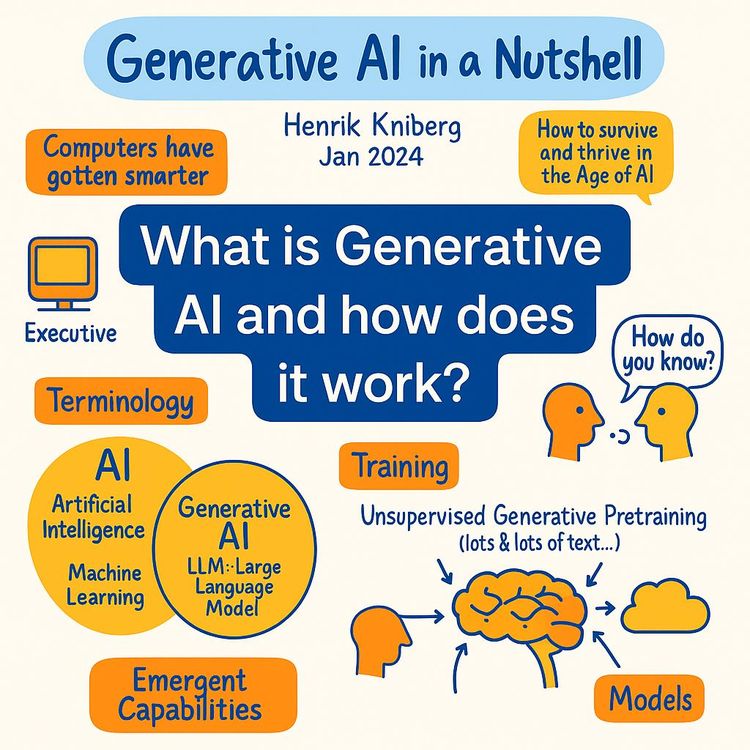
Video Course: What is Generative AI and how does it work?

Video Course: How to Use ChatGPT from Beginner to Professional
Video Course: How to Use Google Gemini for Google Workspace to Boost Productivity

Video Course: How to Use Claude 3.7 AI - Tips for Beginners!
Video Course: ChatGPT for Data Analytics: Full Course - from Beginners to Professional

Video Course: Generating Images and photos With ChatGPT?

Video Course: Generating Images & Photo's with MidJourney

Video Course: Generating Design's with Microsoft Designer and AI

Video Course: Generating Design's with Canva.com and AI
Join 20,000+ Professionals, Using AI to transform their Careers
Join professionals who didn’t just adapt, they thrived. You can too, with AI training designed for your job.