Write SEO Content That Ranks in Google and AI Search (Video Course)
The rules for getting found online changed while most people weren't looking. This guide gives you a repeatable framework for content that ranks in Google and gets cited by AI search. No fluff, just a process that works.
Related Certification: Certification in Writing SEO Content That Ranks in Google and AI Search
Also includes Access to All:
What You Will Learn
- Validate search intent with a quick 30-second SERP check
- Build SERP-based outlines and exploit competitor gaps (70/30 rule)
- Optimize entities and facts to improve Google and AI search scores
- Produce AI-assisted or manual drafts and perform human editing
- Implement internal linking and pre-publish checks (readability, plagiarism)
- Publish, monitor at 30/60/90 days, and iterate based on performance
Study Guide
The New Game of Getting Found Online
Here's the uncomfortable truth about content creation right now: the rules changed while most people weren't looking. You can write a genuinely helpful, well-researched article and watch it disappear into the digital void. Meanwhile, someone else publishes something similar and gets all the traffic. What gives?
The difference isn't talent or even writing ability. It's understanding that we're now playing a two-front war. You're not just writing for Google anymore. You're writing for AI systems that decide, in milliseconds, whether your content deserves to be cited, quoted, and credited. And the strategies that worked even eighteen months ago? They're shifting under your feet like sand.This guide walks you through a complete framework for creating content that ranks in traditional search and gets picked up by AI search assistants. No fluff, no theory. Just a repeatable process you can apply to any keyword, any niche, any time.
You'll learn how to validate search intent before you write a single word, build outlines that actually work, optimize for both Google and large language models, and set realistic expectations for when results arrive. By the end, you'll have a system,not just tips and tricks.
Let's get into it.
Why This Matters More Than You Think
Here's the reality: when someone asks ChatGPT, Perplexity, or Google's AI Overview a question about your industry, those systems pull answers from somewhere. That "somewhere" is content someone wrote. It could be yours. It could be your competitor's. The AI search score,a metric we'll dig into later,measures exactly how likely it is that an AI assistant cites your content when answering questions.
For years, the playbook was simple: find a keyword, write content around it, build some links, wait. That playbook still works, but it's incomplete. The new playbook adds another layer. You need to write for the algorithms that decide whether you're a credible source. Both of them.
The good news? The fundamentals of good writing haven't changed. What's changed is how much precision you can bring to the process. You no longer guess what Google wants,you can measure it. You don't have to wonder if AI systems will find you valuable,you can optimize for it directly.
This is a skill that compounds. Every piece of content you create using this framework teaches you something about your niche, your audience, and what works. The tools will change, but the thinking stays the same.
Step Zero: The 30-Second Check That Saves You From Wasted Effort
Before you even think about keywords, outlines, or AI-assisted research, do this one thing: type your keyword into Google and look at what shows up. That's it. Takes about thirty seconds.
What you're looking for is the dominant content format. If the first page is full of how-to guides, you write a how-to guide. If listicles dominate, you write a listicle. If product pages are everywhere, a blog post won't rank no matter how good it is,you need a product page.
This seems almost too simple, but you'd be amazed at how many people skip it. They fall in love with their idea of what should rank, then spend months wondering why Google disagrees. Google has already decided what type of content best answers that query, based on millions of user behavior signals. Fighting that determination is a losing strategy.
Here's a practical example. Say you want to rank for "best running shoes." You check the SERP and see nothing but product pages from major retailers. If you write a blog post about running shoes, you're done before you start. No amount of optimization fixes that mismatch.
Now, say you search "how to choose running shoes." The results are all informational guides. That's your green light. The format matches what Google thinks people want, and you know exactly what to create.
Search intent matters for AI search too. When you ask an AI assistant for information, it's drawing from patterns in what's already out there. If the dominant format for a topic is commercial, AI systems will surface commercial answers. Matching the format ensures you're playing the same game as everyone else,then you just need to play it better.
The takeaway: respect what the SERP tells you. It's not a suggestion; it's a directive. The sooner you learn to read it, the less time you waste on content that can't rank anyway.
Setting Up Your Content for Success: The Foundation Phase
Once you've confirmed that your keyword is worth targeting, the next step is setting up your content project the right way. This means configuring your tools and your thinking before you write a single word.
Modern SEO tools have changed how we approach content. They analyze the SERP in real time and give you a score that shows how well your content matches what's currently ranking. But these tools need input from you to work properly.
Start by entering your target keyword. Most tools will then ask you to select a content type. If you have the option, choose "SERP-based" over a custom type. This tells the tool to pull real-time data from current search results, so you're always working with the most up-to-date information about what's ranking and why.
Here's where most people drop the ball: the context fields. When your tool asks for brand voice guidelines, product details, or target audience information, don't skip it. This is the difference between generic AI-generated content and content that actually sounds like you.
Think about it this way. If you're writing for a financial services company, your content should sound different than if you're writing for a streetwear brand. The words you use, the tone you take, the examples you choose,all of that should reflect your unique brand voice. When you provide that context upfront, your AI-assisted drafting tools can produce content that genuinely reflects who you are and what you stand for.
Most tools let you save this information as a reusable template. Do that. It takes five minutes now and saves you hours of editing later. Every future piece of content will start from a place of brand alignment rather than generic marketing speak.
This is also the time to document your non-negotiables. What topics must every piece of content cover? What claims can you make? What's your target audience struggling with? The more context you give your tools, the better they can serve you.
Two Roads to a First Draft: AI-Assisted or Manual Writing
With your parameters set, you have two primary paths forward. Neither is wrong, but they serve different purposes.
Path One: The AI Draft
If speed is your priority, generate a full AI draft first. You'll get a structured, on-topic draft in seconds. The quality depends on how much context you provided in the setup phase. If you gave the tool solid brand voice guidelines and details about your audience, you'll get a draft that's maybe 90% of the way to publishable. Your job then becomes reviewing, tightening, and adding personal experience.
This approach shines for high-volume content operations. When you're producing ten posts a week, starting from an AI draft is the difference between meeting deadlines and falling behind. The key is not to skip the human review step. AI-generated content without human oversight is how you end up with generic, soulless content that helps no one.
Path Two: Manual Writing
If you're writing something deeply personal, or if you're trying to fully understand the writing process yourself, write manually. There's a certain flow to writing that you only get from doing it yourself. You can use AI tools as research assistants,having them gather facts, find examples, or suggest structures,but the actual writing is yours.
Most content teams I know use a hybrid approach. They use AI to research and outline, then write the first draft themselves. Or they generate an AI draft and then heavily edit it to add their unique perspective. The choice depends on your timeline and your comfort with editing.
Whichever path you choose, remember: the goal isn't to let AI do the work for you. It's to let AI do the heavy lifting so you can focus on what only you can do,provide genuine insight, personal experience, and a unique perspective that no algorithm can replicate.
The Research Phase: Where the Real Work Happens
The outline is the most consequential deliverable in the entire content process. Get the outline right, and the writing becomes paint-by-numbers. Get it wrong, and you'll struggle to make progress no matter how good your writing is.
Competitor Analysis: The Good, the Bad, and the Ugly
Start by examining the actual headings and structure used by pages currently ranking for your keyword. Not to copy them,that's both lazy and ineffective,but to understand what Google considers the table stakes for this topic. What subtopics do all of them cover? What questions do they answer? What structure do they use to organize their thoughts?
Let me give you a real example. Let's say you're writing about "how to write a case study." You look at the top ten results and notice they all cover the same five or six topics: what a case study is, why you need one, how to structure it, how to write the sections, and what to avoid. Those are your table-stakes topics. You can't leave them out, or your content will feel incomplete.
Finding the Gaps
Now comes the fun part: finding the gaps. Look at what only one or two competitors mention, or better yet, what's entirely absent from the first page. This is where you can differentiate yourself.
AI-assisted research tools are excellent for this. You can program an AI agent to scan community platforms like Reddit, YouTube, Facebook, and LinkedIn to surface real user pain points. This is valuable because it shows you what your audience actually cares about, not what you think they care about.
For example, when researching case study writing, you might discover that the number one pain point for case study writers is getting client buy-in. That's a topic you'll rarely find on a competitor's page, but it's exactly what your audience is struggling with. Including it in your content immediately makes you more useful than the rest of the internet.
Other gaps you might find: how to write interview questions that elicit strong responses, how to leverage video case studies, or how to use anonymized data when clients are reluctant to go on the record. These are real questions real people have, and they're often missing from top-ranking content.
The 70/30 Rule
As you build your outline, aim for a mix: about 70% of your outline should be proven topics,things that all or most of your competitors cover. These are the things you can't leave out without looking incomplete. The other 30% should be your unique angles, the things that make your content different and worth reading.
This balance ensures you're playing the same game as everyone else while also giving people a reason to choose you. It's the difference between creating content that's technically complete and content that's genuinely valuable.
As you research, write down real examples you can include. If you're writing about a process, find a real example to illustrate it. If you're writing about a concept, find a real-world application. These concrete examples move your reader from theory to practical application.
Writing: The Section-by-Section Approach
Staring at a blank page is intimidating. Staring at a detailed outline? Much less so. This is why the research phase matters so much. When you have a solid outline, writing becomes a matter of working through it section by section.
Don't think about writing a 3,500-word article. That's overwhelming. Instead, think about writing a section about "types of case studies." Then a section about "how to structure a case study." Then a section about "common mistakes to avoid." Each of these is a manageable task. String them together, and you have a complete article.
This psychological reframing does wonders for your productivity. You're no longer staring at a mountain; you're just climbing a series of small hills. Each one is manageable on its own.
Finding Your Hook
Every writer has their own process for crafting the hook,that opening that convinces people to keep reading. Some write it first. Others write the entire piece and then go back to write an introduction. Still others write the hook when it comes to them naturally, whether that's at the start or somewhere in the middle.
There's no right way to do this. What matters is that you find what works for you.
Powerful hooks often come from research. Look for contrarian sentiments or surprising truths in your research. For example, imagine you're writing about case studies and you discover that most people don't actually read them. That's a great hook: "Nobody actually reads case studies, but you need them anyway. Here's how to make one worth skimming."
That kind of opening acknowledges a truth your reader recognizes, creates curiosity about the resolution, and promises practical value. It's honest, a little contrarian, and makes you want to keep reading.
The Fundamentals of Writing for Humans and Algorithms
Certain writing principles never go out of style. They're good for your human readers and good for the algorithms that try to understand your content. Here are the non-negotiables:
1. Lead with the Answer
If someone searches "how long does it take to rank on Google," the first sentence of your article should say, "Typically three to six months." Then you can add nuance and context. Searchers came for an answer. Give it to them immediately, then earn their time with depth.
This is sometimes called the BLUF approach,Bottom Line Up Front,and it's more important than ever. Your readers are busy. They don't have time for a 500-word story about how you discovered the answer. Give them what they came for, and they'll reward you with their attention.
2. Short Paragraphs, Always
Two to three sentences per paragraph. That's it. Walls of text kill mobile readability, and mobile devices account for most web traffic. Short paragraphs create visual breathing room and make your content easier to scan. If you're writing anything longer than that, break it up.
3. Subheadings Every 200-300 Words
Subheadings help readers scan your content and give search algorithms explicit signals about what each section covers. A long-standing best practice is to phrase your headings as questions that users are actually asking. Instead of "Permission Considerations," use "How Do You Get Client Permission for a Case Study?" This question-based format aligns with how people search and how AI systems parse content.
4. Clarity Over Cleverness
Aim for a reading level of about sixth grade, and never exceed eighth grade. That doesn't mean dumbing down your content; it means making it accessible. Write so nobody has to reread a sentence to understand it. No sentence should require a second read to be understood. If it does, rewrite it.
You can check this with readability scores in most SEO tools. If the score is poor, simplify your sentence structure and remove jargon. Your readers will thank you, and so will Google.
5. Read It Out Loud
This is a pro tip that works: read your finished piece out loud. Even better, read it on your phone while walking outside. The change of scenery and pace can help you catch awkward phrasings, unnecessary hedging, and weak transitions. You'll be surprised what you notice when you hear the words instead of just seeing them.
Understanding the Content Score: A Reverse-Engineering Tool
Modern SEO tools provide a composite content score that measures how closely your draft matches the patterns of currently ranking pages. This is a reverse-engineering approach because the inner workings of Google's algorithm are not publicly known. The only observable signal is the SERP itself.
Here's how it works. The tool analyzes the pages currently ranking for your target keyword. It looks at their word count, heading structure, entities used, and other factors. Then it compares your content against those patterns and gives you a score from 0 to 100.
The content score is not an arbitrary metric. It's a measurement of how closely your content aligns with what's already working. If your content scores 80, it's matching more of the patterns of top-ranking pages than if it scores 50.
The New Three-Number Score
Content scores have evolved. Most tools now show three separate numbers:
Overall Content Score (0-100): This is the composite measurement of your content's readiness. It's the number you want to see climbing as you optimize.
SEO Score: This measures how well your content is positioned to rank in traditional Google results. It takes into account entities, keyword usage, and other classic SEO signals.
AI Search Score: This is the new kid on the block. It measures how likely your content is to be cited by large language models when they answer user queries. When someone asks ChatGPT or Perplexity a question about your topic, the AI search score measures the probability that your content is the source they pull from.
This last score deserves your attention. Think about it this way: when someone asks an AI assistant a question, the AI pulls its answer from somewhere. It's not inventing information from nothing. It's citing sources. Your AI search score measures how likely that "somewhere" is you. Every point increase improves the odds of being named as a cited source within AI-generated answers.
Entity Optimization: Speaking the Language of Your Topic
Entities are the vocabulary of a topic. They're the specific concepts and terms that top-ranking pages consistently mention. For example, if you're writing about case studies, entities might include customer testimonials, ROI, pain points, and customer success stories.
When you run your content through an SEO tool, it will show you how many of these entities you've covered. It might say something like "38 out of 81 entities found." That means the tool identified 81 entities in top-ranking pages, and your content covers 38 of them.
Missing core concepts signal holes in your content coverage. If the tool says you're missing entities like "customer success" or "ROI," those are topics you need to address. Not necessarily with those exact words, but the concepts should be there.
The key is to add missing entities naturally. This is not keyword stuffing. You shouldn't force an entity into your content just because the tool says it's missing. Instead, use the entity list as a checklist of topics to cover. If an entity doesn't fit naturally, skip it. If it fits, great,you've just made your content more comprehensive.
Entities help Google understand what your content is about. When Google understands your content, it can rank you for relevant queries. It's that simple and that complex at the same time.
Fact Optimization: The New Frontier for AI Search
Facts are a newer development in content optimization. These are specific pieces of information that large language models consistently cite when responding to user queries. They represent what AI systems consider the most important, verifiable information on a topic.
Here's how it works. The tool scans both AI model outputs and top-ranking web pages. It looks at what ChatGPT, Google AI Overviews, and Perplexity say about a topic. It also looks at what pages ranking on the first page of Google say. Then it extracts the specific facts that appear consistently across these sources and groups them by topic.
For example, if you're writing about case studies, some of these facts might be:
* Identifying your goal before you start writing
* Including specific data and metrics
* Making the customer the protagonist of the story
* Using quotes from the customer
* Including visual elements
The logic is transparent: AI assistants pull answers from pages containing real, specific, factual information rather than vague advice. When you include these facts in your content, you signal to AI systems that your content is authoritative and citable.
This is different from entity optimization. Entities align your content with traditional Google ranking signals. Facts align your content with AI citation-selection systems. Both matter, but they serve different purposes.
Most tools offer an auto-optimization feature that handles entity and fact insertion simultaneously. With one click, the tool adds missing entities naturally and places relevant facts while preserving your original voice and writing style. It's a significant time-saver.
But what if your score remains stagnant even after auto-optimization? In that case, the gap is typically not at the surface level of entities or facts. It's in overall coverage. You're missing a whole section that ranking pages cover. The remedy is to reopen your competitor analysis, find a heading that multiple ranking pages share and you skipped, and write that section. This resolves the majority of coverage gaps.
Internal Linking: The Five-Minute High-Leverage Task
Internal linking is one of the highest-leverage activities for a new piece of content. It takes about five minutes, but it yields benefits for months or years. Internal links refer to contextual links from existing content on your site to the new post, and from the new post back to related existing content.
Why do internal links matter? Three reasons:
Discovery: Internal links help Google discover new pages faster. When Googlebot crawls your site and follows a link from an existing page to a new one, it knows the new page exists and indexes it accordingly.
Topical Context: Internal links build topical context by connecting related subject matter. When you link from a post about keyword research to a post about content strategy, you're telling Google that these topics are related and that you're a comprehensive resource on content marketing.
Authority Distribution: Internal links signal to Google that your new page matters. When a page receives links from other pages on your site, it tells Google that this page is important and deserves a defined place in your site's content ecosystem.
Here's the recommended approach. Within your new post, add three to five internal links pointing to existing related content. Then go back to three to five existing posts and add a link from each to your new page. The second step is commonly overlooked but essential. A new page needs incoming links from its own site, not just outgoing ones.
Modern SEO tools can make this even easier. They connect to your Google Search Console and scan your existing content to suggest relevant linking opportunities. Some even allow one-click insertion without leaving the content editor. No more juggling multiple tabs and copying and pasting URLs.
Pre-Publish Quality Control: The Final Gate
Before you hit publish, run through a quality control checklist. This catches issues that visual review often misses.
Readability Score
This score indicates the education level a reader needs to understand your content. For most content, accessibility is the goal. If your readability score suggests a college-level education is required, simplify your sentence structure and remove jargon. Your readers will thank you.
Plagiarism Checker
Run your content through a plagiarism checker to make sure it's original. This is especially important for AI-assisted content, which may occasionally mirror existing published text. Originality is non-negotiable for ranking, and duplicate content can get you penalized.
AI Readability
This is a newer check. It scans your content against the formatting preferences that AI systems favor when selecting citations. The question is: could an AI model extract a clean, accurate answer from your page? If your content is a jumble of unsupported claims and vague assertions, the answer is no.
Beyond these automated checks, do a final human review. Read the entire piece out loud. Look for awkward phrasing, unnecessary hedging, and weak transitions. Ask yourself: "How can this piece be even better?"
Consider whether you've included real screenshots of relevant examples. Can you source expert quotes from brands executing this well? Are there custom visual assets,infographics, diagrams,that would add value? Would an embedded video break up the copy and increase engagement? These enhancements take time, but they pay off in reader engagement and trust.
Publishing and The Waiting Game
Once all checks pass, you're ready to publish. But first, optimize your meta tags. Place your target keyword near the front of your title. Write a meta description that clearly states what the reader will get from your page. Verify character counts against platform limits to ensure your title and description don't get cut off in search results.
Most SEO tools offer multiple export options. You can publish directly if your content management system is connected, copy your content as formatted text or markdown, or download it as HTML or markdown for any CMS. Choose the option that fits your workflow.
Now for the hard part: waiting. Google needs time to crawl, index, and evaluate your content. Most pages reach their ranking potential in three to six months. Low-competition niches can rank considerably faster. Competitive sectors,legal, finance, health, digital marketing,should plan for the top end of the range or longer.
Set reminders to check your content's performance at 30, 60, and 90 days. If your rankings are climbing, your process worked. If they're stagnant, re-enter the content editor. Analyze what's now ranking above your piece and fill any content gaps. Your content scores update with fresh search data, allowing you to identify precisely where your content has fallen behind.
Putting It All Together: Your Five-Step Framework
Let's consolidate everything into a repeatable framework you can apply to any content project.
Step 1: Research and Create Your Outline
Start by validating search intent with a quick SERP check. Then analyze competitor outlines from top-ranking pages. Generate AI-powered outline suggestions and identify gaps. Incorporate community-sourced pain points and questions. Remember the 70/30 rule: 70% proven topics, 30% unique angles. Include real examples throughout your outline.
Step 2: Write and Optimize
Use your outline as a paint-by-numbers guide. Write naturally, section by section. Craft your hook based on research insights. Optimize entities for your SEO score. Incorporate facts for your AI search score. Apply the four writing fundamentals: lead with the answer, use short paragraphs, include subheadings every 200-300 words, and write at a sixth-to-eighth-grade reading level.
Step 3: Internal Linking
Add 3-5 outgoing contextual links to existing content. Add 3-5 incoming links from existing content. Use site data and semantic analysis tools to find the best opportunities.
Step 4: Pre-Publish Review
Run your content through the three quality checks: readability, plagiarism, and AI readability. Read the entire piece out loud. Add visuals, screenshots, and expert quotes. Polish until it shines.
Step 5: Publish and Export
Generate meta tags with your keyword near the front. Publish directly or export for your CMS. Set monitoring reminders at 30, 60, and 90 days. Iterate based on performance data.
Final Thoughts: The Long Game of Content Creation
The convergence of traditional search and AI-assisted discovery isn't a trend,it's the new reality. Content that ranks well in this landscape isn't the product of keyword stuffing or algorithmic tricks. It's the product of a systematic approach that honors search intent, covers topics with authority, demonstrates first-hand experience, and aligns both traditional and AI optimization signals.
This framework isn't about gaming the system. It's about understanding what the system rewards and delivering exactly that. When you create content that's genuinely useful, unique, and informative, you're not just optimizing for algorithms,you're serving the humans behind those searches.
The investment in building this capability is a long-term competitive advantage. As AI assistants become an increasingly common gateway to information, the creators who understand how to become citable sources will capture attention and traffic that others cannot. The tools and techniques described here are available today. Applying them consistently is the differentiator that will define the next generation of search success.
Creating excellent content that's useful, unique, informative, and optimized for search remains a coveted skill set. The framework gives you the roadmap. Now go write something worth reading.
Frequently Asked Questions
Before You Start: Fundamental Concepts
What is the first step before writing any SEO content?
The first step is validating search intent. This is a 30-second gut check that saves hours of wasted effort.
Before you open an SEO tool, search your target keyword in Google. What do you see on the first page? Those results tell you exactly what Google thinks searchers want. If the results are all how-to guides, you write a how-to guide. If they are listicles, write a listicle. If the page is full of product pages, writing a blog post is a bad idea,build a product page instead. No amount of on-page optimization or clever keyword insertion will fix a content-type mismatch. The goal is to match the format and then outperform every other piece within that format.
Why is it important to target only one main keyword per piece of content?
Focusing on a single primary keyword creates depth, not breadth. When you try to optimize for multiple keywords in one article, you dilute your topical focus and confuse search engines about what your page is for.
A single-keyword approach forces you to build a complete resource around that specific topic. You cover the entity thoroughly. You answer the user's exact question. You write with specificity. This depth is exactly what both Google and AI citation engines (like ChatGPT and Perplexity) look for when deciding if your page is the best result. It also makes your process measurable. You write for one keyword, you check your score for that keyword, and you know exactly whether you succeeded.
What role does search intent play in content ranking?
Search intent is the real reason a user types a query into Google. It's the outcome they expect to see on the search results page.
Google uses user behavior signals to determine what content type and format best satisfies a given keyword. Your job is to align with this expectation or risk failing to rank regardless of quality. If the intent is "best running shoes" (transactional/commercial) but you write an article about "how to build running shoes" (informational), you will not rank. Matching format isn't just a technical step. It is the first filter Google uses to deliver results. When you match intent, you are immediately deemed relevant. When you ignore it, every other optimization you perform is wasted effort.
What is the difference between traditional SEO and AI search optimization?
Traditional SEO is about ranking your page in Google. AI search optimization is about getting your information cited by large language models.
For Google, you optimize for links, keywords, and technical infrastructure. For AI search (ChatGPT, Perplexity, Google AI Overviews), you optimize for facts, clear structure, and direct answers. An AI does not "visit" your page the same way a human does. It indexes your content critically. It pulls specific sentences that answer user queries. If your content lacks concrete facts, defined terms, or clear headings, an AI model is less likely to cite it. A strong content strategy covers both humans and AI systems without sacrificing readability.
Do I need technical skills to write effective SEO content?
No, you do not need to know how to code. But you do need to understand the principles of how search engines and AI models parse your content.
You don't need to be a programmer, but you do need to understand structure. Technical SEO skills become relevant for site speed or schema markup. For content writing you need to understand how to use a content editor like Surfer, how to interpret a content score, and how to build a valid internal linking plan. The technical part of SEO content writing is not about writing code. It is about using the right tools to reverse-engineer what Google and AI systems want to see.
Research and Strategy: Building a Foundation That Wins
What is the recommended approach for building a content outline?
Start with competitor analysis. Examine the outlines of the top-ranking pages for your target keyword. Identify the headings, structure, and topics they cover.
This reveals the "table stakes." These are the topics all competitors think are necessary to rank. You must cover this too. Then, look for gaps. See topics that only one or two competitors mention area topics none of them cover but you know are relevant. A strong outline is typically about 70 percent proven topics from competitor research and 30 percent unique angles that differentiate your content. Do not skip this step. The outline is the map. The writing is just the execution.
How can AI tools improve the outline research process?
AI tools can accelerate and deepen the research phase. After you build an initial outline from competitors, input it into an AI assistant and ask it to identify what is missing to satisfy user intent more thoroughly.
You can direct the AI to do deep research across forums, social media, YouTube, and other sources. This often surfaces pain points that standard competitor analysis misses. For example, community research for a "case studies" guide might reveal questions like "How do I get client permission?" or "What if my client wants to be anonymous?" These are the unique angles that differentiate your content. The AI can act as a research assistant. It can't do the critical thinking for you, but it can speed up the discovery of relevant insights.
What should you do with the competitor outlines you gather?
Treat competitor outlines as a data set, not a template to copy. Compile the information from top-performing pages and identify the topics that appear consistently across the majority of them.
These must be included. Then examine what only one or two competitors mention. Decide if those topics add value to your. Finally, look for subjects that nobody covers yet but are still relevant and helpful. Your final outline should blend the proven structure from competitors with your own unique additions. This process ensures you are covering what readers expect and also the gap they didn't know they needed filled.
How do I find the right keywords for my content strategy?
Use a focus on relevance and intent first, not just search volume. A high-volume keyword with low relevance to your business will waste your time and never convert.
Start with a seed topic that is core to your business. Use a keyword research tool (like Ahrefs, Semrush, or Surfer) and generate a list of related keywords. Review them looking for the sweet spot between search volume and competition. Do not just chase trend positions. Look for keywords where the search results show a mix of content formats. If you see a few results that are outdated or lacking depth, you have identified a higher opportunity. It is better to rank on page 1 for a specific, relevant keyword than page 5 for a generic one.
What are "content gaps" and why do they matter?
A content gap is any topic or subtopic your primary competitors cover that you do not. Failing to cover these gaps can harm both your Google rankings and your AI search visibility.
If all top-ranking pages for "how to write a case study" include a section on "getting client permission" and your article skips it, search engines notice. Your content is seen as less comprehensive. AI models also notice this. If all the data they pull from includes "client permission" and your content does not, you appear are less reliable. Use a content researcher or manually compare outlines to find these gaps. Fixing them is often the solution to a stuck content score.
The Craft of Writing: Meets Reality
Should you use AI to draft the entire article or write it yourself?
Both approaches are valid, but the decisive factor is your priority: speed or control. An AI draft offers significant speed advantages, especially when you have already configured your brand voice, product positioning, and contextual information into the tool.
With enough context, an AI draft can often give you 90% of the way to a publish-ready article. It arrives structured, on-topic, and optimized. The writer then needs to step in for accuracy, tightening, and the addition of first-hand experience. If you write from scratch, you have complete creative control and your voice is perfectly authentic. A successful hybrid approach is common: use AI for research and outlines, then write the drafts themselves, or accept AI drafts but then revise heavily with personal stories.
What is the "hook" and when should you write it?
The hook is the opening of your article, designed to capture attention and compel the reader to continue. There is no single "right" time to write it. Some writers need to write it first to set the direction of the piece.
Others prefer to write the full article internally before crafting an opener that accurately summarizes the content. A practical middle ground is to be open it to writing it whenever inspiration strikes. Strong hooks often emerge from your research. If you find a contrarian sentiment in community forums, that can become powerful hook. For example: "Nobody actually reads case studies, but you need them anyway. Here's how to make one worth skimming." It works because it acknowledges a truth the reader recognizes and promises a resolution.
What are the key writing fundamentals for SEO content?
There are four core fundamentals that directly improve both human readability and search performance.
First, lead with the answer. If someone searches "How long does it take to rank on Google?" the first sentence should be "Three to six months." Deliver the answer immediately.
Second, use short paragraphs. Keep them to two or three sentences. Mobile traffic dominates, and walls of text kill mobile readability. Third, use subheadings every 200-300 words. This helps readers scan and provides structure for AI models to parse. Fourth, prioritize clarity over cleverness. Aim for a sixth-grade to eighth-grade reading level. The goal is that no one has to reread a sentence to understand your point. Make it concise. Make it scannable. Make it specific.
How long should your SEO content be?
Your content should be as long as it needs to cover the topic thoroughly and no longer. There is no magic number. Do not write to reach 5,000 words just to hit an arbitrary count.
The best guide is to write a piece that is more comprehensive than the current top results. If the top 3 results for your keyword is 2,000 words, aim for 2,500 - but only if you have genuinely more value to add. Filler content will kill your ranking. Every sentence should serve a purpose, either to inform, to to bring a new perspective. AI models favor thoroughness, but they also favor conciseness. Provide the necessary depth without fluff. If a 1,500-word article perfectly satisfies the search intent, that is better than a 3,000-word article with repetitive information.
How do I structure a post for both Google and AI systems?
Use a hierarchical structure with clear H2 and H3 tags that reflect conversational questions and logical sub-topics. This structure maps directly to how LLMs parse content.
When you phrase your headings as the actual questions users ask (e.g., "How do I get client permission for a case study?") instead of a generic section title (e.g., "Permission Considerations"), you trigger better on-page SEO. AI models also use these headings to jump to relevant sections. A clear Table of Contents helps both readers and robots. In AI search, a well-structured page is more easily quoted. The model will actively seek out the most relevant section and use your heading to contextualize the answer.
Optimization: The Engineering Behind the Words
What are "entities" in SEO and why do they matter?
An entity is a specific concept, term, or subject that top-ranking pages consistently mention. They represent the valid vocabulary of your topic.
If the top 10 results for "how to write a case study" all mention "ROI," "customer testimonials," and "pain points," but your article does not, search engines notice this gap. They may interpret your content as less comprehensive. SEO tools like Surfer analyze these ranking pages and provide a count of how many entities your content covers. You don't need to hit 100% of them, but the more relevant ones you naturally incorporate, the stronger your topical coverage appears. Never force entities into your content. This is not keyword stuffing. If a term doesn't fit naturally, skip it.
What is the difference between an SEO score and an AI search score?
An SEO score measures how well your content is positioned to rank in Google. An AI search score measures how likely your content is to be cited by large language models (ChatGPT, Perplexity, Google AI Overviews) when users ask questions about your topic.
The SEO score is built on reverse-engineering the patterns of content currently ranking. It looks at entities, word count, structure, and placement. The AI search score, however, is a newer and distinct measurement. It scans what AI systems are actually saying about a topic and identifies the "facts" they cite most. Your AI search score reflects how well your content provides the concrete, fact-based answers those models seek. High performance in both scores means you are positioned for organic traffic now and AI-powered visibility of the future.
What are "facts" in the context of AI search optimization?
Facts are specific, verifiable pieces of information that AI systems consistently reference when answering questions about your topic. They are concrete claims, statistics, and decisive statements from authoritative sources.
For example, in an article about writing case studies, a key fact might be "The case study should make the customer the protagonist of the story," or "Case studies with specific data are more convincing." Facts are identified by scanning what AI models are saying and what top-ranking web pages are covering. When your content includes these facts, an AI model is more likely to cite you directly. The AI system looks for the source that clearly states the core, fact-checked information it needs to construct a reliable answer.
How does "auto optimize" work and when should you use it?
Auto optimize is a tool that handles both entity insertion and fact addition in one click. It scans your content, identifies missing entities, adds them naturally, and inserts relevant facts while attempting to preserve your voice.
You should use it after you have written a solid first draft. It closes the surface-level optimization gaps quickly. But, if your score remains stuck even after using auto optimize, the issue is usually deeper. It's not about missing words. It's about missing content. You are likely lacking an entire subtopic that all ranking pages cover. In this case, go back to your competitor analysis, find the subtopics you missed, and write those sections. Auto optimize is a finishing tool, not a replacement for thorough content coverage.
What is the content score and how is it calculated?
The content score is a measurement that tells you how aligned your content is with what is currently winning in search results. It is a reverse-engineering approach to SEO.
Because no one knows exactly how Google's algorithm works, the best strategy is to analyze what Google already rewards. The content score does this by analyzing the top-ranking pages for your target keyword. It looks at usage, entity, structure, and word count. It then measures your content against these patterns. The score is typically three numbers: the overall content score, the specific SEO score, and the AI search score. This score is not abstract. It is a concrete measurement of how closely your content matches the patterns of current top performers.
Certification
About the Certification
Become certified in SEO content that ranks in Google and AI search. Gain a repeatable framework to create content that earns organic traffic and AI citations,skills you can apply immediately to boost search visibility.
Official Certification
Upon successful completion of the "Certification in Writing SEO Content That Ranks in Google and AI Search", you will receive a verifiable digital certificate. This certificate demonstrates your expertise in the subject matter covered in this course.
Benefits of Certification
- Enhance your professional credibility and stand out in the job market.
- Validate your skills and knowledge in cutting-edge AI technologies.
- Unlock new career opportunities in the rapidly growing AI field.
- Share your achievement on your resume, LinkedIn, and other professional platforms.
How to complete your certification successfully?
To earn your certification, you’ll need to complete all video lessons, study the guide carefully, and review the FAQ. After that, you’ll be prepared to pass the certification requirements.
Other AI Video Courses
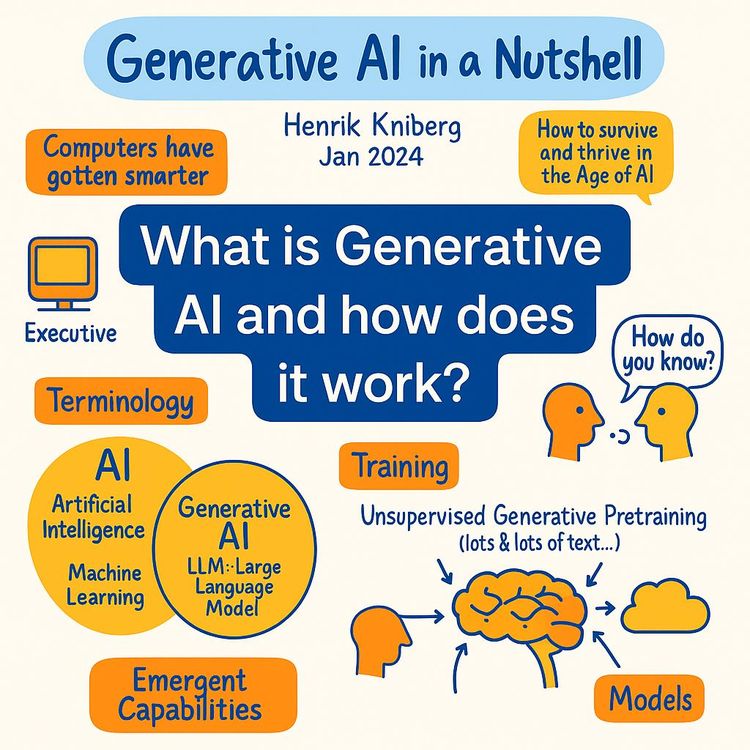
Video Course: What is Generative AI and how does it work?
Video Course: How to Use ChatGPT from Beginner to Professional
Video Course: How to Use Google Gemini for Google Workspace to Boost Productivity

Video Course: How to Use Claude 3.7 AI - Tips for Beginners!
Video Course: ChatGPT for Data Analytics: Full Course - from Beginners to Professional

Video Course: Generating Images and photos With ChatGPT?

Video Course: Generating Images & Photo's with MidJourney

Video Course: Generating Design's with Microsoft Designer and AI

Video Course: Generating Design's with Canva.com and AI
Join 20,000+ Professionals, Using AI to transform their Careers
Join professionals who didn’t just adapt, they thrived. You can too, with AI training designed for your job.