Over 1,000 Amazon Employees Warn AI Could Threaten Jobs: What HR Leaders Should Do Now
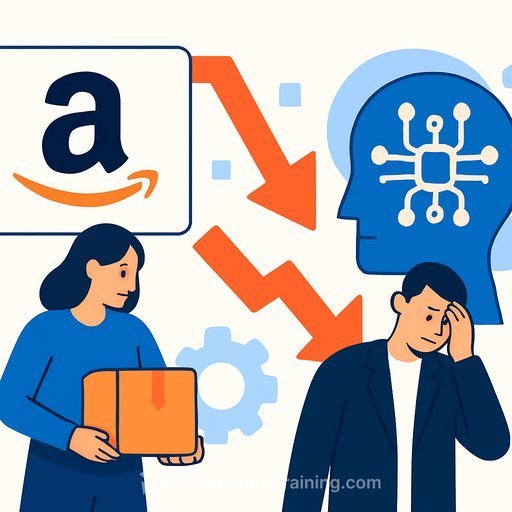
More than 1,000 Amazon employees signed an open letter urging leadership to slow-roll AI initiatives, involve workers, and set guardrails. This comes amid reports of up to 30,000 corporate job cuts across HR, operations, devices, services, and AWS-driven in part by AI efficiency goals.
The letter flags three risks HR can't ignore: job displacement, worker strain from AI-driven productivity targets, and trust erosion tied to climate and surveillance concerns. Source coverage: Newsweek.
Why this matters for HR
- Workforce planning: AI will change role demand asymmetrically-some roles shrink, others spike. You need a rolling, skills-first plan.
- Employee trust: Workers are asking for a voice in how AI is used. Ignoring that increases attrition risk and reputational damage.
- Compliance and fairness: AI in hiring, performance, and RIFs invites bias, explainability, and documentation obligations.
- Wellbeing and productivity: Algorithmic quota pressure without human oversight burns people out and drives errors.
- Climate and brand: Energy-heavy data centers raise sustainability questions. Employees are connecting AI usage to company values.
- Ethics of use: Work tied to surveillance or military use triggers conscience and policy issues that spill into retention.
Immediate actions (next 30-60 days)
- Create an AI Oversight Group: Include HR, Legal, Security, DEI, frontline reps, and an employee council. Publish scope and decisions.
- Publish an AI Use Register: List internal AI tools, their purpose, data used, human-in-the-loop points, and known risks.
- Run a Skills Inventory: Map roles likely to shrink or shift; identify adjacent roles with clear upskilling paths.
- Communicate early and often: Share how AI will change work by function, expected timelines, and support available.
- RIF fairness controls (if applicable): Validate selection criteria, document impact analysis, and test for adverse effects.
- Support managers: Provide talking points, change checklists, and office hours with HRBPs.
- Set up a grievance channel: Give employees a clear way to flag AI harms or policy gaps without fear of retaliation.
Human-centered AI policy (starter guardrails)
- Human accountability: Critical decisions (hiring, performance, termination) require human review and final sign-off.
- Transparency: Employees should know when AI informs a decision about them and how to appeal.
- Bias testing: Pre-deployment and ongoing audits with documented remediation steps.
- Data minimization: Collect only what's necessary; restrict sensitive categories; set retention limits.
- Access control: Role-based permissions and logging for all AI tools touching employee data.
- Use limits: No deployment in contexts linked to violence, surveillance of protected activity, or mass deportation without explicit board-level approval.
- Training: Mandatory AI-safe-use training for managers and users; publish misuse consequences.
For a framework reference, see the NIST AI Risk Management Framework.
Reskilling without wasted effort
- Identify transitions: For at-risk roles, define 1-2 adjacent roles with clear skill gaps.
- Build 6-12 week paths: Mix short courses, internal projects, and mentorship. Tie completion to redeployment opportunities.
- Fund it: Offer learning stipends and protected time. Track redeployment rate and time-to-productivity.
- Show outcomes: Publish quarterly metrics on how many people moved to new roles vs. exited.
If you need curated options by role, scan AI courses by job or popular certifications to speed up program design.
Rethink productivity targets
- Balance the scorecard: Include quality, safety, and customer outcomes-never just volume.
- No blind quotas: AI-suggested targets must be validated by humans and adjusted for context.
- Protect wellbeing: Set ceilings on alert volume, enforce recovery time, and monitor burnout indicators.
- Manager accountability: Tie leader performance to fair goal setting and team health metrics.
Data centers, climate, and employer brand
- Energy disclosures: Publish energy mix and PUE for major AI workloads; set targets to improve them.
- Procurement standards: Prefer regions and vendors with verifiable clean energy commitments.
- Efficiency first: Optimize prompts, caching, and model selection to cut compute waste.
- Report out: Fold AI energy metrics into sustainability reports employees can trust.
Sensitive use-cases: government, defense, and surveillance
- Contract review: Add human rights and workforce impact clauses; require red-team results and audit rights.
- Conscience policy: Offer role transfer or opt-outs for employees with credible concerns, within reason.
- Board-level oversight: High-risk use-cases require explicit approval and public-facing rationale.
90-day execution plan
- Days 0-30: Stand up the AI Oversight Group; publish AI Use Register (v1); freeze any shadow AI in HR decisions.
- Days 31-60: Run bias and privacy audits on live tools; launch first two reskilling pathways; release manager toolkit.
- Days 61-90: Publish policy and metrics; pilot balanced productivity scorecards; share first redeployment wins.
Talking points for HR business partners
- "AI will change how we work. We will retrain where feasible and commit to fair processes when roles are eliminated."
- "No one is measured by an algorithm alone. Human review is required for key decisions."
- "You can see every AI tool we use and how it impacts your job in our public register."
- "If you believe an AI decision was unfair or harmful, here's how to appeal-and who will review it."
Metrics to watch
- Voluntary attrition in AI-affected teams
- Internal mobility and redeployment rate
- Training completion and skill verification
- Bias findings and fix turnaround time
- Employee trust and change-readiness scores
- Energy use associated with AI workloads (quarterly)
Bottom line
AI can reduce some headcount while creating new work. HR's job is to make that shift fair, auditable, and humane-with clear policies, real reskilling, and transparency that earns trust. Do that, and you keep your workforce onside while the company adopts AI with its values intact.
Your membership also unlocks: