Business 2026: Hybrid human-agent teams and the end of the billable hour
AI agents have matured from chatbots into goal-driven systems that plan, reason, and work across tools. The next step-often called agentic AI-adds multi-agent collaboration, dynamic task breakdown, and memory so work can flow with less hand-holding.
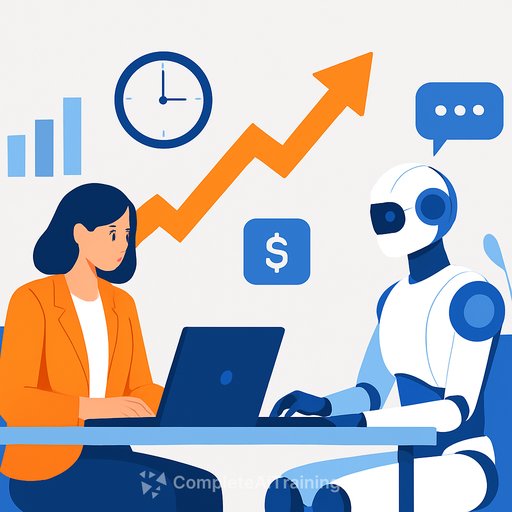
For HR, this isn't a tech footnote. It's a workforce model shift. Your talent plan moves from "Do we have enough people?" to "What's the right mix of people and agents to deliver outcomes?"
What agentic AI means for HR
Traditional AI agents automate defined tasks. Agentic AI coordinates multiple agents, interprets context, and adapts in real time to hit a target. Think less macro recorder, more project teammate.
That changes how you size teams, write roles, measure performance, and reward impact. It also raises new questions about governance, data, and accountability.
Where it will hit first
- Project planning and resourcing
- Contract and compliance checks
- Time and expense capture
- Reconciliations and reporting
High-volume, standardized processes are prime candidates. Human specialists shift toward advisory, client engagement, exception handling, and outcome ownership.
From billable hours to outcome-based billing
In services, billable hours get weaker when agents deliver faster with predictable variance. Pricing moves to "we get paid when the agreed business result is achieved."
Agentic systems plan, monitor, and adjust delivery in real time. That makes value-based contracting far more practical. It also means your firm gets judged on impact, not input.
The HR playbook for 2026
- Workforce planning by skill mix: Define the balance of human expertise and agent capability per offering. Treat agents as capacity you can spin up or down.
- Role redesign: Split roles into outcome ownership (humans) and execution blocks (agents). Clarify escalation paths and decision rights.
- Competency model: Add skills like problem framing, data literacy, agent orchestration, prompt/instruction design, and client communication.
- Performance and rewards: Shift KPIs from hours and utilization to outcomes hit, variance to plan, client value, and quality signals.
- Governance: Establish approval thresholds, audit trails, agent access policies, and human-in-the-loop points for high-risk steps.
- Learning and reskilling: Build short cycles for upskilling consultants into higher-order analysis and advisory work; teach managers to run hybrid teams.
- Data and privacy: Lock down PII, set data retention rules, and require reproducibility for agent actions.
- Vendor and tool standards: Certify tools, require logs/observability, and test for bias, security, and reliability before scale.
- Change management: Normalize agent use, publish do/don't guidelines, and make adoption visible in goals and reviews.
New roles worth hiring or upskilling
- Agent operations manager: Owns uptime, quality, and exceptions across agent workflows.
- Instruction/prompt designer: Translates business intent into clear instructions and evaluations.
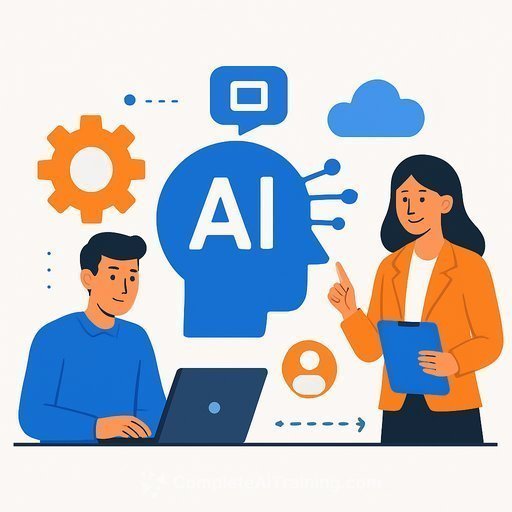
- Hybrid team lead: Manages human-agent work allocation, risk, and client expectations.
- Outcome architect/pricing partner: Designs outcome definitions, SLAs, and commercial guardrails.
- AI risk and compliance lead: Oversees audits, data policy, and regulatory alignment.
Metrics that matter
- Talent: Human/agent skill mix, time-to-productivity, internal mobility.
- Delivery: Cycle time, rework rate, variance to plan, exception volume.
- Business: Outcome margin, win rate for value-priced deals, renewal/expansion.
- Risk: Incident count, policy breaches, model/tool drift alerts.
- Adoption: Active agent usage by team, satisfaction, and opt-out reasons.
Ethics, risk, and compliance
Set standards now. Use recognized frameworks to guide policy and auditing. The NIST AI Risk Management Framework is a solid foundation for controls and testing.
NIST AI RMF and ISO/IEC 42001 AI management systems offer practical guardrails. Require human review for high-impact decisions and keep detailed logs for every agent action.
90-day starter plan
- Days 0-30: Pick two processes with clear outcomes and enough data. Map risks and define success metrics. Select tools and access.
- Days 31-60: Pilot with a small team. Track time saved, error rates, and client value. Capture exceptions and refine instructions.
- Days 61-90: Formalize runbooks, set governance checkpoints, and update role descriptions. Draft an outcome-based contract template and test on one client.
Where agentic AI will expand next
- Research automation that compiles, compares, and cites sources
- Robotic coordination in logistics and field ops
- Decision support in clinical and medical workflows
HR's role is to make this shift safe, measurable, and motivating for people. Get the mix right, reward outcomes, and build the skills that software can't replace.
Keep your teams current
If you need structured upskilling for hybrid work and AI literacy by role, explore curated learning paths here:
Your membership also unlocks: