
AI news ·
98% of hoteliers now use AI in operations but most want human staff to lead check-in, Mews survey finds
Nearly all hotels-98%-have adopted AI in the past six months, yet 59% say the front desk check-in should stay human-led. Properties with formal AI policies report far higher trust in their tools than those without.
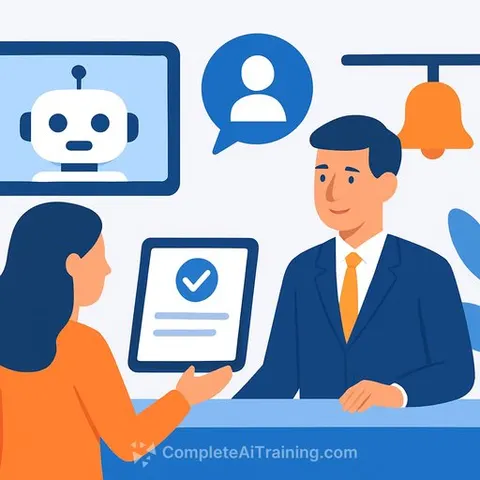
Hotels Embrace AI Widely, But Draw Line at Guest Greetings
Ninety-eight percent of hotel properties globally have adopted artificial intelligence in their operations over the past six months, according to a survey of more than 500 hotels conducted between December 2025 and March 2026. Yet even as AI spreads across nearly every department, hoteliers are drawing a clear boundary: 59% believe the front desk welcome and check-in process should remain human-led.
The data reveals a nuanced view of automation. AI now handles 11 of the 19 most common hotel tasks and manages more than half the workload in those tasks, with adoption highest in upper-midscale, upscale, and luxury properties. The technology spans front office, commercial, food and beverage, and leadership functions.
The preference for human contact at check-in is strongest among properties already using AI extensively, suggesting that operators distinguish between back-office work and guest-facing moments.
Trust Rises With Formal Policies
Ninety-two percent of hoteliers said they are optimistic about AI in hospitality, and 83% trust AI tools to support decision-making. But governance lags adoption: 41% of respondents lack a formal AI policy, relying instead on verbal guidelines or none at all.
Properties with written AI policies reported 92% strong trust in their tools. That figure dropped to 49% among those without formal guidelines. The gap suggests that structured oversight builds confidence in how AI operates.
Revenue, Not Just Efficiency
Among properties with advanced AI capabilities, 52% prioritize revenue growth as the main outcome they want from the technology. That ranks above efficiency improvements or cost reduction.
These same properties reported higher results in guest spending and upselling, indicating that AI is shifting from a cost-cutting tool to a revenue driver.
Moving Beyond Industry Averages
Hoteliers increasingly expect AI systems to use property-specific data rather than industry-wide benchmarks. Pricing decisions and other functions need to account for how each individual hotel operates.
To meet this demand, vendors are building new infrastructure. One provider is developing a semantic layer to give AI tools access to institutional knowledge currently scattered across spreadsheets, staff notes, and disconnected systems.
The topic will be discussed at an industry event on May 27 in Amsterdam. For those working in hospitality operations, understanding how to implement and govern AI has become core to the role.
Learn more about AI for Hospitality & Events and AI for Customer Support.