
AI news ·
About 1 in 4 Americans now use AI tools for health information, poll finds
One in four U.S. adults used ChatGPT or similar AI tools for health information in the past 30 days, a West Health-Gallup poll found. Cost barriers and after-hours needs drive many users, though only a third trust the accuracy of what they get.
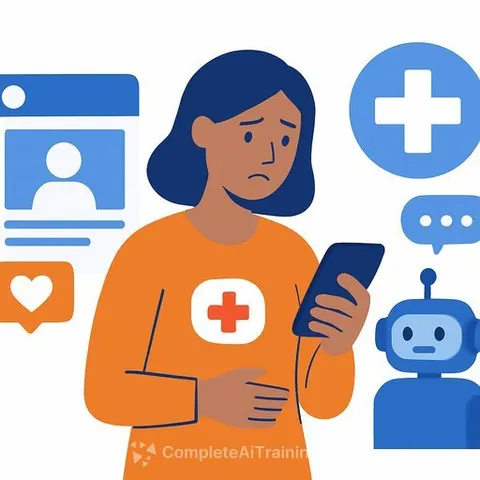
One in Four Americans Now Turn to AI for Health Advice
About 25% of U.S. adults have used ChatGPT or similar tools for health information in the past 30 days, according to a West Health-Gallup Center on Healthcare in America poll released Wednesday. The survey, conducted in late 2025 and supported by at least three other recent studies, shows the practice has become routine for millions of people seeking quick medical guidance.
Tiffany Davis, 42, in Mesquite, Texas, uses ChatGPT to evaluate symptoms from weight-loss injections before deciding whether to call her doctor. "I use it for anything that I'm experiencing," she said.
The shift mirrors how Americans have long searched Google for health information-but with a key difference. AI for Healthcare tools now synthesize information instead of forcing users to sort through dozens of search results. "I almost view it like a better entry portal into web search," said Dr. Karandeep Singh, chief health AI officer at UC San Diego Health.
Speed and Convenience Drive Usage
About 70% of Americans using AI for health research say they want quick answers, additional information, or are simply curious. Many use it before scheduling appointments or after medical visits to understand test results.
Rakesia Wilson, 39, in Theodore, Alabama, regularly consults AI tools to decide whether a symptom warrants time off work. "I just don't necessarily have the time if it's something that I feel is minor," said Wilson, who works up to 70-hour weeks as an assistant principal.
Access Gaps Drive Some Users to AI
While most Americans still prioritize doctors for health information-about 80% saw a health care professional in the past year-some turn to AI because professional care is out of reach. About 40% of AI health users wanted help outside business hours, while roughly 30% cited cost concerns or didn't want to pay for a doctor's visit.
Younger adults and lower-income people were especially likely to use AI tools because they couldn't afford care or faced access barriers, according to a KFF survey conducted in late February.
Trust Remains Divided
Only about one-third of people who recently used AI for health information said they "strongly" or "somewhat" trust its accuracy. Another 34% distrusted it, and 33% felt neutral. Concerns about privacy are also widespread-roughly 75% of U.S. adults worry about how their medical information is handled by AI tools.
Dr. Bobby Mukkamala, president of the American Medical Association, said he welcomes patients who arrive with informed questions from AI research. But he emphasized the limits: "It is an assistant but not an expert, and that's why physicians need to be involved in that care."
Last summer, private ChatGPT conversations were accidentally indexed on public websites without users' knowledge, highlighting real privacy risks. Tamara Ruppart, 47, in Los Angeles, avoids AI health advice altogether given her family history of breast cancer. "Health care is something that's pretty serious," she said. "And if it's wrong, you could really hurt yourself."