
AI news ·
Ad creative becomes the primary targeting signal as Google, Meta and TikTok automate audience selection
Google, Meta, and TikTok now use ad creative, not manual filters, to qualify audiences. Marketers must embed targeting intent directly into headlines and videos.
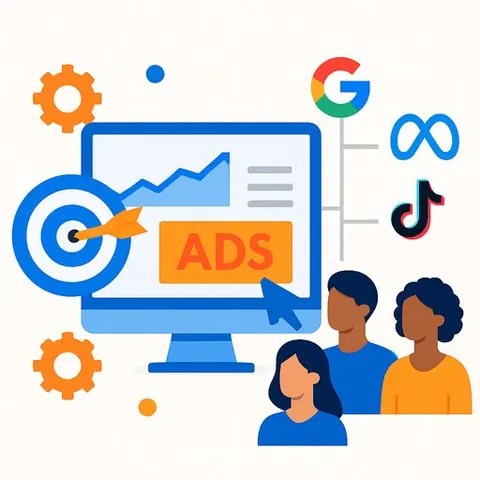
Google, Meta, and TikTok are automating audience targeting so aggressively that creative - headlines, images, videos - is becoming the strongest signal for who sees an ad. For performance marketers, this means qualification is shifting out of audience settings and into the message itself, directly affecting lead quality and cost per acquisition.
The shift from audience to creative qualification
For years, ad campaigns relied on layered targeting: demographics, interests, remarketing lists, and intent signals to find the right people. That approach is not disappearing, but its influence is shrinking. Platforms now push broad audience inputs to AI-driven targeting - Google's Performance Max, Meta's Advantage+ campaigns, TikTok's automated audience expansion - and let algorithms decide who is most likely to convert. The problem is that algorithms still need signals. Conversion data is the strongest, but creative is quickly catching up. Everything from a headline to a call to action tells the platform what kind of person should engage.
In the world of AI for Marketing, this shift changes how campaigns qualify audiences. Instead of narrow targeting filters, creative must now communicate who an offer is for - and just as importantly, who it isn't for. When ads clearly identify the intended audience, users self-select. Qualified prospects click; unqualified ones scroll past. Both outcomes feed cleaner data back to the machine learning system.
Higher education shows the shift in action
Higher education marketers are already seeing this play out. A university promoting an online Master of Science in Data Analytics can no longer rely solely on demographic filters to reach prospective students. Broad lookalike audiences or Advantage+ audiences might cast a wide net, but the creative can narrow it. A generic headline like "Advance your career with a Data Analytics degree" says little about who the program fits. A qualifying headline - "Built for bachelor's degree holders ready to advance into leadership - earn your online M.S. in Data Analytics" - immediately signals the prerequisite. Undergraduate prospects are less likely to engage, while qualified graduate candidates click and convert, reinforcing positive optimization signals. The creative itself becomes the qualification mechanism.
Platform algorithms need clear audience signals
Google Performance Max uses audience signals as starting points, not strict controls. Advertisers hand over creative assets, and Google's systems decide where to show them across Search, YouTube, Display, Gmail, and Maps. A vague headline for an orthopedic practice - "Expert Care for Your Health Needs" - gives Google little to work with. "Persistent Knee Pain? Meet with Our Orthopedic Specialists" ties the message to a specific need and audience. Users who match that problem are more likely to respond, and Google's optimization learns faster from those interactions.
On TikTok, the first three seconds matter even more. For lead generation, qualification must begin immediately. An opening like "Already have a bachelor's degree and looking for your next career move?" tells viewers whether to keep watching and simultaneously gives TikTok's algorithm behavioral signals about who engages. Unqualified viewers scroll past; the algorithm adjusts. This self-selection loop strengthens audience learning with every impression.
Why this matters for Marketing professionals
Treating creative as something that happens after strategy and targeting is now a liability. Creative is becoming the primary lever for audience qualification. Marketing teams need to work more closely with media and creative departments to embed targeting intent directly into headlines, hooks, and videos. For marketers adapting to this shift, the AI Learning Path for Marketing Managers covers campaign optimization and AI-driven digital strategies, helping teams build the skills to make creative a performance driver, not just a branding exercise.