KAIST launches AI Philosophy Research Center to align technology with human values
KAIST has opened the AI Philosophy Research Center to put a simple but hard question at the center of science: What kind of existence are humans, and how should technology develop so people can be happy? The center brings humanities scholars and scientists into the same room to stress-test ideas before they hit society.
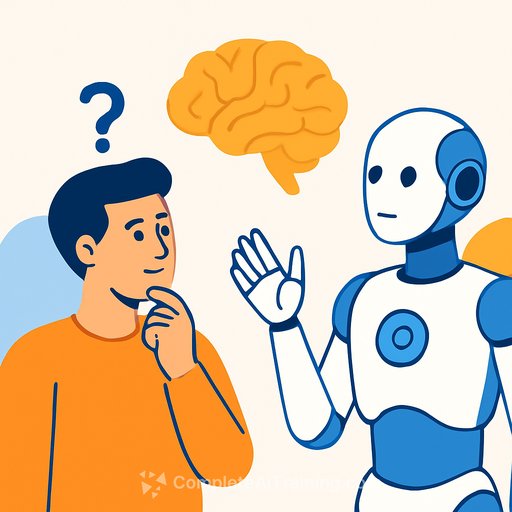
"As AI becomes physical and humanoids enter daily life, we need clear answers about the relationship between humans and intelligent machines," said Center Director Kim Dong-woo, professor at KAIST's Digital Humanities and Social Sciences Division. "If we don't define that relationship, social confusion is guaranteed."
Why now
Kim studied philosophy at the University of Minnesota (M.A.) and the City University of New York (Ph.D.) and joined KAIST in 2023. The idea took shape after the release of ChatGPT, when KAIST President Lee Kwang-hyung warned that chasing technical milestones alone could push society into chaos and called for tight collaboration between humanities and science.
The center's mission is blunt: clarify human-machine boundaries, anticipate real-world friction, and turn that into workable guidance for institutions and industry. For ongoing publications and methodological pieces, see Research.
What the center will do
- Run monthly seminars and grand debates that convene experts across humanities, social sciences, and STEM.
- Launch an international joint project with partners in Europe and Asia on the role of the humanities in the AI era.
- Build sustained exchanges with MIT's School of Humanities, Arts, and Social Sciences (MIT SHASS).
Kim puts it plainly: if AI robot secretaries hit offices and cleanup robots start working city streets, have we really decided how they should be treated-legally, ethically, and socially? The conversations about status, responsibility, and limits are overdue.
Inaugural symposium: January 21
Theme: "Designing Humans, Society, and Technology in the Post-AI and Post-Robotics Era." (See Design considerations.)
- Keynote: Yasuo Deguchi (Kyoto Institute for Philosophy) on redefining a world where humans coexist with AI, robots, and animals.
- KAIST President Lee Kwang-hyung will propose "Humanism 2.0" to redraw the line between human and machine.
- Park Sung-pil, dean of the Graduate School of Future Strategy, will argue for cultivating talent with philosophical creativity to lead the AI and robotics era.
Priority questions for researchers
- Status and treatment: What rights, responsibilities, or liabilities-if any-should apply to service robots in public and workplace settings?
- Ethics and governance: Do we need dedicated robot ethics, or can existing human-centered frameworks carry over with amendments?
- Human-AI teamwork: What are acceptable norms for oversight, consent, and accountability in labs, hospitals, factories, and classrooms?
- Value alignment: How do we measure "human benefit" when optimizing socio-technical systems at scale?
- Humanism 2.0: Where should the boundary sit between tool, teammate, and quasi-agent-and who decides?
Practical moves you can make now
- Co-design studies with philosophers and social scientists before piloting new AI or robotics deployments.
- Stand up internal review for human-machine interaction (beyond standard IRB), including incident reporting and red-teaming.
- Instrument deployments to capture off-nominal events; publish negative and null results so others don't repeat failures.
- Prototype "interaction contracts" for robots in public spaces: visibility, explainability, escalation paths, and human override.
- Create evaluation datasets that include normative criteria (dignity, fairness, consent) alongside technical metrics.
If you're building team capability for this work, curated training can help. See AI courses by job role (Complete AI Training).
The center's stance isn't to slow technology. It's to make sure progress lands in a form society can actually live with. That means tight feedback loops between labs, policy, and lived reality-and it starts now.
Related: Context on the catalyst for this debate - an overview of ChatGPT from OpenAI (overview).
Your membership also unlocks: