Australia's National AI Plan: Practical governance, clear priorities
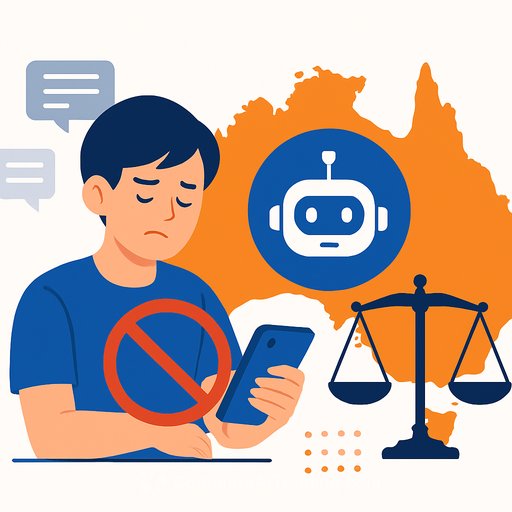
Australia has set its direction for AI with a National AI Plan that favors practical governance over fresh, sweeping laws. The government will lean on existing legal frameworks, invest in advanced data centres, build AI skills, and put public safety front and center. An AI Safety Institute is slated for 2026 to track emerging risks and guide responses. This follows the recent ban on social media access for users under 16, signaling a firmer stance on digital risk.
The plan at a glance
- Infrastructure: Attract investment in advanced data centres to support AI adoption across the economy.
- Skills: Build AI capability to support and protect jobs, with a focus on practical workforce training.
- Safety: Ensure public safety as AI use scales, with oversight grounded in current laws.
- Regulation: Use existing legal and regulatory frameworks, with sector regulators handling AI-related risks in their domains.
- Oversight: Establish an AI Safety Institute in 2026 to monitor threats from generative AI and coordinate responses.
Officials framed this as a balanced approach that backs innovation while managing real risks. The government emphasized that laws already on the books remain the primary tools for oversight, enforcement, and accountability. For leaders, the message is simple: move forward, but document, assess, and prove control.
What this means for government and regulators
Agencies will remain on point for AI risks in their sectors, using current statutes and guidance. Expect more cross-agency coordination, updated guidelines, and clarity on enforcement thresholds. Transparency, record-keeping, and impact assessment will matter as much as technology choices.
- Map AI use cases to existing laws (privacy, consumer protection, safety, competition, anti-discrimination, IP).
- Issue sector-specific guidance on acceptable use, testing, and incident reporting.
- Set up data-sharing and oversight protocols across agencies to avoid gaps.
- Update procurement rules to require model risk assessments, testing evidence, and audit access.
- Prepare for the AI Safety Institute's 2026 role in monitoring and coordinated response.
Implications for legal and compliance teams
No new law doesn't mean low risk. Liability still flows through privacy, consumer law, contracts, safety standards, and employment obligations. Your defense is documentation: risk assessments, vendor controls, testing evidence, and clear accountability.
- Create an AI register covering purpose, data sources, model providers, testing, monitoring, and owners.
- Run impact assessments for high-risk uses (bias, safety, misinformation, IP, security).
- Tighten vendor due diligence: data provenance, safety evaluations, model update policies, and incident SLAs.
- Set human-in-the-loop controls for critical decisions; log overrides and outcomes.
- Align policies on content provenance, watermarking/labels, and data retention.
For business leaders and HR
The plan puts skills at the core. Budget for training, re-skilling, and role redesign as AI tools roll into day-to-day work. Tie AI pilots to measurable outcomes and change management, not just demos.
- Define priority use cases and metrics (cost, quality, cycle time, safety).
- Upskill teams on prompt quality, review standards, and risk flags.
- Update job descriptions and performance goals to reflect AI-assisted work.
- Build a lightweight approval flow for new AI tools to avoid shadow IT.
If you're building a skills plan by job function, see practical course paths here: AI courses by job.
PR and communications: reduce reputational risk
AI will touch content, customer support, and public messaging. The risk isn't just errors-it's trust. Set clear guardrails, disclose use appropriately, and prepare for incident response.
- Policy for AI-generated content: disclosure rules, review steps, and approval authority.
- Guidelines for imagery and voice cloning; use labels or watermarks where possible.
- Playbooks for misinformation, deepfakes, and model hallucinations affecting brand or public safety.
- Coordinate with legal on claims, disclaimers, and data handling.
Timeline and action checklist
The AI Safety Institute is planned for 2026, but enforcement through existing laws is active now. Use the next 6-12 months to lock in basics and show traceability.
- Stand up an AI governance board and a single source of truth for AI systems.
- Prioritize risk reviews for high-impact use cases (hiring, health, finance, safety-critical operations).
- Refresh privacy notices and supplier contracts for AI-specific data use and model updates.
- Run tabletop exercises for AI-related incidents and comms response.
- Publish clear employee guidelines: approved tools, data do's and don'ts, escalation paths.
For context on the policy direction, see the Reuters coverage. For privacy enforcement expectations, review Australia's regulator site: OAIC.
Bottom line: Australia is choosing clear guardrails over new statutes. Move fast, but keep evidence, controls, and communication tight-you'll need all three.
Your membership also unlocks: