
AI news ·
Agentic AI could add $2 billion in annual life insurance premiums by closing the US coverage gap
Agentic AI could generate $2 billion in annual life insurance premiums by 2030, per Deloitte. The technology targets a gap where 40% of adults lack adequate coverage, mainly due to cost myths and confusion.
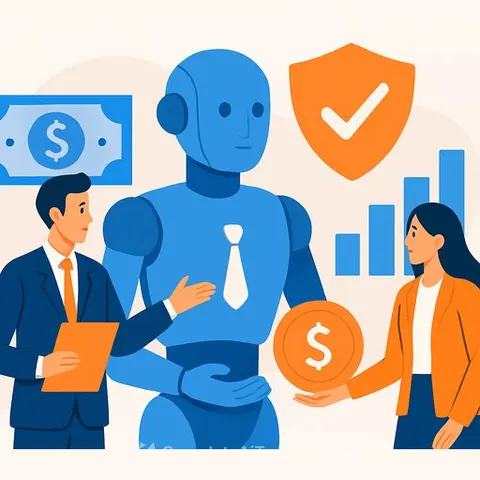
Agentic AI Could Add $2 Billion in Life Insurance Premiums by 2030
The US life insurance industry has a stubborn problem: 40% of adults say they need coverage or need more of it, yet sales follow-through remains weak. Agentic AI could close that gap by removing friction from the buying process and reaching customers the industry has long struggled to serve.
The Deloitte Center for Financial Services predicts agentic AI embedded in life insurance distribution could generate $2 billion in annual incremental premiums by 2030, with a range of $400 million to $5.2 billion. Individual life insurance premiums could grow 11% by 2030 with AI, reaching $21.2 billion instead of the $19.1 billion expected without it.
The opportunity exists because the insurance industry still relies on a model where products are sold, not bought. AI can change that by helping consumers understand why coverage matters, what it costs, and which policy fits their situation. The technology amplifies agents rather than replacing them.
Why the Coverage Gap Persists
Perceived cost is the primary barrier. A 2025 Insurance Barometer survey found 46% of respondents cite cost as the reason they lack coverage or have too little. Younger adults are particularly affected-they overestimate premiums by 10 to 12 times the actual cost, which keeps them from seriously considering the market.
Knowledge gaps compound the problem. Twenty-two percent of survey respondents say they don't know how much coverage they need or what type to buy. Another 21% cite procrastination. These barriers concentrate among younger households, lower-income families, women, and Black and Hispanic consumers-the segments most critical to future industry growth.
Four Moments Where AI Changes the Buying Journey
Consumer research: Fifty-one percent of consumers surveyed said they would use an AI tool to research life insurance, and 55% would use one to shop for it. AI is becoming the self-education layer before people speak with an adviser.
Targeted outreach: Life insurance demand is event-driven. Marriage, a home purchase, a new child, a job change, or income increase all trigger protection needs. Agentic AI can monitor these signals and reach the right household with relevant messages at the right time, even for modest case sizes that were historically unprofitable to pursue.
Guided digital buying: AI conversational interfaces can explain products, gather information progressively, prefill applications, and keep buyers moving through the process. As agentic capabilities expand, more sophisticated underwriting could move buyers directly to instant-issue digital policies.
Agent amplification: This is where AI creates the most value. The technology can prepare case summaries, estimate coverage gaps, suggest discovery questions, surface likely objections, and draft follow-ups. Agents then spend more time earning trust, applying judgment, and helping households make confident decisions rather than handling administrative work.
What Carriers Need to Do
Insurers must think of AI agents as a new customer class. As consumers increasingly use AI tools to research and compare options, carriers need to optimize how their products appear in agentic search results. That means clear, plain-language descriptions, transparent coverage explanations, and consistency between what prospects read online and what advisers say in person.
Personalized outreach becomes economical at scale. AI can identify moments that matter and speak to specific household concerns without flooding inboxes with automated messages. For carriers with broad customer bases in adjacent lines, this creates a practical way to expand life insurance conversations that rarely happen today.
Reconfiguring agent workflows is essential. Build AI into pre-meeting prep, needs analysis, quoting, objection handling, and follow-up so agents spend less time chasing leads and more time advising. Success should be measured not just by efficiency but by policy count growth, better conversion on smaller cases, and stronger reach into underserved segments.
AI removes friction that currently stops unserved and underserved consumers from buying life insurance. Carriers that use AI to simplify and personalize while matching how customers already use these tools will see the most gains. Early movers may best position themselves to improve distribution economics and earn relevance in a market where consumers expect guidance to be immediate, personalized, and easy to act on.
For insurance professionals looking to understand how AI reshapes customer acquisition and sales processes, resources on AI for Insurance and AI for Sales offer practical context for these shifts.