2025 Agentic AI for CX Automation: What Customer Support Teams Need to Know
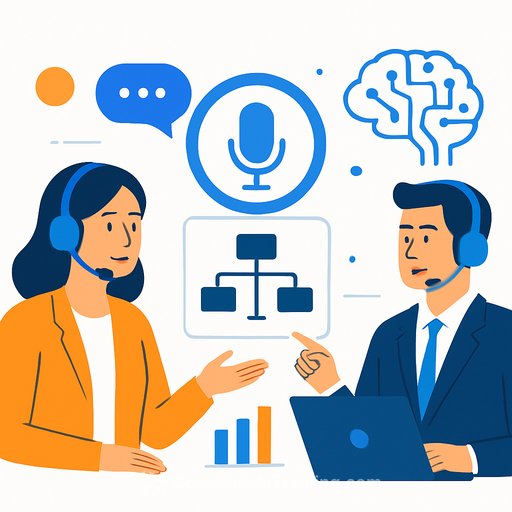
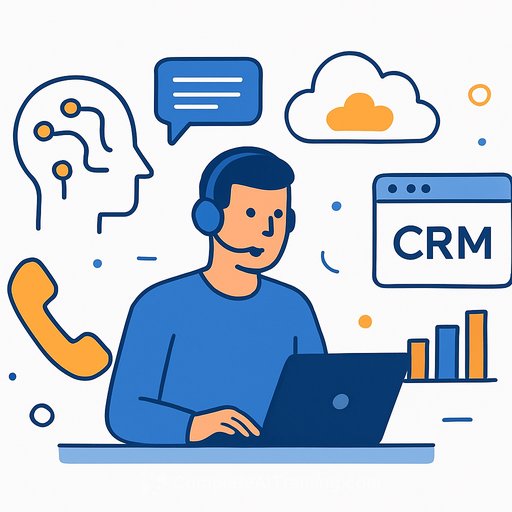
Contact centers are moving from static scripts to systems that think and assist in real time. The 2025 Agentic AI: Redefining CX Automation report (now available on ResearchAndMarkets) shows how agent-like AI can learn from live interactions, support agents, and handle tasks with context. For related AI research and practical resources, see Research.
The goal is simple: lower cost-to-serve, faster resolutions, and consistent experiences at scale. If you lead support, this is the shift to pay attention to.
From reactive to proactive support
Agentic AI goes beyond traditional bots. It uses policies, memory, and goals to decide next steps, resolve issues, and guide agents while conversations unfold.
That means fewer transfers, less handle time, and better outcomes without adding headcount. It also means customers get help before problems escalate.
What the new report covers
- Clear definition and core traits of agentic AI
- Market, business, technology, and CX trends driving adoption and investment
- Use cases across contact centers and service teams, with benefits for customers and employees
- Company and product write-ups for five vendors with generally available solutions
- Responsible AI guardrails and governance to reduce risk
- How agentic AI integrates with orchestration, automation, and the broader enterprise stack - practical UX and workflow guidance is available under Design
Why support leaders should care
- Reduce cost-to-serve with automated steps, smarter routing, and fewer repeat contacts
- Improve resolution speed with real-time guidance and context-aware actions
- Lift CSAT through consistent, proactive service and cleaner handoffs
- Boost EX by offloading grunt work and giving agents live coaching
Where agentic AI fits right now
- Agent assist: real-time prompts, next-best actions, compliance nudges
- Self-service: transactional flows that adapt to intent and history
- Quality and compliance: automated scoring, summaries, after-call work
- Knowledge: retrieval and content suggestions grounded in policy
- Operations: forecasting signals, workflow automation, triage
Vendor highlights featured in the report
The report includes generally available offerings from five companies, showing practical deployments across industries:
- Balto Software, Inc.
- CallMiner, Inc.
- OnviSource
- Sendbird, Inc.
- Verint Systems
The takeaway: agentic AI is no longer experimental. It's already supporting live operations.
Responsible AI: guardrails that matter
- Governance: clear policies for data use, human-in-the-loop review, and auditability
- Risk controls: red-teaming, prompt hygiene, fallback flows, and incident response
- Compliance: privacy-by-design, consent management, and documentation for regulators
- Change management: transparent comms with agents and customers; training and feedback loops
A simple 90-day plan to get started
- Pick one journey: high-volume, rule-heavy, measurable (e.g., billing changes or password resets)
- Baseline KPIs: AHT, FCR, CSAT, containment, QA scores
- Data readiness: scrub PII, map knowledge sources, define escalation rules
- Pilot in production with guardrails: limited scope, human oversight, clear exit criteria
- Measure and iterate weekly: prompts, policies, and workflows
- Expand to the next use case after hitting target deltas (e.g., -10% AHT, +5 points QA)
For report details and examples, visit the listing on ResearchAndMarkets.
If you're planning skills development for your team around AI in support, explore curated training by job role here: Complete AI Training - Courses by Job.
Your membership also unlocks: