
AI news ·
Agentic AI pushes CMOs to redesign how humans and machines work together
Agentic AI is pushing marketing leaders to redesign workflows where humans and machines operate as one unit. The shift expands marketing's role from running campaigns to orchestrating experiences across AI-driven and traditional channels.
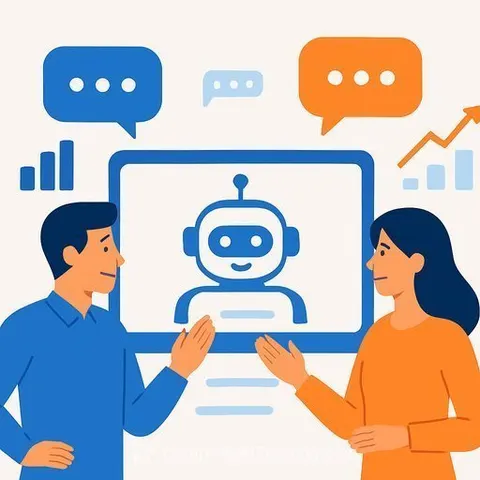
Marketing's New Role: Designing How Humans and AI Work Together
Agentic AI is forcing marketing leaders to rethink their core mandate. The shift isn't about adopting another tool-it's about designing workflows where humans and intelligent systems operate as a single unit, learning and adapting at speeds organisations haven't managed before.
Customer behaviour is moving faster than most companies can respond. People now expect personalised interactions without friction. At the same time, AI agents are beginning to act on behalf of customers, influencing how brands are discovered and evaluated. Marketing must now design for both human and machine-mediated interactions.
This expands marketing's role beyond running campaigns. Instead, marketers orchestrate intelligent, adaptive experiences across AI-driven and traditional channels. That orchestration demands more content, more variation, and greater speed-all while maintaining trust and coherence.
Where organisations get stuck
Twelve months into the agentic AI wave, many organisations are caught between curiosity and conviction. Pilots advance faster than operating models. Some teams strengthen data foundations and governance. Others cycle through benchmarking and proof-of-concept, hesitant to commit.
The risk isn't experimentation or spending time on foundations. The risk is staying suspended between the two for too long.
Marketers are natural problem-solvers and early responders to customer shifts. They're well-positioned to move through this tension. But progress requires diversity of thought. Bringing sceptical voices into the room-from finance, legal, ethics-improves judgment and prevents overconfidence.
How to move forward
Start with the room, not the roadmap. Bring together people from different functions with varied perspectives, all grounded in shared understanding of the customer.
Next, redesign workflows from scratch. Begin with how customers discover and engage with your brand today. If this work isn't disrupting internal silos, it's not going far enough.
Choose a select number of high-impact bets. Some should deliver early confidence. Others reshape capability over time. The rest can wait.
Be explicit about key junctures in workflows. Minimise handoffs. Use human intelligence for judgment, creativity, and meaning. Leave pattern recognition, speed, and scale to machines. Clear boundaries between human and machine work are crucial for building trust.
Finally, establish feedback loops and guardrails early. Define success clearly. Ask: What changes for the customer? What moves the business? When those answers are clear, teams learn faster and course-correct sooner.
The commercial payoff
The payoff isn't short-term performance spikes. It's predictability. In uncertain markets, the ability to forecast accurately, respond faster to customer shifts, and align execution with strategy becomes a business advantage.
This is language that resonates with CEOs and boards. It's the terrain on which marketing's influence expands.
Learn more about AI strategy for CMOs and AI applications in marketing.