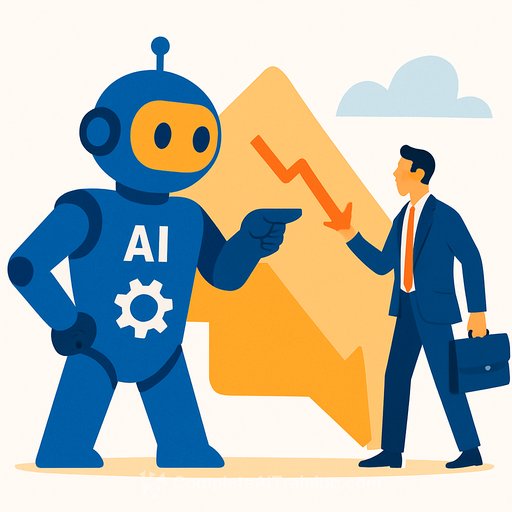
Risk Management: Are Organizations Ready for Agentic AI Risks?
As AI evolves from simple tools to complex multi-agent systems, the risks organizations face multiply rapidly. Traditional AI risk programs, which focus on ethical and cybersecurity concerns, must adapt quickly if companies want to move forward safely and effectively.
AI is no longer just chatbots or image generators. Agentic AI systems can perform a series of tasks independently, creating new challenges that leaders can’t ignore. The potential for widespread disruption is real, and the stakes are high.
The Ethical Nightmare Challenge
AI introduces a host of risks: hallucinations, deepfakes, job displacement, intellectual property issues, biased outcomes, privacy breaches, and opaque decision-making processes. Leaders must:
- Identify potential ethical pitfalls their organization might face with large-scale AI use.
- Build internal resources to prevent these issues.
- Train employees to use these resources effectively and exercise sound judgment.
Meeting this challenge is tough but essential. Agentic AI intensifies these risks and raises the cost of failure. Without proper management, businesses risk significant operational and reputational damage.
How AI Risk Evolves with Technology
Most companies built AI risk strategies around narrow AI—systems focused on specific tasks like facial recognition or credit scoring. These systems have well-understood contexts, data science oversight, human review, and manageable output rates.
- They operate within predictable environments.
- Data scientists monitor and mitigate risks.
- Humans often review results before action.
This framework starts to break down with generative AI.
Generative AI: A Shift in Risk Dynamics
Generative AI tools like large language models (LLMs) are used in diverse, unpredictable contexts, making risk assessment and monitoring much harder. False outputs or “hallucinations” happen frequently, requiring users to be trained to verify information. The complexity of managing these models increases as companies customize or fine-tune them.
Risk assessments now need to happen at multiple stages, from vendor models to internal modifications. Deciding who is responsible and when to act becomes more complicated, demanding a more dynamic approach to risk management.
Multi-Model and Agentic AI: The Complexity Curve
As organizations move beyond generative AI, they start connecting multiple AI models—combining language models, image generators, databases, and narrow AI systems. Then, these integrated AI agents gain the ability to take digital actions and communicate with each other, both inside and outside the organization.
This progression can be seen as stages:
- Stage 1: Connect an LLM with another generative AI.
- Stage 2: Link multiple databases and AI systems.
- Stage 3: Enable AI to perform digital tasks like transactions.
- Stage 4: Allow internal AI agents to communicate.
- Stage 5: Enable communication with external AI agents.
Each stage demands more advanced risk controls and employee skills. The challenges multiply:
- Assigning risk assessment responsibilities becomes complex.
- Human oversight of AI outputs diminishes.
- Decisions to deploy or halt AI systems carry greater weight.
- Real-time monitoring and quick intervention are critical.
- Employee training is more important than ever.
Meeting the Challenge
AI will continue evolving toward faster, more autonomous systems that operate beyond human supervision. Organizations face a choice: prepare now while complexity is manageable or react later after costly failures damage reputation and trust.
Success depends on recognizing that AI risk management requires a fundamental shift in policies, training, and decision-making—not just a technical upgrade. Moving through the complexity stages without proper infrastructure is reckless.
Organizations don’t have to solve everything immediately. They should:
- Assess their current AI complexity stage honestly.
- Build capabilities suited for that stage.
- Create systems to evolve safely to the next stage.
- Invest in employee training focused on responsible AI use.
- Develop monitoring and intervention protocols before crises emerge.
This approach minimizes risk and positions companies to benefit from AI advances without falling victim to ethical or operational failures.
For organizations looking to build AI skills and understand ethical AI deployment better, resources such as Complete AI Training’s latest courses offer practical guidance to upskill teams effectively.
Your membership also unlocks: