
AI news ·
Agentic AI shifts plant operations from dashboards to decisions
Process manufacturers use agentic AI to automate decisions and adjust parameters in real time. It cuts response times and improves safety by acting on anomalies within seconds.
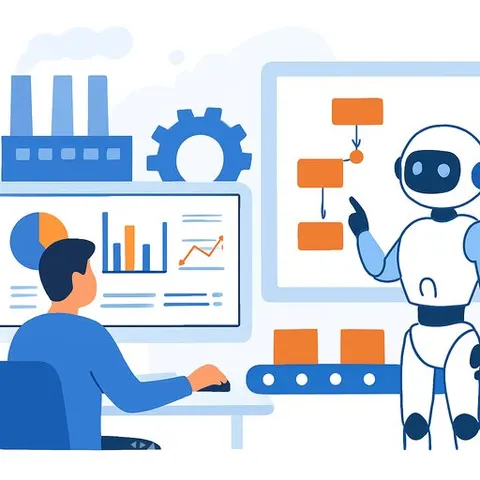
Process manufacturers are turning to agentic AI to move from passive dashboards to automated decisions. Autonomous agents that perceive, reason, and act can monitor production lines, predict equipment failures, and adjust parameters in real time-cutting response times and improving safety. These systems tackle a long-standing problem: industrial environments generate vast data volumes that overwhelm human teams working under time pressure.
What agentic AI brings to the plant floor
Unlike traditional analytics, agentic AI goes beyond triggering alerts. A system in a chemical plant can detect a temperature anomaly, analyze its root cause from historical and live data, and initiate a corrective action-such as adjusting a coolant valve-within seconds. This closes the gap between insight and response that often leads to costly downtime or safety incidents.
Integrating AI with existing systems
Successful deployments connect agentic AI to sensors, IoT devices, and enterprise platforms like ERP and maintenance management systems. That integration gives agents the real-time and historical context needed to make sound decisions. Human oversight remains essential: engineers define the boundaries for autonomous actions and step in when exceptions occur. For operations teams, AI for Operations covers predictive maintenance, process optimization, and supply chain visibility-areas where agentic AI can deliver measurable gains in safety, efficiency, and sustainability.
Why this matters for operations professionals
Agentic AI shifts daily work from constant monitoring to strategic oversight. Instead of reacting to alarms, professionals can concentrate on process improvements and reliability projects. The technology handles repetitive, data-heavy tasks, freeing teams to focus on higher-value decisions. As these tools spread, building skills in autonomous systems becomes critical. Structured training-such as an AI Learning Path for Plant Managers-lays out how to design, deploy, and govern agents in an industrial setting.