
AI news ·
Jeppesen ForeFlight unveils Airflow AI engine for aviation operations
Jeppesen ForeFlight launched Airflow, an aviation AI engine. The first tool connects to ChatGPT for flight planning.
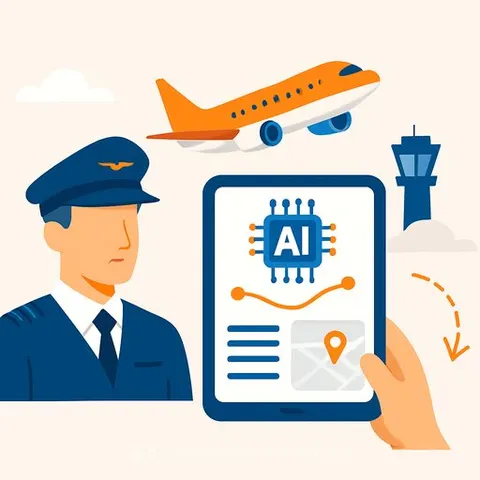
Jeppesen ForeFlight has introduced a new aviation-focused artificial intelligence engine built to work across crew planning, day-of-flight operations, and flight deck solutions. The system, Jeppesen ForeFlight Airflow, anchors the company's strategy for bringing AI into commercial, business, and military aviation on timelines customers control.
"We have helped the industry evolve from paper to digital to mobile, and we are bringing to market a highly differentiated AI offering in Jeppesen ForeFlight Airflow that customers can deploy on their own terms and timelines, at significantly lower IT costs than previous industry transitions," said Brad Surak, CEO of Jeppesen ForeFlight.
Open architecture and domain data
Airflow combines commercially available data, segregated proprietary customer data, and decades of aviation domain knowledge. That includes safety expertise, certification know-how, and contextual reasoning drawn from across the industry. The engine's open architecture is model agnostic, so operators can plug in their own AI agents, adopt third-party solutions, or use the native agents Jeppesen ForeFlight provides. This flexibility lets teams tailor AI for Operations tasks like fleet scheduling and day-of-flight adjustments to their existing tech stacks.
First product connects to ChatGPT
The company also previewed its first tool for the general aviation market: the ForeFlight AI Connector. It functions as an MCP server that links ForeFlight Mobile directly to a customer's existing OpenAI ChatGPT environment. Pilots and dispatchers can query their AI for flight plans, refuelling stops, or build custom AI-connected workflows using ForeFlight Mobile data. This ChatGPT Integration will expand to other AI applications later, with support planned for Google's Gemini and Anthropic's Claude.
Commercial and military rollouts ahead
Jeppesen ForeFlight expects to launch the first commercial and business aviation offerings for Airflow later this year. Military-focused capabilities will follow. All releases build on the same core engine, giving operators across segments a unified way to bring AI into daily workflows without overhauling existing systems.
Why this matters for operations professionals
For operations teams managing fleets, crews, and flight schedules, Airflow shifts AI adoption from a large-scale IT project to a configurable layer. It lets operators start with the data and models they already trust, then expand scope on their own schedule. The open, model-agnostic design means no vendor lock-in, and the lower deployment cost compared with earlier digital transitions removes a common barrier. In practice, an airline or corporate flight department could connect proprietary scheduling data to AI agents that surface refuelling options, identify crew constraints, or flag certification issues-without building everything from scratch.