Agentic AI Briefing For Managers: Build vs. Buy, Governance, And Your Next 90 Days
Latest insights as of 12 p.m. ET, Jan. 13. Agentic AI is shifting from pilots to core infrastructure, and leaders are being pressed to turn experiments into accountable systems that scale.
Today's Highlights
- The core decision is build vs. buy. Off-the-shelf tools move fast but are rigid; DIY offers control and differentiation but needs talent, time, and budget.
- Many deployments fail without human governance. A "Service-as-a-Software" model is rising: automation first, human judgment on the loop.
- As agents become integral, C-suite lines blur. Strategy, tech, risk, and ops converge into shared ownership.
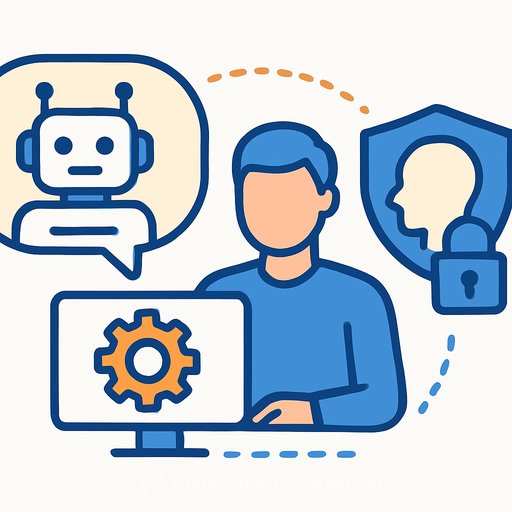
- Machine identity is a new blind spot. Agents need secure credentials, least-privilege access, and auditable actions to operate safely.
- Testing is its own market. Sandboxes, red teaming, and guardrails are becoming standard before agents hit production.
What Agentic AI Actually Does
These systems plan, learn, and execute multi-step work with minimal prompts. Think "autonomous workflows" across pricing, inventory, support, and planning-not just chat answers.
They thrive with clear goals, clean data, and tight feedback loops. Without those, they drift, over-confidently execute, and create messes at scale.
Build vs. Buy: A Simple Decision Playbook
Buying makes sense when speed, compliance, and known use cases matter more than custom logic. You accept vendor constraints to ship faster and reduce internal load.
- Buy when: you need deployment in weeks, the task is common (support summaries, triage, routing), data can stay within standard connectors, and you want vendor risk controls.
- Build when: workflows are core IP, you need deep system integration, data is sensitive, or you're seeking unit-cost advantage at scale.
- Hybrid: start with a vendor to validate ROI, then insource critical parts once value is proven.
Consider a "Service-as-a-Software" model: the agent performs the bulk of work; humans approve exceptions, edge cases, or high-impact actions. It's fast, safer, and easier to audit.
Governance That Actually Works
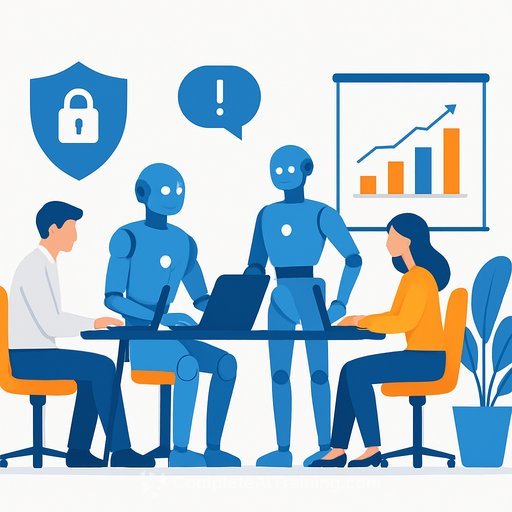
Agents fail without human oversight. Give them a clear mandate, checkpoints, and a place in your org chart.
- Accountability: name an owner for each agent, with metrics and budget.
- Policies: define allowed actions, data boundaries, and escalation rules.
- Reviews: weekly ops reviews on accuracy, cost, and incidents; monthly risk reviews for model drift and bias.
- Metrics that matter: task success rate, time to resolution, human override rate, rework %, cost per task, and customer impact.
Use a lightweight control board across Product, Data/AI, Security, Risk/Legal, and Ops. Decisions are faster when these teams meet with shared dashboards and pre-agreed thresholds.
Security: Treat Agents Like Employees With Badges
Agents need identities, permissions, and supervision. The goal is to prevent silent failures and limit blast radius when things go wrong.
- Identity and access: issue unique machine identities; grant least-privilege roles and time-boxed tokens; rotate secrets automatically.
- Controls: isolate environments, enforce approval for high-risk actions, and require signed requests for system changes.
- Audit: log every action with who/what/when/why; monitor for off-policy behavior; alert on data exfiltration patterns.
For standards and guidance, see the NIST AI Risk Management Framework here and the OWASP Top 10 for LLM Applications here.
Testing Before Production
Don't ship an agent you haven't tried to break. Treat testing as an ongoing practice, not a checkbox.
- Sandbox: simulate data, goals, and constraints; compare runs against known good outcomes.
- Red team: probe prompt injection, data leaks, and jailbreaks; rotate attack sets monthly.
- Guardrails: enforce tools-only execution, function whitelists, and budget caps per run.
- Stop conditions: define hard fails and auto-pause rules; require human review after N anomalies.
Where Value Is Showing Up First
- Retail: price changes, promo planning, and inventory moves executed on real data with human approvals for big swings.
- Support: triage, summarization, draft responses, and post-case reporting.
- Finance and ops: reconciliations, vendor follow-ups, and variance analysis.
- IT and data: pipeline checks, access requests, and routine admin tasks.
Expect platform gatekeeping to grow. Some marketplaces will welcome third-party agents; others will push their own. Design for multi-platform constraints early.
The C-Suite Is Changing With It
Strategy, tech, and risk are now a shared job. CFOs track unit costs and productivity shifts; CIO/CTOs own the control plane; CISOs gate access and logs; CHROs redesign roles; Legal sets boundaries and disclosures.
Consider role-focused training for executives who will own the control plane-see the AI Learning Path for CIOs for governance and cross-functional ownership guidance.
Create a single executive forum for agentic AI with quarterly targets, spend visibility, and a clear incident path. Fragmented ownership is the fastest way to stall or overspend.
Your 90-Day Plan
- Days 0-30: pick two measurable use cases; define metrics and guardrails; choose buy/build; stand up a sandbox; assign owners.
- Days 31-60: run pilots with human approval; tune prompts/tools; add identity controls and logs; start weekly ops reviews.
- Days 61-90: expand to limited production; negotiate vendor terms or allocate build budget; finalize training, runbooks, and incident playbooks.
Practical Procurement Questions
- What's the cost per successful task, including human approvals and rework?
- How do you log every tool call and data touch for audit?
- What happens on model updates or outages? Who approves rollbacks?
- Can we export our prompts, configs, and run history if we switch vendors?
Skills And Training For Your Team
Upskill managers and operators on prompts, guardrails, and measurement. Start with targeted resources by role and use case.
Agentic AI will keep moving from side projects to systems that run real work. Treat it like any other enterprise capability: clear ownership, strong controls, steady iteration, and relentless focus on business outcomes.
Your membership also unlocks: