
AI news ·
AI accelerates cyberattack lifecycles and raises aggregation risk for re/insurers, CyberCube warns
AI is accelerating cyberattacks faster than defenses can respond, according to risk firm CyberCube. Damage can now occur before detection kicks in, shifting insurer focus toward recovery over prevention.
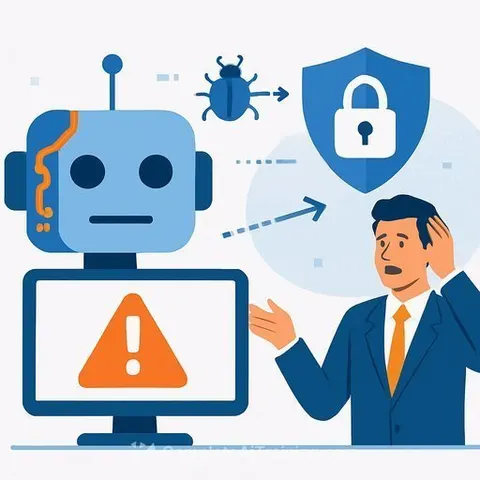
AI is accelerating cyberattacks faster than defenses can respond
Cyber risk analysis firm CyberCube says artificial intelligence is enabling threat actors to find vulnerabilities, exploit them at scale, and coordinate attacks with unprecedented speed. The firm published its assessment in a market briefing titled AI Risk Landscape: Implications for Cyber Re/insurance.
William Altman, director of cyber threat intelligence services at CyberCube, said AI is compressing the time between initial compromise and operational disruption. In some cases, damage occurs before detection and containment become effective.
Recovery now matters more than prevention
This shift changes how insurers should evaluate business interruption losses. The ability to recover from an attack is becoming more critical than the ability to prevent one.
Altman said: "AI is compressing the cyberattack lifecycle, reducing the time threat actors spend between initial compromise and operational disruption and in some cases enabling impact to occur before detection and containment are effective."
Concentration risk in AI infrastructure poses portfolio threats
As AI becomes embedded in critical operations, it's increasingly concentrated across a small number of hyperscale cloud platforms and foundation model providers. This creates shared points of exposure across multiple insureds.
Dependencies on dominant providers tighten the AI supply chain. When one system fails or is compromised, the impact spreads across many customers simultaneously rather than remaining isolated.
Altman added: "As AI becomes more deeply embedded in critical business operations and increasingly concentrated across compute infrastructure, hyperscale cloud platforms and foundation model providers, the potential for portfolio aggregation risk may rise. This reflects the tightly coupled nature of the AI supply chain, where dependencies on a small number of dominant providers create shared points of exposure across insureds."
Correlated losses are now more likely than isolated events, particularly as AI systems take on greater roles in automation, decision-making, and operational control.
For insurance professionals, this means reassessing how cyber risk concentrates across client portfolios and how AI dependencies create systemic vulnerabilities. Learn more about AI for Insurance and how Generative AI and LLM systems are being weaponized in threat scenarios.