Lead AI Transformation with Proven Project Management
Every few years, a new wave hits-agile in 2012, digital in 2020, AI now. The pattern is familiar: big budgets, bold promises, low success rates. Around 70 percent of transformations miss the mark, and it's rarely the technology. It's organizational design, leadership alignment and follow-through.
If you manage teams, budgets or strategy, this matters. Failed AI initiatives don't just stall; they burn trust, morale and time. The difference between a headline project and a hard reset is the quality of project management and change management behind it.
Why AI Programs Fail (and Why Managers Should Care)
Across major studies, only a minority of digital transformations achieve their goals. Boston Consulting Group reported roughly 30 percent success across 900 transformations, and McKinsey found even lower rates in traditional industries. Early AI programs are tracking the same way-many stall in "pilot purgatory," never scaling to enterprise value.
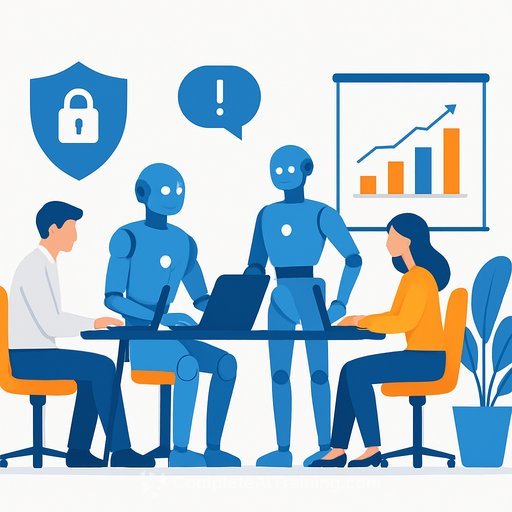
Behind those numbers are common patterns: tech-first thinking, contractor-heavy teams, short timelines and adoption vanity metrics. If you lead projects or change, this is now a core competency. Treat AI like an organizational transformation, not an app rollout.
AI Adoption vs. AI Transformation
There's a difference between checking the AI box and changing how your business makes decisions. We saw this with agile: "doing agile" (ceremonies and tools) vs. "being agile" (structure, culture and governance). AI is no different.
What most companies call AI transformation today is really AI adoption:
- Buying enterprise licenses for tools like ChatGPT or Copilot
- Running prompt workshops
- Launching innovation labs and demo days
- Measuring success by how many people "use AI"
Real AI transformation is harder-and worth it. It means redesigning decision rights for human-AI collaboration, rebuilding core processes from first principles and rethinking how expertise, data and authority flow. That's not a quarter. That's a program.
What Actually Works in AI Change
Look at ING's transformation. The bank broke down hierarchies, moved to autonomous squads and focused on customer outcomes. Development cycles fell from 18 months to as low as three, mobile satisfaction rose and the bank led its market. The catch: it took years, not months, and required changing power structures and building internal capability.
The broader data lines up. Organizations that take a comprehensive approach-structure, leadership, skills, incentives, and tech-see far higher success rates than the baseline. BCG's research shows success can more than double with this approach, and McKinsey highlights two strong predictors: staff more than half the team with internal employees and plan for 24-36 months, not 6-9.
For deeper context, see BCG's analysis on flipping transformation odds and McKinsey's findings on what separates successful transformations from the rest: BCG: Flipping the Odds of Digital Transformation Success and McKinsey: Unlocking Success in Digital Transformations.
How to Lead AI Transformation Projects That Deliver
- Diagnose before prescribing. Audit data quality, access, lineage and governance. Clarify which class of AI you need (generative AI, machine learning, or intelligent automation). Map integration points and process dependencies before you fund builds.
- Use proven change frameworks. Apply models like Kotter's 8 steps and Prosci's ADKAR to drive sponsorship, communication, capability building and reinforcement. Organizations with excellent change management are multiple times more likely to hit outcomes.
- Plan for years, not quarters. Set a 24-36 month roadmap with staged outcomes and learning loops. Over-index on internal talent; avoid contractor-only teams that leave when the hard part-scaling and adoption-starts.
- Redesign work, not just roles. Define decision rights between humans and AI, update approval paths and codify "who trusts what, when." Build playbooks for exception handling and escalation.
- Measure outcomes, not tool usage. Track customer impact, decision quality, cycle time, risk reduction and cost to serve. "Daily active users" of AI tools is a vanity metric unless it ties to business results.
- Invest in capability, not demos. Stand up enablement: data literacy, prompt fluency, model risk basics, privacy and security. Build an internal community of practice so improvements compound.
A Practical Operating Rhythm for Managers
- Quarter 0-1: Baseline data and process health, choose priority use cases, define governance and risk guardrails, and set outcome metrics.
- Quarter 2-3: Pilot two to three high-leverage use cases. Prove value in production with real users. Document the new way of working.
- Quarter 4-6: Scale what works. Industrialize data pipelines, integrations and MLOps. Formalize training and support. Retire redundant processes.
- Months 18-36: Expand to adjacent processes, refine decision design and refresh the portfolio as models, data and regulations evolve.
Common Failure Patterns to Avoid
- "Tool-first" projects with no process redesign
- Pilots that never face real workloads or compliance constraints
- Contractor-heavy teams that can't sustain outcomes post-launch
- Success metrics that celebrate usage over results
- Underestimating the time needed to change incentives, governance and culture
The Bottom Line for Management
AI failure isn't a tech gap-it's a management gap. The winners treat AI as an operating model change led by project management and change management, not a one-off install. Set a multi-year plan, staff with insiders, redesign decisions and measure what matters. That's how you compound value instead of compounding rework.
Next Steps
If you're responsible for leading this shift, build the skills and systems that carry beyond the first pilot. Start with the AI Learning Path for Project Managers to align use cases, change management and delivery.
For executive-level strategy, governance and portfolio planning, explore AI for Executives & Strategy to connect vision to execution without getting lost in tool churn.
Your membership also unlocks: