AI Agent Identity Management: A New Security Control Plane for CISOs
Sponsored by Token Security
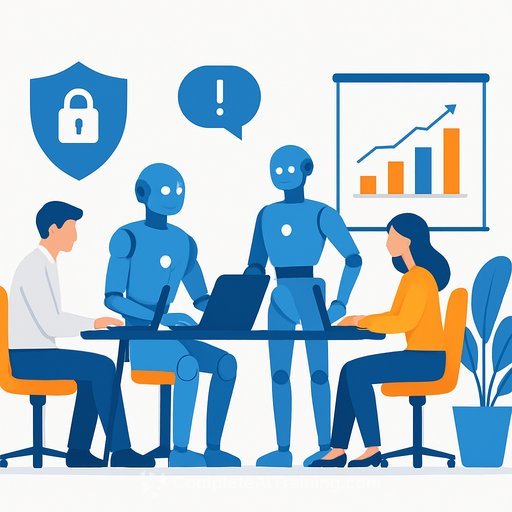
Identity programs were built for people and predictable services. Autonomous AI agents don't fit that mold. They act with intent, operate at machine speed, and cross system boundaries without waiting for tickets or approvals.
That's why IAM, PAM, and IGA alone are no longer enough. Without a dedicated control plane for agent identities, risk compounds while adoption keeps moving.
Why AI Agents Break Existing Identity Models
Human identities are centralized and role-based. Machine identities are scalable and repetitive. AI agents sit in the middle. They take goals, adapt behavior, and chain actions across tools and APIs while running continuously.
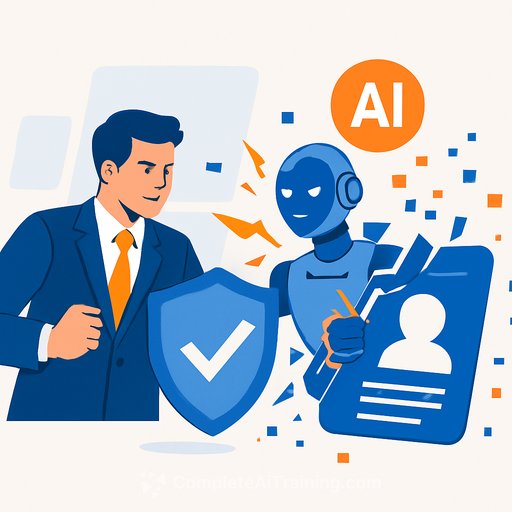
This hybrid profile changes the risk math. Agents inherit human-like intent and decision-making, but keep machine-like reach and persistence. Treating them as generic service accounts creates blind spots, ownership gaps, and over-privileged access that drifts from the original purpose.
Adoption Without Security Is the Real Accelerator of Risk
Most enterprises think they have a handful of agents. A closer look often uncovers hundreds-custom GPTs, copilots, coding agents on local machines, and MCP servers tied into production workflows (see MCP (Model Context Protocol) Courses).
Security leaders are left with basic unanswered questions:
- How many agents exist, and where do they run?
- Who owns each agent and its credentials?
- What systems and data are they touching?
- Which agents are still active and why?
Unmanaged credentials are still a favored attack path. Now they're multiplying at machine speed.
The Case for AI Agent Identity Lifecycle Management
Workforce identities follow joiner, mover, leaver. Service accounts follow creation, rotation, decommissioning. AI agents compress that lifecycle into minutes or days-and then get forgotten.
Quarterly access reviews can't keep up. The answer is continuous lifecycle management that treats agents as first-class identities from creation through decommissioning, with near-real-time governance, least privilege, and auditability.
A Practical Lifecycle Blueprint for CISOs
- Discover continuously: Use behavior-based discovery across cloud, SaaS, developer environments, and endpoints. Static inventories miss short-lived agents.
- Classify and assign ownership: Tie every agent to a responsible owner, team, and business purpose. Flag orphaned agents and enforce time-to-fix SLAs.
- Provision with guardrails: Issue scoped credentials, prefer short-lived tokens, isolate secrets, and codify policies as code.
- Authorize dynamically: Right-size permissions by observed behavior, remove unused rights automatically, and make elevated access temporary and purpose-bound.
- Monitor and trace: Correlate actions across agents, APIs, and platforms to a single identity context. Maintain per-agent audit trails.
- Review and retire: Auto-expire stale agents, disable on owner departure, and decommission cleanly with credential revocation.
- Govern and report: Map controls to Zero Trust and audit requirements with evidence on who did what, where, and why.
Visibility Comes First: Discovering Shadow AI
Agents rarely pass through formal provisioning. They appear in notebooks, CI/CD, browser extensions, SaaS connectors, and local scripts. If you can't see them, you can't govern them.
Prioritize continuous discovery driven by behavior signals: token use, unusual API call patterns, cross-system chaining, and agent-to-agent invocation. Quarterly scans won't catch agents that spin up and vanish in an afternoon.
For foundational guidance on identity-centric architecture, see NIST's guidance on Zero Trust here.
Ownership and Accountability Matter
Orphaned agents are today's orphaned accounts-multiplied. Projects pause. Employees move teams or leave. Credentials stay valid and permissions stay broad.
Require a named owner at creation, enforce periodic attestations, and auto-quarantine agents without an active sponsor or business purpose. Treat unowned agents as incidents waiting to happen.
Least Privilege Must Be Dynamic
Teams often grant broad access so agents don't break workflows. That convenience turns into risk fast. An over-privileged agent can pivot across systems faster than any human.
Shift from one-time role design to continuous right-sizing. Remove unused permissions, add time-bound elevation with approvals, and block cross-domain actions that don't match the agent's declared intent.
Traceability Is the Foundation of Trust
As organizations move to multi-agent systems, single-system logs aren't enough. You need identity-centric trails that correlate who initiated, which agent acted, what was accessed, and which downstream systems were touched.
This is core to incident response and to regulatory expectations around automated decision-making. NIST's AI Risk Management Framework offers helpful context on accountability and transparency here. For training focused on regulatory compliance and governance, see the AI Learning Path for Regulatory Affairs Specialists.
Identity Is Becoming the Control Plane for AI Security
AI agents aren't a science project anymore-they're part of daily operations. As autonomy grows, unmanaged identity turns into systemic risk.
Treat agents as a distinct identity class. Govern them continuously. Regain control without slowing useful adoption. In an agent-driven enterprise, identity isn't just about access-it is the control plane for AI security.
Next Steps for Security Leaders
- Run a 30-day discovery sprint to baseline agent count, owners, and access.
- Pilot dynamic least privilege on a high-impact agent and measure permission reduction.
- Add agent ownership checks to offboarding and quarterly reviews.
- Instrument correlated audit trails across your top three agent-integrated systems.
- Define incident playbooks for orphaned agents, credential leakage, and cross-agent abuse.
Token Security offers an in-depth guide on AI agent identity lifecycle management and a platform demo that shows these controls in action. If you want details on discovery, dynamic authorization, and auditability, book a demo and see how the platform works end to end.
If your leadership team needs structured upskilling around AI tools and governance, explore the AI Learning Path for CIOs.
Sponsored by Token Security
Your membership also unlocks: