
AI news ·
AI agents can handle EMS documentation, dispatch support and inventory tracking as the technology moves into field use
AI agents are already handling EMS documentation, dispatch support, and equipment tracking without waiting for commands. Agencies report cutting ePCR completion time from 20 minutes to 5.
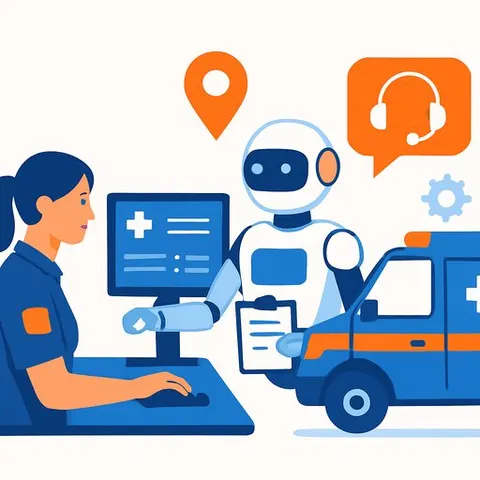
AI Agents Are Already Reshaping EMS Operations
Emergency medical services face a familiar problem at shift change: crews juggle competing documentation, equipment checks, and dispatch assignments before the first call arrives. An AI agent working in the background could handle much of that friction - verifying patient addresses, pulling previous run reports, pre-filling electronic patient care records, and logging crews in - all before a tone drops.
This isn't theoretical. AI agents designed for EMS can monitor activity, anticipate needs and perform tasks independently. They operate as a quiet support system, not a replacement for medics, dispatchers or supervisors.
What an AI agent actually does in EMS
An AI agent functions differently from a traditional app. Rather than waiting for commands, it watches workflows and acts on patterns it recognizes.
In the field, a medic can say "Show me the stroke protocol" and the agent displays the latest version while simultaneously drafting the report using voice inputs and vital signs from the monitor. During dispatch, the agent considers unit location, crew certifications, equipment status and traffic before suggesting the best unit for a call. After transport, it auto-fills patient demographics, timestamps and vital signs in the ePCR, leaving only the clinical impression for the medic to verify.
Quality assurance becomes faster too. AI agents flag high-risk calls, incomplete narratives and protocol deviations, organized by urgency with suggested review notes. Equipment tracking happens automatically - the agent monitors expiration dates and auto-orders supplies when levels drop below threshold.
Training gaps get addressed quietly. When documentation errors or clinical skill gaps appear, the agent assigns brief, targeted training modules without requiring formal intervention.
Why operations leaders should care
EMS agencies operate under constant pressure: high call volumes, administrative overload, thin margins for error. AI agents shift some of that weight without sacrificing performance.
Documentation that typically takes 20 minutes can drop to 5 when an agent captures data from CAD systems, monitors and voice inputs, then auto-fills large portions of the ePCR. Real-time information analysis against protocols reduces cognitive load in critical moments. Truck checks, maintenance scheduling and crew alerts get managed without adding to a supervisor's workload.
Leadership gains visibility too. AI can visualize call surges, track system status and flag coverage gaps before they become operational problems. Better documentation accuracy also improves billing and reimbursement outcomes.
Key capabilities most EMS providers haven't considered
AI agents learn your patterns over time, becoming more helpful as they anticipate common actions and preferences. They integrate with tools already in use - CAD systems, ePCRs, scheduling platforms, maintenance software. Voice activation works even in noisy environments, making field use straightforward.
These agents flag clinical risk based on vital signs, documentation gaps and pattern recognition before human eyes might catch it. Hospitals are already using them for triage and discharge workflows. EMS has more operational friction to resolve and more to gain from their implementation.
If you've used Siri, Alexa or Google Assistant, you've already interacted with an AI agent. EMS agents simply have a mission-critical job description.
How to start without overhauling operations
You don't need a six-figure budget or engineering staff. Start by identifying where people waste time or repeat work. Pick one workflow - daily truck checks or protocol lookups - and test it there.
Get feedback from field crews, not just IT or administrative staff. Measure time and error reductions. Use those results to build support for broader use.
AI agents won't replace people. They're designed to be the support system that medics, dispatchers and supervisors deserve, especially when seconds matter.
For operations managers looking to understand how AI can optimize EMS workflows, consider exploring AI learning resources focused on operational excellence. You can also learn more about AI agents and automation in professional settings.