
AI news ·
AI agents move beyond chatbots to handle real business operations as Google and Microsoft shift to autonomous systems
AI agents are now handling sales, scheduling, customer service, and reporting at small businesses-not just answering questions. Google and Microsoft are both pushing toward execution-focused AI built into daily operations.
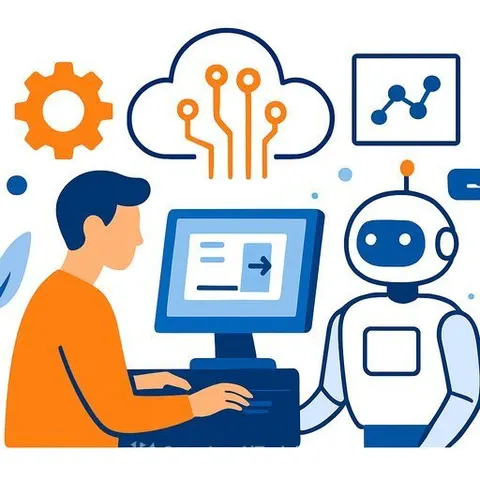
AI Agents Move Into Core Business Operations
Autonomous AI systems are now handling real work across sales, scheduling, customer service, and daily workflows at small and medium-sized businesses. This week, major tech companies signaled the shift: the next phase of AI is execution, not conversation.
Google introduced AI agents that monitor inboxes, draft emails, manage schedules, and handle transactions. Microsoft is restructuring Copilot into an "agent-first" platform integrated with Office, Windows, and enterprise systems. The goal is direct: turn AI into a digital workforce.
Where the Value Actually Sits
A chatbot saves an employee minutes. An AI agent automates entire workflows-customer follow-ups, scheduling, reporting, lead qualification, internal support. That operational efficiency is why enterprise AI spending is climbing in 2026, particularly among companies focused on cutting labor costs.
For operations teams specifically, this means fewer manual handoffs. Agents can move data between systems, trigger actions based on conditions, and maintain consistency across processes without human intervention at each step.
Enterprise Software Remains Essential
Some predicted AI would replace traditional software platforms. The opposite is happening. AI agents need access to business systems, permissions, customer data, payroll platforms, CRMs, and operational infrastructure. Enterprise software becomes more valuable as the foundation AI agents operate within.
The Competitive Pressure on Smaller Operations
A lean team supported by AI agents can handle sales outreach, customer service, appointment booking, marketing, and administrative work at a fraction of traditional costs. Small businesses that adopt agents early may operate with the efficiency of much larger competitors.
Businesses that delay face a real disadvantage. Competitors will move faster and cheaper.
What Operations Leaders Should Do Now
The race is no longer about the smartest chatbot. It's about who builds systems that perform actual work inside real businesses. Operations teams should identify repetitive workflows-the ones that consume hours weekly but don't require judgment calls-and assess which ones agents could handle.
Start with AI Agents & Automation fundamentals. Understand how agents integrate with your existing systems. Learn which workflows are candidates for automation. The companies that integrate agents into daily operations early will gain a measurable competitive advantage over the next few years.
For operations professionals specifically, see AI for Operations resources to understand how this applies to your role and your team's workflows.