The German Federal Employment Agency automates Jira processes with AI agents
Client: Federal Employment Agency (Bundesagentur für Arbeit)
Region: Germany
Industry: Public sector
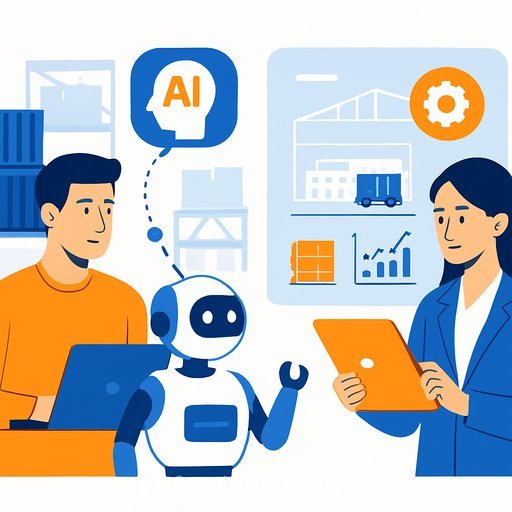
The Federal Employment Agency (BA) and Capgemini built an AI-based multi-agent system that turns Requests for Change (RFCs) and user stories into structured Jira tickets. The goal: reduce manual work, keep quality high, and meet strict privacy requirements without moving data outside the agency.
The management problem
Digital workloads keep growing while headcount stays flat. Converting long, complex RFCs into consistent Jira tickets was slow, manual, and prone to variation. The BA needed a scalable way to handle volume, protect data, and keep humans in control.
The solution in short
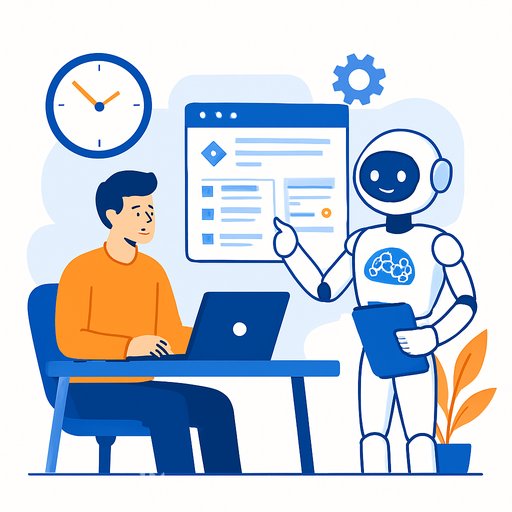
A coordinated set of AI agents now automates most Jira ticket creation, with humans reviewing before anything is finalized. The system runs entirely on-premises to meet privacy standards and integrates directly into the BA's local Jira environment.
- Significant reduction in manual effort
- More consistent, higher-quality ticket content
- Fully privacy-compliant, on-premises deployment
- Scalable approach applicable across public administration
- Stronger internal innovation capability
How the multi-agent system works
- Reader agent: Parses RFCs and user stories, extracting relevant details.
- Planner agent: Breaks the work into clear steps and fields.
- Creator agent: Drafts the Jira ticket (title, description, category, metadata).
- Reviewer agent: Checks for consistency and duplicates before human approval.
Scalability and maintainability were built in. The system handles large documents and LLM token limits, and it includes training and enablement so teams can adopt the new way of working.
Technical foundations and governance
The solution is fully integrated into the BA's local Jira instance and operates on-premises. Privacy-compliant models such as Aleph Alpha, LLaMA, and Mistral are orchestrated via CrewAI for multi-agent coordination.
All data stays inside the agency's secure IT environment. Operations, security, and development teams worked together to align controls, logging, and access. The system augments staff by removing repetitive work; people still make the final call.
Results managers care about
- Ticket creation is now largely automated and faster end-to-end.
- Manual copy-paste, reformatting, and summarization are handled by agents.
- Quality and consistency improved through standardization and human review.
- The BA now has a proven blueprint to apply multi-agent AI to adjacent use cases.
Where it goes next
The BA plans to extend the system to document classification, administrative workflows, and citizen-facing communication. The groundwork is set for a modular AI stack that can be scaled across public services, with ongoing collaboration to evolve the platform responsibly.
What to copy if you lead a public organization
- Start with a high-volume, rules-based process and define a clear human-in-the-loop step.
- Keep data on-premises and involve security from day one.
- Use model-agnostic orchestration so you can switch or combine LLMs as needs change.
- Measure outcomes: cycle time, quality, and rework rate-not just throughput.
- Invest in training and change management to make the new workflow stick.
"With Capgemini, we found an innovative partner who shares our vision of intelligent, secure, and practical AI integration. This project shows how technology can be used meaningfully to empower our workforce and make public administration future ready."
- Florian Winzer, Bundesagentur für Arbeit
If you're building internal capability for similar initiatives, explore curated AI learning paths by role at Complete AI Training.
Your membership also unlocks: