
AI news ·
AI and Low-Code Unite to Create Smarter, Scalable IT Support and Customer Service
AI combined with low-code platforms speeds up IT support and customer service by enabling smart, adaptable tools. This approach boosts efficiency, personalization, and seamless collaboration.
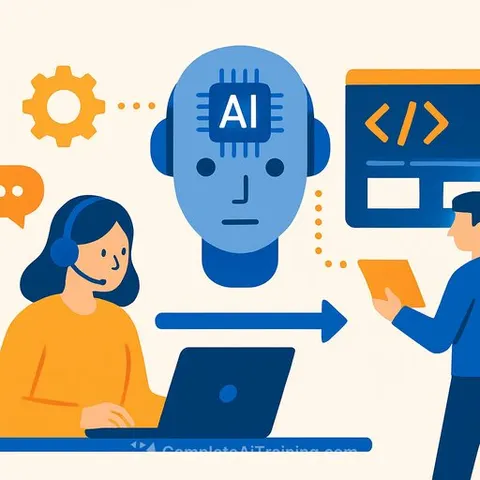
AI + Low-Code: Transforming IT Support and Customer Service
IT support and customer service have moved from basic back-end tasks to key players in business success and customer loyalty. With customer demands growing and tech environments becoming more complex, traditional support methods often lag. Slow response times, disconnected systems, and reactive processes create challenges for both support teams and users.
Combining Artificial Intelligence (AI) with Low-Code Development Platforms (LCDPs) offers a fresh approach. This blend enables teams to build smart, scalable, and personalized support tools quickly. It goes beyond simple automation by adding predictive insights, conversational interfaces, and dynamic workflows—without long development waits. This is a smarter way to improve support that emphasizes speed, innovation, and understanding user needs.
The Growing Pressure on IT and Support Teams
IT and customer service teams face two big challenges: maintaining reliable technology and providing excellent user experiences. IT teams juggle many tools, security concerns, and increasing service requests. Customer service deals with rising ticket volumes, multiple communication channels, and the need for fast, personalized help.
Traditional development, manual processes, and isolated systems can't keep up. The result is patchwork solutions that cause delays and errors. What’s needed is flexible, intelligent infrastructure that responds in real-time. This is where AI combined with low-code makes a difference.
Low-Code: Speed Meets Flexibility
Low-code platforms let teams create and update applications fast using drag-and-drop tools and templates. What typically takes weeks or months can now be done in hours or days. This agility allows quick deployment of helpdesk apps, ticketing systems, knowledge bases, and incident workflows with minimal technical hurdles.
Beyond speed, low-code offers adaptability. Support needs can change suddenly—a new product, a ticket surge, or new regulations. Low-code allows teams to adjust tools on the fly without waiting for specialized developers. Support managers and IT can work together to build solutions that match real-world demands.
The Role of AI: From Reactive to Predictive
AI adds an intelligence layer to low-code’s flexibility. Technologies like natural language processing (NLP), machine learning, sentiment analysis, and predictive analytics help improve support effectiveness dramatically.
AI-powered chatbots handle routine questions instantly, freeing human agents for complex cases. These bots can be built or integrated via low-code platforms, trained on past ticket data, and improved continuously with feedback.
AI also streamlines ticket routing. Instead of fixed rules, AI models analyze ticket details and assign them to the best agent based on skills and availability. This speeds resolution and boosts satisfaction. Sentiment analysis helps detect frustrated customers and triggers timely escalation. Predictive analytics forecast issues like potential churn or system failures, enabling proactive support.
These AI-driven insights, once limited to data scientists, are now accessible through user-friendly low-code tools, embedding intelligence directly into daily workflows.
Seamless Collaboration: Citizen Developers + IT + AI
One powerful benefit of AI combined with low-code is that innovation is no longer exclusive to developers. Business users, known as citizen developers, can help build and improve support tools using intuitive interfaces and reusable components.
With AI features integrated into the same platform, they can easily add pre-built models or connect APIs. For example, a customer support lead might design a chatbot flow, add sentiment analysis, and launch it across channels—working alongside IT to ensure compliance and scalability. This collaboration breaks down barriers, speeding up delivery and producing solutions that fit actual needs.
Real-World Impact: Use Cases That Matter
- IT Support: Intelligent service desks built with AI and low-code can classify, prioritize, and resolve tickets automatically. Common issues like password resets or software installs are handled by bots or automated workflows, reducing workload and speeding up fixes.
- Customer Service: AI-driven self-service portals operate 24/7, adapting to user behavior. They recommend helpful articles, initiate returns, or escalate to agents when necessary, while collecting data to improve continuously.
- Telecom: AI + low-code detect network outages early and notify affected customers proactively.
- Banking: Fraud detection and resolution are streamlined through AI-powered alerts.
- Healthcare: Patient portals personalize communication based on health status, built with minimal coding effort.
These aren’t one-time projects. They’re agile systems evolving with ongoing insights, feedback, and automation.
Scalability Without Complexity
The AI + low-code approach scales support quickly without losing control. As business needs grow, new workflows, dashboards, or customer touchpoints can be launched on demand. AI helps these systems get smarter over time.
Both technologies integrate smoothly with existing tools like CRMs, ERPs, and ITSM platforms, avoiding costly overhauls. This flexibility benefits global teams and distributed workforces, enabling rapid deployment of new services, languages, or support channels in one platform.
Keeping it Secure and Governed
Flexibility requires strong governance. Leading low-code platforms offer enterprise-level security with role-based access, encryption, audit logs, and API monitoring. AI models can be managed centrally to ensure fairness, privacy, and compliance.
IT leaders can set guardrails allowing business users to innovate while maintaining oversight. This protects sensitive data, supports regulations like GDPR and HIPAA, and preserves system integrity.
Many platforms provide AI explainability, showing why decisions are made. This transparency builds trust and supports ethical AI use in support environments.
The Future: Autonomous Support Systems
IT support and customer service are moving toward systems that operate independently but stay highly personalized. AI + low-code lay the groundwork for tools that learn from interactions, adapt to users, and optimize results continuously.
Picture service desks that fix issues before users notice, or customer systems that spot dissatisfaction early and offer instant tailored solutions. These capabilities are already emerging in companies embracing AI and low-code together.
As generative AI becomes more common, expect bots that write their own scripts, workflows that improve automatically, and documentation that updates itself—faster and more securely thanks to low-code platforms enhanced by AI.
Conclusion: Smarter Support Starts Here
The future of IT support and customer service is fast, intelligent, and customer-focused. AI and low-code platforms do more than speed up processes—they change how support is delivered and experienced.
By combining AI’s analytical power with low-code’s agility, organizations build responsive, resilient, and human-centered support models. IT teams drive innovation. Agents get smarter tools. Customers and employees receive faster, personalized help. Everyone benefits.
If you're interested in exploring AI and automation tools to boost your support skills, check out Complete AI Training’s latest courses for practical learning paths.