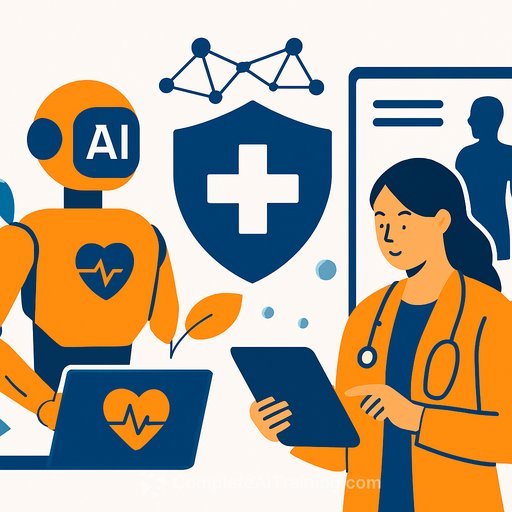
AI, Hardware, and Clinical Application Programmes in Healthcare
Healthcare innovation today blends AI, devices, software, imaging, and regulatory frameworks, all demanding precise coordination. Among these, generative AI stands out for its transformative potential, already being used in research and development, commercial operations, and supply chain management.
Traditional approaches like face-to-face appointments and paper-based systems struggle to keep up with the fast-paced, data-driven demands of modern medicine. Both healthcare professionals and patients want quicker, more efficient ways to access and share information that meet strict medical standards.
Medtech’s Growing Productivity Gains with Gen AI
Medtech companies lead healthcare innovation, with estimated productivity gains ranging from $14 billion to $55 billion annually. On top of that, adopting generative AI could add over $50 billion in revenue through new product and service innovations.
A 2024 survey by McKinsey found that about two-thirds of Medtech executives have implemented generative AI, with 20% scaling it up and seeing significant productivity improvements. However, challenges remain, such as data integration hurdles, decentralized strategies, and skill shortages. These issues highlight the need for a more streamlined approach to deploying generative AI solutions.
R&D Leads Gen AI Adoption
Research and development departments are the most comfortable with new technologies and are leading generative AI adoption. They use AI tools to speed up tasks like summarizing scientific articles, showing a grassroots uptake even without formal company-wide strategies.
While AI accelerates R&D processes, human oversight remains essential to ensure accuracy and quality. Companies report 20% to 30% productivity gains by reducing administrative workload and improving research depth and precision.
Key Performance Indicators (KPIs) for Healthcare Product Programmes
Tracking performance is crucial in healthcare, where the core goal is delivering high-quality care while maintaining operational efficiency. KPIs help providers make data-driven decisions that improve patient outcomes and optimize resource use.
Healthcare product programmes focus on developing, launching, and continuously improving medical products. Success depends on seamless coordination across clinical, technical, regulatory, and business teams. Speed to market is vital, moving products from concept to launch without unnecessary delays.
Labeling and documentation are especially important. AI-assisted labeling has improved operational efficiency by 20% to 30%. Monitoring how well resources like time, budget, and staff are utilized during development is also key.
KPIs should cover:
- Operational efficiency
- Patient outcomes
- Financial health
- Patient satisfaction
Breaking these into financial, operational, clinical quality, and patient experience categories provides a well-rounded view of performance.
Balancing User Experience with Technical Precision
Innovation is judged as much on user experience (UX) as on technical performance. The UX Design Awards highlight healthcare products that excel in both areas.
For example, Siemens Healthineers’ CIARTIC Move is a self-driving 3D C-arm imaging system that allows surgeons to control the device wirelessly within a sterile field. ASUS received recognition for its HealthConnect App and VivoWatch Series, which combine AIoT-driven healthcare with user-friendly interfaces, showing how consumer devices are becoming more intuitive for patients.
Integrating Regulatory and Product Development Processes
Establishing clinical and regulatory pathways early in development is essential. Generative AI helps automate and refine complex documents and mixed data sets, making compliance easier to manage.
Embedding regulatory considerations into agile practices ensures teams stay compliant while innovating. This approach reduces risk and keeps product development on track despite changes in regulatory requirements.
For product development professionals, adopting generative AI and focusing on cross-functional collaboration can significantly improve efficiency and outcomes. The benefits include faster research cycles, smoother regulatory compliance, and enhanced user experiences—all critical for success in healthcare product programmes.
Your membership also unlocks: