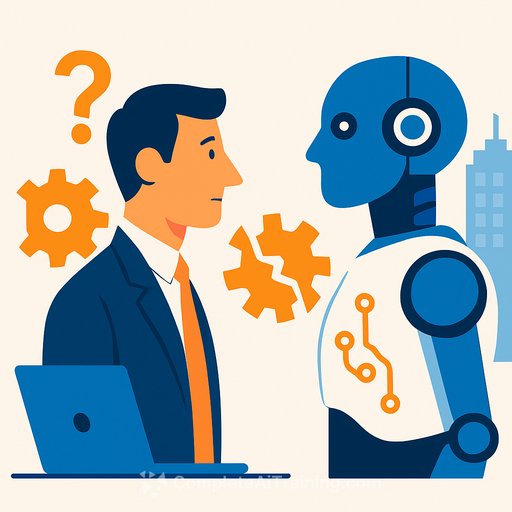
The Impact of Artificial Intelligence on White-Collar Jobs
Artificial Intelligence, once a concept confined to science fiction, is now actively transforming how organizations operate. From corporate offices in major financial centers to government administrative departments, AI is reshaping the nature of work. Its speed, intelligence, and ability to replicate human reasoning are challenging established roles and prompting critical questions: Who can be replaced? What skills remain uniquely human? And is adapting optional or essential?
White-collar jobs have long been seen as secure, involving intellectual tasks, specialized expertise, and managerial responsibilities. Roles like accountants, lawyers, HR professionals, analysts, and public servants were considered safe from automation due to the complexity involved. However, this assumption is changing quickly.
AI’s Growing Role in Corporate Functions
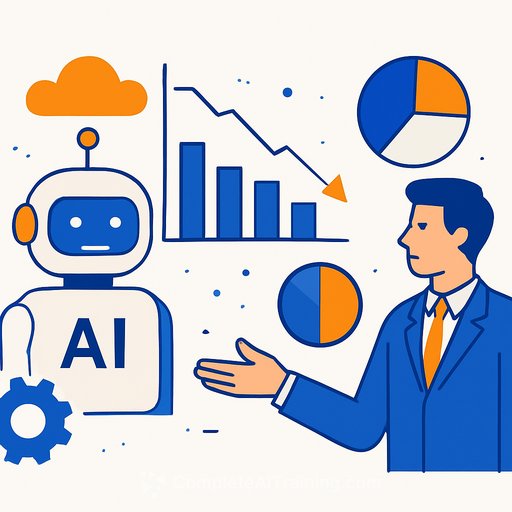
In business settings where efficiency and agility are key, AI has moved beyond being just a tool to a strategic necessity. Machine learning models now predict customer behavior with precision, allowing marketing to customize campaigns to individual preferences. Financial departments use AI to automate reporting, spot anomalies, and assess risks early.
Human resources rely on AI to screen resumes, evaluate personality traits, and predict cultural fit. Legal teams deploy AI to review extensive documents during discovery, and media outlets experiment with AI-generated content for routine news. Across industries, AI is integral to staying competitive.
This progress comes with a challenge: many tasks once handled by junior staff—assistants, analysts, and entry-level executives—are now automated. New graduates entering the workforce face high expectations to outperform AI systems. If an AI can produce an audit report faster and more accurately, what role remains for a junior accountant? If AI can draft basic code or memos, where does that leave entry-level developers or administrative aides?
AI as a Collaborative Partner
It’s inaccurate to view AI simply as a job threat. In many cases, AI acts as a collaborator that enhances human work. Professionals who integrate AI into their processes often boost productivity and creativity. Architects use AI-assisted design to explore ambitious ideas quickly. Journalists employ AI for data analysis to uncover trends that would take much longer manually. Policy analysts simulate policy impacts with AI models, gaining clearer insights.
This partnership is known as “augmented intelligence,” where AI amplifies human capabilities rather than replaces them. The most successful workers will be those who adapt, learning to guide AI, question its outputs, and refine its results. The human role shifts from executor to director, steering AI’s suggestions.
AI in Government and Public Administration
Government adoption of AI has been slower but is no less significant. Many public offices now use AI to handle large data sets. Tax agencies detect evasion patterns, public distribution monitors supply chains, and municipal bodies identify illegal construction via satellite imagery. AI streamlines issuing digital certificates, processing applications, and managing grievances, potentially improving transparency and responsiveness.
However, ethical concerns arise. Unlike corporations focused on profit, governments must balance efficiency with social responsibility. Automation could displace many clerks, typists, and junior officers who may lack skills to transition into new roles. This raises tough questions about protecting livelihoods while embracing technology.
Reskilling becomes essential—not just as a buzzword but as a real commitment. Both governments and companies must invest in training programs that build digital literacy, AI awareness, data interpretation, and flexible thinking. While AI handles routine tasks, it cannot replace emotional intelligence, cultural awareness, or moral judgment. Bureaucrats who interpret AI-generated reports with societal impact in mind add indispensable value.
The Changing Nature of Leadership and Senior Roles
Even senior managers and consultants increasingly use AI for complex decisions. Tools now simulate negotiations, generate strategies, and draft detailed reports. As AI becomes more interactive and context-aware, it will propose alternatives and creative ideas, not just follow commands.
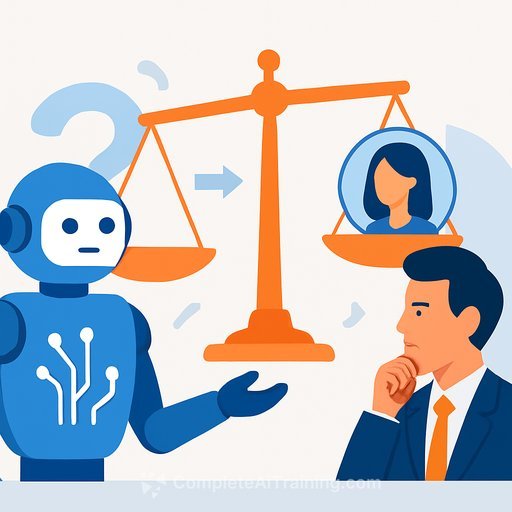
What sets human leadership apart is the ability to judge ethics and fairness, not just efficiency and speed. This means senior professionals must develop skills to critically assess AI's recommendations and uphold values that machines cannot encode.
Opportunities and the Road Ahead
No white-collar role is completely immune to AI’s influence. Yet, this shift also creates new fields such as AI ethics, human-centered design, prompt engineering, and algorithm auditing. These require a mix of expertise, critical thinking, and technical knowledge that only humans can provide.
The future worker will be defined less by experience and more by adaptability—the ability to learn, unlearn, and relearn. AI will be present at every decision-making table, not to dominate but to contribute. Those who resist may fall behind; those who engage will find new purpose and creative influence.
For those in government or human resources looking to sharpen AI skills and stay relevant, exploring targeted training can be a strong next step. Resources like Complete AI Training’s course offerings provide practical learning paths suited to various roles.
Ultimately, AI and humans will shape the future of work together. It’s not about replacement but collaboration. Adaptation is no longer optional—it’s essential for staying relevant in a changing workplace.
Your membership also unlocks: