Human touch remains key to AI customer service strategies
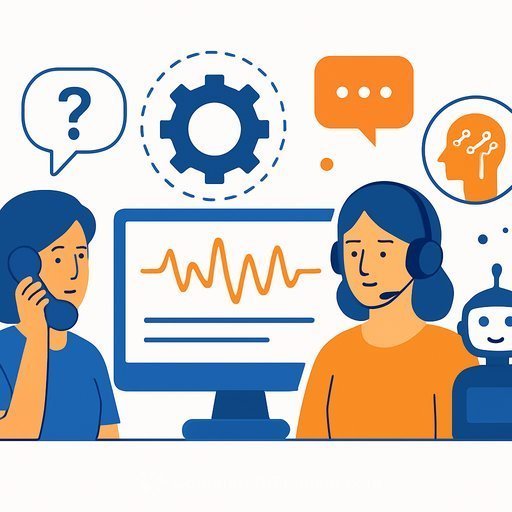
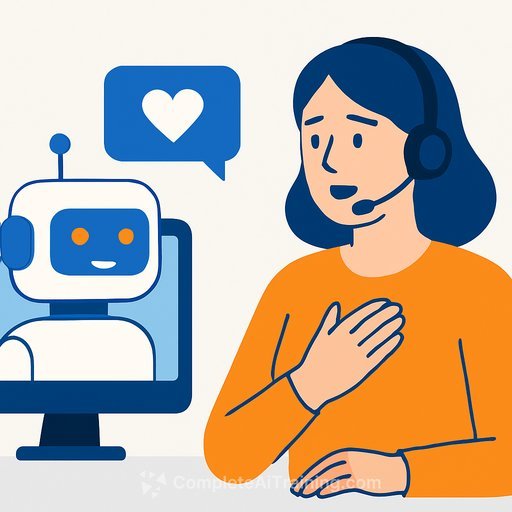
AI can speed up response times and clear queues, but it still misses context, emotion, and the subtle judgement calls your team makes every day. The winning approach right now: AI as the first touch, humans as the last mile.
Here's how leading brands are doing it - and how you can put the same playbook to work without burning trust or morale.
What leading brands are actually doing
- Allianz: A voice assistant triages roadside breakdowns across 20+ languages and fast-tracks urgent cases (think a lone parent stranded at night) to human agents. The company also launched an app that speeds up claims for spoiled food after power cuts - quicker resolution, less back-and-forth.
- Expedia: AI resolves over half of inbound queries. Complex itineraries still move to a human, with all conversation context passed forward so customers don't repeat themselves.
- easyJet: AI drafts replies for phone, chat, and email. Human agents review and tweak before sending. During the Greece wildfires, AI-powered social scanning flagged posts mentioning "stranded" and "elderly," helping teams prioritize vulnerable customers fast.
- MavenAGI: The CEO is clear: the goal isn't to replace agents. It's to free them for customers who need a real conversation.
- The Very Group: Staff were initially wary of AI. That faded once they saw it improving their performance - and customer satisfaction hit a company record in FY ending June 2025.
Why a fully automated contact center is a bad bet
Analysts say AI still struggles with messy, real-world scenarios. A recent Gartner study even called a fully automated service function "unlikely and undesirable," and predicts that by 2027, half of the companies planning big AI-driven headcount cuts will abandon those plans.
Translation: automation helps, but humans keep customers. The smart move is a blended model with clear rules, clean handoffs, and strong governance.
What to implement now
- Define intent tiers: Let AI handle FAQs, status checks, and simple updates. Route edge cases to humans early.
- Design the handoff: Pass full context (history, what the bot tried, sentiment, verification status) to the agent. No "Can you repeat that?" moments.
- Use agent assist, not auto-send: Give agents AI-suggested replies to edit. Keep the human voice; use AI for speed and consistency.
- Set escalation triggers: Time-based escalation, negative sentiment, repeated intent failure, or keywords like "fraud," "emergency," or "medical."
- Create an approved tone + policy bank: Pre-approved templates for refunds, apologies, and regulated language. Safer and faster.
- Close the loop: Feed resolved tickets back into your models. Promote responses that earned high CSAT; demote the ones that confused people.
- Train the team: Teach agents how to spot AI errors, verify facts, and prompt effectively to refine suggestions.
Metrics that keep you honest
- Containment rate by intent: What the bot can truly resolve without human help.
- Handoff latency: Time from bot failure to human pickup.
- CSAT gap: Human-only vs. bot-assisted vs. bot-only (where safe). Watch for drop-offs.
- Average handle time (AHT): For bot-assisted tickets - should fall without hurting quality.
- Agent-assist adoption + edit rate: Are suggestions useful, or constantly rewritten?
- Compliance and QA pass rate: Especially for refunds, cancellations, and regulated claims.
Risk and governance you can't skip
- Fact-checking: Block the bot from making policy promises it can't keep. Guardrails over free-form answers for sensitive topics.
- Bias and prioritization: If you triage urgency (like Allianz), audit outcomes to ensure fair treatment across demographics and languages.
- Data minimization: Don't send PII to external models unless you have a legal basis and proper controls.
- Human-in-the-loop gates: High-risk actions (refunds, cancellations, medical or safety issues) require human approval.
- Incident playbook: If the bot goes off-script or a policy shift invalidates responses, know how to pause, notify, and recover.
A simple 90-day rollout plan
- Weeks 1-2: Pull the top 50 intents. Mark quick wins (status, password, address change). Identify sensitive areas to keep human-led.
- Weeks 3-4: Launch agent assist on email and chat for the top 10 intents. Measure suggestion acceptance and edit rates.
- Weeks 5-6: Turn on limited self-serve for 3-5 low-risk intents with clear escape hatches to humans.
- Weeks 7-8: Build the handoff: pass full context, add sentiment, and set escalation triggers.
- Weeks 9-12: Expand intents, add voice if your QA passes. Start social scanning for urgency keywords (e.g., "stranded," "elderly") where relevant.
- Ongoing: Weekly QA on transcripts, monthly bias checks, quarterly model updates tied to policy changes.
The takeaway for support leaders
AI should make your team faster and more accurate - not faceless. Use it to clear the noise so your best people can handle the moments that actually build loyalty: complex fixes, sensitive conversations, and time-critical cases.
If you're standing up skills and playbooks for your support org, you can explore focused training here: AI courses by job.
Your membership also unlocks: