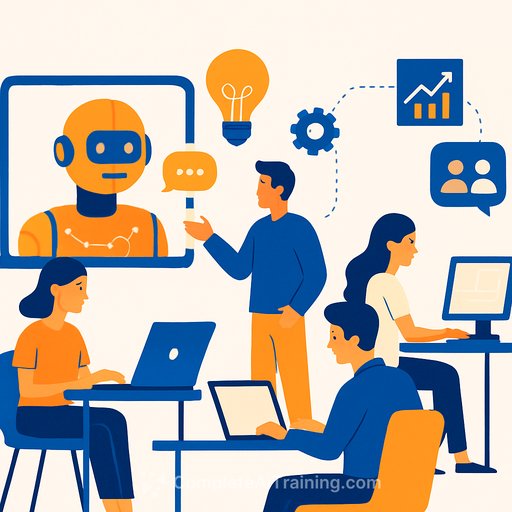
The Impact of AI in the Workplace
AI is already changing how work gets done, and its influence is set to grow significantly. Recent breakthroughs, especially tools like ChatGPT, have sparked widespread interest in what AI can do for productivity and collaboration.
Over the past year, agentic and generative AI tools have emerged that help teams save hours by automating routine tasks such as creating reports, summarizing meetings, drafting documents, and tracking performance goals. These tools are making it easier to collaborate, reduce unnecessary meetings, and improve goal alignment.
Recognizing these advances, Newsweek honored companies like Zoom, Pfizer, and Betterworks with AI Impact Awards for their workplace innovations. Their solutions demonstrate how AI can streamline communication, save managers’ time, and support technology adoption.
Better Performance Management
Performance management remains a challenge for many managers and employees. The process can feel cumbersome, and people often struggle to clearly communicate achievements or understand feedback.
Betterworks tackled this by introducing an AI-powered assistant that supports goal setting, feedback, and performance conversations. This AI acts as a copilot, helping employees focus less on admin tasks and more on growth and productivity.
For example, LivePerson, a software company using Betterworks, saw a 30% increase in timely performance review completions and a 75% reduction in time spent on these reviews. Employees and managers reported clearer, more constructive feedback, especially benefiting those less comfortable with communication.
The AI tool helps overcome the “blank page” problem by analyzing job titles, past goals, and feedback to suggest relevant professional and development objectives. This reduces back-and-forth edits and improves alignment with company goals.
Before launching, LivePerson stress-tested the AI with tough scenarios to ensure reliability, giving employees confidence in the tool. The result is a workforce better equipped to understand expectations, track progress, and identify growth opportunities.
Looking ahead, Betterworks plans to add features like succession planning data and dashboards that provide managers with quick insights to take action. Supporting middle managers, who often face burnout and conflicting demands, is a priority.
A Companion for Collaboration (and Fewer Meetings)
Zoom, known for keeping teams connected during remote work, has enhanced its platform with AI tools to make meetings more effective and, in some cases, reduce the need for them altogether.
The Zoom AI Companion summarizes meetings, generates next steps, and helps schedule tasks. It also answers questions during meetings and assists with drafting emails, memos, and outlines by pulling information from meetings and company documents.
This tool supports a “conversation to completion” workflow, helping employees convert discussions into actionable results. Users across finance, sales, customer service, operations, HR, IT, and product management are discovering ways to save time and improve communication.
For instance, finance managers can quickly synthesize reports to decide next steps, product teams can analyze user feedback faster, and sales teams can summarize calls with actionable insights. Zoom offers a prompt library and best practices to help users get the most out of AI Companion.
Among Zoom’s clients, 60% of Fortune 500 companies have enabled AI Companion. Companies like Gainsight and Zscaler report strong adoption with minimal training, while remote-first BairesDev saved over 19,000 employee hours since late 2023.
By reducing repetitive tasks and improving meeting quality, this AI tool lets people focus on higher-value, strategic work.
AI Training Program
Pfizer developed its own generative AI platform called Vox to assist teams with patent drafting, coding, and identifying business opportunities. Along with Microsoft's Copilot, these tools offer extensive AI capabilities but required a focused effort to ensure employees understand their value.
Pfizer launched a comprehensive learning program to help all employees—from beginners to advanced users—get comfortable with AI. The program features introductory courses, an AI Academy, and partnerships with educational institutions.
Over 12,000 employees (more than 15% of Pfizer’s workforce) have begun training, with a 96% positive feedback rate. Additionally, 250 employees started graduate programs related to AI through collaboration with Stevens Institute of Technology.
The company also developed leadership programs integrating AI training, breaking down the learning journey into four stages: exploring, understanding, practicing, and mastering AI. Various formats like workshops, nanodegrees, and role-specific training help employees apply AI in their daily roles.
To address skepticism, Pfizer created badge credentials to mark progress and placement exams to guide learning paths. They also hosted an in-person event, AI Academy Live, featuring leaders who emphasized a human-centered approach to AI adoption.
Pfizer’s AI strategy has already delivered significant ROI—$163 million attributed to Tier 1 AI adoption—with trained employees using AI tools more frequently and effectively than their peers.
One participant shared, “Session has provided me the confidence to play around with GenAI tools and begin embracing these tools in my day to day.”
For managers interested in training options to better equip their teams, exploring AI courses can be a practical next step. For example, Complete AI Training offers job-focused AI courses tailored for various roles.
To explore more about AI's role in boosting workplace productivity and collaboration, consider visiting Complete AI Training for resources and courses designed to help your team adapt and thrive.
For the full list of AI Impact Award winners and to learn more about workplace AI innovations, check out the official AI tools directory and resources.
Your membership also unlocks: