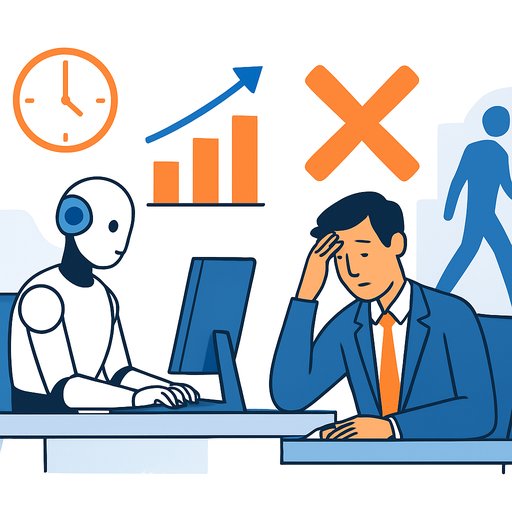
AI's Next Decade: Inevitable, uneven, and closer than it looks
Silicon Valley's boldest voices see a work reset coming. Nvidia's Jensen Huang says every job will be transformed and likely move to a 4-day week. Bill Gates argues humans may soon not be needed "for most things," and Elon Musk thinks most people won't have to work at all in "less than 20 years."
That might sound extreme, but it's plausible-and even likely, according to Geoffrey Hinton, often called the "Godfather of AI." His concern isn't the tech; it's the transition.
Hinton's warning: replacement will outpace creation
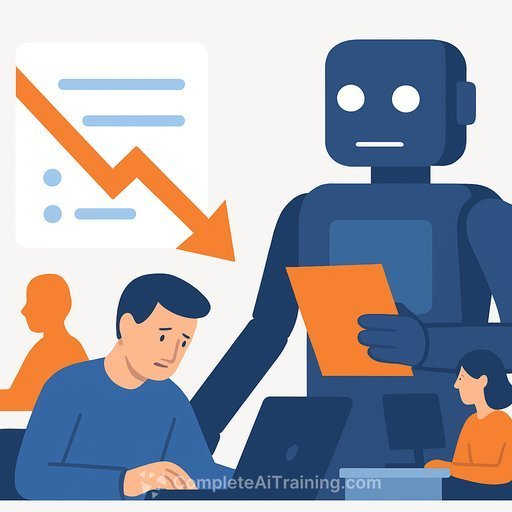
Hinton argues a large share of today's work can be done cheaper by AI, and that's where the money is flowing. "It seems very likely to a large number of people that we will get massive unemployment caused by AI," he said in a recent discussion with Senator Bernie Sanders at Georgetown University.
He points to the roughly trillion dollars being invested in data centers and chips. One major way to recoup that? Selling AI that replaces workers. He's clear: new roles will appear, but not enough to offset the losses.
The money behind the shift
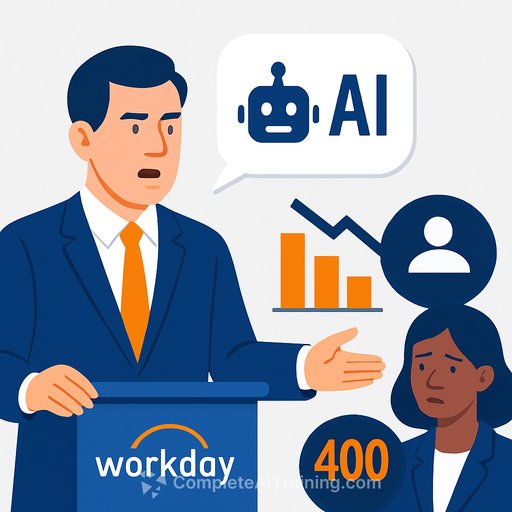
Big Tech is prioritizing short-term returns over long-term science, Hinton says. Meanwhile, the unit economics are under pressure. OpenAI reportedly isn't expected to turn a profit until at least 2030 and may need more than $207 billion to support growth, according to estimates cited by HSBC.
If the economics improve by automating labor, pressure to replace headcount will rise. That tension lands on HR, managers, and policy makers fast.
The fog problem: clear at 1-2 years, murky at 10
"It's a bit like when you drive in fog," Hinton told Sanders. "We can see clearly for a year or two, but 10 years out, we have no idea what's going to happen."
What is clear: AI isn't going away. Workers and teams who use it to amplify their skills will keep their edge.
Who's at risk-and how soon
Senator Bernie Sanders warns nearly 100 million U.S. jobs could be displaced by automation, based partly on estimates generated by ChatGPT. High-risk areas: fast food, customer service, and manual labor. White-collar roles like accounting, software development, and nursing could also see cuts.
His concern goes deeper than paychecks. "Work, whether being a janitor or a brain surgeon, is an integral part of being human… What happens when that vital aspect of human existence is removed from our lives?"
Senator Mark Warner adds that young workers could be hit first, with unemployment among recent college grads reaching 25% within two to three years if there are no guardrails. Waiting this out is not a strategy.
What leaders should do now
- Run a task audit: Break roles into tasks; flag repetitive, rules-based, and text-heavy work for AI support or redesign.
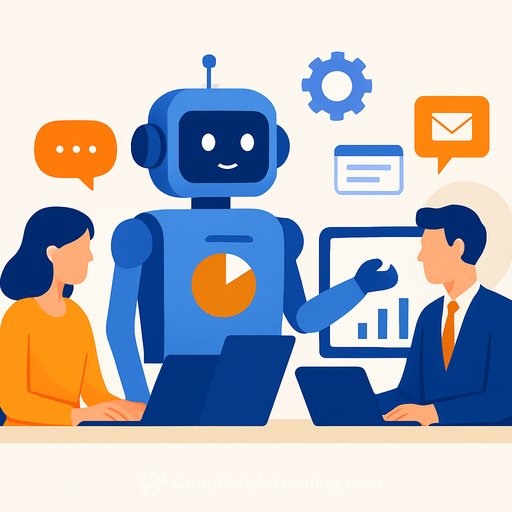
- Prioritize augmentation: Make "AI as co-worker" the default. Define which tasks AI drafts and which humans review.
- Stand up governance: Create an AI policy on data handling, accuracy thresholds, human-in-the-loop, and vendor usage.
- Set up skills pipelines: Fund AI literacy for all, and deeper training for analytics, prompt design, and workflow automation.
- Redesign jobs, not just headcount: Shift time to uniquely human work-relationship management, complex judgment, safety, creativity.
- Protect early-career talent: Build apprenticeships and rotational programs where entry-levels learn with AI, not compete against it.
- Measure the tradeoffs: Track quality, speed, error rates, customer outcomes, and compliance-not just cost savings.
- Pilot shorter weeks: If AI lifts output, test 4-day schedules in targeted teams with clear KPIs and transparent reporting.
- Vendor due diligence: Require model lineage, data sources, bias testing, SOC2/ISO controls, and clear SLAs for accuracy and uptime.
- Create transition support: Internal mobility, paid reskilling, and fair severance for roles that shrink.
90-day action plan
- Appoint an AI lead and cross-functional working group (HR, Legal, IT, Security, Finance).
- Choose 3 high-volume use cases (e.g., customer support replies, claims review, invoice coding) and run controlled pilots.
- Publish a plain-language AI policy and an acceptable-use guide for employees.
- Launch a baseline AI upskilling sprint for managers and ICs; certify your first cohort.
- Set review gates: human sign-off for decisions that affect money, health, jobs, or safety.
- Report monthly on outcomes: productivity lift, error reduction, employee sentiment, and risk incidents.
For HR, general leaders, and researchers
- HR: Build a skills taxonomy, map roles to AI exposure, and publish internal pathways for redeployment.
- General management: Tie AI projects to P&L and customer outcomes, not vanity demos.
- Science & research: Study causal impacts on quality and bias; benchmark models on real workflow data, not just leaderboards.
Upskill your team fast
If you want structured learning paths and certifications by role, explore these resources:
Bottom line
AI will transform work. The debate is not whether-it's how smooth the landing will be and who gets left behind.
Leaders who act now-augment tasks, retrain people, and set firm guardrails-will protect their workforce and their results. Those who wait will inherit the mess.
Your membership also unlocks: