
AI news ·
AI-based grid management tools aim to cut renewable energy waste across Europe
The EU expects AI to manage power grids by 2030, coordinating decentralized solar and wind sources to cut wasted electricity. Data gaps, skills shortages, and cybersecurity rules must be resolved first.
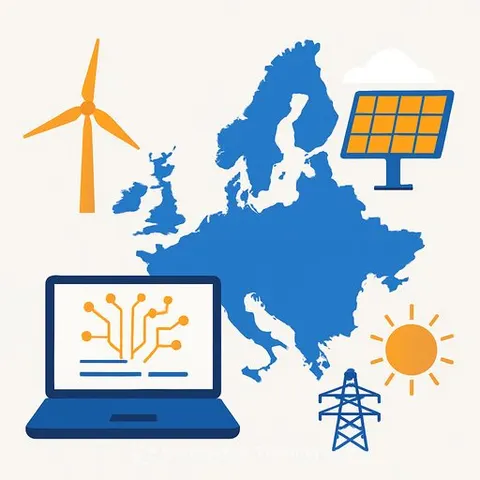
AI Will Manage European Power Grids by 2030 to Cut Renewable Waste
Europe's energy operators will rely on artificial intelligence to prevent wasted renewable electricity as solar and wind capacity expands across the continent. The European Union expects AI systems to manage power grids by 2030, coordinating thousands of decentralized energy sources in real time to avoid costly curtailment and maintain stability.
The shift addresses a fundamental problem: renewable generators and flexible loads are scattered across increasingly complex networks where power flows change constantly. AI analyzes large datasets to forecast weather patterns, predict bottlenecks, and adjust generation and consumption before grid stress occurs.
What AI Does Today
Grid operators already deploy AI for specific tasks. Accurate solar and wind forecasts help prevent expensive emergency interventions. Predictive maintenance of power lines and equipment cuts operating costs. Studies show AI can reduce operating reserve costs by up to 15%.
AI also improves electricity trading by reducing price risk and enables more effective marketing of renewable power. Grid operators can spot potential cyberattacks before they cause outages.
The Technical Leap: Digital Twins and Grid Models
Newer approaches move beyond conventional simulations. Grid foundation models (GridFM) trained on massive datasets accelerate planning and operations. Digital twins-virtual copies of real power grids-let operators test solutions without physical deployment, saving time and resources.
Germany's AMAZING research project, funded by the Federal Ministry for Economic Affairs and Energy, is testing AI-generated digital twins with five grid operators. Results will inform widespread adoption across Europe.
Three Barriers Remain
Data gaps. Incomplete datasets and outdated infrastructure slow rollout. Germany's delays in deploying smart meters illustrate the problem.
Skills shortage. Grid operators need new training to work with AI systems effectively. AI assists human decision-making rather than replacing it.
Regulation. The EU must establish cybersecurity standards to prevent attacks on AI-controlled grids. Unified rules across member states are needed before widespread deployment.
Where to Learn More
EM-Power Europe will showcase AI applications for grid management from June 23-25, 2026, in Munich. The conference session "Can We Trust AI to Run the Grid?" on June 23 will feature field results and discuss required data infrastructure and regulatory frameworks.
A dedicated joint booth, AI for Smart Energy, will display multiple applications. The smarter E Forum on June 24 will demonstrate how companies can use AI to manage grid flexibility and increase system resilience.
More details are available at www.em-power.eu.