
AI news ·
AI boosts wine sales and cuts waste in hospitality without replacing staff, Napa Valley operator says
Restaurants are using AI to match guests with wines they'll enjoy, cutting spoilage and boosting sales without aggressive upselling. Staff keep control-the tools fill knowledge gaps, especially for new hires.
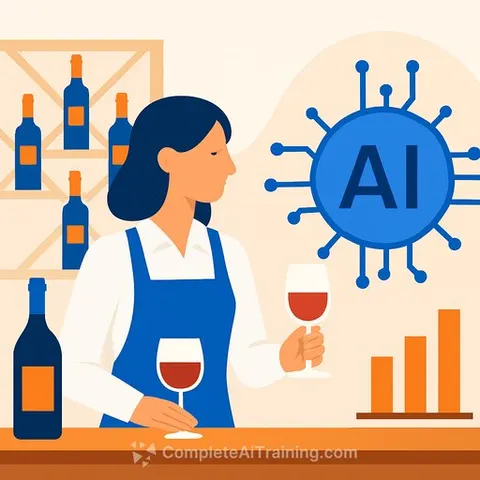
AI Helps Wine Sales in Hospitality Without Replacing Sommeliers
Artificial intelligence is changing how restaurants sell wine by matching guests with bottles they'll actually enjoy-rather than pushing higher prices. The shift is already reducing waste, speeding up staff training, and lifting revenue at hospitality venues.
Rachel Wilson, general manager of the Napa Valley Marriott, said the technology's real value lies in precision. "Personalisation is just about finding the right product for the guest," she said. "What are they personally going to enjoy?"
Better satisfaction drives more sales
When guests drink something they like, they order more. That straightforward logic is producing measurable results: longer dwell times, more orders, and a relaxed experience without aggressive upselling.
Wilson recorded a striking operational benefit: spoilage dropped significantly once guests selected wines they were likely to enjoy. For operators in a high-cost environment, reduced waste translates directly to better margins.
Consumer tastes shift faster than staff knowledge
Wine preferences change constantly. Wilson pointed to a recent trend that caught many operators off guard: sales of non-alcoholic wine and mocktails skyrocketed in just two years at her property.
Static wine lists and staff knowledge alone can't keep pace. Real-time data and adaptive tools have become essential for staying current with what guests actually want to drink.
AI strengthens staff rather than replacing them
Concerns about automation miss the point. AI acts as a real-time knowledge base for bartenders and servers, offering pairing suggestions, tasting notes, and popularity data when they need it.
New employees benefit most. "When we hire a brand new server, they might be using their phone more than 40% for the first week or two," Wilson said. Faster onboarding means more consistent service across teams.
Experienced staff still drive the experience. "Our bartenders are fantastic. They're looking at the guests in the eyes. They know what a guest is looking for," Wilson said. "But how can we make sure they have all of the knowledge that they need?"
The guest experience is evolving
QR codes linked to AI platforms let diners explore wine options the moment they sit down-often before speaking to staff. Guests make initial selections independently, then benefit from human interaction when needed.
For high-value guests, AI enables personalisation before arrival. Wilson's team uses the technology to select wines for guests' rooms before they check in. "I can feel really confident you're going to enjoy" the bottle waiting in your room, she said.
Operators can stock bolder wine lists
Better tools to guide guests toward unfamiliar options give operators confidence to take risks. "The larger our wine list gets, the more tools like this are really helpful," Wilson said.
That could lead to more diverse offerings rather than reliance on safe, high-volume sellers.
AI is already embedded in hospitality operations
AI isn't a future concept. It's already used in pricing, revenue management, and menu development across hospitality.
The real question isn't whether AI belongs in the industry. It's how operators use it. "It's not about removing the human element," Wilson said. "It's about making sure that we have tools that can help maximise the time that we're really spending there."
Her analogy is simple: butter was once churned by hand for 30 minutes. Now it comes from a fridge. The butter isn't less fantastic-it's just easier to serve.
Learn more about AI for Hospitality & Events and how AI for Customer Support applies to guest-facing roles.