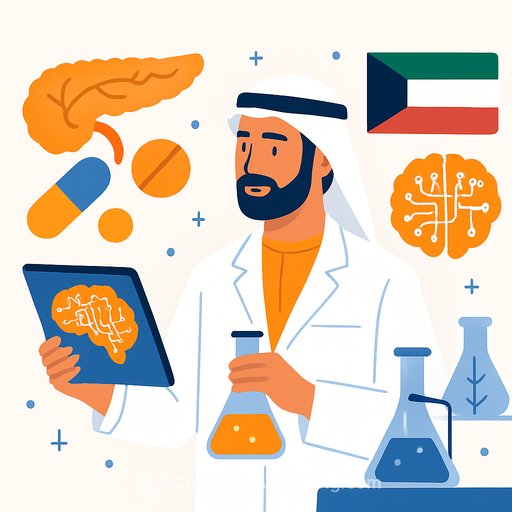
Kuwaiti Scientist Advances Diabetes Research Using AI
A senior scientist at Kuwait’s Dasman Diabetes Institute (DDI) has applied artificial intelligence to deepen insights into the molecular mechanisms of diabetes, offering new directions for drug development.
Dr Anwar Mohammed, Head of the Precision Health Analysis Unit and Senior Scientist at DDI, led a study demonstrating the use of AI in modeling complex biological structures linked to diabetes. The findings were published in the Journal of Cellular and Molecular Medicine.
AI-Powered Molecular Modeling
Dr Anwar utilized AlphaFold 3, an AI model from Google DeepMind, to simulate the interaction between the KLF15 zinc finger domain and DNA—a key factor in understanding type 2 diabetes at the molecular level. The accuracy of the AI-generated structure was validated against experimental X-ray crystallography data, confirming its reliability.
To further refine the study, molecular dynamics simulations and binding energy calculations were used to pinpoint critical hotspots. These hotspots are promising targets for designing precise therapies.
Implications for Drug Development
This research highlights AI’s growing role in structural biology, which focuses on the 3D structures of biomolecules such as proteins and DNA, and how their interactions influence disease. The approach can accelerate the creation of targeted therapies, essential for managing chronic conditions like diabetes.
Dr Anwar acknowledged the support of DDI and the Kuwait Foundation for the Advancement of Sciences (KFAS), emphasizing their contributions to advancing scientific research and medical innovation in Kuwait.
About Dasman Diabetes Institute
Founded by KFAS, Dasman Diabetes Institute is a recognized leader in diabetes research in the region. Its ongoing commitment to innovation helps position Kuwait prominently in global scientific progress.
- Research published in Journal of Cellular and Molecular Medicine
- AlphaFold 3 details: Google DeepMind AlphaFold
Your membership also unlocks: