
AI news ·
AI can build faster but product strategy still determines whether it lasts
AI can build software fast - Anthropic made its Cowork tool in 10 days. But 43% of startups fail from poor product-market fit, and speed just gets a bad idea to market faster.
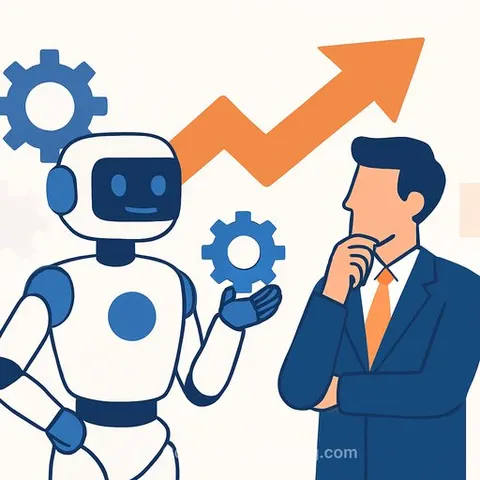
AI Speed Doesn't Fix Bad Product Ideas
Anthropic built its Cowork tool almost entirely with AI in 10 days, drawing attention to how quickly generative AI can now produce working software. The real question isn't how fast teams can build-it's whether they're building the right thing.
David Barlev, founder and CEO of Goji Labs, has worked on more than 500 product launches. His blunt assessment: "The biggest risk is building something fast that shouldn't have been built at all."
Speed doesn't rescue a weak idea. It just gets a weak idea to market faster.
The Product-Market Fit Problem
Forty-three percent of startup failures stem from poor product-market fit, according to CB Insights. Those failures often involve teams spending months polishing products nobody asked for.
AI can compress the build phase. It cannot validate whether a problem actually exists or whether customers care about the solution.
Barlev said the teams that use AI effectively keep speed in its lane. "Speed should be applied to the right layer," he said. "AI is great for accelerating builds, but validation and architecture still need intention."
A Forrester Consulting study found that validating user flows and designs before launch delivered 415% ROI and $9.4 million in benefits, largely by reducing developer rework after launch. That value appears early, when teams test flows properly and catch issues before they become expensive rebuilds.
Security and Quality Gaps Widen
Faster builds also mean faster exposure when safeguards lag. Gartner expects a quarter of enterprise generative AI applications to face at least five minor security incidents annually by 2028.
The product may look finished on the surface while underlying systems remain untested. Early warning signs include user confusion, inconsistent flows, or features that technically work but don't connect to clear outcomes.
Barlev flagged another signal: when teams struggle to explain what the product does or who it's for. "That's almost always a strategy gap, not a development issue," he said.
These failures don't show up in a launch video. They show up when customers hesitate, click around, and quietly leave.
How Strong AI Adopters Actually Work
McKinsey found that organizations seeing real impact from AI are nearly three times more likely to redesign workflows. The better adopters aren't treating AI like a magic shortcut. They're changing how work gets done so the tool fits into a process with priorities, checkpoints, and a clear sense of what success looks like.
The current excitement around Cowork doesn't eliminate the need for product strategy. Less energy should go into raw code generation. More should go into user needs, roadmap decisions, and the tradeoffs that determine whether a product survives outside a showcase.
Fast builds impress people. Clear, usable products keep them around.
"Human teams are still responsible for defining what matters," Barlev said. "That includes user experience, tradeoffs, and long-term direction. AI can generate solutions, but it doesn't understand context, trust, or business impact the way a product team does."
What Teams Should Do Now
Twenty percent of AI initiatives fail. Fifty-seven percent of those failures involve projects that tried to do too much too quickly, according to Gartner. Tighter scope and clearer priorities tend to outperform ambitious builds that lack direction.
The checklist for product teams:
- Use AI to compress execution, not decision-making
- Test early and often
- Keep scope focused
- Treat UX as part of business logic, not a layer added at the end
- Define clear user flows and outcomes before you ship
AI can get a product into the market faster. Whether it stays there depends on whether it works and whether it solves a real problem.
For teams building with AI, consider exploring AI Coding Courses to understand how to best integrate these tools into your workflow, and AI for Product Development to learn how strategy and validation fit into accelerated development cycles.