Your Favorite AI Chatbot Might Be Exaggerating Scientific Findings
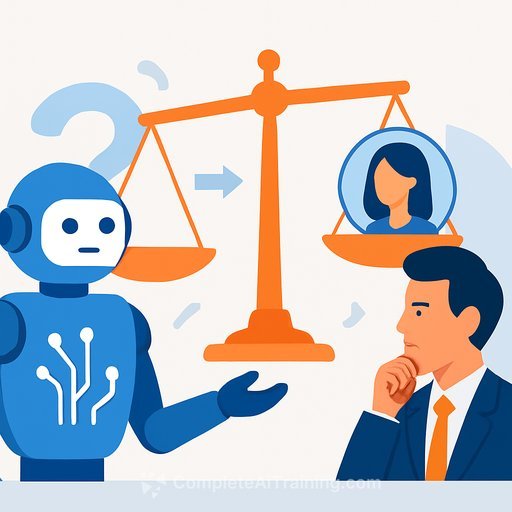
AI chatbots have become popular tools for summarizing scientific papers, making complex research more accessible. However, recent findings suggest these tools often overgeneralize research findings, which can mislead readers and carry serious consequences.
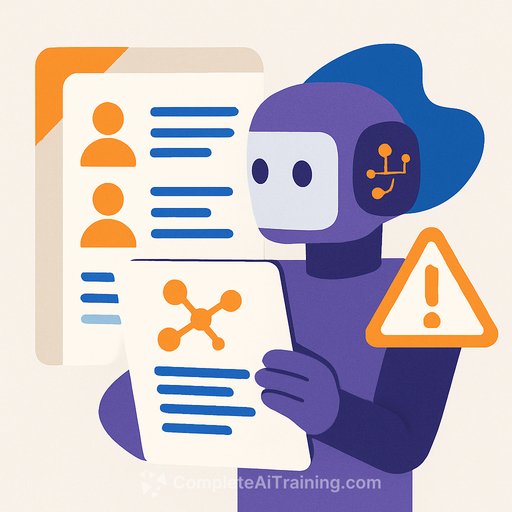
A recent study tested 10 leading large language model (LLM) chatbots, including ChatGPT, Claude, and DeepSeek, by asking them to summarize abstracts and full research articles from top science journals. The results showed that up to 73% of AI-generated summaries contained overgeneralizations—statements broader or less precise than the original research supported.
Why Precision in Scientific Summaries Matters
Scientific writing demands accuracy because even small misrepresentations can cause real-world harm. For example, a clinical trial summary might omit that a drug was tested only on males. A doctor relying on such a summary could mistakenly apply the results to all patients, including females, potentially leading to dangerous outcomes. A well-known case involves the sleep aid Ambien™, where women metabolize the drug differently, affecting safety profiles.
Which AI Models Were Tested?
The study evaluated these models:
- GPT-3.5 Turbo
- GPT-4 Turbo
- LLaMA 2 70B
- Claude 2
- ChatGPT-4o
- ChatGPT-4.5
- LLaMA 3.3 70B Versatile
- Claude 3.5 Sonnet
- Claude 3.7 Sonnet
- DeepSeek
The team compared AI summaries to original texts and human-written summaries, focusing on shifts such as quantified claims becoming generic or past tense claims turning into present tense. Such shifts indicated overgeneralization and reduced accuracy. AI summaries were about five times more likely to contain these overly broad conclusions compared to human summaries.
Why Do Newer AI Models Sometimes Perform Worse?
Interestingly, newer AI models tended to overgeneralize more, except for ChatGPT-4.5. One possible reason is that these models prioritize responses that sound confident and plausible to appear more helpful. Human feedback during model fine-tuning may favor confident-sounding answers, encouraging the model to present broader claims even if they aren’t fully supported by evidence.
Can Better Prompts Fix Overgeneralization?
Simply instructing AI to avoid inaccuracies might not help. In some cases, asking for more accuracy actually increased overgeneralizations. This counterintuitive effect could be due to the AI defaulting to familiar patterns that sound authoritative but are less precise. More research is needed to identify prompt strategies that reduce overgeneralization reliably.
How to Address the Overgeneralization Problem
- Use low-temperature settings: Setting the temperature to zero when generating summaries reduces randomness and helps keep outputs closer to the source content.
- Choose more accurate models: Models like Claude showed fewer overgeneralizations in the study and might be preferable for critical summaries.
- Critically evaluate AI summaries: Researchers, educators, and communicators should always compare AI-generated summaries against original research before using or sharing them.
- Develop benchmarking tools: AI developers can adopt frameworks that detect overgeneralizations and score model performance, improving future releases.
AI chatbots can make science more accessible by simplifying complex papers. But simplification must not come at the cost of accuracy. Overgeneralizing true facts can mislead readers and affect decisions in healthcare, policy, and education.
As AI tools become increasingly common in scientific communication, adopting best practices to ensure precise, cautious summaries is crucial. This helps maintain trust in scientific information and protects against unintended harm.
Your membership also unlocks: