
AI news ·
AI could let one-person firms displace small businesses, Taiwan adviser warns
AI is enabling solo operators to replace small teams, threatening conventional small businesses built on headcount. An adviser to Taiwan's government says one person with AI tools can now handle what five employees once did.
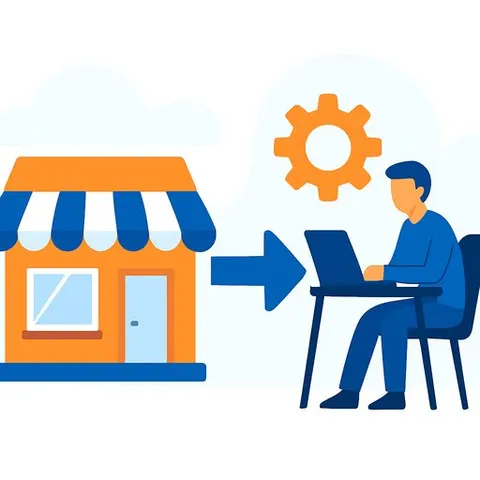
One-person companies may displace small businesses as AI takes hold
Artificial intelligence is reshaping the economics of small business in ways that could eliminate entire job categories, according to Lee-Feng Chien, an innovation economy adviser to Taiwan's Executive Yuan Economic Development Commission.
Speaking at an AI forum on May 14, Chien said the technology is enabling solo operators to handle work that previously required teams. A single person with AI tools can now manage tasks across design, development, and execution-functions that traditionally justified hiring multiple employees.
The shift poses a direct threat to conventional small businesses that rely on scaling headcount to grow revenue. If one person can accomplish what five used to do, the math changes entirely for companies built on that model.
What this means for IT professionals
Development teams should expect AI to move work upstream toward judgment and strategy. Routine coding, testing, and infrastructure tasks are moving toward automation, while human developers focus on architecture decisions and problem-solving that machines cannot yet handle.
This mirrors broader changes in how AI agents and automation are reshaping enterprise work. As agents handle execution, the premium shifts to professionals who can design systems, evaluate tradeoffs, and make calls that require domain expertise.
For IT and development roles specifically, staying relevant means building skills in AI for IT and development-understanding how to work alongside these tools rather than being replaced by them.
The broader economy question
Chien's observation raises a harder question: if productivity gains from AI primarily benefit solo operators and large enterprises with resources to implement these tools, what happens to the middle tier of small businesses that employ most workers?
The answer likely depends on how quickly small business owners adopt AI and whether they can retrain existing staff or shift their business models entirely. Those who don't will face pressure from both directions-smaller, nimbler competitors above them and larger players below.