AI is squeezing entry-level work: Why college grads could face 30%+ unemployment-and how HR and educators can respond
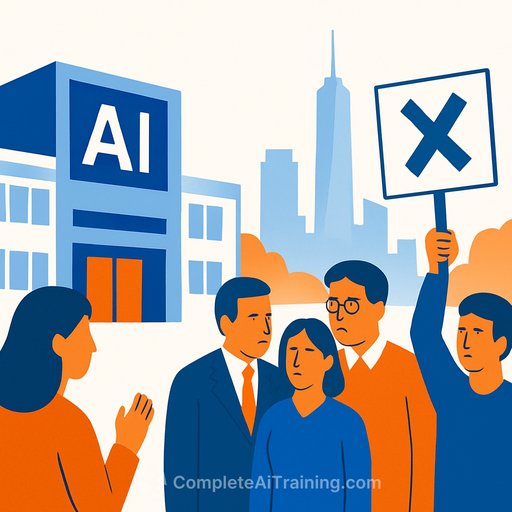
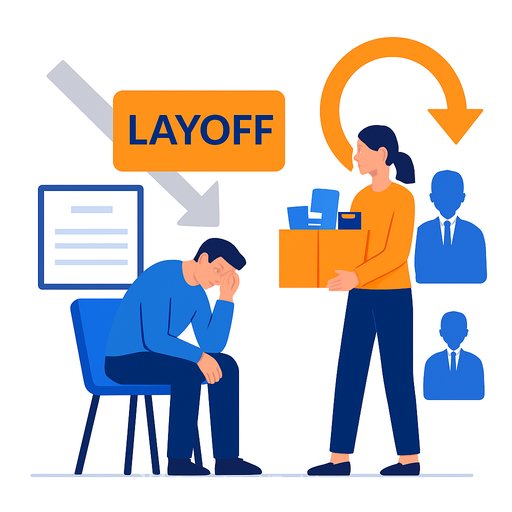
Artificial intelligence is moving from hype to headcount. ServiceNow CEO Bill McDermott warned that unemployment for new college graduates "could easily go into the mid-30s in the next couple of years" as AI agents take on more work.
That's a massive gap from traditional estimates. The Federal Reserve Bank of New York recently put the unemployment rate for recent grads around 5.7%, with underemployment at 42.5%-the highest since 2020. See the NY Fed's data.
What's changing
- Businesses are cutting costs, reducing hiring, and automating tasks with AI across departments.
- Block signaled plans to reduce nearly half its workforce as automation expands. Atlassian laid off about 10% to fund AI investments.
- Tech leaders are open about smaller teams: Amazon's Andy Jassy expects a leaner corporate workforce, and Palantir's Alex Karp has talked about growing revenue while keeping headcount down.
- ServiceNow says its software has removed 90% of customer-service use cases that used to rely on humans-while helping firms grow free cash flow and revenue without adding staff.
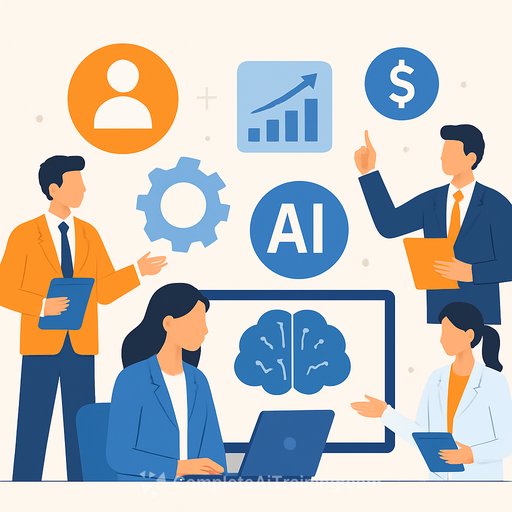
The thread running through all of this: fewer hires, more output, especially in white-collar functions like support, ops, marketing, and even parts of coding.
Why entry-level roles are exposed
- AI agents handle routine tasks end-to-end-tickets, drafts, QA, reporting-leaving less space for "learning by doing."
- Managers can scale workflows with smaller teams, so backfills slow and pipelines shrink.
- Differentiation now depends on context, judgment, and owning outcomes-not task completion.
As McDermott put it, "So much of the work is going to be done by agents." That makes it harder for young people to stand out without a clear edge.
What HR should do in the next 90 days
- Run a task inventory: Map repeatable work in support, finance, IT, marketing, and HR. Flag anything with clear inputs/outputs for automation.
- Redesign roles, not just reduce them: Shift job descriptions toward problem ownership, cross-functional literacy, and AI tool proficiency.
- Pilot agents on a narrow path: Start with one workflow (e.g., L1 support triage). Set guardrails, measure resolution time, quality, and rework.
- Reskill before you rehire: Offer short sprints on prompt fluency, data analysis, and workflow design. Tie completion to role changes and pay.
- Set hard metrics: Target higher revenue per employee, lower time-to-resolution, and fewer handoffs. Share the scorecard to build trust.
- Revamp early-career programs: Replace generic rotations with AI-augmented apprenticeships where juniors ship real outcomes with senior oversight.
For tools, playbooks, and use cases built for HR teams, explore AI for Human Resources.
What colleges and training leaders should change now
- Shift from tasks to outcomes: Grade projects on shipped results, not effort-dashboards live in production, support bots that resolve issues, campaigns that convert.
- Make AI literacy baseline: Every student should be able to prompt, critique model output, and design a simple automated workflow.
- Go cross-disciplinary: Pair domain courses (health, finance, ops) with data literacy and product thinking.
- Partner with employers: Build apprenticeships that plug into live workflows. Replace theoretical capstones with company briefs.
- Measure employability: Track underemployment, portfolio depth, and time to first relevant role. Tune curriculum quarterly.
For curriculum ideas and hands-on resources, see AI for Education.
How recent grads can stand out
- Own a niche problem: Pick a business pain (e.g., churn prediction for B2B SaaS, L1 ticket deflection) and build repeatable solutions.
- Publish proof: Ship a small agent, an analytics dashboard, or a support macro set. Document metrics and before/after workflows.
- Stack complementary skills: Domain knowledge + data basics + prompt skill + communication beats raw coding alone.
- Speak in numbers: "Reduced response time by 38%" lands better than "helped with support."
- Go where teams augment, not replace: Apply to roles that pair you with agents and seniors on accountable outcomes.
What to watch next
- Underemployment rate for recent grads rising or falling
- Job postings that require AI fluency across non-tech roles
- Productivity gains outpacing hiring in white-collar teams
- Agent performance on quality and compliance benchmarks
The signal is clear: leaders expect higher output with fewer people. Whether unemployment truly hits the mid-30% range for grads or not, the direction is set.
HR's move is to redesign work and reskill at speed. Educators need to align programs with shipped outcomes. Grads should show they can partner with AI and deliver measurable results-right now, not "someday."
Your membership also unlocks: