
AI news ·
AI drug diversion software fails to detect nurse stealing fentanyl at Tennessee hospital, records show
A nurse anesthetist at Chattanooga's Erlanger Baroness hospital stole fentanyl for four months while the hospital's AI monitoring software failed to flag the missing drugs. Co-workers spotted the problem first.
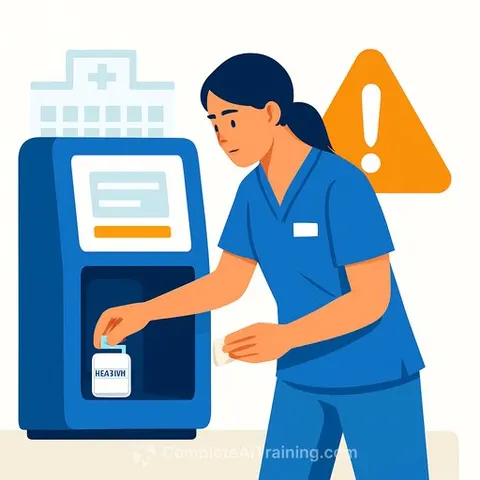
AI Drug-Monitoring Software Failed to Catch Fentanyl Theft at Tennessee Hospital
A nurse anesthetist at Erlanger Baroness, the largest hospital in Chattanooga, stole fentanyl for months while the hospital's AI-powered drug monitoring system failed to raise alarms, according to Tennessee Board of Nursing records released in December.
The nurse, John Stevenson, began diverting unused fentanyl after surgeries in March 2025 and escalated to daily use by June. Co-workers noticed him slurring his words, struggling to stay awake, and swaying while on duty before he was caught and fired.
The hospital uses Sentri7, medication-monitoring software made by Wolters Kluwer that is supposed to detect missing drugs faster than humans can. Yet the system failed to flag approximately five instances of missing drugs during Stevenson's four-month theft spree, the nursing board's order states. The hospital also found "additional inconsistencies between drug dispensing and waste documentation that should have been flagged by the automated monitoring system."
A Rare Public Failure
The Erlanger case offers an unusual window into AI failures in drug diversion detection. Healthcare facilities are not required to disclose their use of such software or report malfunctions to anyone, meaning there is no public account of how widespread these programs are or how often they fail.
Erlanger declined to comment on the incident. A Wolters Kluwer spokesperson said the company remained "confident in our software" but would not answer questions about what happened at the hospital.
Drug diversion experts said they had never seen an AI failure in this area publicly documented before. Jacob Smith, a pharmacist in charge of drug security at Johns Hopkins Medicine, said the case is puzzling because stealing leftover drugs is one of the most well-known diversion methods, and fentanyl is one of the most common targets.
"I've never myself seen these technologies be called out in that specific way," Smith said. "It doesn't make sense to me how you could miss it."
Lack of Transparency Creates Risk
David Rastall, a Johns Hopkins neurologist and AI researcher, said the lack of transparency around proprietary AI systems allows errors to be buried rather than fixed. That means errors could repeat at other hospitals.
"The ideal for patients, caregivers, and hospitals systems would be," Rastall said, "when an AI is found to be making some type of error, that becomes very transparent and public."
The Drug Enforcement Administration requires hospitals to confidentially report lost or stolen drugs. However, these reports are not required to include details about any AI software involved, according to interviews with three drug diversion prevention experts.
Terri Vidals, founder of Rxpert Solutions, questioned whether the Erlanger case was a software malfunction or user error. "This is the most basics of basics for this software," Vidals said. "I find it interesting that they're saying it wasn't flagged by the software. I think there's maybe more to that story."
How the Software Works
Sentri7 monitors about 60 "attributions of risk" designed to identify red flags for investigation by hospital staff. More than 700 hospitals use Sentri7 Clinical Surveillance programs, according to Wolters Kluwer. Another 1,500 hospitals use ControlCheck, a competing AI drug diversion system made by Bluesight.
A 2022 peer-reviewed study funded by the National Institutes of Health found that Sentri7 could uncover drug diversion faster than existing methods. Researchers tested it on medication data from two years and 10 hospitals, searching for 22 nurses already known to have diverted drugs. The software found them all, sometimes weeks faster than humans could.
At Erlanger, humans spotted the problem first.
Why the System May Have Failed
The nursing board's order suggests one possible explanation: Sentri7 was in its "initial learning phase" at Erlanger. However, the board provided no details about what that means.
A Wolters Kluwer executive said in an interview that Sentri7 has no "learning phase" because it is trained on nine to 12 months of historical data when implemented at a new hospital.
Jacob Smith offered another theory. In his experience, AI drug diversion software works well in emergency rooms and intensive care units but is less effective in operating rooms, where drugs are dispensed and charted differently. These areas can be harder for AI to track and require closer human oversight.
"We've got people whose entire job is to work with this software," Smith said. "The software is a piece of it, but if you rely on the software to give you all your signals, you'll miss stuff. It's just not 100%."
A Widespread Problem
Drug diversion is common across U.S. healthcare facilities. An estimated 15% of healthcare workers divert drugs at least once, according to the nonprofit Healthcare Diversion Network.
Diversion has been linked to at least 13 disease outbreaks since 1985, causing more than 200 infections, mostly of hepatitis C, according to the Centers for Disease Control and Prevention.
Hospitals purchase expensive anti-diversion software because a major diversion case can result in multimillion-dollar DEA fines. "They don't promise a return on investment," Smith said. "They promise cost avoidance."
Stevenson was not charged with a crime. The nursing board placed his license on probation while he underwent drug counseling.