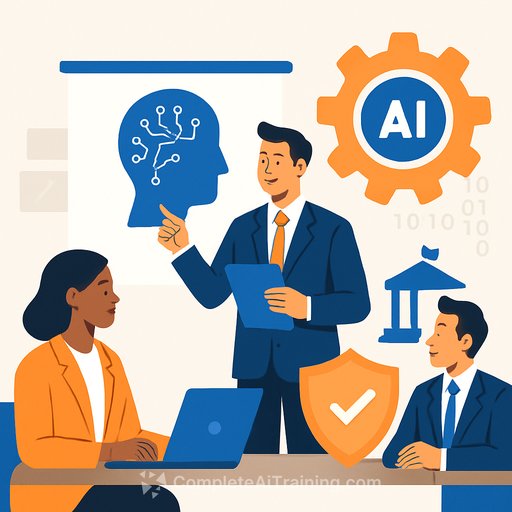
AI Education for Public Officials: Building Competence and Trust
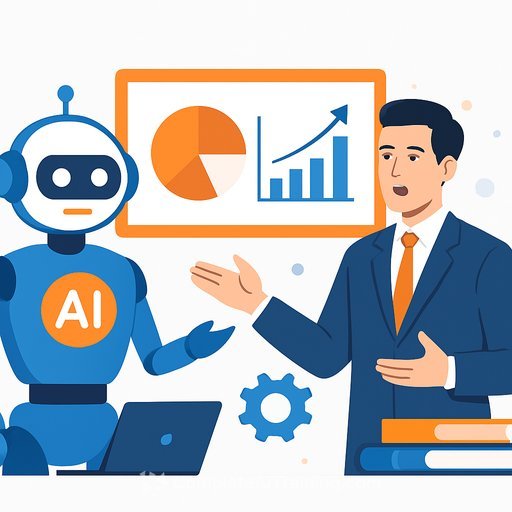
The government is preparing 40 to 50 AI courses aimed at civil servants to improve their judgment reliability and protect sensitive information. These courses will cover key topics such as prompt usage and data linkage methods, helping public officials integrate AI effectively into their daily work.
With a goal to establish three major AI powerhouses nationally, the new government is shaping education programs that boost AI skills tailored to different public service roles. There’s also a plan to introduce AI assistants in critical administrative areas like budget settlement and legal interpretation.
Developing an AI Education System for Civil Servants
The National Human Resources Development Institute under the Ministry of Personnel Management and Innovation recently began a study titled “Establishing the AI Education System of the National Human Resources Center.” This initiative is focused on crafting AI learning content and a structured education system customized for the diverse job functions within public service.
Initial course topics include AI leadership, AI ethics, and AI operation principles. These foundational subjects aim to foster an organizational culture that encourages responsible AI use and raises awareness of ethical challenges tied to AI deployment in government offices.
Practical AI Tools and Work Manuals
To support practical AI adoption, the government plans to develop AI assistant manuals specific to various public official roles. These guides will help optimize AI use for tasks such as preliminary budget settlement, legal interpretation, handling citizen complaints, and policy data collection.
Additionally, training will include organizing AI commands (prompts) and methods for linking external data at each work stage, providing hands-on skills to improve efficiency and accuracy.
Challenges and Considerations
As AI reshapes administrative processes, systematic education becomes more critical. The Human Resources Center emphasizes setting clear boundaries on how much AI judgment can be trusted and how responsibilities will be shared, especially in areas involving legal interpretations and policy decisions.
Concerns about data privacy and confidentiality remain significant. Earlier this year, the government blocked certain AI tools like Dipsyck due to security issues, highlighting the need for strong system protections before widespread AI use.
Current AI Integration in Government
- The Ministry of Science and ICT has encouraged public officials to accept AI as a collaborative partner in their work.
- Seoul Metropolitan Government operates the “Seoul Data Hub,” an AI-powered platform handling citizen complaints and data management.
The success of AI in government depends on stable implementation and clear guidelines on ethical use, responsibility, and security.
As the research by the Human Resources Institute concludes in August, expect detailed AI courses and work-specific manuals that will provide public officials with the tools needed to confidently incorporate AI into their workflows.
For those interested in expanding AI skills in public service, exploring tailored AI training options can be valuable. Resources like Complete AI Training's courses by job offer relevant learning paths for government professionals.
Your membership also unlocks: