Tech Leaders Dodge the Layoff Question While Telling Workers to Code Smarter
AI executives at the HumanX conference in San Francisco this week offered workers a consistent message: develop critical thinking skills, embrace your humanity, and learn to code better. They offered almost no answer to a simpler question: how many jobs will AI destroy?
The contradiction was stark. An advertisement at the conference entrance read: "Stop hiring humans." On stage, executives from Amazon Web Services, Coursera, and other tech giants assured the audience that human skills would remain valuable. Yet they also predicted AI would transform every job, every company, every way work gets done.
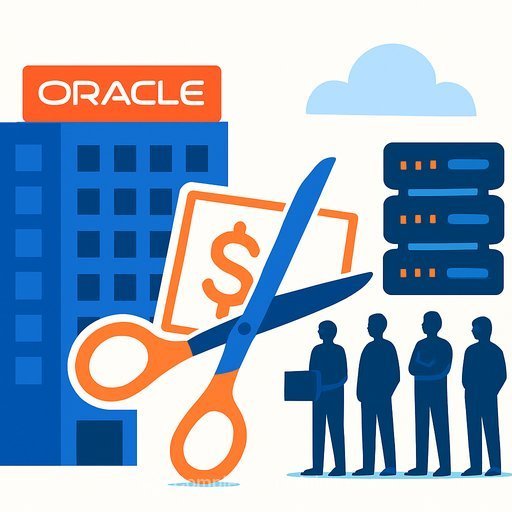
Companies Are Already Citing AI for Cuts
The anxiety driving the conference is real. More companies are explicitly blaming AI for layoffs:
- Salesforce laid off 4,000 customer support workers, saying AI now handles 50 percent of its work.
- Block's chief Jack Dorsey announced plans to cut headcount nearly in half, citing "intelligence tools" that have fundamentally changed operations.
Some economists argue these companies are using AI as cover for cuts driven by past overhiring or preparation for infrastructure investments. But the pattern is unmistakable: AI is becoming the stated justification for workforce reductions.
The Coding Debate
Two years ago, Nvidia's Jensen Huang said the goal was to make it so "nobody has to program." Andrew Ng, founder of DeepLearning.AI, rejected that advice on Tuesday.
"We will look back on that as some of the worst career advice ever given," Ng said. In his view, AI has made coding accessible to more people-not obsolete.
For HR leaders, this disagreement matters. If coding remains a valuable skill, training budgets should reflect that. If it doesn't, they shouldn't.
What Will Actually Differentiate Employees
The emerging consensus among conference speakers: interpersonal and analytical skills will become the main differentiator as AI handles routine work.
Greg Hart, chief executive of Coursera, said: "As AI can do more of a job, the things that will distinguish and differentiate a given employee are going to be the human skills-critical thinking, communication, teamwork." Enrollment in Coursera's critical thinking courses has tripled over the past year.
Florian Douetteau, chief executive of French AI company Dataiku, described a future where AI agents work autonomously while humans provide "capacity for judgment." But he expressed concern about the implications.
"We are going to have a generation of people who will never have written anything from start to finish in their entire lives," he said. "That's pretty unsettling."
The Real Problem: Entry-Level Jobs Are Disappearing
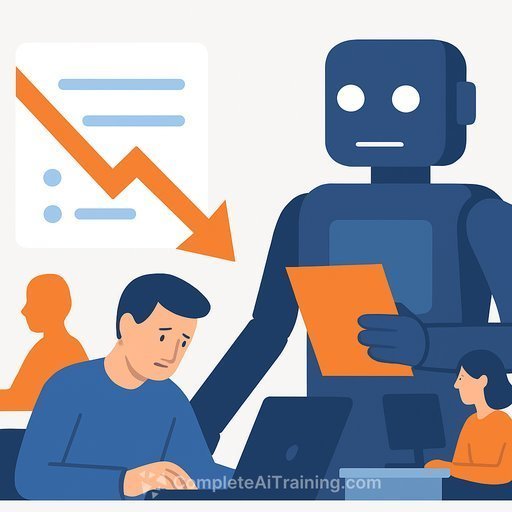
This advice about developing human skills may ring hollow for recent graduates. AI has automated entry-level tasks that once served as training grounds for new workers.
Hiring of candidates with less than one year of experience fell 50 percent between 2019 and 2024 among America's major tech companies, according to SignalFire, an investment fund. Without entry-level jobs, workers have fewer opportunities to develop any skills at all.
Al Gore, speaking as the conference's sole dissenting voice, called for direct action. "We should be preparing for the loss of knowledge work jobs in a number of categories," he said.
He drew a parallel to the deindustrialization that followed offshoring in the 2000s. "The mistake was not globalization. The mistake was in not preparing for the consequences of globalisation," he said. "Maybe we don't want to talk about it, because it may slow down the enthusiasm for the technology."
What This Means for HR
For human resources leaders, the conference exposed a gap between what executives are saying and what they're doing. They're cutting jobs while advising workers to develop skills-without explaining how workers will develop those skills if entry-level positions disappear.
HR teams face a choice: accept the inevitability framing and manage the transition, or push back on the assumption that job displacement is unavoidable. Learning more about AI for CHROs can help HR leaders make informed decisions about workforce strategy rather than reacting to announcements.
The conference made one thing clear: AI's impact on employment will be decided not by what the technology can do, but by what companies choose to do with it. HR departments will help determine which path their organizations take.
Your membership also unlocks: