Turning Labs and Imaging Into Plain Language: A Practical Playbook for PR and Communications
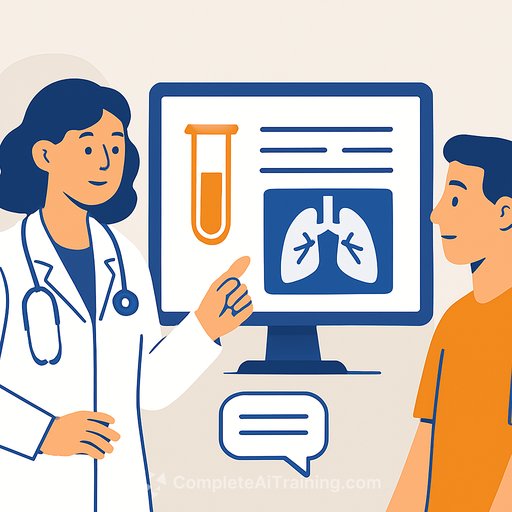
"In addition to language translation, AI plays an important role in interpreting labs and imaging results into plain language for patients to understand," says Tom Gillette, CIO of Mount Sinai Medical Center in Miami Beach.
For PR and Communications teams, this is a signal. Clear, human-first summaries reduce confusion, build trust, and cut downstream call volume. Done well, it also supports equity by making complex results accessible across languages and reading levels.
The HIMSS AI & Cybersecurity Virtual Forum is free to attend on Nov. 18. Learn more and register.
Why this matters for PR and Communications
- Clarity: Translate clinical jargon into words patients and families actually use.
- Consistency: Standardize tone and messaging across service lines and languages.
- Trust: Show your organization explains results without hedging or hype.
- Efficiency: Fewer clarification calls and shorter call times.
- Equity: Reach multilingual audiences with the same quality of information.
How to build a responsible AI explainer workflow
- Source of truth: Feed models with approved glossaries, patient education, and brand voice guidelines.
- Guardrails: Set reading level targets (6th-8th grade), banned terms, and tone rules.
- Human review: Require clinician sign-off for all patient-facing summaries.
- Compliance: Keep PHI secure, log prompts and outputs, and document approvals.
- Feedback loop: Capture patient questions and refine templates weekly.
- Measurement: Track comprehension, call volume, and time-to-clarity.
Messaging principles you can publish
- Plain language always. Short sentences. Everyday words.
- Be direct about uncertainty. Avoid false reassurance.
- Use comparisons and ranges patients recognize (e.g., "slightly above normal").
- Include next steps and who to contact for urgent issues.
- State clearly that a clinician reviews all summaries before they are sent.
Use cases you can ship this quarter
- Lab result explainers sent via portal or SMS with safe-next-step guidance.
- Imaging summaries with plain-language descriptions and visual analogies.
- Discharge summaries that clarify meds, side effects, and warning signs.
- Appointment prep sheets that explain what to expect and how to prepare.
- Multilingual FAQs for common tests, linked from result pages.
Risk and reputation management
- Disclaimers: State that summaries support, not replace, clinical advice.
- Escalation: Route any "red flag" outputs to a clinician and notify the patient appropriately.
- Bias checks: Review translations for cultural nuance and medical accuracy.
- Hallucination sweeps: Prohibit AI from inventing values or diagnoses.
- Issue log: Track errors, time to correction, and stakeholder notifications.
Metrics that matter
- Comprehension scores from quick in-message polls.
- Call-center volume and average handle time related to results.
- Repeat portal visits to the same result (proxy for confusion).
- NPS or trust scores tied to results delivery.
- Language coverage and parity of reading levels across languages.
Team and tooling checklist
- Plain-language style guide and approved analogies for common conditions.
- Clinical glossary mapped to patient-friendly terms.
- Translation memory to keep terminology consistent across languages.
- Retrieval setup: Pull from your institution's vetted education content.
- Version control and audit trails for all patient-facing text.
Prompt templates to speed production
- "Rewrite this lab result for a 7th-grade reader. Use neutral tone, short sentences, and the glossary below. Include 'what this means,' 'what to do next,' and 'when to call a doctor.' Do not interpret beyond the provided clinical note."
- "Translate the approved English summary to Spanish and Haitian Creole using our terminology list. Preserve reading level and tone. Flag any idioms that don't translate cleanly."
Governance notes for leaders
- Publish a public-facing explanation of how your AI-assisted summaries work and who reviews them.
- Train spokespeople on benefits and limits; avoid overpromising.
- Run tabletop simulations for misinterpretations and privacy concerns.
- Align with plain-language standards; see PlainLanguage.gov.
Upskill your team
If your comms team needs structured training on prompts, workflows, and risk controls, explore role-based options here: Complete AI Training - Courses by Job.
Healthcare organizations that explain results clearly earn trust. Gillette's point is simple and useful: AI can help patients make sense of labs and imaging, as long as your team sets the rules, keeps clinicians in the loop, and measures what matters. If you're planning your 2025 roadmap, this belongs near the top.
Your membership also unlocks: