AI-Generated Communications: Human Ownership Versus AI Authorship
AI-generated content has quickly become a staple in both professional and casual conversations. While the technology behind it has been around for some time, tools like ChatGPT have accelerated its adoption across industries, especially in communications and media. It feels like having a tool that can produce text, images, or stories instantly, offering faster and more efficient content creation.
Ethical And Legal Concerns
In early 2025, over 1,000 UK musicians took a stand by releasing a silent album titled Is This What We Want?. This protest was aimed at proposed changes to British copyright laws that would ease regulations for AI companies, allowing them to use copyrighted materials without creators’ permission. Renowned artists like Kate Bush, Annie Lennox, and Hans Zimmer highlighted the risks of AI-generated content encroaching on original work.
Concerns about ethical and legal ownership arise from cases where creators feel AI tools have absorbed their work without consent, leading to intellectual property violations. For example, author George R.R. Martin and the New York Times sued OpenAI and Microsoft over alleged copyright infringement. As communications professionals increasingly depend on generative AI (GenAI) and large language models (LLMs), the risk of unintentionally violating copyright laws grows.
Maintaining Authenticity
Beyond legal questions, brands face the challenge of preserving authenticity and a unique voice. Since GenAI models are trained on similar publicly available data, content generated by different brands can end up sounding alike, risking brand dilution.
It’s often unclear if the data used for training was obtained ethically or with proper consent. This lack of transparency makes it difficult to guarantee the originality and exclusivity of AI-generated content. Communications leaders must find ways to ensure their brand’s voice and thought leadership remain distinct in an AI-driven environment.
The Ownership Conundrum
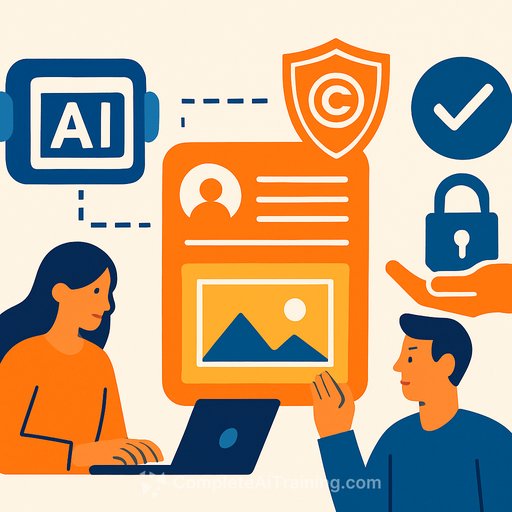
The protests by musicians and writers reveal a blind spot in AI content ownership. If two companies use AI to create identical messages, who owns the content? Current copyright laws protect only human authorship. For instance, U.S. courts have denied copyright registrations for works created entirely by AI without human input.
This loophole means multiple companies could produce similar AI-generated campaigns without any legal oversight or protection. The risk of brand dilution increases, especially when AI content lacks the unique values and voice of the brand it represents.
The Regulatory Vacuum: Who Governs AI In Communications?
The rapid growth of AI raises the question: who regulates its use in communications? Governments, tech companies, and regulatory bodies are starting to act. The European Union’s AI Act, for example, classifies AI models by risk and requires transparency. The AI Governance Alliance is also working on frameworks for responsible AI integration across sectors.
Despite these efforts, a unified global framework for AI content generation is still missing. Regulations need to keep pace with technology to provide clarity and protect all stakeholders.
Authenticity And Trust: The Communicator’s Ethical Imperative
Issues with AI-generated content go beyond ownership and legalities. Deepfakes, synthetic media, and fabricated news threaten authenticity and trust in communications.
To maintain trust, communicators should:
- Stay updated on AI regulations.
- Establish clear corporate policies on AI use.
- Adopt ethical best practices for AI-generated content.
- Use watermarking to identify AI-created materials.
- Prioritize transparency with audiences and stakeholders.
Balancing innovation with accountability is critical. Ensuring accuracy and authenticity must remain central as AI tools become more integrated into communication strategies.
For communications professionals looking to improve their AI skills and stay informed on best practices, exploring specialized training can be valuable. Resources like Complete AI Training’s latest AI courses offer practical knowledge on ethical AI use and content creation.
Your membership also unlocks: