
AI news ·
AI-generated film Hell Grind screens at Cannes fringe event after being made in two weeks for $500,000
A 15-person team in Kazakhstan made a 95-minute sci-fi film in two weeks for $500,000 using generative AI. Traditional production of comparable scope would cost an estimated $50 million.
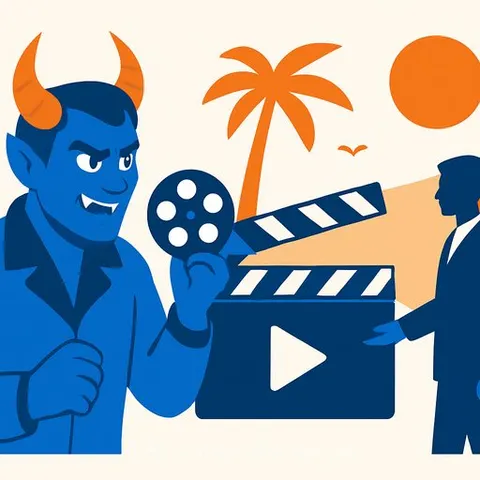
AI-Generated Film Produced in 14 Days for $500,000
A 95-minute science fiction film called Hell Grind was produced entirely using generative AI by a 15-person team in Kazakhstan. The production took two weeks and cost roughly $500,000 - mostly in compute costs - compared to an estimated $50 million for traditional filmmaking of comparable scope.
Hell Grind was presented at a side event near the Cannes Film Festival this week. Despite headlines suggesting it premiered at Cannes itself, the film did not screen in the festival's official program.
How the Production Actually Worked
The team used the Higgsfield AI video platform, which orchestrates generative video models from multiple developers including Google's Veo 3. Rather than directing actors and crews, the film's directors wrote prompts - sometimes 3,000 words long - to generate footage.
Each prompt produced about 15 seconds of video. The first 25 minutes required 16,181 video generations to create 253 usable shots. Prompts had to specify camera type, lens, lighting, and even physical laws like gravity and inertia to avoid visual inconsistency.
Lighting proved crucial to avoiding the flat, artificial look common in AI-generated imagery. The team also used prefixes to define style and camera specifications, treating prompt engineering as a core creative skill.
What Directors See as the Opportunity
Mikhail Kumarov, one of Hell Grind's directors, said: "The future is one person making a whole film. Like a writer, like a manga artist. Their stories, their fans: the only thing that matters is that a person has light inside; a story they can tell the world."
Aitore Zholdaskali, who directed a traditional feature in 2025, compared the shift to how laptops democratized music production. He spent ten years building toward his first feature film through weddings and music videos. With AI tools, he said, the barrier to entry drops significantly.
Another director, Adilet Abish, reported being moved to tears by scenes with AI-generated characters - a reaction that surprised him.
The Consistency Problem, Partially Solved
The main technical challenge in AI filmmaking has been maintaining consistent character appearances and world physics across longer sequences. Higgsfield's tools address this through orchestration and prompt specificity, though the solution required extreme precision in language.
The platform adds layers of control on top of underlying AI models to keep visual output coherent across multiple shots.
What This Means for Creatives
The traditional film workflow - coordinating equipment, crews, budgets, and retakes - disappears entirely. Directors become prompt engineers. AI design tools replace physical production.
Chuck Russell, director of The Mask, has announced two features to be made with Higgsfield, signaling interest from established filmmakers in the pipeline.
The Pushback
Artist Alma Haser launched Empty Red Carpet, a photo series highlighting what she calls "creative theft" in generative AI. The work supports Human Made Mark, an initiative proposing certification for films with real people both on-camera and behind the scenes.
The Academy of Motion Picture Arts and Sciences updated Oscar rules to clarify that generative AI cannot win awards for acting or screenwriting.
Hell Grind itself is intentionally campy - a proof-of-concept rather than a finished artistic statement. Its purpose is to demonstrate the technical feasibility and to market the workflow to studios, not to compete as cinema.