
AI news ·
AI helps HR leaders replace annual reviews with continuous feedback
Two Canadian HR execs are scrapping annual reviews for frequent AI-assisted check-ins, with 89% of AI-using HR teams reporting higher efficiency.
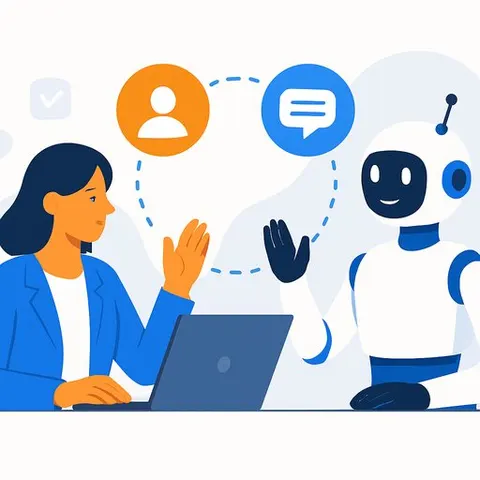
Two Canadian HR executives are replacing the annual performance review with frequent employee check-ins supported by artificial intelligence, describing the shift as a way to make feedback more honest and less burdensome for managers. Brianna Madron of DiveThru and Lui Lanzillotta of Burnac Produce say that AI-powered tools - used for note-taking, data capture, and prompt generation - are helping their organizations move toward continuous performance management without sacrificing the personal connection that traditional reviews often lack.
Building the foundation with regular, relationship-driven conversations
Madron, Director of People and Culture at the Edmonton-based mental health company, designed the check-in process around psychological safety and connection. Hourly employees at client-facing locations meet at least monthly with their managers. Head office staff connect every two weeks. The first question on her meeting template is personal: "How are you as a person doing?"
That structure is deliberate. Madron said that building a base of trust makes it easier to hold people accountable later. "If you're leaving it for a mid-year or an end-of-year check-in only, that's not going to give you an effective place to chat about all of the different things that might have happened in the year that you wanted to see done differently," she said.
AI handles the administrative weight so managers can stay present
Both HR leaders see AI's clearest near-term role as an administrative enabler, not a decision-maker. Madron described an AI-powered note-taking tool as essential for preserving the flow of a check-in. "I can be there, present, and my AI is taking my notes for me, and then afterwards I go in and make sure everything looks good," she said. "There's nothing worse than having to say, 'Hold that thought, just let me write down what you're saying.'"
The notes are shared with employees through a shared Google document, a transparency measure that reinforces trust. For managers looking to adopt these tools, foundational resources on AI for Management can provide practical starting points. Madron's team uses the recorded data from check-ins and engagement surveys to track year-over-year trends in employee sentiment about the support they receive.
At Burnac Produce, Lanzillotta is building a structured system that lets managers enter real-time observations in seconds, rather than reconstructing performance memories at year's end. "In the absence of AI, it will be very manual," he said. "You're stuck entering information into an Excel sheet and over the course of time it could be perceived as a potential burden and additional work."
The US-based Society for Human Resource Management documented this trend in its white paper "The Human + AI Advantage" (2025), finding that 89% of organizations already using AI in human resources reported greater operational efficiency.
Consent, transparency, and where to draw the line
Both executives draw clear boundaries around how AI should be used. Madron requires employee consent before any AI note-taker joins a meeting. "I let my team know: I have an AI note-taker that's recording this, and if someone says no to it, that's totally okay," she said. She also avoids putting names or identifiable details into AI tools, using them only to clean up notes and surface discussion patterns.
Lanzillotta frames the manager's role as a system designer who implements tools easy enough leaders will actually use them. "We become a system designer where we implement the system that makes sense for the leaders that's easy to use," he said. He stressed that regular feedback eliminates the surprise of an annual rating - employees know where they stand at any time.
The technology serves the conversation, not the other way around
Neither leader sees AI as the centrepiece of performance management. Madron said the tool's purpose is to free her to focus on the person in front of her, not the documentation. Lanzillotta emphasized that closing the feedback gap matters more than the software itself.
ADP Canada's Workplace Trends for 2026 report identified aligning AI innovation with strong data governance and keeping a human in the loop as the top priority for Canadian organizations. HR managers mapping out a rollout can turn to an AI Learning Path for HR Managers for structured guidance on implementation and ethics.
Why this matters for managers
Continuous feedback powered by AI cuts the administrative drag of annual reviews and replaces it with a steady stream of documented, transparent conversations. For managers, the immediate practical step is to separate the human work of coaching from the clerical work of record-keeping. Tools that capture notes in real time, prompt better questions, and share summaries with employees can make performance management feel less like a deadline and more like an ongoing dialogue. The technology works best when it increases the number of honest conversations, not when it automates the judgment calls.